Our friends at A Arquiteta, a Brazilian company specializing in online course on Architecture, have recently released a free mini-course titled “Curso de Realidade Aumentada para Arquitetura, Engenharia e Interiores”.
The course, taught in Portuguese, has the goal to introduce Architects, Engineers, Interior Designers and other professionals to AR visualization using existing 3D models.
This course in particular is targeted to professionals using Trimble SketchUp in their workflow, however, AR-media Studio, the reference AR platform for this course, can easily import any 3D model properly exported following the Guidelines.
Requirements of the Augmented Reality course
In order to fully enjoy the course and get the more benefits, you will have to do the following:
This mini course will teach you how to create a simple Augmented Reality project using an architectural 3D model.
You will learn the steps needed to go from the 3D model to AR visualization, in particular visualization using a target image (planar project). However, AR-media studio also offers the option to create Spatial and Geolocated projects, in order to visualize the 3D in the surrounding environment or at a specific location, even in a 1:1 scale.
The total course duration is 1 hour and it is split into 7 lessons, each focusing on a specific stage of the AR workflow with AR-media and SketchUp.
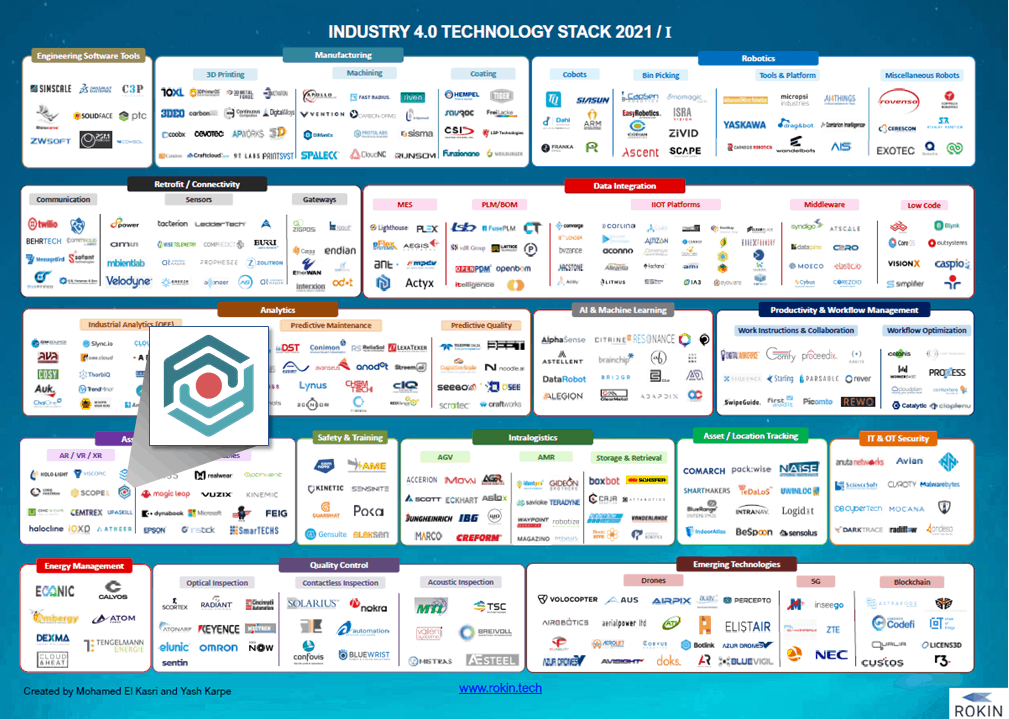
German Technology Scouting company Rokin, recently released the Industry 4.0 Technology Stack, a summary of the most relevant players, grouped by area of expertise.
We are proud to be included in the Industry 4.0 Technology landscape, specifically in the AR/VR/MR Area.
Inglobe Technology is the owner of HyperIndustry, a web-based platform designed to support field technicians with paperless Industrial Augmented Reality instructions in real time using mobiles and wearables.
Leveraging on HyperIndustry, Inglobe has delivered several Industry 4.0 projects helping companies to transform relevant industrial processes including Maintenance, Assembly, Field Operations and Technical Training.
The last two years have been very critical for Education worldwide with a pandemic disrupting the relationship between teachers and students, since for many it’s been impossible to stay in class.
These challenges led to the emergence of alternative teaching methods, with digital tools helping the transition to a virtual classroom model and distance learning gaining ground quickly.
In many occasions we have talked about the importance of activating a true digitization of the learning process and materials in order to empower both students and teachers with modern technologies, this is why at some point we decided to offer an easy to use, yet very effective platform to the educational users.
Starting today, we are finally introducing the AR-media Educational plans to our community.
Taking into account several different educational use cases we made available 4 plans: one for Students; one for Teachers; one for Classrooms and one for Schools. In addition, we have another plan named “Academy” that can be customized according to the number of classrooms and students.
As with the existing plans for Individuals and Companies, we aim to offer the most competitive prices in the market, since we believe everybody should have access to Augmented Reality authoring tools.
The users who will undertake the purchase process will be asked a proof of enrollment if they are students or a school certificate if they are a teacher or an educational institution.
AR for students, teachers and educational institutions
Whether you are a college student building your AR project for your thesis or a teacher exploring new ways to make lessons more interactive and engaging, AR-media Educational plans offer you the features you need at a very competitive pricing.
For classrooms and schools, when teachers need to involve dozens of students, AR-media offers dedicated plans with exclusive features, such as the possibility to create assignments, give marks and provide feedback to the students. This is a great way of using the platform as a true collaborative environment. Students can even work as a team on the same project!
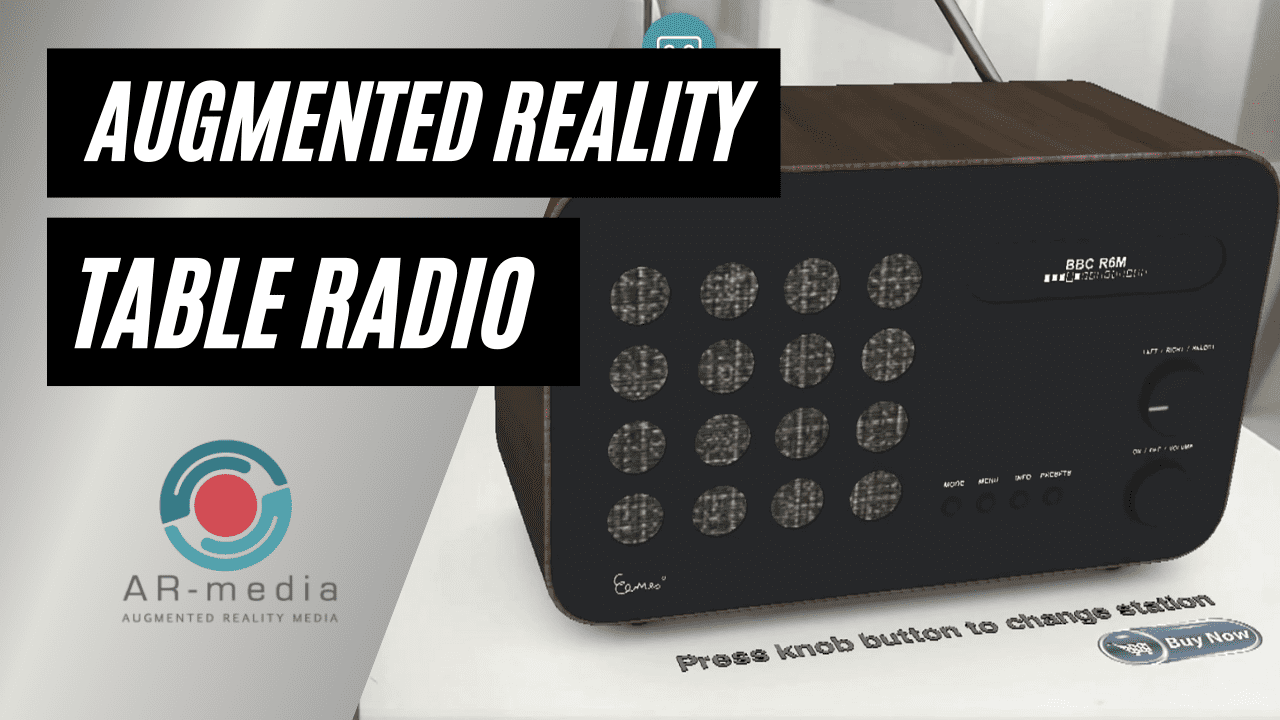
After developing a successful method for moulding plywood in the early 1940s, Charles and Ray Eames employed the acquired know-how to create a wide range of products – including radio cabinets. By 1952, roughly 200,000 radios with cabinets designed by the Eameses had been sold by various manufacturers.
One design, however, never went into production: an elegant table radio with a moulded plywood case, whose compact shape and austere, more technical look were unusual for the time. (Source: https://designmuseumshop.com/products/eames-radio)
AR-media user and evangelist Daniel Nunes Kroll, CEO of the Brasilian company A Arquiteta, created a fantastic Augmented Reality experience using the Eames Radio itself, making it play music and giving the user the ability to switch from one radio station to another.
This is a planar experience you can try yourself for free. Download the AR-media app for iOS or Android, download and print the image trigger from the app; frame the trigger using the AR-media app and enjoy this interactive AR experience.
How it was created using AR-media Studio
This interactive AR experience was created using AR-media Studio, the Mixed Reality platform powered by Inglobe Technologies.
This project was created as a planar project, meaning that the 3D content is anchored to a target image.
The 3D radio was added inside the 3D editor and from there the interactions were created by using the AR-media Behaviours Manager, that lets you manage several types of interactions and conditions.
HTML5 is a very powerful markup language, it givesyou the ability to create simple to complex web applications rich in multimedia content. HTML5 allows you to create apps and games that, in the form of packages, can be easily integrated into entertaining immersive experiences.
AR-media Studio offers a straightforward process to easily combine HTML5 and Augmented Reality into a single project.
In particular, among the use cases that can be achieved, here are a few examples:
HTML5 Mini Apps
Using HTML5 to build mini applications serves the purpose of achieving a specific goal during the user experience, for example a registration form. Integrating this kind of content into immersive experiences can help gather data from users/customers to be used later for marketing purposes. In this way you can build an experience that is useful and entertaining at the same time because it provides a funny experience to the user, yet it collects precious marketing data.
HTML5 Mini Games
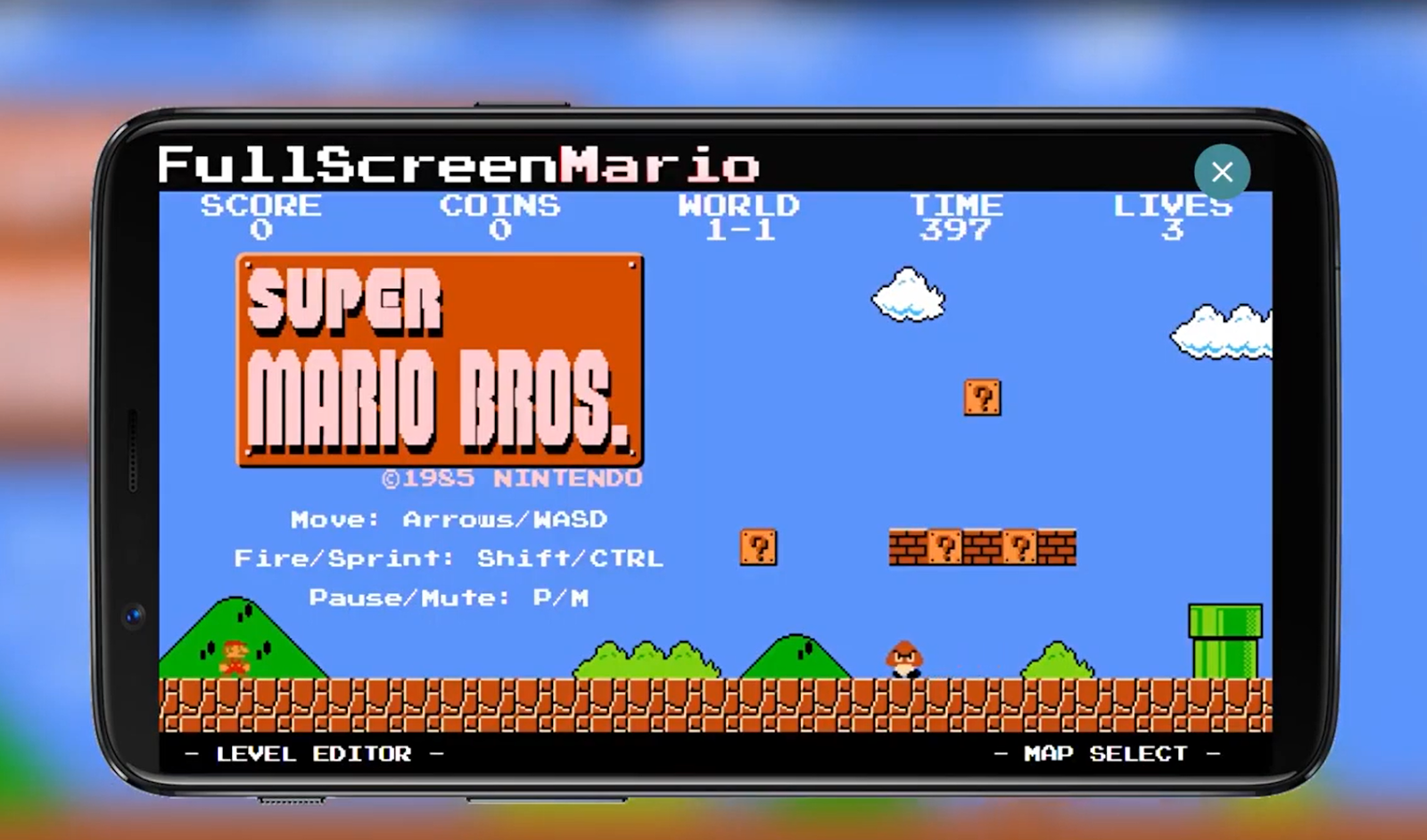
People love games on mobile devices and HTML5 lets you create mini games that can be embedded into AR/VR experiences so that, once the user scans an image she is given the option to play a game. This kind of user experience is especially useful when the mini game has some kind of pertinence with the content/topic being scanned. When creating this kind of content, please keep in mind the the final experience will be enjoyed on a mobile device, thus all the games controls have to be usable through touch and gestures.
HTML5 Quizzes and Tests
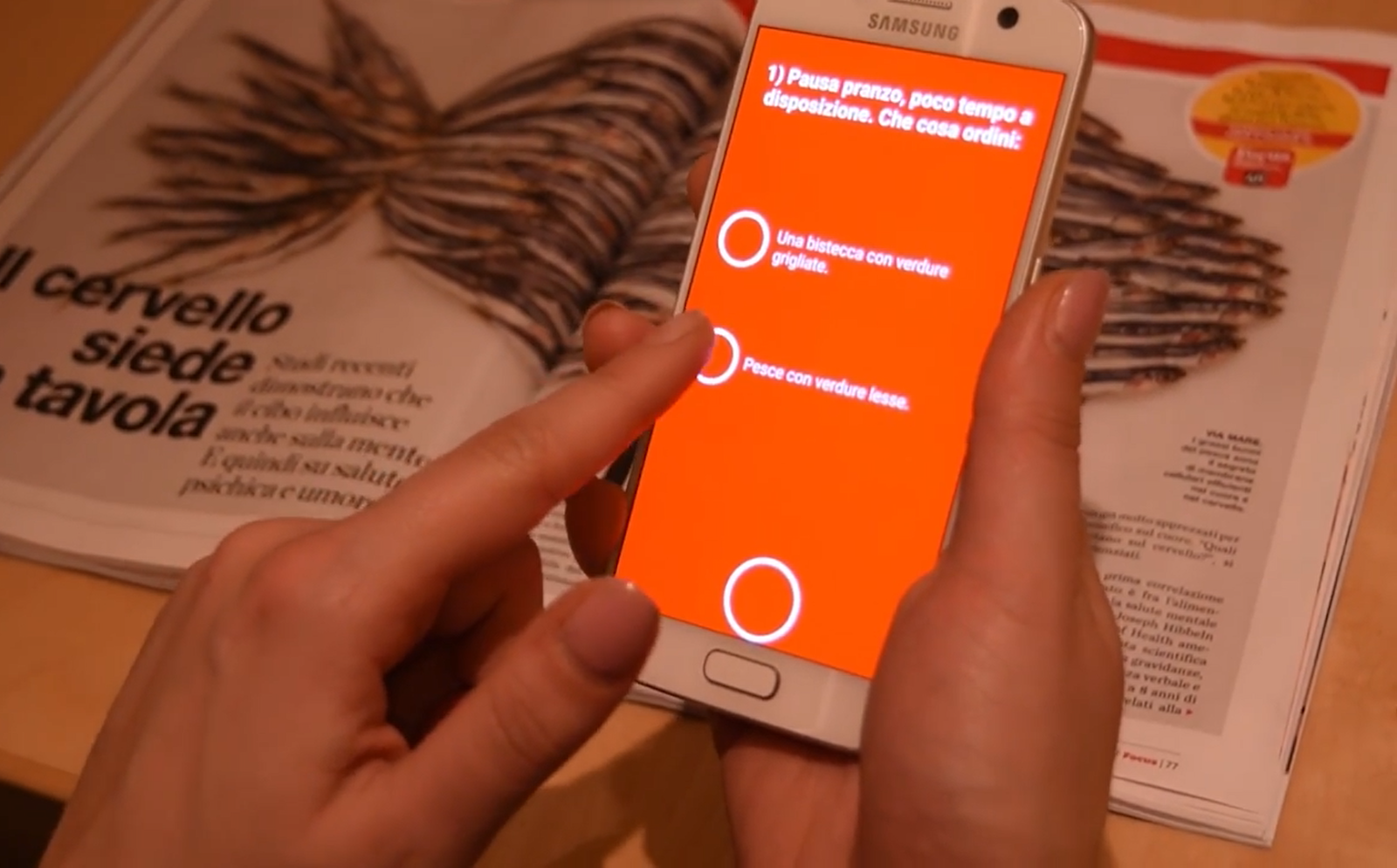
For Entertainment, Training or Education purposes, HTML5 can help you integrate Quizzes and Tests into your printed materials in order to let users enjoy a Quiz or a Test related to something they just read. This is a great way to enrich a training book since the user will be able to get immediately a feedback related to the level of understanding of the topic she just read. Same goes for funny quizzes, the user can easily get a result without having to engage in boring and time consuming calculations.
HTM5 Photo Galleries
Finally HTML5 packages can also be used to create Photo Galleries. Starting from an AR experience, the user can be invited to open a gallery with additional media files, as an in-depth of the topic being discussed. This is a great option for magazines or catalogs which are tipically full of pictures. So when there is not enough room on the page to add additional visual content, and HTML5 gallery, triggered through Augmented Reality can be the perfect complement.
AR-media has been developed with creatives in mind, in an effort to provide a zero-coding authoring tool to anyone willing to create Mixed Reality content even in the absence of technical skills and large budgets. For this reason, in the last few weeks our Product Development team released quite a few improvements to the AR-media Studio User Interface, making it more intuitive and straightforward for new users.
Our goal is to make it easy and quick to create compelling immersive experiences using a variety of assets, including 3D models, videos, 360 images and so on. Below are the highlights of this release.
The Dashboard
The dashboard got a design overhaul with the goal to make the authoring process more intuitive. It now presents a 3 steps workflow: Upload, Create, Publish.
Upload is the process of storing and organizing the content you need in your projects (e.g. images, videos, 3D models); Create is the actual authoring process. It’s the area where you can create and publish your projects; Visualize is the visualization step, when your project is published and you just need the AR-media Player app to view your Mixed Reality experiences.
Moreover, in the dashboard the users can find technical resources and documentation that can be very useful in order to get started.
The new AR-media Studio Dashboard
Adding Projects
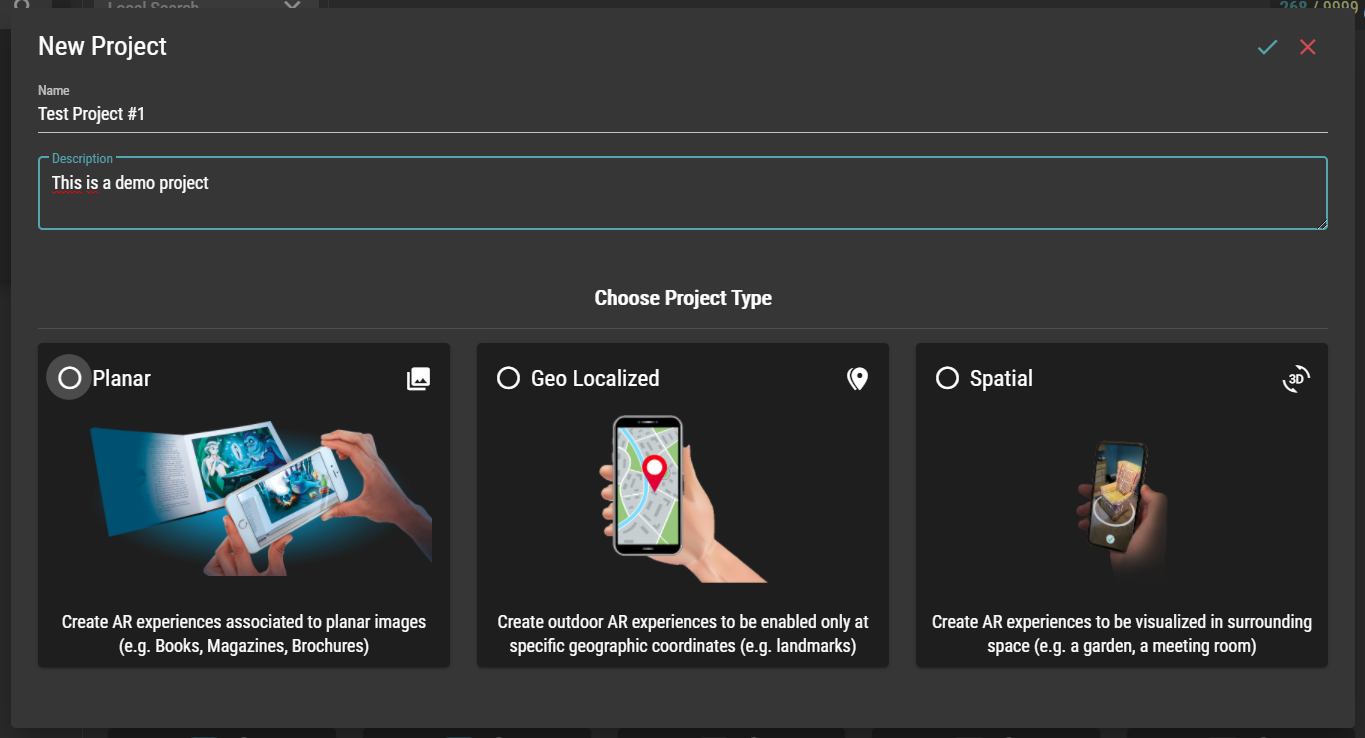
The projects’ creation process hasn’t changed, what we changed is just the UI. We made it easier to understand and select what project type you need to create. You can pick one of the options among Planar, Geo Localized and Spatial.
Selecting the project type
Adding Experiences
After creating your projects, you need to add one or more experiences, these change according to the project type. For example, in planar projects, experiences consist of target images; in geo localized projects they consist of locations; finally in planar projects they consist of spaces.
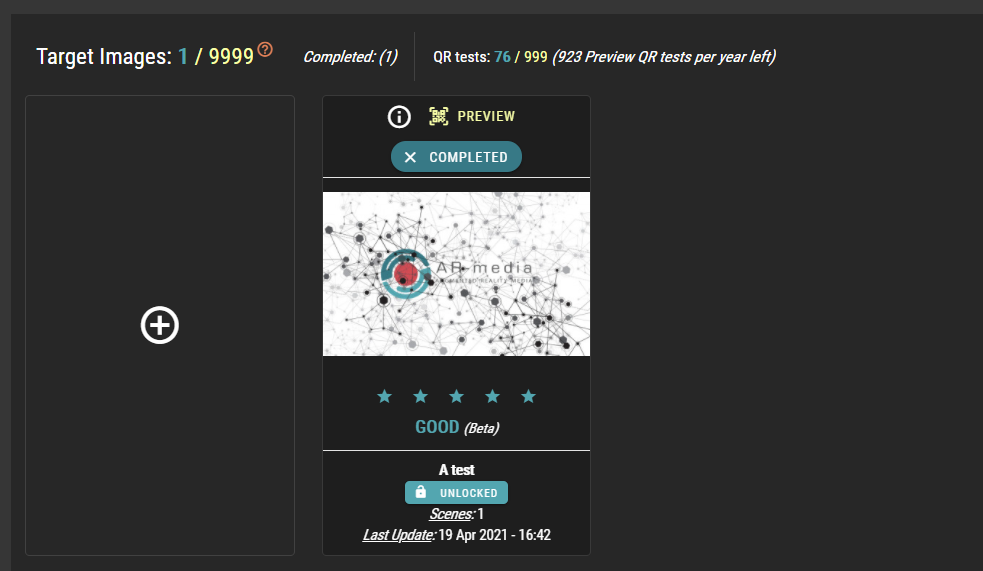
These namings now change dynamically according to the project type. Morevore, adding experiences is now more intuitive thanks to the addition of a large “+” card.
Adding new experiences in a planar project
Adding scenes
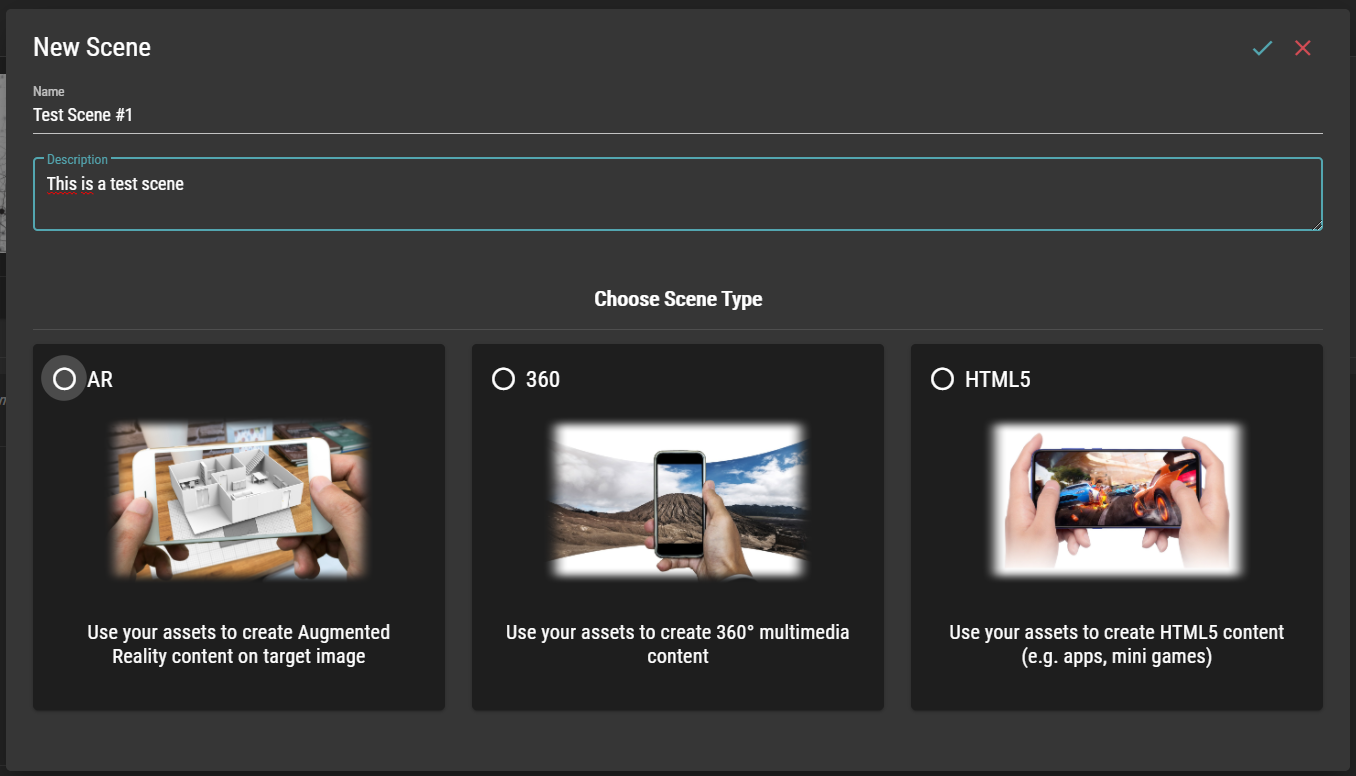
While projects and experiences are mostly containers, scenes represent the actual content of a project. Within a scene users can add 3D models, videos, 360 photos and even HTML5 packages. A scene type selector now helps the user make this choice.
Selcting the scene type
3D Models Preview
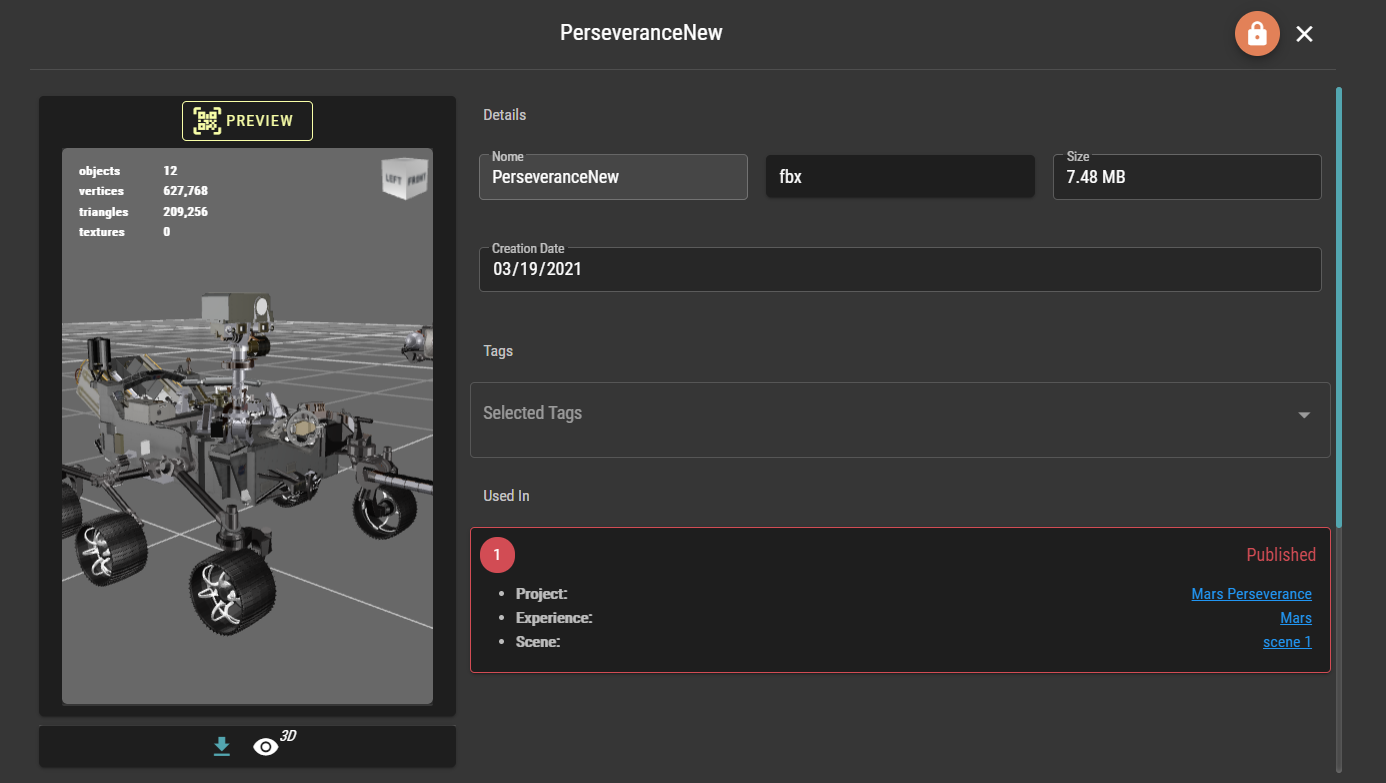
Finally, 3D models can now be previewed via the AR-media Player app directly from the Assets Manager. The preview consists in the spatial visualization of the model, with the possibility of verifying its graphic rendering and performance, even before actually using it within a project.
3D model preview button inside the assets manager
Let us know your feedback and suggestions regarding your AR-media Studio User Experience.
Founded in 2015, the Gianluca Spina association annually awards the homonymous prize for Digital Innovation in Cultural Heritage and Activities. A recognition to the cultural players who have been able to combine the artistic aspects with the technological ones, in the best possible way, in projects with a high innovative and economic impact.
Circo Maximo Experience (Circus Maximus Archeological area, Rome)
Brera Plus (Pinacoteca di Brera)
MArTA 3.0 (Museo Archeologico Nazionale di Taranto)
Circo Maximo Experience among the best for the second year in a row
The Circo Maximo Experience project reached the podium in the last edition, while it got a special mention last year.
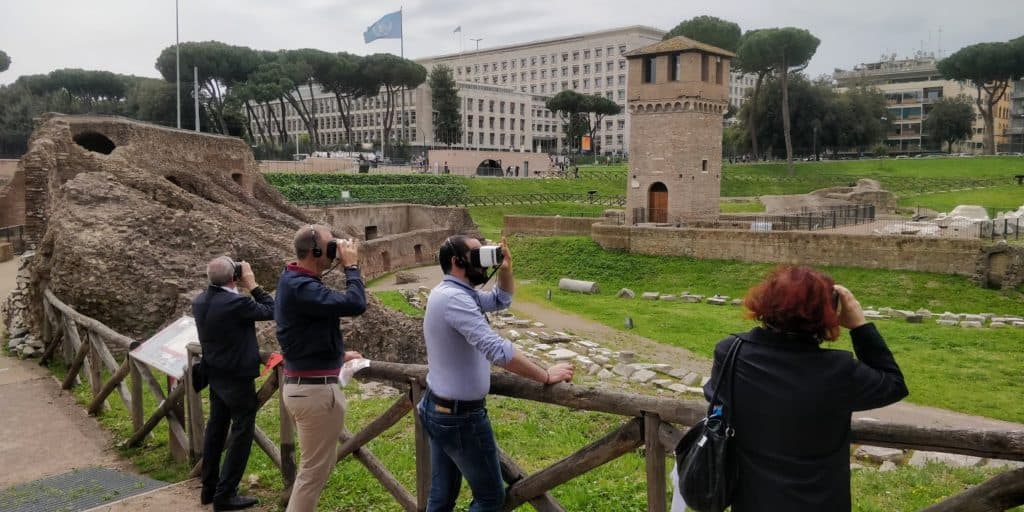
Tourists enjoiying the Circo Maximo Experience
The archaeological area of the Circus Maximus was reopened in 2016 after several years of work and the Capitoline Superintendence decided to enhance the site using Augmented and Virtual Reality techniques. In terms of complexity and technologies used, the project is unique in its nature. In particular, it was the first time that such an advanced approach was used on an outdoor site of this size. If you want to know more about the project, refer to this article.
Even though the pandemic outbreak forced the Archaeological Area of Circus Maximus to restrict or suspend completely the immersive tour, there is still a great interest around the solution and how it allowed tourists to experience it in a completely new way.
The good news is that the Circus Maximus site is now open and restrictions are being progressively lifted, allowing visitors from Italy and abroad to get the tickets for one of the most innovative archeological experiences available right now globally.
The jury of Premio Gianluca Spina awarded the first prize to the MArTA 3.0 project of the National Archaeological Museum of Taranto, responsible, among other activities, for the digitization of 40,000 artwork and the creation of a large open source and open data database with Creative Commons licenses.
The smart glass market was valued at USD 3.89 billion in 2020 and is expected to reach USD 7.96 billion by 2026, at a CAGR of 12.66% over the forecast period 2021 – 2026 (Source: Mordor Intelligence)
Punctually every year the analysts and observers of the AR market begin to speculate on the fact that the current one could finally be the year of the mass affirmation of smart glass, and just as punctually at the end of the year the sales volumes turn out to be quite low to be able to talk about sales success.
What we have learned so far is that the smart glass market is certainly a very promising market, however there are still a number of obstacles that must be removed to facilitate its large-scale adoption, both in the Enterprise and the Consumer world.
For this reason we have decided to take a look at how the players in this market are moving in an attempt to understand what direction they are taking and on what type of devices they are orientating, in order to understand, as developers and end users, what we can expect in the coming months and years.
Microsoft
Microsoft is one of the few companies that has approached augmented reality wearables more successfully. Since the launch of the first version of Hololens, until today, the Redmond company has been able to create a functioning ecosystem of software and hardware, which has made Hololens the reference AR device for the Enterprise , while it has never coveted to become a Consumer product.
Microsoft Hololens 2
We expect to see Microsoft still at work for a long time in this area and we think it can succeed where it has failed with mobile devices.
Snap Inc.
Snap Inc., the company that owns the Snapchat social media platform has always been among the first to experiment with Augmented Reality in different forms, first by proposing AR filters on its app, then by launching the Spectacles, smart glass equipped with cameras and designed to make it easier to upload video and photo content from the glasses directly to the Snapchat account.
Snap Spectacles 2021
In the recent weeks we all read the news of the acquisition, by Snap Inc., of WaveOptics, a UK startup, purchased for 500 million dollars. WaveOptics is a manufacturer of displays for smart glasse, both for the optics and projection part and it is the same technology already used by Snap in its smart glass Spectacles 2021.
Snap’s move has the dual objective of strengthening itself in the hardware sector of Consumers Smart Glass, positioning itself among the leaders of this rapidly expanding market, but at the same time also defensive, to avoid excessive growth among its competitors.
Apple
For years we have been hearing rumors about a possible launch of AR Smart glass by Apple, but for the moment the Cupertino company has not yet released any device totally dedicated to Augmented Reality.
Apple has worked a lot on the software side, in particular with ARkit, to provide a valid tool for developing immersive applications and, on the other hand, it has equipped its iPhones with technologies capable of accurately mapping the surrounding environment, such as Lidar, with the aim to provide a basis for the fruition of advanced AR experiences.
The rumored Apple View Render
Again, as of 2021, we just have rumors. They say Apple will finally release a Mixed Reality headset in 2022 and that it will be endowed with eye tracking capabilities, an 8K display and a 5 nanometers CPU. There are even presumed renders of such a project, but they haven?t been confirmed in any way.
What we know for sure is that Apple is not known to launch products in a prototype state, as for example did Google with the Google Glass, rather the company launches a new product when it is certain to obtain an adequate market response.
Facebook
Facebook is one of the Tech Giants that has been investing more in immersive technologies for some years now, in particular with the acquisition of Oculus and the subsequent release of several successful VR devices.
But Facebook does not seem to want to stop there and has recently created the “Facebook Reality Labs” division, within which all the company’s efforts in the area of Mixed Reality converge.
Recent statements by CEO Mark Zuckerberg revealed that Facebook is working in partnership with the eyewear giant Luxottica on a new Mixed Reality device that will carry the RayBan brand.
Currently not much is known about this new product, except that it will not have a display and that it could resemble Snap Inc.’s Spectacles. So as the first non-VR smart glass, Facebook could release a simple smart glass, which connects to the mobile phone, but, it seems, without offering real functionality of viewing virtual objects in the real world.
Alleged prototype of Facebook Smart glass
Mobile AR
In the uncertainty of a market that struggles to find the killer device, mobile devices remain a certainty, which in recent years have served as a vehicle for Mixed Reality towards the mass market.
Thanks to social networks, AR filters and several successful apps (e.g. Pokemon Go), Augmented Reality has landed on billions of devices, making them known all the advantages and, in some cases, the limits.
Google Cardboard
Mobile AR represents the compromise, the technology that already exists, affordable and accessible to all and which fills the gap left by the absence of an affordable and ergonomic AR smart glass for the masses. It is expected that the Mobile AR market will triple its value in the next three years. (Source: Statista)
As of today it is quite difficult to find a wearable device priced like a smartphone with all of its components, a dedicated CPU, a high resolution display, wifi, GPS, compass, etc?
Leveraging on the computing power and advanced features of mobiles, it is possible, today, to turn smartphones into valuable Mixed Reality Headsets that allow to deal with a growing number of needs and applications while at the same time may guarantee both scalability and quality of experience.
On February 18th 2021 the NASA’s Perseverance rover successfully landed on Mars and started its exploratory mission, consisting mainly in the collection of samples, images and sound of the red planet.
The first images and sounds released by NASA have garnered a lot of media attention, so we decided to use the official Perseverance 3D model in order to create and publish an Augmented Reality experience of the rover in 1:1 scale.
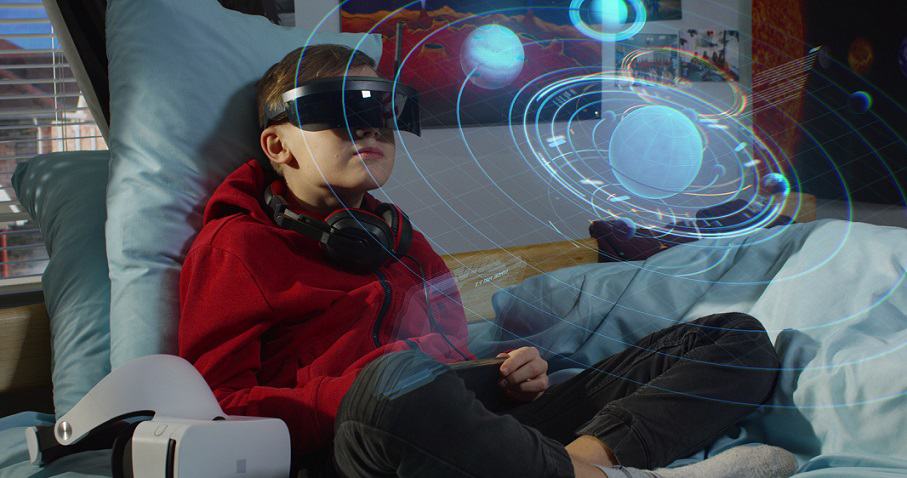
Thanks to this experience you’ll be able to enjoy the Rover anywhere in your surroundings and get projected on a multisensorial Mars environment as recorded by Perseverance. If you use a suitable AR/VR headset for smartphones you can select the new immersive visualization mode of AR-media to enjoy a truly Martian immersive experience and, in a way, feel like being there.
How to enjoy the AR Mars Perseverance experience?
If you want to play this Augmented Reality experience just download the AR-media Player app from your favourite app store (Google Play Store, Huawei App Gallery or Apple App Store), open the app and select the Mars Perseverance card from the list of available projects.
Then just download the experience and follow the instructions: you will be asked to move your device to create a map of the surrounding environment and after that just tap on the display to place the 3D model of the Mars Perseverance rover where you want it to appear.
How was the experience created?
This Mars Perseverance experience was easily created using AR-media and creating a spatial project. We downloaded the 3D model and the 360 image from the NASA free resources and assembled them in a just few minutes.
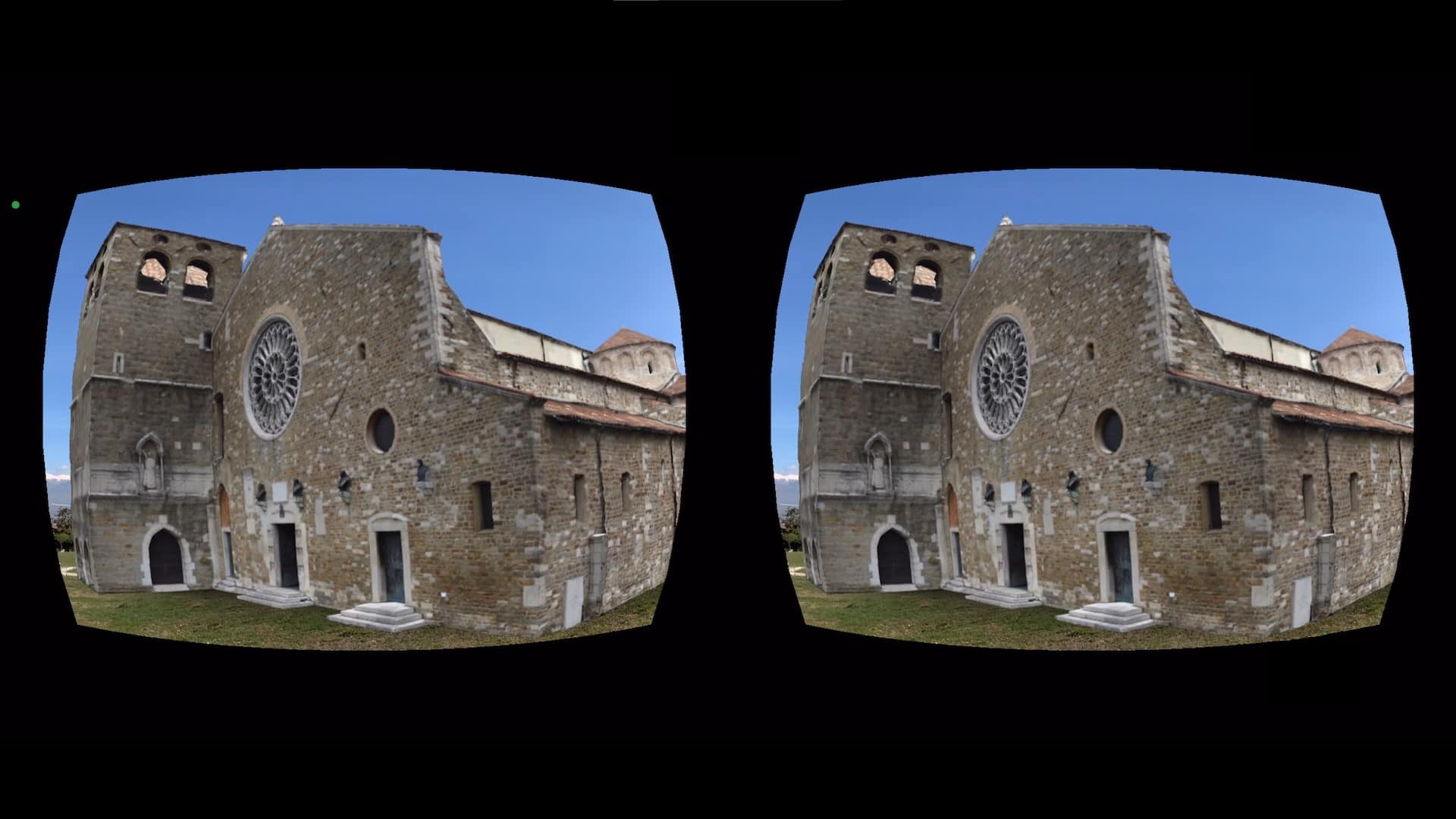
As we disclosed a few weeks ago, our development team has been working hard to implement a new visualization mode for every experience enjoyed using the AR-media Player, the Immersive Mode, an AR feature to be used in combination with your Mobile AR headset of preference, including Google Cardboard.
Today we are glad to announce that the Immersive Mode is finally available to all AR-media users, including the ones with a Free plan.
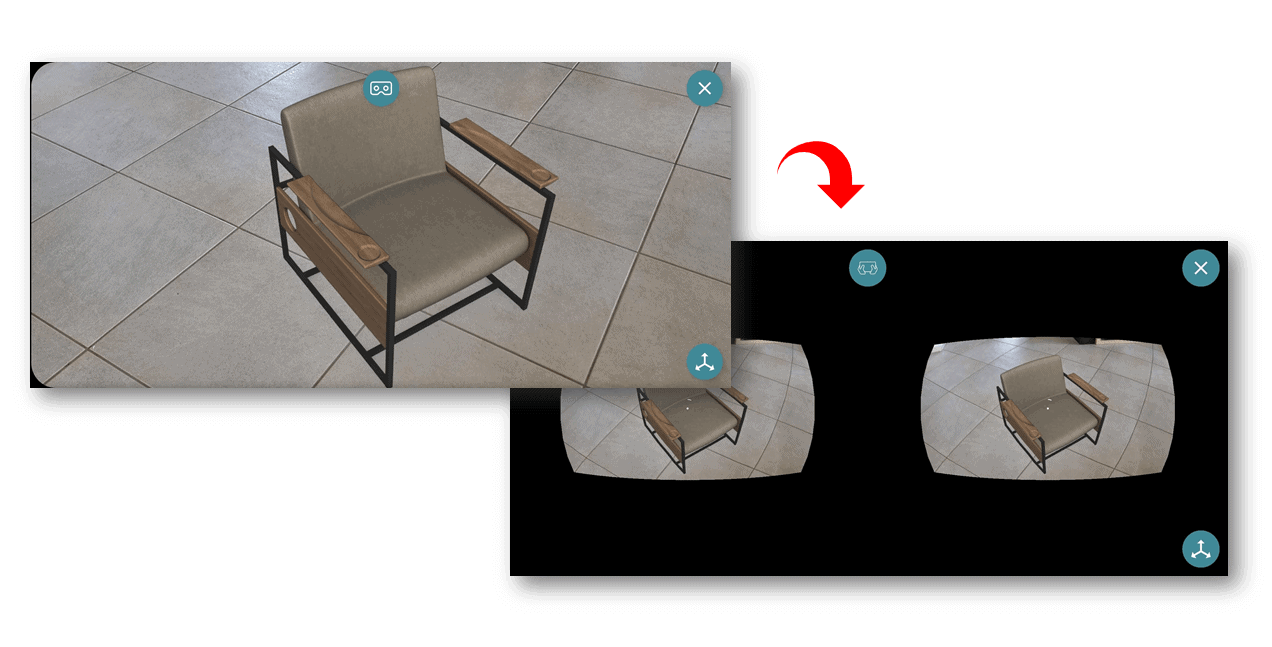
Using the Immersive Mode is easy! You will find a new button available when you play any experience, just tap on it and your display will switch into a split mode. Then simply use your smartphone in combination with your Mobile AR headset and you’ll be ready to enjoy a truly immersive Augmented Reality experience.
What kind of hardware do you need for Mobile AR?
In order for you to enjoy the immersive mode, you need some kind of device that allows you to exploit the split screen functionality, typical of stereoscopic visualization.
There are loads of products on the market, from entry level to semi-professional.
You can start to get a Mobile AR accessory from as low as 14.99$, like in the case of the Homido product line, to higher price tags like in the case of the Merge Headset.
A very popular Mobile AR option is the Google Cardboard, available for a few dollars from several eCommerce stores and distributors, including customizable units.
What use cases the AR-media Immersive Mode enables?
There are several scenarios where the AR-media Immersive Mode can prove to be useful. By their nature, certain kinds of experiences are best enjoyed with a Mobile AR headset, just think of 3D models in 1:1 scale that allow the viewer to walk inside out the object for proper exploration, or think about entertaining 360 experiences.
Civil Engineering, Assets Management and any other discipline that requires dealing with physical infrastructure -be it a bridge, a road or a skyscraper- goes through complex workflows from idea to disposal. These require dedicated tools and software for effective management and to prevent any possible inefficiencies that can quickly translate into extra costs.
Cutting inefficiencies and speeding up the design and construction process are probably some of the most plausible reasons why AR, since the very beginning, has witnessed a considerable amount of adoption among AEC professionals. Being able to anticipate some of the most common causes of faults by visualising a realistic 3D Digital Twin preview of the infrastructure, on site or in the office, offers a lot of benefits along the entire value chain of Infrastructure Management.
Civil Infrastructures (e.g. Bridges) Visualization Use Cases
Augmented Reality visualization of civil infrastructures can help Designers, Engineers and Workers in many ways. Here is a list of the most common use cases.
Design
Being able to view your project in the physical space before it’s even built can help you and your stakeholders get a grasp of how the final bridge will look like and may help you become aware of potential flaws in advance.
Participatory Planning
Big infrastructure projects, including bridges, can require a participatory planning phase with citizens and institutions before they get the green light. AR visualization in the target site can help to better discuss and address any issue regarding the environmental impact.
Construction
With operations going on in the construction site, AR visualization of bridges can help to assess the actual level of completion of the project and to carry a gap analysis between the baseline and the actual infrastructure.
Maintenance
Being able to analyze an Augmented Reality representation of bridges can help Maintenance Managers and Field Workers better communicate and agree on the intervention points and on the activities to be carried on.
Disposal
Even when the lifecycle of a bridge is over, AR can help plan the disposal phase in order to have a realistic visual representation of the site and make disposal operations more efficient.
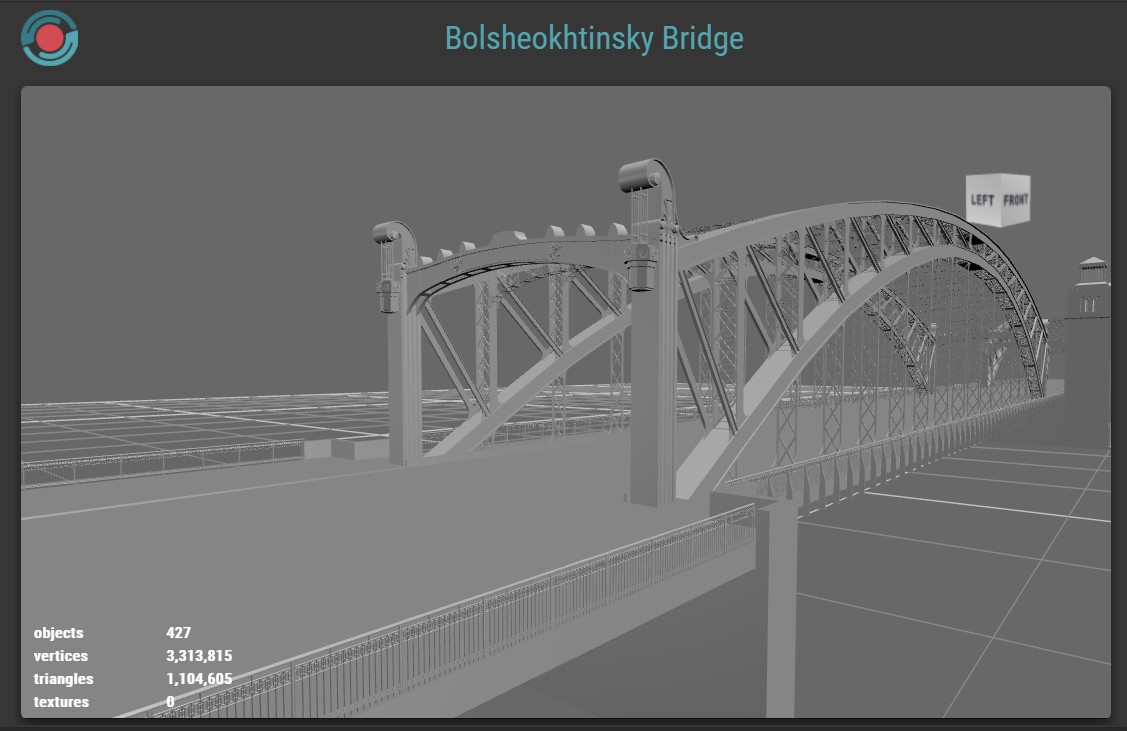
Preparing the model (3D and Photogrammetry workflows)
You can decide to visualize your 3D model in several ways: planar; spatial; geolocation.
With a planar visualization you can view your 3D model directly on a printed image, rendering or planimetry, while using spatial or geolocation you can see the model directly in the physical space or even in the project site before it’s even built.
In order to prepare your model for AR visualization you basically have two ways:
Existing infrastructure
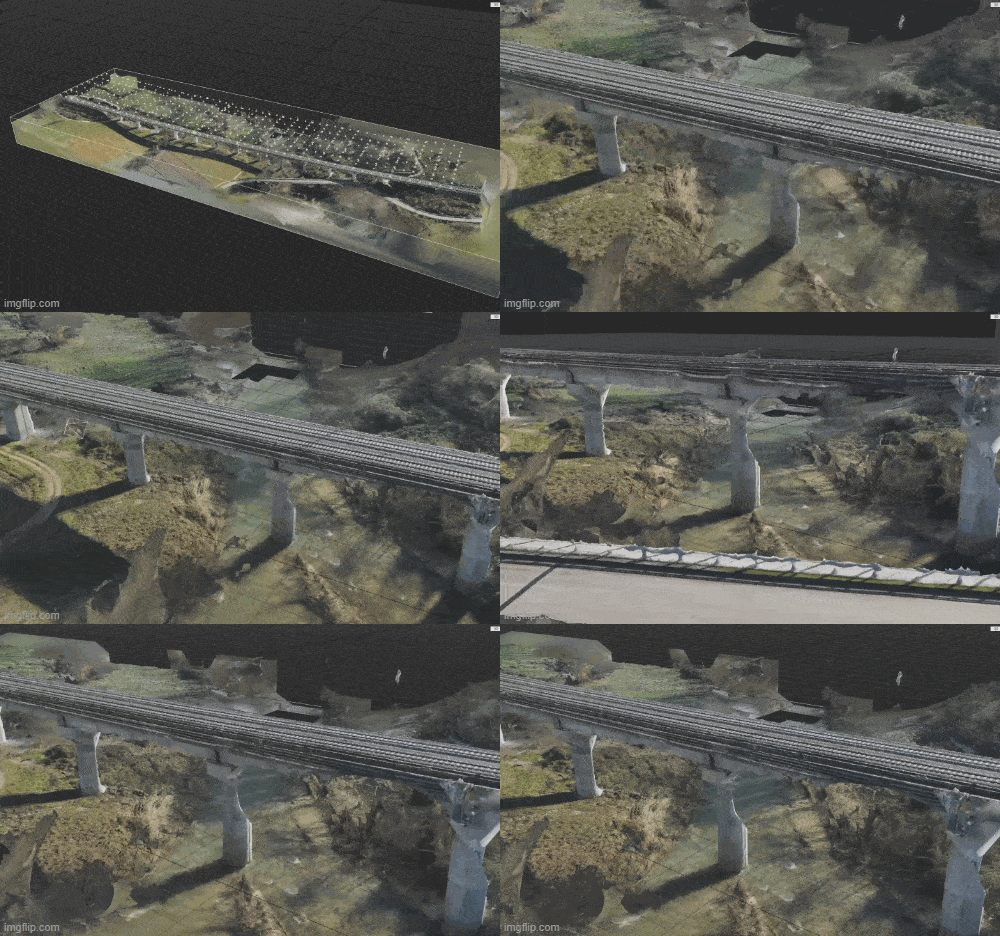
When the need is to plan maintenance tasks on existing assets (e.g. bridges) you can either rely on an existing and detailed 3D model with textures that corresponds to the current state of the infrastructure or you can create a photogrammetric reconstruction (mostly using drones) and use that as the base for planning your operations.
Using photogrammetry in an AR Workflow
Non existing infrastructure
When the infrastructure is still at the design stage, or the construction site is still working, you can only rely on the 3D model of the project.
Preparing the AR scene inside AR-media Studio
Visualizing civil infrastructures and bridges with AR-media
If you have 3D models or a reconstruction of your asset (let’s say a bridge) it takes only a few minutes to create an Augmented Reality presentation using AR-media Studio.
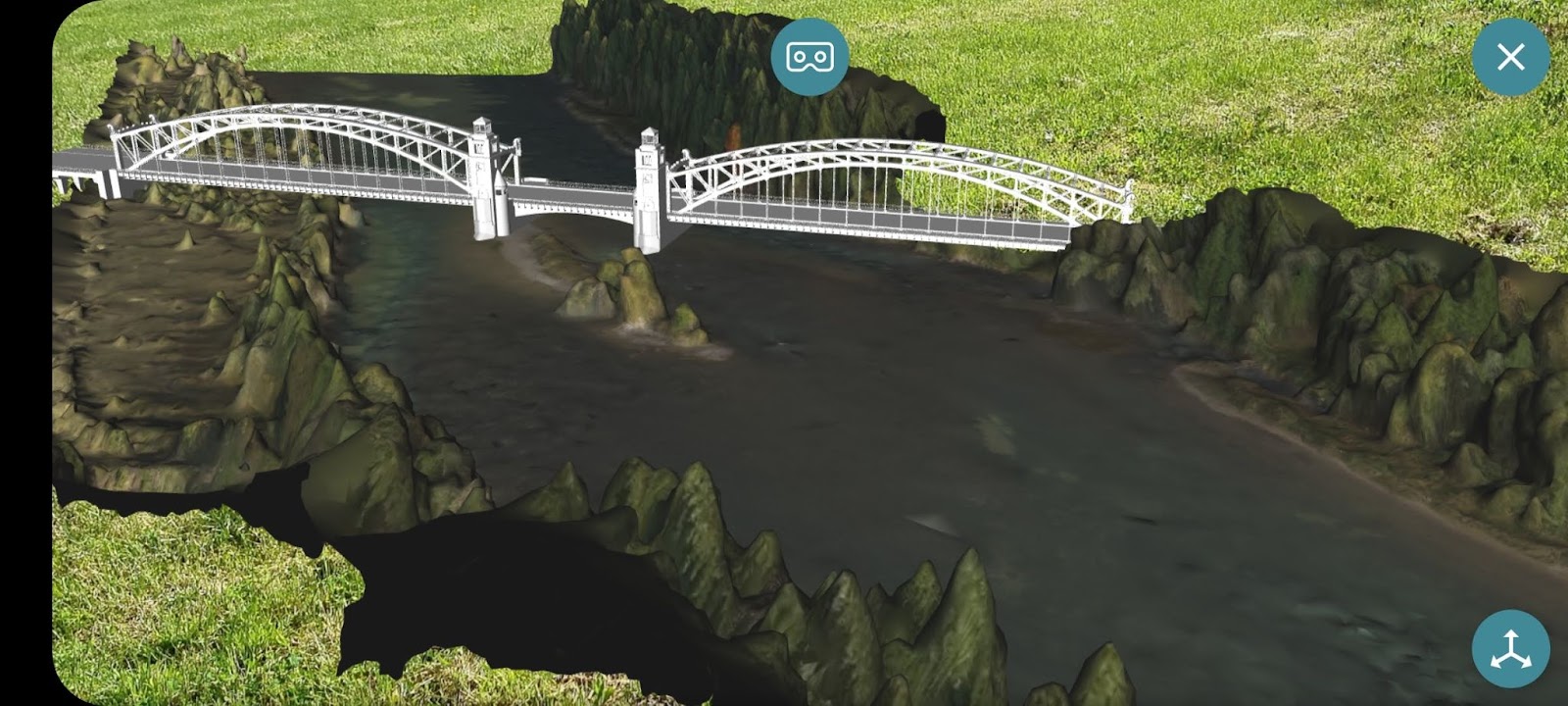
You can either create a planar project if you want to associate your content to a target image or a spatial project if you want to be able to visualize it in the physical space (indoor or outdoor). Finally you can create a geolocalized project if you want to enable the content only at a specific location.
Visualizing an AR Spatial Project inside the AR-media Player app
By distance learning we mean a style of learning where teachers and students are physically separated, hence the teaching is not done in a classroom, but a set of technologies is used to ensure activities are carried on regularly and the communication is facilitated.
Prior to the pandemics this practice was very limited and mostly dedicated to students living in remote areas or suffering from health problems forcing them to stay home.
However with the Covid-19 outbreak distance learning has become the main teaching method, involving over 1.3 billions students in 186 countries (Source: Unesco).
How Distance Learning works and is it effective?
Starting from the first quarter of 2020 hundreds of millions of students everyday have begun to connect remotely with their teachers and the rest of the classroom on a variety of video call platforms including Zoom, Meet and Skype.
This way of teaching has its advantages and disadvantages, let’s dig into them.
Main advantages of Distance Learning
Flexible scheduling
Educational activities are not interrupted even during the pandemic
Reduction of trips, in some cases very long
Main disadvantages of Distance Learning
Not being in the classroom may be less effective in terms of learning
Harder to focus in a non-school environment full of distractions
Kids need assistance from their parents
Summing it up, distance learning has proven to work quite good since the technologies available today allow for an effective learning experience. However since the pandemics was an unexpected event, the way distance learning has been carried out may not be the optimal one and surely doesn’t take into account that the learning experience has its own peculiarities and teachers should not replicate online the same exact classroom experience.
One of the areas that require improvements is teaching materials. In class learning provides a certain type of engagement that distance learning doesn’t provide and sometimes, studying alone, at home, without being in front of a blackboard or in a school lab, can be quite frustrating, especially for STEM subjects.
One way to fill this gap may be starting to integrate digital content and lessons into traditional teaching materials, let’s see how.
How to use AR to improve the Distance Learning experience
There are several ways to use Augmented Reality in the Education domain, some involve simply providing immersive teaching materials, other involve getting students to experience how to use AR in creative ways. We listed a few use cases we believe can add value, especially in a Distance Learning context, where students could feel less involved.
AR in Education Case Studies
Immersive Lessons
Teachers can prepare AR content to deliver additional digital content to their students during traditional lessons. Students at home can use their own mobile devices to enable Augmented Reality media on their books.
Remote Teamwork
With students being physically separated from each other, it has become difficult to encourage collaboration during the teaching process. However, certain AR platforms, like AR-media, provide the ability to work together in the creation process of AR content. Such projects can be assignments from the teachers on specific subjects.
Tests & Quizzes
Testing the students through a webcam can be quite challenging and here is where AR comes to the aid. Teachers can prepare tests and quizzes and distribute them via an AR app, so that students can enable that kind of content by simply scanning a specific book page. The main advantage for teachers is to get all the data gathered into a platform that provides immediate feedback on how the students scored on those tests.
Immersive Tours
Traveling in the last year has almost become a tabu and students have stopped traveling as well since all the school trips have been suspended. Despite the current restrictions, AR and VR offer a unique way of virtual travelling in order to see and discover new places. School could easily create and let their students experience virtual tours. This use case can also be useful in preparation for real trips, when the situation will be back to normality.
Acquiring new digital skills
Finally, Augmented Reality can also be acquired as a new digital skill by students, with the support of their teachers. Using AR-media, teachers can involve their students in 3D project creation activities to be visualized on mobile, without any coding skill required. It is a great way to get young students familiarise with this promising technology.
What’s next in EdTech?
As you will have understood, technology is changing the way students learn worldwide and the Covid-19 pandemics just contributed to the acceleration of this process.
Educational institutions need to rethink how they want to engage students during the learning process by mixing traditional and proven methods with innovative tools and technologies, with the double goal to make the process more appealing and at the same time to transfer new digital skills to the kids.
Even before COVID-19, there was already high growth and adoption in education technology, with global edtech investments reaching US$18.66 billion in 2019 and the overall market for online education projected to reach $350 Billion by 2025 (Source: Business Insider). Among the tools being adopted the most we have language apps, virtual tutoring, video conferencing and eLearning software.
In the future the EdTech field will develop even more and increasingly sophisticated technologies will be made available to the public, one of these will be AI teaching algoritms.
We are glad to announce that Inglobe Technologies has joined the Human Brain Project to create a new generation of intelligent bio-inspired industrial robots. Together with its partners, the National Research Council of Italy (CNR) and the spinoff AI2Life, Inglobe will contribute to and leverage on the digital EBRAINS infrastructure.
About the Human Brain Project and EBRAINS
The Human Brain Project (HBP) is the largest brain science project in Europe and stands among the biggest research projects ever funded by the European Union. At the intersection of neuroscience and information technology, the HBP investigates the brain with the help of highly advanced methods from computing, neuroinformatics and artificial intelligence, and drives innovation in fields like brain-inspired computing and neurorobotics.
The project is building a research infrastructure to help advance neuroscience, computing and brain-inspired technologies – EBRAINS -to create research platforms and tools that benefit the wider community. It draws on cutting-edge neuroscience and offers an extensive range of brain data sets, a multilevel brain atlas, modelling and simulation tools, easy access to high-performance computing resources and to robotics and neuromorphic platforms.
The GROW Project
Strong of its expertise in the development of Human Machine Interfaces and Perceptual Computing Solutions for the Industry, Inglobe will contribute to the Human Brain Project with its concept of a General-purpose Robot for Object-retrieval in Warehouses (GROW). With the help of innovative bio-inspired algorithms, some of which have already been developed in the context of the GOAL-Robots project by CNR (National Research Council of Italy), we will build a prototype of neuromorphic autonomous Robots to perform industrial tasks that fall outside of those typically performed by more traditional Robots.
The project will show that, by using an “open-ended autonomous learning” approach – i.e. a core research field of machine learning and robotics aiming at building systems able to autonomously acquire knowledge and skills – alongside with bio-inspired learning algorithms, it will be possible to create general-purpose robots for object-retrieval capable of autonomously learning to reach, grasp, and collect a large variety of objects, independently of their shape, rigidity, position, and orientation. Together with its partners, Inglobe will work on new computational architectures based on Reinforcement Learning methods and deep neural network controllers coupled with suitable Industrial Information Systems.
The solution to be built will be demonstrated with applications in both Manufacturing and Logistics. This is a great opportunity for Inglobe Technologies to introduce in the market a new generation of intelligent bio-inspired industrial robots.
We discussed the importance of Augmented Reality in Publishing several times, stressing the attention on the shift in preferences towards digital content from the readers worldwide, however we never cease to be amazed when a new product joins the AR club and starts offering Augmented Reality content to its readers, in order to provide a more satisfying experience.
Sports magazines, books and other print products, being related to sport events and performances, often fall short in the attempt to provide an engaging storytelling about them, since in many cases, using just pictures, is a constraint that readers tend to overcome by consulting additional multimedia sources, like social media and digital media, that offer video content. This constraint can be finally left over by providing an augmented reading experience.
Another sports magazine joins the Augmented Reality club
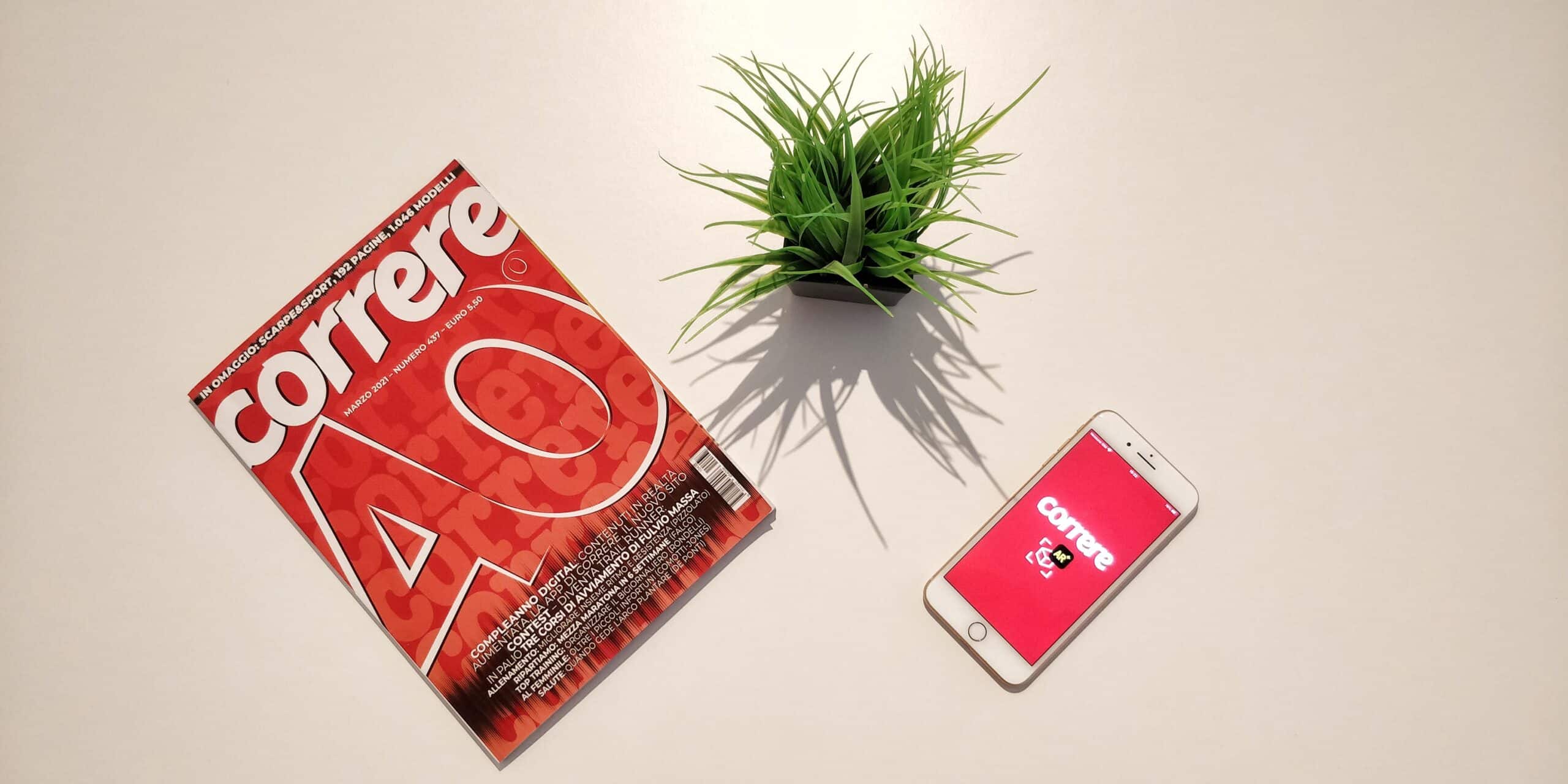
The editorial staff started adding AR content to selected pages inside the Correre magazine in order to provide additional in-depth content like interviews, highlights, training tips and more. Such content can be enjoyed by means of a mobile App that the readers can download from the iOS and Android app stores at no additional cost!
By pointing the smartphone’s camera to those pages with the AR icon, readers can download and enable videos, animations, 360 content and other media files that bring the pages to life.
Using the “Correre AR” app
More and more publishers are choosing AR-media
One of the key elements of the increasing diffusion of AR books and magazines is the accessibility of the authoring tools. The easier it is to create Augmented Reality experiences for print media, the higher is the chance of having more products like these in the publishing market.
One of such tools is AR-media, Inglobe Technologies’ Zero Coding Augmented Reality platform, a visual and easy to use tool for creators willing to quickly and effectively produce immersive content for a variety of audiences and use cases, including publishing.
When the new generation of the AR-media platform was launched, we announced some major changes to the authoring workflow, including the way the AR-media plugins work within this new release.
In particular the authoring of Augmented Reality projects has been moved from the 3D modeling software to the web platform, while the plugins are now designed to just export your 3D projects in order to make them easily and readily available inside the AR-media Assets Manager.
While AR-media allows you to easily export your models from nearly any 3D modeling software by following some simple guidelines, some users still prefer to have a dedicated export to do the job, and here is where the Autodesk 3ds Max plugin comes into play.
AR-media Plugin for Autodesk 3ds Max Highlights
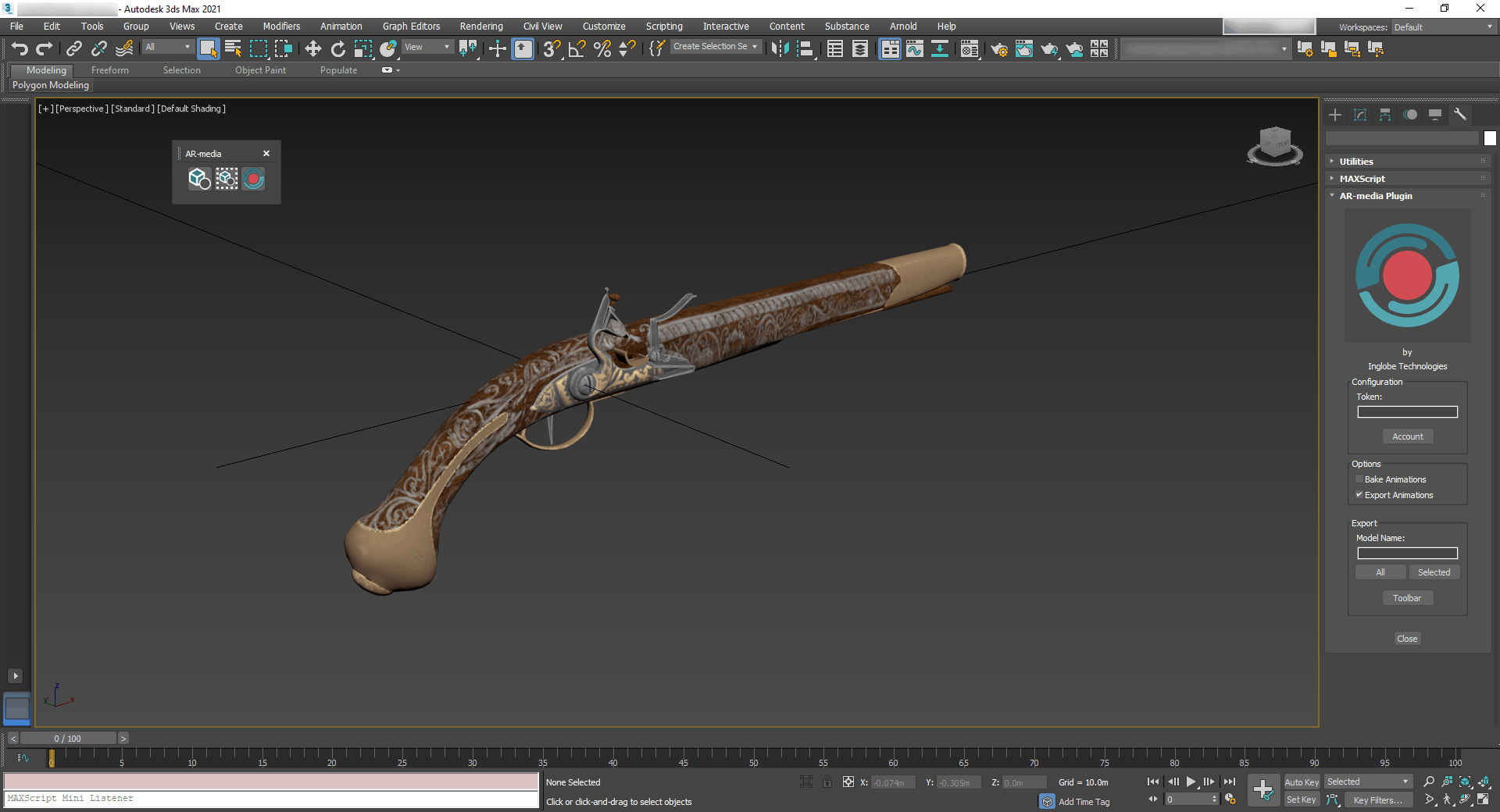
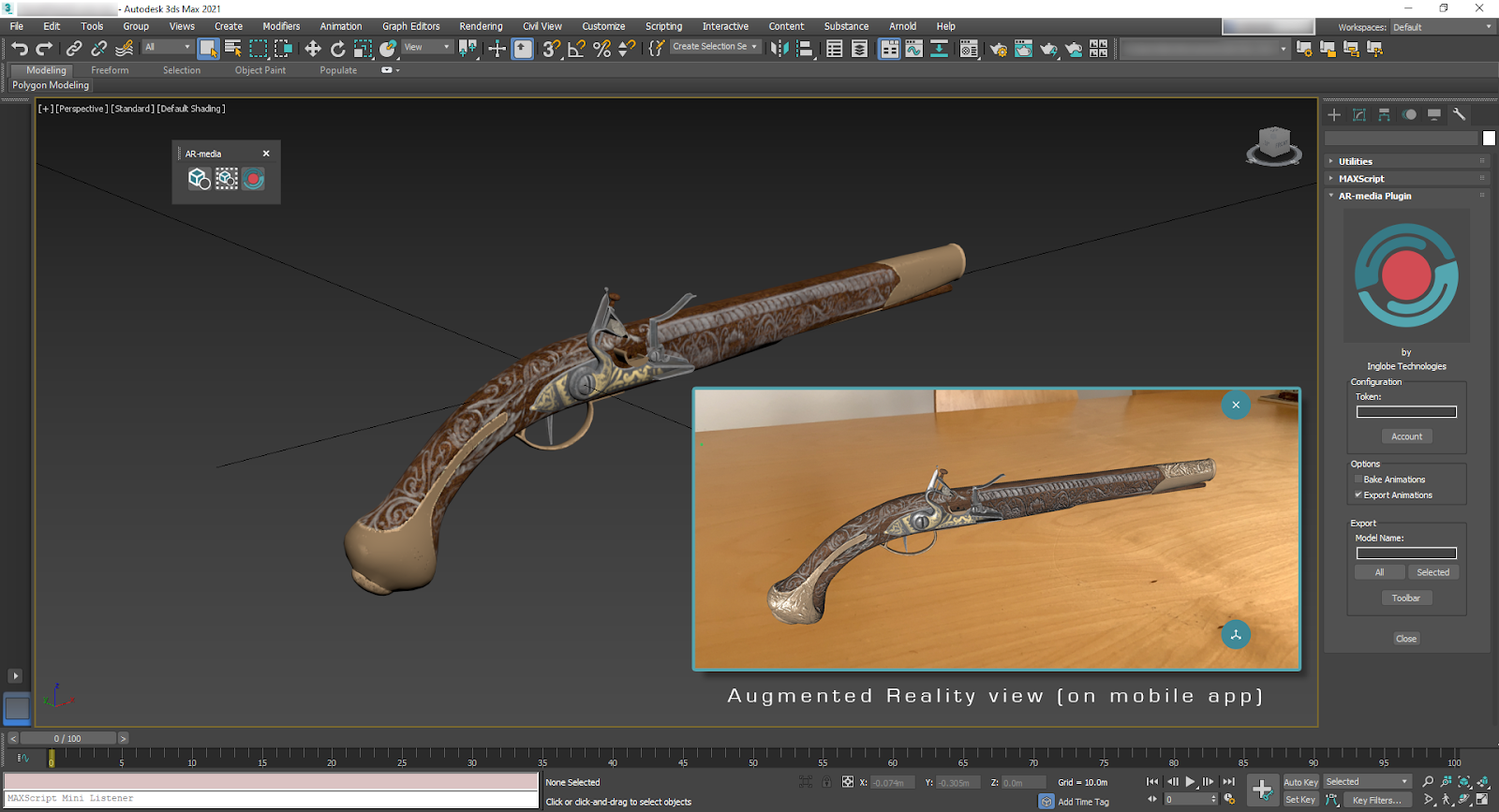
After releasing the Trimble SketchUp plugin for AR-media, we are now releasing the Autodesk 3ds Max plugin to the community. It provides the ability to export 3D projects and upload them to AR-media directly from the software by means of a dedicated toolbar and sidebar.
The plugin lets you:
Export the entire scene
Export the selection
Go to your AR-media Studio Account
Bake the animations
Export the animations
The AR-media Plugin for Autodesk 3ds Max
Download the AR-media 3ds Max Plugin from the Autodesk App Store and start creating. Also
Get your free AR-media Plan
AR-media is the ideal tool for users willing to create simple to advanced AR and VR projects for mobile devices without coding. The platform supports planar, spatial and location-based tracking, offering a wide range of possibilities in order to make your projects unique.
Among the content types supported we have images (2D and 360), videos (2D, 360 and Alpha), audios, 3D models (static and animated), HTML5 packages, buttons and CTAs.
Since the launch of the new generation of the AR-media platform last November, our team has been working hard to add more features and address the needs of entire groups of AR Creators, from Publishers to Architects, from Marketers to Teachers and many more.
We are now excited to announce that we are about to launch a new Immersive AR/VR mode, in order to let our end-users experience Augmented and Virtual Reality content with a higher level of engagement, using affordable Mobile VR headsets.
This new feature will let users switch from standard to binocular visualization for any experience available in the AR-media Player.
The new immersive AR/VR mode is something to be used in association with dedicated headsets that work in combination with smartphones. This class of low cost devices include popular options like the Google Cardboard, the Samsung Gear VR and the Zeiss VR One.
The most popular online stores, like Amazon and Aliexpress, offer plenty of such Mobile VR headsets, starting from a handful of dollars.
When picking one of these devices be aware of its ergonomics and make sure they support your smartphone’s display size. Getting a device with adjustable interpupillary distance is a plus that ensures you will be able to regulate focus.
Starting from issue #336 of February 2021, the Italian sports magazine “Il Nuovo Calcio” embraces AR in order to offer additional content in conjunction with the printed magazine.
To celebrate the magazine’s 30th anniversary, the editorial board decided to release a brand new mobile application, named “Il Nuovo Calcio AR” for iOS and Android devices, providing exclusive access to interesting and updated multimedia content that would not be possible to deliver on paper.
With this move, Il Nuovo Calcio is the first Italian sports magazine to embed AR multimedia files into its product, confirming the trend, already underway by the major publishers, to offer a hybrid product that integrates both the traditional logic of publishing with the digital ones. The final aim is to offer a renewed and more appealing reading experience.
As we discussed before, the publishing industry is undergoing great changes, mainly due to the rise of interest of readers towards digital products and channels, which is part of a general shift of information towards digital media. One of the ways to strengthen paper products’ appeal is by providing a mix between digital and traditional, which is a type of support to which people are still very attached to.
What an AR sports magazine can offer?
With the introduction of its application, Il Nuovo Calcio will be able to offer content that will enrich the reading experience, by making pages more interactive and more entertaining.
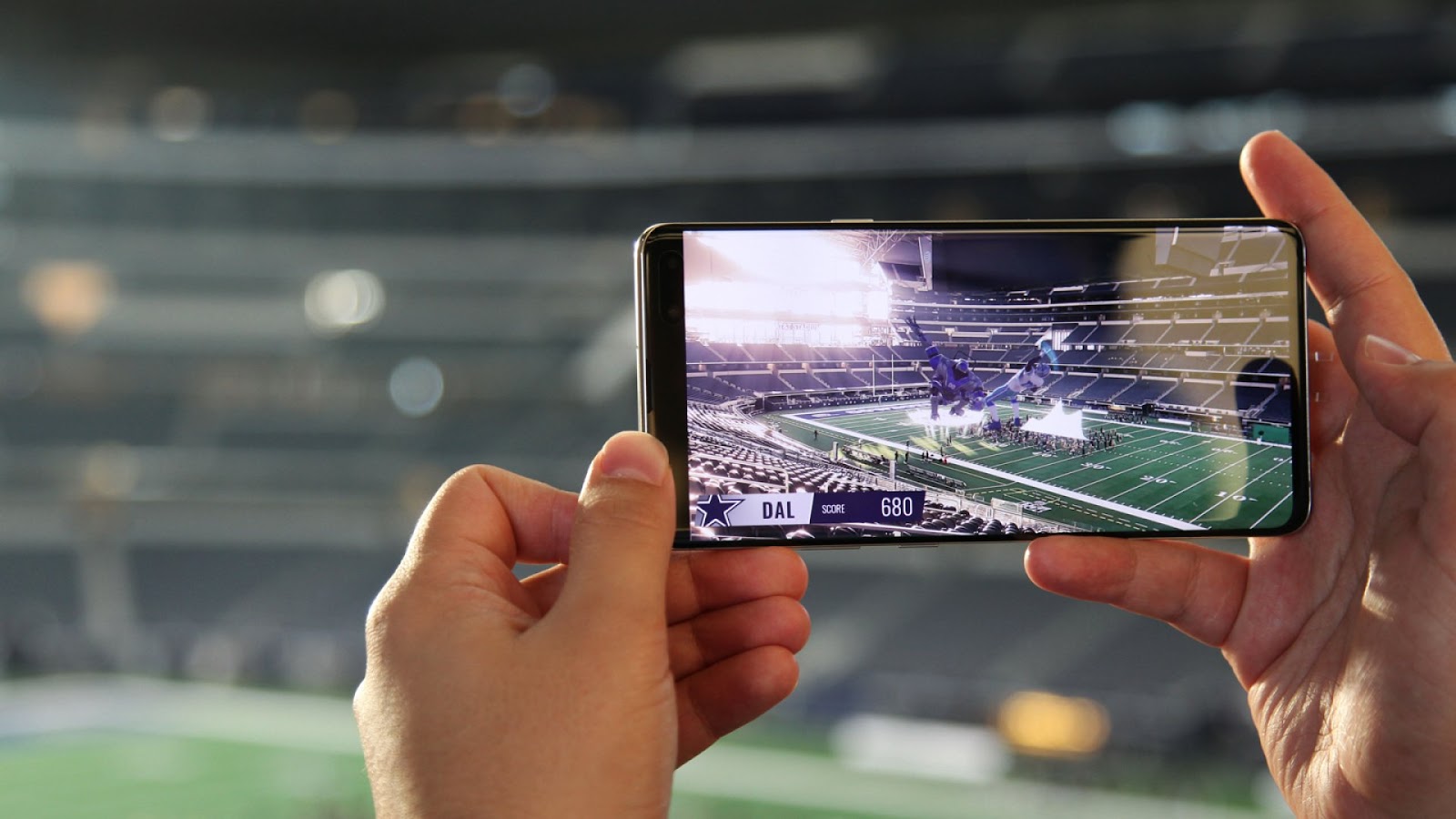
It is easy to imagine how much a sports magazine can benefit from AR content like video interviews, highlights, tactical animations, gallery of photos and even 3D models of stadiums or other sport facilities.
Before this hybrid model was even possible, readers used to read paper products and then they explored the topic more in depth using the internet. Often publishers themselves provide indications and website references where a topic can be studied in depth, when they haven’t the chance to embed it directly into the product.
Finally with AR and VR, publishers have more tools to deliver their content and to provide a truly fulfilling experience.
One of such tools is AR-media, Inglobe Technologies’ Zero Coding Augmented Reality platform, a visual and easy to use tool for creators willing to quickly and effectively produce immersive content for a variety of audiences and use cases, including publishing.
2020 will certainly be remembered for a long time as the “annus horribilis” for Culture and Tourism worldwide. The ongoing pandemic has profoundly impacted on this sector due to the limitations on travel, lockdowns and social distancing measures. Almost all the location-based VR/AR experiences have been shut down because of Covid-19 and Cultural Heritage institutions, including Museums and Archaeological sites, have shifted to new ways of presenting their pieces of art. Notwithstanding these well known difficulties, our disruptive project, Circo Maximo Experience, has been recognized as the “Best Innovative Venue” in 2020 in the context of the “Remarkable Venue Awards”.
The 2020 Remarkable Venue Awards Global Winners
Established in 2017, the Remarkable Venue Awards is an initiative created by the leading online ticketing platform “Tiqets” to celebrate the best museums and attractions around the world.
Since the first Remarkable Venue Awards, awards ceremonies have taken place annually in Amsterdam, Barcelona, London, New York, Paris, and Rome. The 2020 Remarkable Venue Awards was a global, online event which celebrated seven categories of awards in six countries: UK & Ireland, France, Italy, the Netherlands, Spain and the United States. The selection of the winning venues is based on the customer reviews of venues on Tiqets.com. For the first time, the Remarkable Venue Award winners of each country went head-to-head to compete for a global title. 6,000+ customers voted for their favorite museums & attractions of 2020 to crown the Best of the Best.
Circo Maximo Experience is the Best Innovative Venue in 2020
Circo Maximo Experience is the first outdoor permanent Mixed Reality experience that engages visitors in an exciting journey through the history of Circus Maximus in Rome, the largest and most iconic entertainment venue of the ancient times. By wearing Mixed Reality headsets, visitors are able to admire the monument across all the transformations it went through during the different ages. Circo Maximo Experience is a particularly complex engineering challenge that has been designed with the user’s safety in mind. Our “safety-by-design” approach allowed the venue to keep working also during the pandemic, thus making it the only publicly accessible Immersive Mixed Reality experience during these hard times. Additional measures were adopted in order to make the experience safer. The unique harmonization of safety, content, site and technology made it possible for the project to be crowned with this award.
A more sustainable and technologically advanced future for Cultural Heritage
The Covid-19 crisis has brought to light the need for a profound transformation of the way museums and cultural heritage sites are accessed. There is little doubt, today, that we need a more sustainable and technologically advanced approach to Cultural Heritage valorisation. Thanks to its market validation, Circo Maximo Experience is set to become a model that will inspire other Cultural institutions to embark in similar digital transformation projects in the future.
The publishing industry has undergone a massive transformation in the last decade, with mobile and portable devices opening the door to digital content that wasn’t as easily and freely available before. E-books, online magazines and other multimedia content now abund and seriously challenge the supremacy that traditional and paper based products had before.
Not only digital media challenged traditional media in the adoption rate, but it is also becoming increasingly attractive for advertisers that are shifting their budgets towards digital channels year over year.
One of the reasons behind this shift is that not only digital media attract more users, but it also allows advertisers to target their message to a better profiled audience.
In some countries digital advertising revenues already surpassed traditional advertising and where it didn’t happen yet, it is set to happen in 2021.
The solution to changing preferences in the Publishing Industry
Most of the major consulting companies agree that publishers and editors should reposition their products and start mixing innovative and engaging experiences into their traditional offer.
A lot of people are still attached to paper products and rather than completely replacing them, they’ve started making it complementary with digital products.
Digital and Paper can live together as they offer profoundly different user experiences. So why not contaminate paper products with engaging content that readers typically expect to experience only on digital products? To us that is the key to rejuvenate the image of paper products and making them more attractive. There are plenty of options to achieve this goal and we believe that Augmented Reality plays a crucial role in this process.
Augmented Reality Books
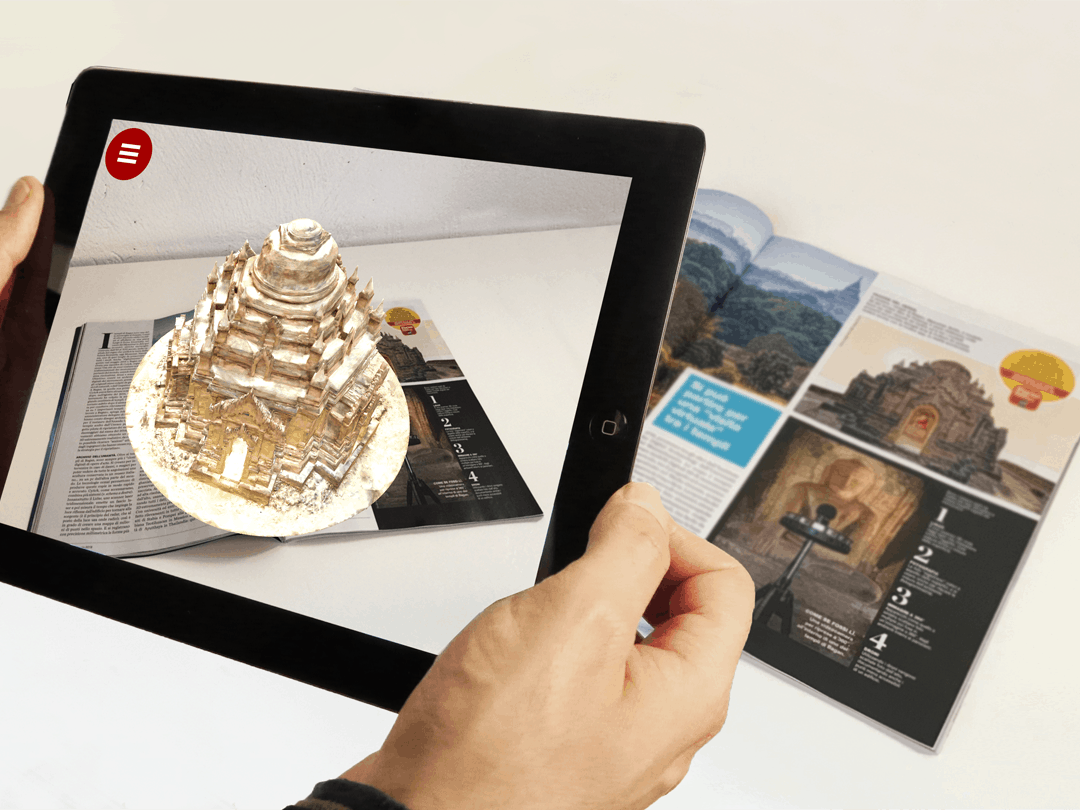
There are certain book genres that would benefit a lot from an integration of multimedia content enjoyed in Augmented Reality. Just think about technical and scientific books with a lot of images, schemes and illustrations, they may be complemented by videos, animations, infographics and 3D models, making the reading and learning process much more effective.
Credits: Eosliber by Ripensarte
Augmented Reality Magazines
Today we have quite a few examples of magazines that have embraced Augmented Reality as a part of their content offering. Telling a fact or a news with the aid of interactive media provides the reader with an experience that is a hybrid between the traditional and the digital ones.
Just here in Italy we have quite a few examples of magazines that are offering AR content to the readers with Focus by Mondadori being the most popular one, with over 100.000 readers having downloaded the AR app to enjoy the multimedia content.
Augmented Reality Newspapers
Newspapers are probably the category that lost more ground in sales because of the shift of many users to digital channels to stay informed. Paper newspapers have to be printed every night and distributed in the whole country in a matter of hours, making it a continuous challenge.
Editorial offices have to work very quickly to get the work done in time and sometimes, as the newspapers are being printed, they are already out of date because something else happened.
Augmented Reality could help editors to provide newspapers with up to date information, since the AR content can be prepared and/or updated, even once the newspapers are out.
Credits: AdvisionPlay
Augmented Reality School Books
Just like technical and scientific books, school books are often full of images, illustrations, infographics, that serve the purpose of helping students to understand more effectively what’s being taught in that book.
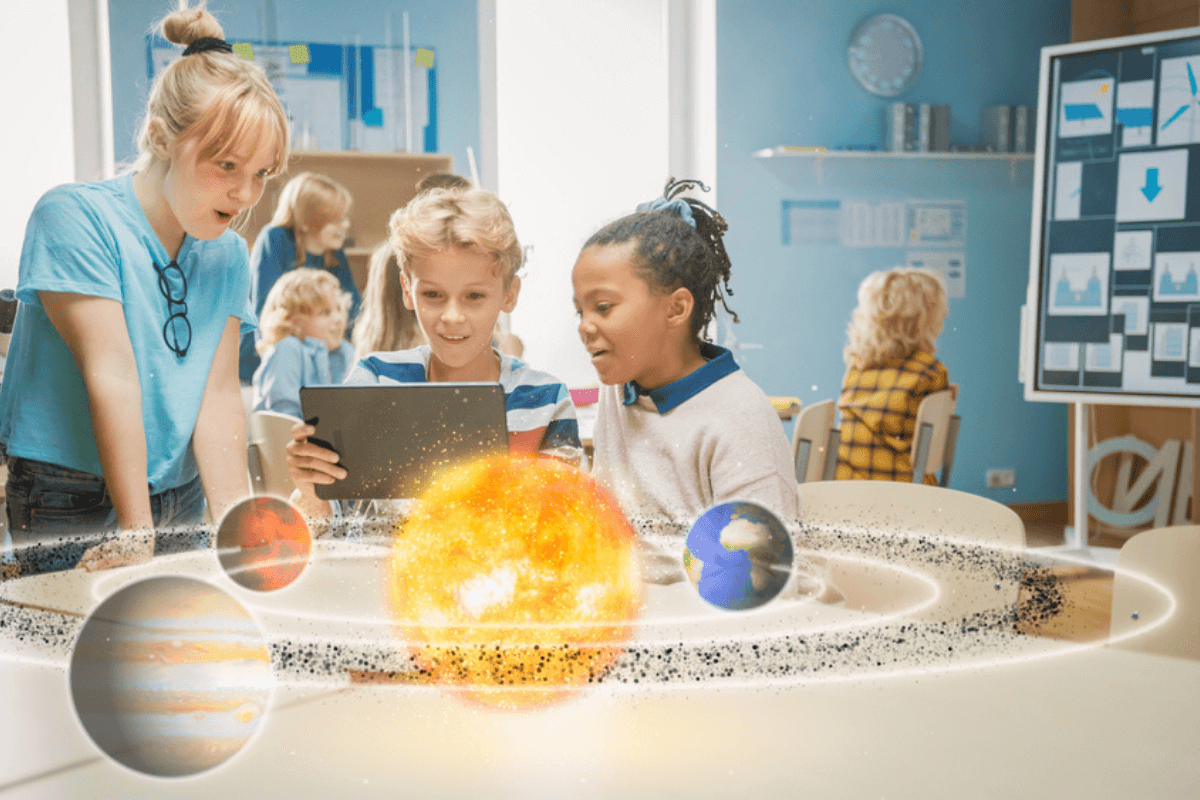
Imagine students studying the solar system while pointing a device to their book and watching the animation of the planets moving around the sun in 3D, or also studying history by watching small clips taken from documentaries that provide appropriate in depth information related to those facts.
Credits: Visible Bodies
How AR-media can support Publishers in the transition
Augmented Reality can support publisher transition to a hybrid model of traditional and digital media, offering paper products with additional multimedia content attached to a certain number of pages.
With this approach readers can continue to enjoy a product they are attached to, while benefiting from the innovation of digital content like videos, 3D models, 360 photos and videos and so on.
Moreover, with the aid of data analytics and push notifications, publishers can build and nurture a relationship with their readers and have a better understanding of their preference in terms of types of content, by analyzing which pages have been scanned the most and how long the reader spent on each one of them, that are typical tools available to online publishers.
In this scenario AR-media is the ideal tool to build and publish Augmented Reality projects for Publishers, as it requires no coding skills and allows the user to create AR content with a visual, simple workflow. Get a free AR-media account and start creating, you can rely on detailed tutorials and documentation available in the support section.
For so many of us 2020 has been a year out of the ordinary for so many reasons, both personal and professional. We changed so much our lifestyle and coped with risks and dangers never encountered before, and we all hope 2021 will be the year of hope and the return to a better and safer normality. The brutal changes introduced by the pandemic forced the society to introduce new solutions in so many fields, in order to guarantee the continuity of activities like work and school.
In 2021 we expect to see the strengthening of some Augmented Reality trends that started in 2020 or even before and at the same time the emergence of new trends that will shape how this market will evolve and change in the next few years.
Augmented Reality confirmations of 2021
In 2020 thanks mainly to Covid-19 restrictions we have witnessed the strengthening of technologies and ways of working that were introduced in the last few years in an effort to help the workforce to fix problems more efficiently and reduce business trips.
One of such existing trends is the rise of Remote Assistance and Video Conferencing tools. It is quite predictable that we will start to see additional efforts to bring even more Augmented Reality features in this application domain, including holographic avatars in 2021.
Mobile AR is another field where AR shined in 2020 because it allowed to partially fill the gap of not being face to face or in a specific place by adding immersivity to solutions in areas like Industry 4.0, Education, Cultural Heritage and even Marketing events and exhibitions.
We expect to see even more Mobile AR adoption in many industries because, unlike wearable devices, smartphones and tablets are widely available and that makes mobile AR a great tool for B2C applications.
Augmented Reality new entries of 2021
At the moment we can’t be 100% sure of what kind of year 2021 will be for business since -as we go into the new year the virus is still there- most of the restrictions are still in place and we all expect that at some point, hopefully around the half of 2021 things will slowly go back to business as usual, even if some behaviours and habits will probably persists in the future (e.g. tendency to reduce low added value business trips and higher attention to safety issues both in public and working environments).
What we know for sure instead is that, technologically speaking, we are getting ready for an important jump especially in telecommunications and artificial intelligence sectors.
The widening telco infrastructure will bring 5G to millions more people in 2021, enabling numerous additional AR/VR use cases that were not possible before.
The exceptional speed and the reduced latency that 5G guarantees will allow companies to build apps and software that will access to AR content on demand and almost instantly, enabling entirely new use cases of real time access to information and content.
Parallel with the emergence of Mixed Reality Headsets with a better market fit, Smartphones will play a crucial role in this revolution and nearly any user will be capable of streaming ultra high quality videos, highly detailed 3D models and other challenging content on their device. This scenario will make it possible to create applications in Education, Publishing, Tourism, live Sport events, that were not possible before. Even the further development of an AR Cloud accessible to all will be a step closer.
In 2021 we’ll probably see even more intersection between AR and AI, where Augmented Reality will be the visualization layer and Artificial Intelligence the computational one.
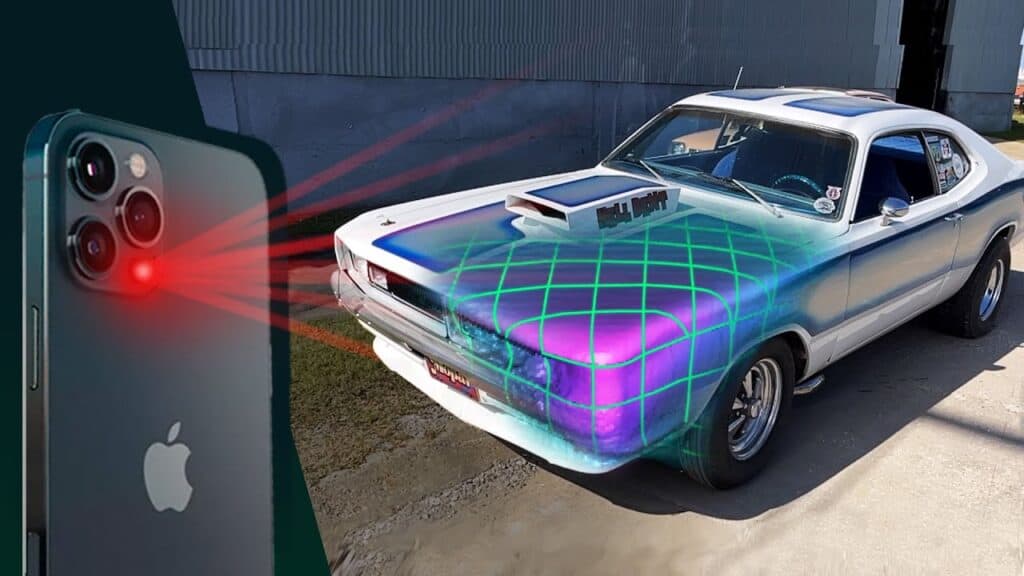
Finally, with the recent release of the iPhone 12 Pro, with an embedded Lidar sensor, Apple brought a powerful tool, based on the laser technology, to the masses. A Lidar is used basically to assess the depth of an environment, to recognize objects better and will help a lot with mobile photography as well as with Augmented Reality apps.
In particular we expect to see a massive increase in Photogrammetric Reconstructions in 2021 since the iPhone 12 Pro helps the user to capture objects from the world, isolate them and create a digital copy that could be used in dozens of use cases.