Last week we had the pleasure to be invited to the “Data Driven Innovation for Industry 4.0 Enterprises” event hosted by Marconi University in Rome. The topic involved several entities and companies telling their Industry 4.0 practical experiences in different fields including law, consulting and manufacturing.
As Inglobe Technologies we shared a couple of projects we made in the industrial sector, explaining which problems led the companies to pick Industry 4.0 technologies to solve their problems and finally we shared results and implications of using Augmented Reality in a manufacturing environment.
Artificial Intelligence (AI) is, today, one of the hottest technology topics across different business communities thanks to the growing public attention towards the technical achievements in the field and the ongoing investments both by Governments and Tech Giants. AI is already dominating the debate around innovation and digital transformation and it is expected to have an even larger impact in many sectors, including industry, finance, healthcare, education and safety.
The way we learn and work will drastically change in the near future, that means we need to rethink our educational system and to prepare for the challenges of the future by planning investments and fostering the research around topics such as Machine Learning, Perceptual Computing, Cognitive Robotics and Language Understanding.
The AI market is worth about 5 billion dollars and it is expected to decuplicate its value within the next 5 years, a truly impressive growth rate! Some current major uses of artificial intelligence include image recognition, object identification, detection, and classification, as well as automated geophysical feature detection. The largest proportion of revenues come from the AI for the enterprise applications market. (Source: Statista)
Artificial Intelligence Market Value (Statista)
Italy is the fifth largest producer of most-cited scientific papers on machine learning after the United States, China, India and the United Kingdom (Source: OECD) That means that despite the lack of a central national strategy on AI, like the one the French Government is adopting, Italy is one of the most advanced countries in terms of research and development, counting many researchers and organizations working on AI-related topics.
The Institute of Cognitive Sciences and Technologies (ISTC-CNR), a leading Italian research center on AI, in collaboration with other organizations such as the Italian Association for Artificial Intelligence (AI * IA) and the Italian Association for Machine Learning, has recently designed an educational program called “Advanced School in Artificial Intelligence” (AS-AI) in order to help post-graduates and professionals face the fast-growing demand of the job market for new skills and competencies related to advanced fields of Artificial Intelligence.
Inglobe Technologies is proud to support this initiative by sponsoring the School and by offering the course of “Visual Perception and Spatial Computing” which will be taught by its Chief Research Officer, Luigi Freda. This course will provide an introduction to visual SLAM and real-time techniques, focusing on how to:robustly localize a camera system with respect to the environmentcompute a dense 3D reconstruction of the surrounding scenesegment the obtained 3D model by using both geometry and semanticsuse deep learning for empowering advanced scene understanding and improve SLAM performances
The course will present emerging spatial AI techniques which have many potential applications, including mixed-reality, virtual reality, and cognitive robotics.
During and after the courses, participants who will enroll in the Advanced School in AI will be involved in an internship program with the partners of the program, organizations and companies, including Inglobe Technologies.
AS-AI is a great opportunity for the participants to start building a valuable professional network while at the same time empowering their professional AI skills and competences. To enroll in the program, please consult the Enrollment procedure and the requirements applicants must have in order to join the Advanced School in AI → https://as-ai.org/apply/
As you may now today the GDPR (General Data Protection Regulation) comes into force. It is a European Union law on data protection and privacy for all individuals within the EU and the European Economic Area. The GDPR aims primarily to give control to citizens and residents over their personal data and to simplify the regulatory environment for international business by unifying the regulation within the EU.
At Inglobe Technologies we have updated our Privacy Policy and Terms of Service to make them compliant with the new law. Moreover we have adjusted our internal processes regarding data management to make them GDPR compliant.
You can read the aforementioned updated documents and please do not hesitate to contact us for any inquiries about your data at gdpr@inglobetechnologies.com
The discussion will be about how companies represent a huge potential pool for the adoption of new technologies and how they can find the right balance between benefits that can be achieved in terms of processes and return on investment. With the new workflows, industrial productivity will certainly evolve in many ways and more workers will be able to increase their personal skills. The Panel will analyze the potential enabled by the new software / hardware tools in the Industry 4.0 perspective.
Graziano Terenzi, CEO of Inglobe Technologies will be part of the Technical Jury of Technology Hub that will award the prizes to the participants in the Hackathon VR initiative organized by IMRA, the Italian Mixed Reality association.
EICS consists in two days of conferences given by leading figures of the IoT world, important corporation CTO and professionals in the field which will illustrate the most recent technology’s frontiers and their application area. Conferences are about four different subject matter: “Architecture, Art and Design“, “Entertainment“, “Healthcare” and “Industry 4.0“.
Inglobe will be represented by Alessandro Terenzi, CTO and Co-Founder, who will give a talk in the Industry 4.0 track.
The Talk at EICS
The title of the talk is ?Authoring & Integrating Augmented Reality Experiences for Industry 4.0?, this is the description: “Terms like Industry 4.0, Smart Factories, Internet of Things are spreading today. When talking about modern manufacturing and production systems in general, they are becoming, without any doubt, baseline but, as a matter of fact, for many decision makers these terms still remains somewhat vague and more often than not implementing such ideas in a real context results in a hard start and in an inevitable failing end which, in turn, results in a waste of time and in missed opportunities. Considering the wideness of the topic, without any presumption of completeness, the speech aims to describe how two of the hottest technologies available today, specifically Augmented Reality (AR) and Remote Assistance (RA), can help companies in implementing Industry 4.0 concepts in a meaningful and effective way. Some of the latest advances in AR will be presented with a particular focus on how they integrate in real production environments. Part of the speech will address crucial topics related to the creation of AR experiences and the integration of AR systems with existing workflows. Finally a few case studies will be discussed along with the lessons learned while implementing AR solutions in real world productive settings.“
Inglobe has been selected among the 5 winners of the Terna Next Energy call managed by Cariplo Factory’s GrowItUp and will now enter the Engage stage which aims at starting a collaboration phase between Terna and the companies in order to identify a set of challenges to be tackled by means of the proposed solutions.
12 out of the 85 companies which joined the call were invited to pitch in Rome during the Selection Workshop in front of the Terna Management. Right after the pitch session, 8 of the participants were invited to one-to-one interviews with a delegation of Terna managers and finally 5 of them were selected for the “Engage” stage.
During the pitch session Inglobe presented its technological solutions for the Utilities, that include, for example, the Hyperindustry AR Platform, and identified some of the Terna processes on which industrial AR could have a positive impact.
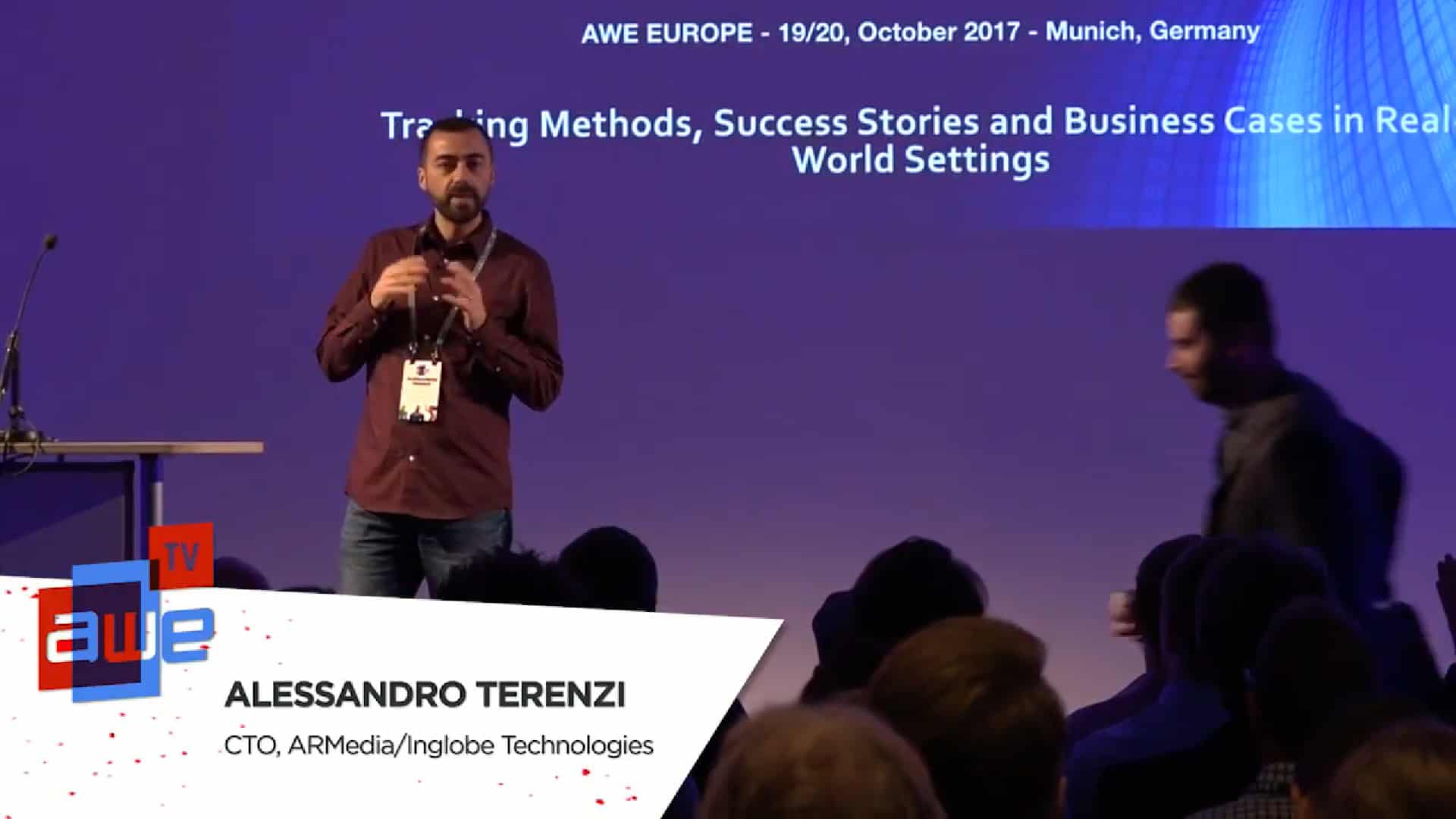
During the Creators Track at the recent AWE Europe 2017event in Munich, Inglobe Technologies? CTO Alessandro Terenzi gave a speech about?Object Tracking for Augmented Reality, explaining pros and cons of each approach and the technical workflow behind the creation of 3D targets of Augmented Reality applications, especially in an industrial environment.
Huawei, China’s cellphone and connectivity technology giant, and Inglobe Technologies, the leading Italian Mixed Reality company, continue their collaboration in developing Augmented Reality solutions to make operations more efficient. The collaboration aims at providing field engineers with innovative tools meant to reduce execution time and errors. One of the products on which a post-installation check solution has been deployed is the SUN2000-25KTL inverter, a piece of equipment employed in large industrial photovoltaic fields.
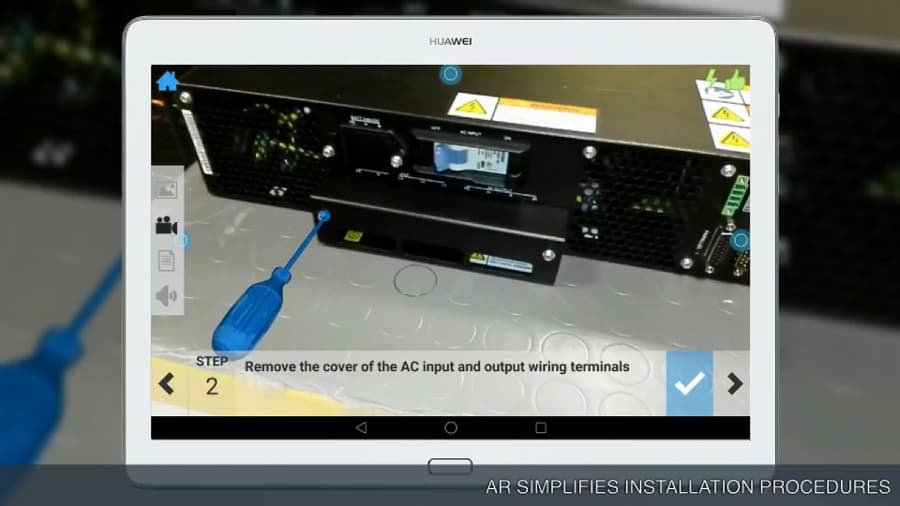
A more recent application the Chinese manufacturer focused on regards the Huawei UPS2000-G installation procedures, used to power the network infrastructure support equipment. This scenario requires the technician to use step-by-step instructions with Augmented Reality graphic elements and animations to perform assembly and wiring operations, quickly and easily locating the intervention areas on the equipment and performing her technical assignments. During the process, the technician is supported in choosing the most suitable tools for executing individual tasks.
The solution has been implemented by means of HyperIndustry. Hyperindustry is Inglobe Technologies’ Augmented Reality Platform for industrial enterprises. It is composed by two modules: a web-based backend that allows you to run the procedures authoring workflow; and a mobile client that can be deployed on iOS, Android, and wearable devices, allowing field technicians to receive directly assignments on their own devices and to synchronize the outcome of their activities on the platform.
On October 19th and 20th 2017, the European edition of AWE, Augmented World Expo, the most important event in the world on the topic of Mixed Reality, will be held in Munich, Germany. AWE Europe 2017 is structured in a number of activities that include keynote speeches, specialist speeches from AR and VR industry experts, developer workshops, pitches of some of the most promising startups, and more.
This edition of AWE Europe promises to be particularly interesting as it is the first appointment that follows the release of ARkit by Apple and ARcore by Google, namely the tools that have been animating the debate over the past few weeks, demonstrating the potential of native mobile AR in countless demo applications that developers around the world have begun to share. Another key topic will be the so much debated AR Cloud as a viable scenario of mass adoption of the technology.
As usual, both for the American and European editions, Inglobe Technologies will take part in the conference with a speech by our CTO Alessandro Terenzi on “Practical Object Tracking for Augmented Reality“, a session devoted to exploring the methods and bounds Object Recognition with AR, in a number of areas spanning from Cultural Heritage to Smart Manufacturing.
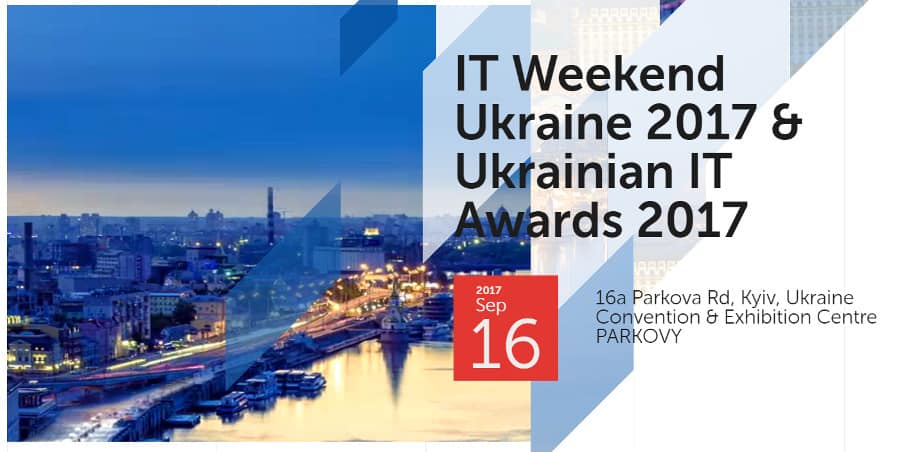
The annual IT Weekend Ukraine has been bringing together 1000+ attendees to dive into the world of innovations together with global tech experts. During 5 years, the event presented speakers from SAP, Skype, IBM, Intel, HP, Dell. For 2017 IT Weekend Ukraine will be exploring digital transformation by showcasing the latest developments in Robots & Machines direction with a focus on Artificial Intelligence, Virtual and Augmented Reality, Big Data and Data Science as well as Bots and Machine Learning.
We proudly take part to the event and will be contributing with a speech about “Practical Object Tracking for Augmented Reality“, a talk about the State of Art of Augmented Reality technologies with a focus on the latest achievements related to 3D object tracking. The typical processes involved in the creation of robust 3D trackable data will be discussed using both CAD-based and photogrammetry-based approaches, showing the strengths and weaknesses of each. Practical use cases will be discussed with meaningful examples taken from the Industry, Cultural Heritage, AEC, Gaming and Publishing sectors.
A few weeks ago Super Ventures, an Augmented Reality fund and incubator based in San Francisco, published the first comprehensive AR landscape map in order to classify the most promising startups and companies in the ecosystem.
The result is a map organized into 6 different areas: applications; tools; devices, input, output, components.
We can’t consider Augmented Reality just as a promising technologies anymore, not with such an ecosystem and not now that even the giants are jumping on the bandwagon with innovative solutions, Apple being the very latest with its ARKit. It is much more than promising. All the hype around Mixed Reality technologies may attract many investors, but their journey in understanding and sorting all the possible opportunities is not an easy one. This is why Super Ventures took the time to identify the opportunities in relation with the belonging field, be it hardware or software.
Inglobe Technologies has been included in this AR Landscape map in the “Tracking SDK” section inside the “Tools” area thanks to its AR-media SDK and object tracking technologies. Actually Inglobe also develops authoring and publishing tools for Industry 4.0, New Media and Cultural Heritage.
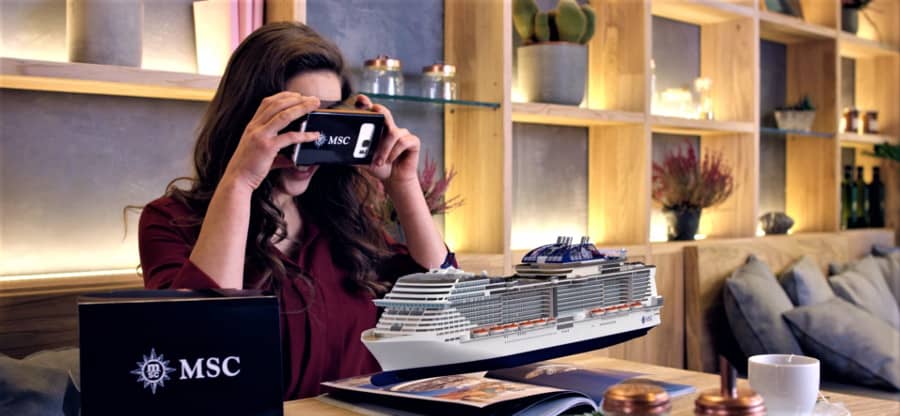
Last year MSC Cruises, supported by Axed Group in collaboration with Inglobe Technologies, Onemore and D2B, created the first mixed reality catalog for sale of cruises through the travel agency channel. The experience consisted of displaying 360° photos and videos relative to the MSC cruise ship environments and to the locations of the various routes available. Potential customers could try to preview the cruise experience from an entirely new point of view than that offered so far by the traditional catalog.
This year, for the 2018-2019 edition, MSC Cruises has gone further and wanted to offer an even more immersive experience by adding Augmented Reality to Virtual Reality, thus offering the first Mixed Reality catalog for cruises in the world.
The application allows users to rely on their mobile devices to view 3D models of MSC ships, which seem to emerge from the paper catalog pages coming to life and offering an interactive perspective. In fact, you can access the panoramic views that cast people inside the environments of the ship by enabling an immersive exploration thanks to the selection of hotspots available in AR on the three-dimensional model of the ships.
Google Cardboard visualization is also available, for an even more immersive user experience.
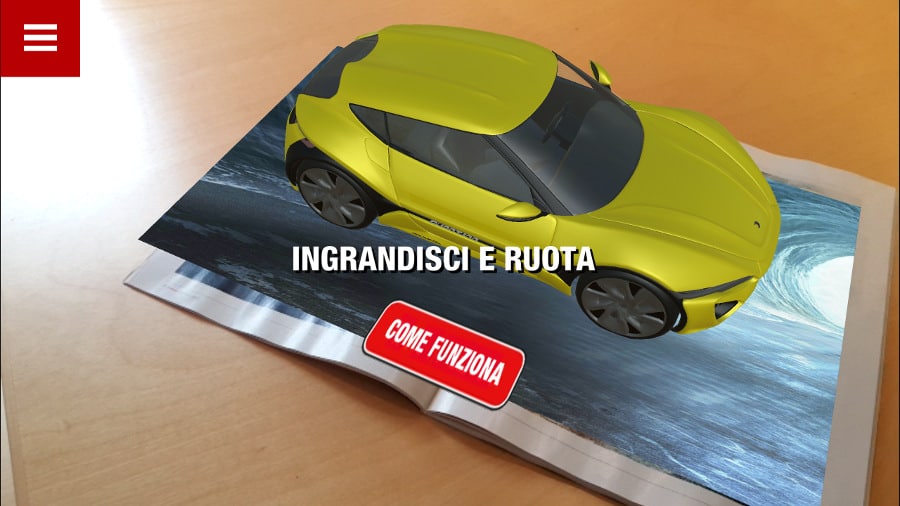
On december the 20th 2016 issue #291 of Focus was released on newsstands, the historical magazine published by Mondadori which explores topical themes such as science, innovation, behavior and culture, which is also the most read magazine in Italy. The novelty is that starting from this issue, Focus is enriched with immersive content with augmented reality, making the reading experience even more engaging and exciting.
How does the Augmented Reality magazine works
Focus readers with a smartphone or tablet can download from the stores the app Focus Realt? Aumentata for Android and iOS, which enables content in AR by simply framing the pages of the magazine to which are associated ?augmented? contents. The cover of issue #291 of Focus and several inside pages of the Augmented Reality magazine come to life by showing the reader immersive multimedia experiences related to the contents.
We are talking about 3D animations, 360? videos, thematic tests, mini games and panoramic photos that add information and understanding to the text and images available to the reader, which is not limited to view only, but can interact with and activate a series of additional content according to her curiosity.
Inglobe Technologies innovation in the solution for Mondadori
The Augmented Reality technology is provided by Inglobe Technologies, which for ten years has been involved in the development of pioneering AR solutions. Back in 2007, when the advent of smartphones had not yet occurred, Inglobe had launched the idea of an AR book on the solar system. A few years later, in 2011, Inglobe has released a whitepaper on innovation in publishing through Augmented Reality.
Today, almost 10 years later, thanks to the advent of the mobile and AR technologies into the mainstream, Focus Mondadori has embarked on a path of high-impact product innovation. In this context, Inglobe oversaw the entire development of the apps for Android and iOS working on contents edited by Mondadori.
The technical features of the project include the recognition of planar images -the pages that trigger AR experiences-, gamification experiences, which allow readers to interact with contents, 360? photos and videos and a range of interactive and 3D tests.
Augmented Reality in Publishing and the future issues of Focus
The path taken by Mondadori with the introduction of Augmented Reality in one of its leading editorial products highlights?two trends in the publishing industry: the first one concerns the strong need to give new life to this medium that always suffers more competition from new media and new ways of information fruition; the second one concerns the possibility of offering highly engaging content to readers thanks to the opportunities made available by the Mixed Reality. The?leading players in Publishing?are likely to move towards this direction if they want to keep an updated and attractive product for readers.
Issue #291 of Focus’s Augmented Reality magazine is not a random experiment, but a path that will continue in the future with the regular publication of monthly issues enriched by augmented reality experiences, providing for the adoption of a technological solution specially designed for the publishing industry. We look forward to the next issue #292, to be published at the end of January.
The manufacturing environment is a great source of new ideas, especially when it comes to efficiency gains. Starting from the end of the 80’s the lean thinking approach and its methodologies have changed the way factories work and perform, targeting waste and giving people the most appropriate training to give their best.
The increasing digitalization of industrial processes has led to the formalization of theIndustry 4.0 trend, which tries to group a bunch of new technologies which are capable to bring manufacturing operations to the next level.
Among the lean methodologies, World Class Manufacturing (WCM) has conquered many leading manufacturers worldwide which implemented it in their processes and obtained consistent performance improvements.
World Class Manufacturing Pillars impacted by Augmented Reality
The World Class Manufacturing methodology is structured into 10 technical pillars and 10 management pillars, each one focusing on a specific aspect of the industrial organization.
While Augmented Reality is potentially useful to a wide range of scenarios, what we know for sure is that the technology is capable of making a great impact on the following WCM pillars:
Autonomous Maintenance
This pillar refers to the set of simpler maintenance tasks that can be carried out by the machine operators without a dedicated intervention from the maintenance department. It involves operations like cleaning, lubrication and inspection. Autonomous Maintenance reduces pressure on maintenance professionals and avoids the machines are run up to the breaking point. In this context Augmented Reality is of great help in the process of training operators to perform simple maintenance tasks they never run before.
Professional Maintenance
While Autonomous Maintenance is performed by machine operators, Professional Maintenance requires a higher level of specialization and a dedicated maintenance team. PM concerns taking care of machine breakdowns and more complex preventive and predictive maintenance tasks. Augmented Reality is particularly suited to support PM activities as a training technology as well as a step by step support in complex maintenance procedures. It is also very useful at standardizing procedures referred to same activities, but that are performed differently at different locations, something not uncommon in the case of companies with widespread operations.
People Development
Tightly linked to the development of human resources skills is the PD pillar. When the workforce has been involved and when training gaps have been identified, then Augmented Reality, and Virtual Reality as well, come into play. AR has proven to be an excellent technology to speed up the learning process in many fields, including industrial training. The people to be trained has the chance of learning something new directly on the field with the aid of visually presented information.
How to implement AR into industrial processes
Companies who understand the huge potential of Augmented Reality in industrial contexts and may want to evaluate whether the technology works as expected in their context, should take into account the following industrial roadmap we suggest.
According to this approach companies should consider to start with a pilot project on a real application case inside the company in order to experiment and assess if AR delivers what expected in terms of benefits. After a successful pilot the company will be ready to extend the technology to other use cases in a structured manner using an appropriate software platform.
For these purposes take a look at our HyperIndustry platform, designed to provide manufacturers with a vertical tool which enables the power of Augmented Reality to support multiple operations in the shop floor.
Inglobe Technologies recently released a new version of its popular AR-Media SDK, now available as version 2.1.0. New sophisticated features, alongside with bug fixing and general improvements, are now implemented into the SDK in order to satisfy even the most demanding developers, willing to create memorable augmented reality experiences.
AR-media SDK 2.1.0 release highlights
Multiple object tracking
This is a new unique and exciting feature of the AR-Media SDK, which enables you to recognize multiple objects at a time enabling the respective contents at the same time. Multiple object tracking works with 3D objects as well as with planar images and a mix of the two. New advanced augmented reality experiences are now possible thanks to this feature.
Android camera performance
Camera performance on some Android devices has been improved and made much more smooth.
API documentation
AR-Media SDK API documentation is now complete and exhaustive. Check it out.
Upcoming features
Even though only available upon request, by the moment, the SDK will soon include a specific support for Samsung Gear-VR, enabling the creation of applications which can run on such device in Augmented Reality mode! This feature has been deployed in a relevant project in which we recently took part in the field of cultural heritage enhancement.
Immersivity is referred today as one of the most important attributes of high quality Virtual Reality experiences. Indeed, much attention has been recently devoted to technologies that enable immersivity mainly as a consequence of the widespread adoption of Virtual Reality headsets, such as Google Cardboard, Oculus Rift, HTC Vive and Samsung Gear. Seldomly the term ?immersive? is used today to make reference to Augmented Reality experiences, as, notwithstanding the promises, they mainly run on smartphones or not yet fully developed Smartglasses. This happens mainly because of the limitation of current AR displays.
On Monday 10th October 2016, the city of Rome together with Zetema, one of the most important Italian cultural heritage management organizations, launched and opened to the public the “ARA as it was“, namely the first large scale augmented reality valorization project for the roman cultural heritage. Hosted in a beautiful building designed by the famous American architect Richard Meyer, Ara Pacis is the symbol of the power exerted by the Augustan lineage across the Roman Empire.
The Project
The project has been developed by ETT Solutions in collaboration with the Augmented Reality vendor, Inglobe Technologies, that provided the AR technology that made it possible. Basically, the Ara Pacis Augmented Reality system is based on immersive AR headsets that work in association with an Application that assists visitors through the discovery of the monument and its history.
We expect that this is going to be one of the most important benchmarks for Augmented Reality projects for Cultural Heritage as Zetema has already a business model around this project. Paying visitors are provided with Immersive Smartglasses, namely Samsung GearVR, powered by a Samsung S7 smartphone that runs the “Ara as it was” application.
The application is based on a unique feature of Inglobe’s AR technology that provides high performance 3D Tracking on a variety of devices, including Samsung Gear VR. This feature, together with the other features of the technology by Inglobe has made it possible to develop such an incredible and unique experience.
The Experience of an immersive Cultural Heritage site
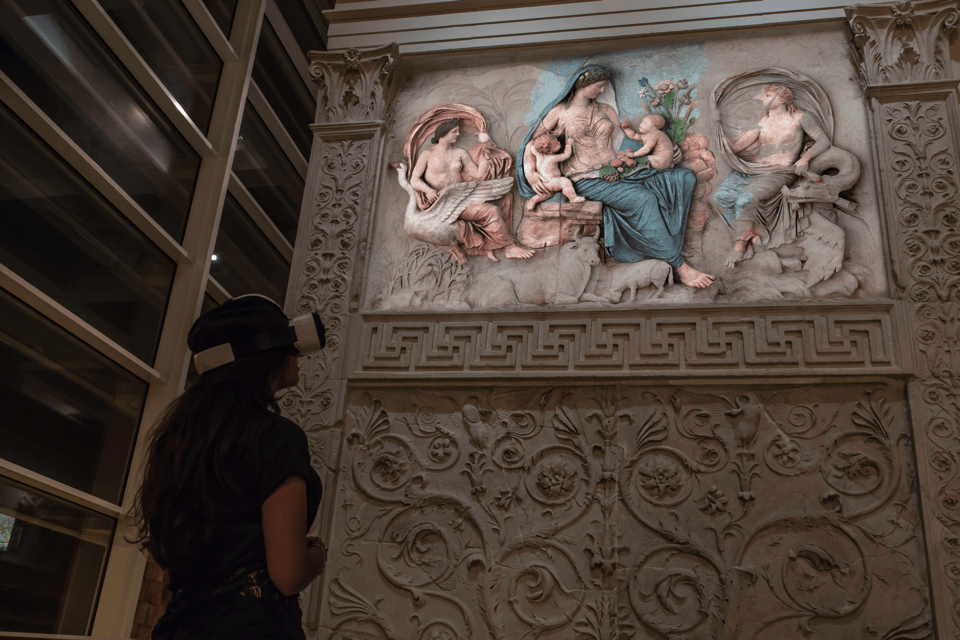
Thanks to this approach, visitors can immerse themselves in the narrative path of the museum in first person. They can see the bas-reliefs and elements of the monument come to life in AR by providing the original shapes and colors together with information related to their history.
The experience is personalized and is based on a hybrid and multi-sensorial approach as it relies on sensorimotor, visual and auditory interaction, right there in the real world.
Tourist with VR AR headset visiting Ara Pacis in Rome
Talking about the solution, it allows to navigate through the different POIs of the monument. Each POI is a gateway to an immersive AR experience that leverages 3D object recognition and tracking (unique features of Inglobe’s AR technology) to provide visitors with information related to digital reconstructions both in terms of architecture and socio-historical meaning of the monument. Large FOV, precision of 3D Tracking, accuracy of Computer Graphics overlays and personalization of experience are just some of the takeaways of the solution.
When people think of improving efficiency in a business with digital technology, they often have an image of a robot on an Industry 4.0 assembly line. In practice, tasks involving people are also being performed more smoothly and rapidly with the help of technology. This case study describes a project that Inglobe has delivered for Huawei Technologies to provide its technicians Industrial Augmented Reality tools to carry out common tasks more efficiently.
Background of the project
Installation and maintenance of IT equipment can be complex. The outcome of a work order is affected by a number of issues. The technicians have too many procedures to remember and even with the best documentation, reading text and looking at images of a product can be misunderstood or time consuming. Extra time must be taken to avoid errors, which leads to inefficiencies in the performance of assigned tasks, security problems and, ultimately, higher costs.
Working with Huawei’s Technical Documentation Innovation team, Perey Research & Consulting invited Inglobe Technologies to provide an appropriate solution for developing AR-enhanced installation and inspection instructions through its HyperIndustry platform.
The HyperIndustry platform is the basis for delivering targeted applications to support field technicians during installation, assembly and maintenance of some enterprise-class equipment, improving their performance. This project focused on the SUN2000-KTL inverter, a device that converts DC power from photovoltaic power systems on commercial rooftops and in large power stations into AC power and feeds it into the power grid.
The goal of the project was to assess how HyperIndustry – Inglobe’s Augmented Reality platform for Industry 4.0 – could improve the installation and maintenance processes of Huawei’s SUN2000-KTL product.
The challenges of the Industrial Augmented Reality project
The project presented a series of technical and organizational challenges to the partners. First, the team members collaborating on the project were in different regions of the world (US, Europe and China) and all development had to be performed remotely. The Inglobe technical team never had direct access to the devices on which the project was to bring value. Nevertheless, all the tracking and testing operations were successfully completed on schedule.
The installation steps tested for AR-enhancement are complex. Huawei has published videos and images to support the technician, as well as specialized tools. Each step must be completed in order for the correct installation.
Further, Huawei required that the application rely entirely on natural feature tracking. Finally, the solution needs to work outdoors, in highly variable climatic and lighting conditions in which the SUN2000 inverters must be installed. Without use of any marker and relying solely on 3D models based on photographs, Inglobe Technologies’ 3D tracking component delivered excellent results on systems mounted on building rooftops.
How the AR experience is structured
AR-assisted procedures developed by Inglobe Technologies for Huawei focus on installation and maintenance instructions of SUN2000 inverters in photovoltaic systems installed outdoors.
The AR experience was created rapidly based on a detailed storyboard and using the HyperIndustry platform, an Experience Management System for Industry 4.0. The platform compiles all the necessary content and interactive modules into native mobile applications for use on Android and iOS smartphones and tablets.
First the technician can choose either English or Mandarin instructions. The Industrial Augmented Reality experience starts when the technician points the camera of the mobile device on which the application is running at the inverter. The target is automatically recognized, and a list of procedures available for the model appears on the screen. The procedures may be assigned by the maintenance manager to one or more technicians, or they can be initiated entirely by the engineer in the field.
Once the technician begins a procedure, a series of steps are shown, each accompanied by instructions that simplify the operation to be performed and by Augmented Reality elements which, depending on the need, may be highlights of the intervention points or procedural animations. HyperIndustry platform by Inglobe Technologies allows the developer to associate additional contextual information, such as technical documents, photos and videos previously prepared by the technical documentation team, with each step.
Field technicians independently perform technical procedures by executing all required steps. The procedures may be either followed linearly or accessed as required, as a result of the definition of branches and paths depending on the use case or the context. Checklists and steps in the application help the operator to perform inspections and audits. The platform records the technician’s performance, then sends all of the performance metrics and analytics to managers so they can assess the processes.
The technologies involved in the project
HyperIndustry is a modular platform based on a content management system that allows corporate asset management in the context of an Augmented Reality workflow for Industry 4.0. The project consists of 3D models, tracking data of the equipment, images, videos, animations, documents, and other information considered valuable for the design of procedures, and management of users and assignments.
The platform includes a series of profiles to be associated with business roles including technical manager, who can create and assign tasks with a user-friendly interface and the field technician who receives the requests on his device. An analytics control panel is included in order to analyze data and customizable indicators (KPIs).
The platform’s recognition of 3D objects uses an advanced 3D tracking technology designed to deliver AR experiences efficiently and reliably on mobile and wearable devices.
The Benefits for Huawei
Existing studies show that the use of Augmented Reality when performing complex procedures in the field can improve performance of technicians in the workplace. Augmented Reality–assisted instructions help the professional access all the relevant information where and when needed. By reducing the need for training and avoiding errors during the performance of tasks, AR can significantly reduce costs, compared to traditional methods of delivering documentation.
Compared with the traditional paper-based or digital instructions, one of the most obvious benefits related to the installation and maintenance instructions is the technician’s immediate understanding of each step in the operation. The use of Industrial Augmented Reality has, in fact, allowed Huawei to make understanding procedures faster and less ambiguous, reducing the cognitive load for the operator. Consequently, the average execution time of the procedures could decrease.
This ease of access to information is a key factor that not only speeds up the execution of procedures by new technicians, but can also help the experienced staff in solving occasional and complex problems, through a true “perceptual intelligence system”.
Rhonda Truitt, Director of US R&D Technical Communication Innovation & Best Practices at Huawei, referring to the project declared: “The results we achieved on this project through Inglobe’s HyperIndustry were nothing short of amazing. Object recognition on outdoor equipment was something other vendors told us could not be done. Our customers have responded overwhelmingly positive about this experience. I am confident that we will see a sharp decline in installation errors due to this AR experience for post installation checks. Inglobe has really impressed me.”
Plans for the future
Huawei plans to continue working on Augmented Reality workflows that integrate Technical Documentation, Product Lines and support for Customers and Technicians in the field.
The debate around industry 4.0 and smart manufacturing is involving an increasing number of execs worldwide, but that doesn?t mean they are all aware of the potential benefits of this trend for their companies. Same goes for the challenges to be tackled before a company can speak the industry 4.0 language.
Augmented reality is one of the cutting edge technologies involved in the industry 4.0 trend when talking about smart manufacturing, it is a technology which was seen just as a fancy toy until a few years back, but which has now reached the right level of maturity to be employed in a productive environment.
The truth is many actors in the industry field still feel like something big is going to happen on their shop floor in the next future, but they don?t know exactly when and what.
As for the when, we are much more advanced in the adoption of industry 4.0 practices than the non-experts may understand. There are so many investments and pilot projects going on out there which are speeding up the process of refining the technology and getting companies ready to improve their processes. In fact, sectors such as gaming are not lagging behind, with initiatives like ξενα καζινο στην ελλαδα paving the way for innovative solutions and new market opportunities, driving competition and technological adoption. So the right time is right now, at least for those who want to be the leaders.
As for the what, the range of potential applications is very wide, although some trends have emerged where augmented reality has proven to increase process and people performances as well as being effective at driving down costs in so many departments.
Critical issues in Industry 4.0 environments
Processes in the productive environment exhibit a number of critical issues that make operations less efficient, as well as more risky for technicians working in the field. These are the areas of focus according to our experience:
Human error: even the most experienced workers may suffer from an information overload resulting from excessive amounts of procedures to remember and difficulty in identifying the exact intervention points
Inefficiencies: according to some empirical studies traditional assembly and maintenance operations require longer execution times compared to the same operations carried on with the assistance of augmented reality. Use of wrong tools, inadequate training received by technicians and poor to none access to operations? analytics are some of the most recurring inefficiencies inside factories
Cost: all of the above translates into higher workforce costs due to longer operations, recurring errors and damage to components due to incorrect procedures execution
Empirical studies and the evidence of performance improvement
There is a number of empirical studies conducted on the field in order to research the effectiveness of AR applied to industrial operations. This set of studies compares the performance of two groups of workers carrying on the same assembly or maintenance operations, one group operates with the aid of AR instructions, the other group with the support of traditional printed instructions.
What researchers have highlighted is a performance improvement up to 50%, which means AR enables workers to perform a given task faster and with a lower possibility of error. All of this evidence translates into economical benefits as well, since reduced execution times means a lower cost of labor.
Potential usage scenarios for Industry 4.0
The range of possible use cases is really wide and involves nearly all kind of operations that can be executed on the shop floor, from core manufacturing activities such as production to support processes such as maintenance, training and so on. The following is a list of potential usage scenarios according to our experience.
Operations: any kind of operation which requires some step by step procedure can benefit from the introduction of augmented reality. Installation, assembly, machinery tool change are just some of the processes where AR can make a difference and make manufacturing really smart
Maintenance and Remote Assistance: industrial companies know how much time-consuming the maintenance tasks can be. Preventive, corrective and in some cases predictive maintenance requires companies to allocate many human and financial resources to guarantee the operations smoothness and minimize machinery faults. In this context AR is extremely effective at reducing execution times, minimizing human errors and sending the relevant performance analytics to maintenance managers.
Training: especially for those companies where training is a critical process involving many field technicians AR guided training mode can be very effective both for experienced people and new technicians at the beginning of the learning curve
Quality control: AR support in quality control processes allows to check wether the items produced respect or not the best manufacturing standards.
Design and visualization: in this scenario of usage augmented reality comes into play providing tools that improve design, prototyping and visualization in the design phase
Inglobe Technologies? solution is a mobile and wearable platform designed to support smart manufacturing activities; it is equipped with advanced Augmented Reality features that can be integrated into technical processes in different industries. It enables a more effective communication between field workers and business infrastructure in order to provide contextual and smart information about installation and maintenance.
The platform allows key people inside companies to create and manage augmented reality experiences including object tracking, tasks creation and assignment, data analytics management.
Our Mixed Reality platform can be integrated into IoT solutions and Advanced Visualization / Interaction, includes different customizable modules and supports mobile devices, smart glasses and standalone systems.
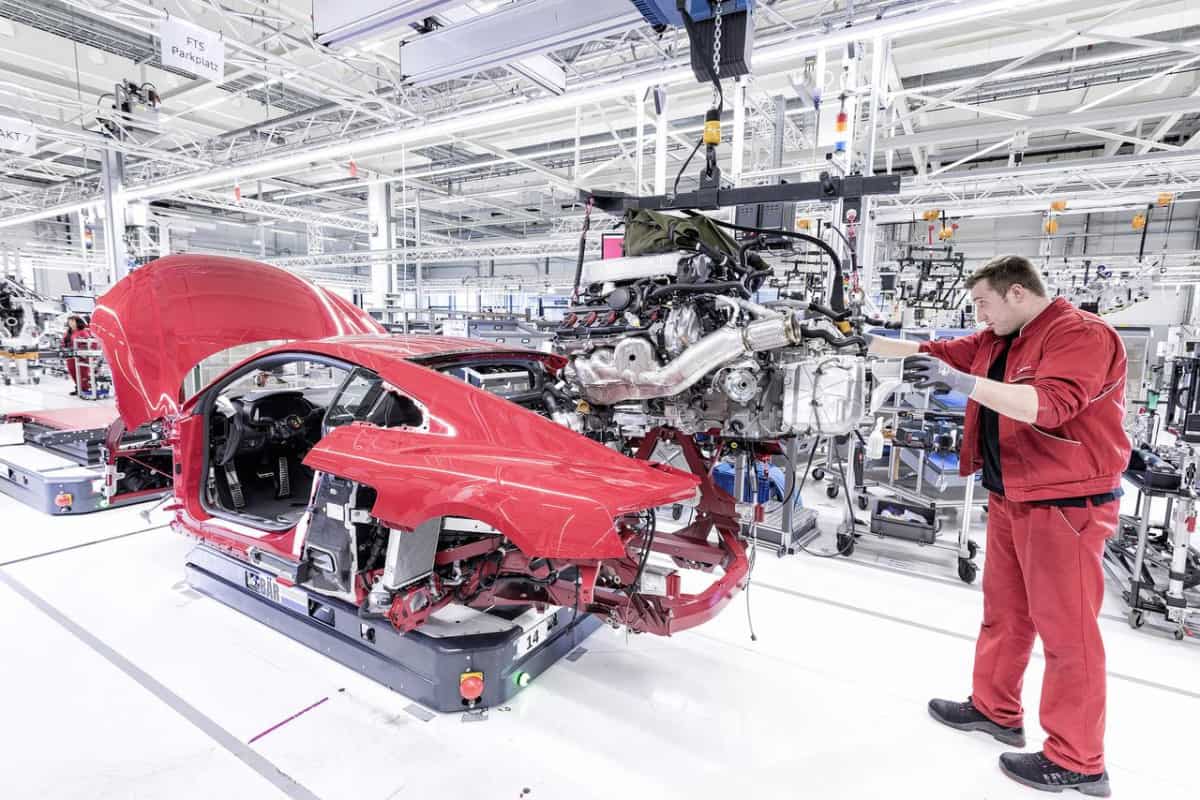
Many vendors in the Augmented Reality space today provide platforms that promise to support technicians with AR enabled procedures for service and maintenance also in the automotive sector. But few do really offer the technical features that are required to deal with the complexities of the real world.
The majority of the platforms use planar images to trigger the AR contents. On the other hand, one of the key requirements of any enterprise class AR maintenance solution is the capability to deal with real systems and parts. Indeed, not always engines or mechanical parts can be identified or tracked by means of 2D images. Thanks to AR-media powerful tracking methods, the AR-media Dealer 2.0 solution provides the functionalities that are needed to identify and track 3D parts with the required flexibility, while at the same time enabling the access to step-by-step instructions and information relevant for diagnostics.
The solution is the outcome of the joint effort of Inglobe Technologies, a leading Augmented Reality Developer, and Lynx International. The platform that enables AR information for diagnostic and maintenance purposes is thought for Tablets and Smartglasses (Epson Moverio) and has the flexibility to extend the support to other devices as well. Thanks to a unique Mixed Reality feature, the platform can be used in association also with Virtual Reality glasses, like Samsung Gear, in low-cost blended AR/VR Training experiences.
The videos below show the AR-media Dealer solution in action:
Being able to provide contextual, high quality and spatially aligned digital information to real objects in Cultural Heritage sites is one of the biggest challenges for developers who try to provide a unique experience to their App users. This is what Augmented Reality is for.
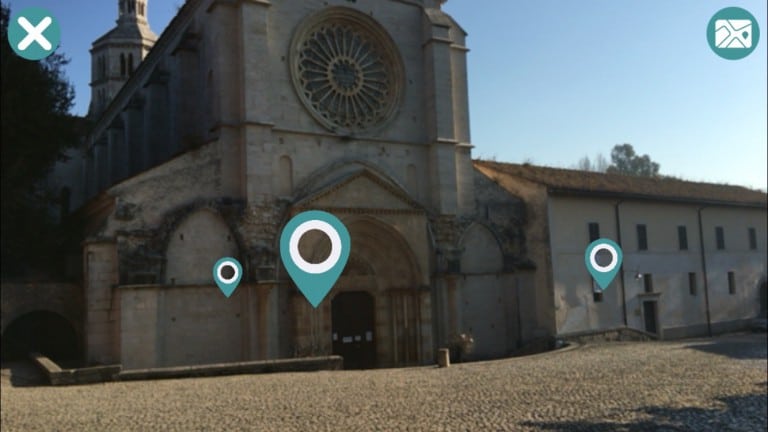
In order to help developers deal with these challenges, at Inglobe Technologies we have worked hard to add new features to the AR-media Augmented Reality SDK. The new AR-media SDK v2.0 provides different tracking methods -including geolocation, planar images, device motion, 3D object tracking- alongside with 360° panoramas and interactive 3D contents on mobiles. The methods are packed together in such a way that they can be easily integrated into a single app. For more information take a look at this presentation:
And here goes a video that shows some of the features at work
If you are an interested reader, you can start to develop your own mobile Apps based on those features using the AR-media SDK today and make yourself familiar with the technology.