This new generation of AR-media is made of the following components:
AR-media Studio: Web based Experience Creation
AR-media Plugins: Optional exporters for the major 3D modeling software
AR-media Player: Mobile viewer app for iOS and Android
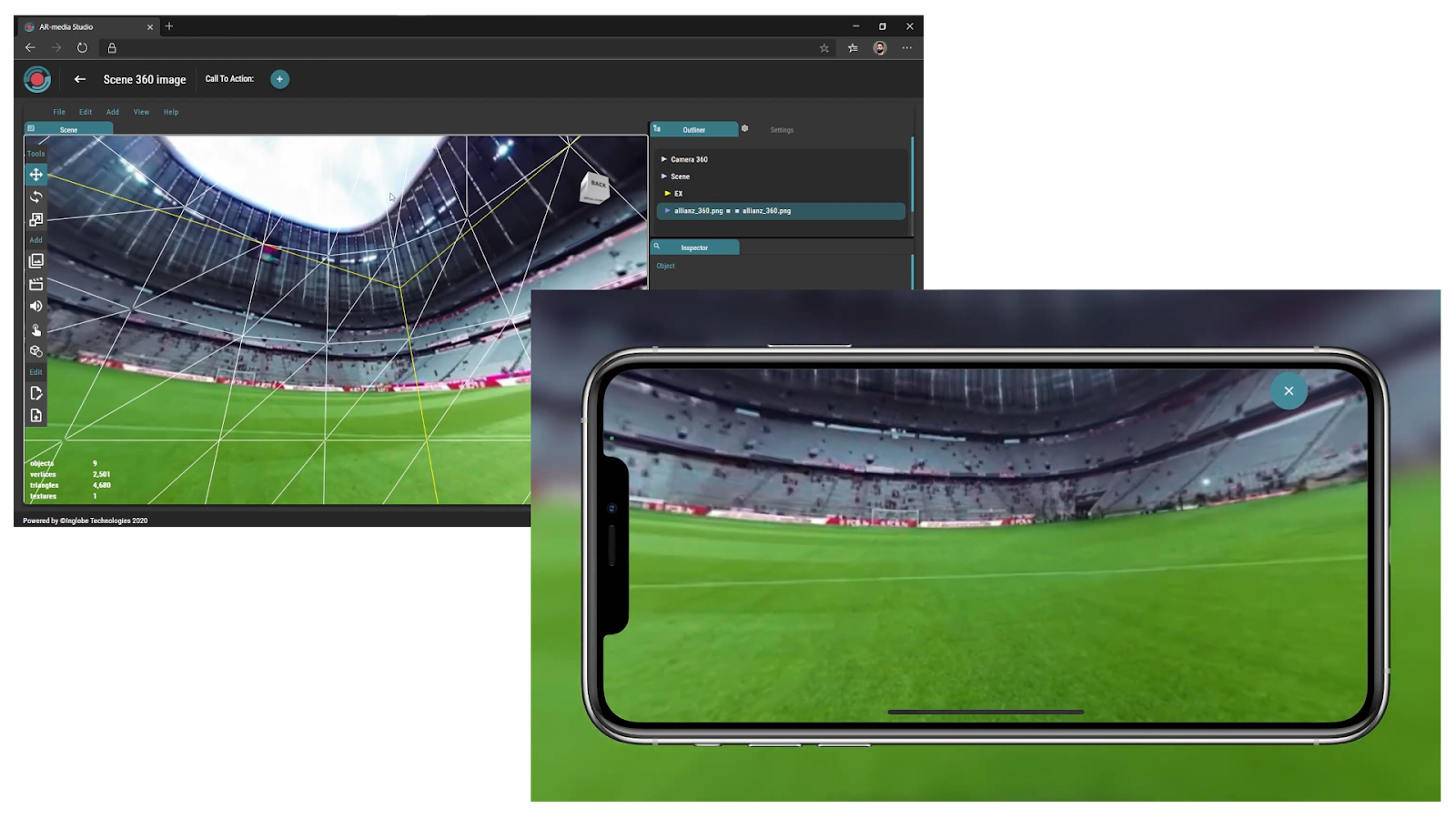
AR-media Studio allows the user to upload her content into the platform’s Asset Manager, the area where multimedia files are stored and eventually organized in folders and subfolders. With respect to 3D models, such files can be exported from the major 3D modeling software, following specific guidelines.
The next step is the project creation. Thanks to an intuitive 3D web editor, the user can add her content into so called “Augmented Reality scenes”, that is the combination of content and events created according to the final user experience on mobile devices.
Finally the project can be made public, or shared privately, and enjoyed using the mobile application called AR-media Player, freely available on the app stores.
Moving objects in the physical space
Inglobe Technologies just released a feature update that includes the ability for users, using the AR-media Player, to select single items in an Augmented Reality scene and interact with it, other than with the entire scene including other objects.
These new features also introduce the ability to pan objects and rearrange them in the physical space, finding the most suitable position according to the user intent.
The ability to rearrange objects’ position, size and orientation, makes AR-media a great tool for Augmented Reality in interior design, meaning a user can load her favourite pieces of furniture and accessories and visualize them instantly in the space, adjusting the combination and finding the perfect fit.
How it works
In order to use these functionalities, the user needs to download the free AR-media Player app from the stores (Android Play Store, iOS App Store and Huawei App Gallery) and browse through the list of the available categories, select a category and finally select the project she wants to download for Augmented Reality visualization.
What the user has to do is just opening the AR-media Player on her mobile device, loading the project and visualizing it in the surrounding space, both indoors and outdoors. With a few easy gestures she can select the object she wants to move and then simply drag it to the desired position. Objects can also be rotated and zoomed.
Switching content with AR-media
Eventually, architectural projects and real-time interior design use cases, can be enriched by an additional feature AR-media offers, which is switching content by tapping on objects (or any other preferred user interaction) in order to visualize alternative design options.
Suppose the user wants to decide which of the three sofas she is considering, fits best in her living room. Well with AR-media she can easily switch from one sofa to another and have an instant preview.
Of course such a set of features can prove useful in many other application domains, like architectural design, project presentation, civil engineering and more.
With the AR/VR market set to touch almost 19 billion dollar in sales in 2020, including hardware and software, it is now clear that is increasingly and rapidly becoming a mass market, collecting the interest of consumers and professionals from many areas, from industry to architecture, from marketing to publishing.
The opportunity Augmented Reality offers to content creators is to provide an engaging way to explore traditional media, turning them into live contents, rather than just still ones.
This is especially true for Photographers: they use a lot of technology and digital tools in their work, but the final result is a static content, a picture, printed or digital.
In an effort to identify what they could do in order to offer more dynamic and interactive products, we analyzed a number of use cases related to their work, helping them to understand how they could surprise their clients and differentiate themselves from the crowd.
A Photographer, as well as a Video Maker, creates a lot of content, thus it is quite simple for them to create Augmented Reality products and services starting from what they already have. Some examples of what Photographers can do with the help of Augmented Reality include:
Immersive Photo Albums with Augmented Reality
Photographers use to create photo albums to collect all the photos of a specific event, be it a trip, a wedding party, a birthday or any other special occasion. Their photo albums are printed products that provide a traditional way of use: people browse them to look at the pictures.
But nowadays Photographers do much more than that. They shoot professional videos and even video clips with drones, or 360° photos and videos. Unfortunately such content cannot be included in a printed photo album and must be enjoyed separately on a computer, smartphone or smart TV.
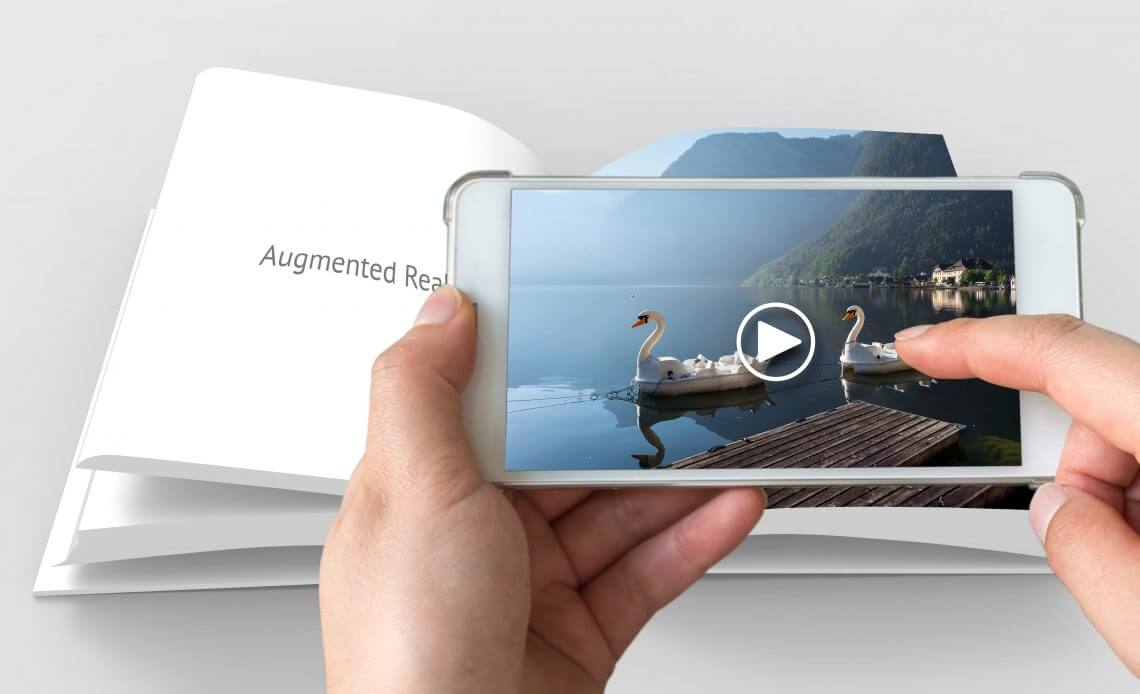
Finally with Augmented Reality apps it is now possible to pack the entire experience into a device, typically a smartphone, enabling the visualization of slideshows, videos and 360°contents on printed photo albums. The product comes to life making the entire experience funnier and more satisfying.
Visualization of 360° Photos and Videos
Photographers who shoot panoramic and 360° photos and videos cannot use printed media to let their clients visualize that type of content. Of course you must use at least a smartphone in order to be able to properly view 360° content. Using an Augmented Reality platform, connected with a mobile app like AR-media Player, helps Photographers to easily create 360° content that their client can enable by simply scanning a picture they already have in their photo album or that has already been printed.
Photo Exhibitions with Augmented Reality
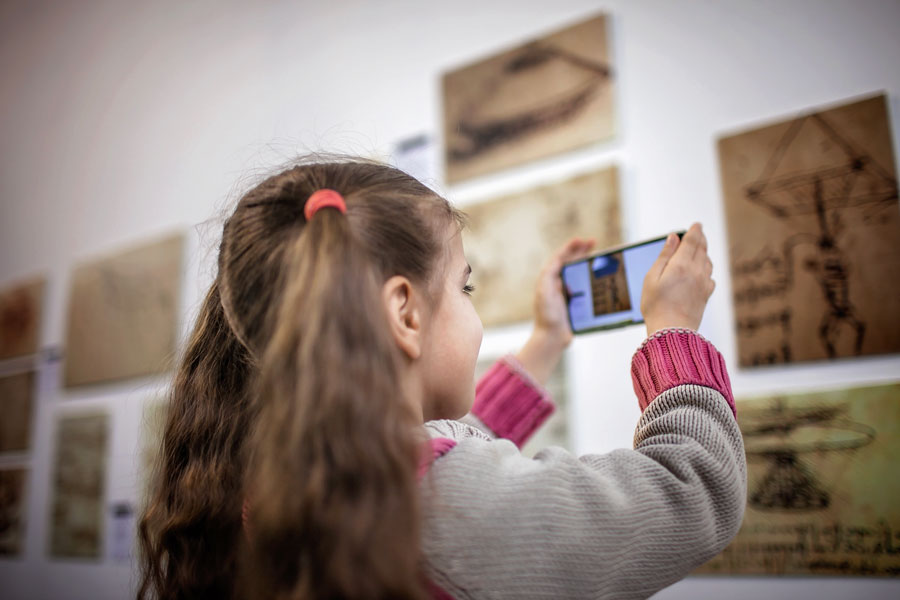
Making a photo exhibition more engaging is easy using an Augmented Reality app and platform. Each photo of the exhibition can be associated with additional multimedia content, making the visitor’s experience more entertaining and rich.
Scanning a photo with an Augmented Reality app like AR-media Player, activates additional content like images, videos and 3D models.
How to upgrade your Photography business with AR-media
Augmented Reality can clearly help photography professionals to get more out of their work, bringing their photos and videos to life through a set of existing AR applications. AR provides a powerful way to surprise clients, stand out from the competition and sell higher margin services and products.
In this scenario AR-media is the ideal tool to build and publish Augmented Reality projects for Photographers, as it requires no coding skills and allows the user to create AR content with a visual, simple workflow.
Building Information Modeling (BIM) has made the entire building lifecycle management much more efficient thanks to an effective and practical approach to handling project information regarding planning, building, maintenance and disposal.
This methodology is widely supported by a large number of software today, including Revit and Archicad many of which have become a standard in the AEC industry, however BIM managers and designers willing to get started with Augmented Reality in Architectural visualization can rely on other options in order to quickly achieve their visualization needs.
How can you combine BIM and Augmented Reality?
Using BIM models in combination with Augmented Reality enables some very interesting use cases for BIM managers and architects.
Visualizing an entire project/building before it is even built, in its future location
Selectively visualizing specific layers of the BIM model, over an existing building or over a 3D model, for example the water or the electrical system
Early identification and correction of structural problems like pipeline clashes
The AR-media platform is a tool particularly suited for BIM models Augmented Reality visualization, since it is very easy to prepare and upload a 3D project to AR-media Studio and visualize it using spatial mapping or geolocation.
An interesting feature of AR-media Studio that BIM managers can leverage on in order to create interactive Augmented Reality visualization projects is the Behaviours Manager. This feature of the platform can be used to add buttons and touch interactions that allow you to associate actions to events. For example one of such events can be switching from one layer to another.
The AR-media Plugins have been our most popular product for many years, and for such a long time they provided an entry level tool for people to easily create AR projects, without ever leaving their 3D modeling software of choice.
So many things have changed in the AR landscape since then, especially with mobile phones revolutionizing the way people access AR and VR content.
For this reason we decided to redesign and launch a completely new version of the AR-media Plugins, packed into a comprehensive platform made of the following components:
Web based Experience Creation (AR-media Studio)
Optional exporters for the major 3D modeling software (AR-media Plugins)
Mobile viewer app for iOS and Android (AR-media Player)
With respect to the past, the new platform offers a lot more features and allows you to easily build simple and complex Augmented Reality projects, including those with interactions such as buttons, animations, 360° navigation and so on.
Supported experience types include Planar, Spatial and Geolocalized. Spatial experiences, a new feature in the AR-media platform, allow you to visualize your AR content in the space, without the need to look for a target image, enabling an entirely new set of use cases, like for example the visualization of architectural projects, the visualization of cultural heritage reconstructions or the visualization of marketing content like a brand new car in 1:1 scale and much more.
Banner Call to action (es. Discover the AR-media platform)
We are excited to announce that the new AR-media platform will offer a wide range of features, many of which will be new compared to what the AR-media Plugins used to offer.
In general, you will be able to include the following content into your AR and VR projects:
3D Models
Videos (Planar videos, 360° videos and Alpha videos)
Images (Planar images and 360° images)
Audio Clips
HTML5 apps and mini games
The AR-media platform will work with subscription plans for individuals and companies and will also include a Free plan, in order to let our users familiarize themselves with the new product and its functionalities.
Moreover an option for custom Enterprise plans is provided, so companies can ask us to tailor the platform according to their needs, including a white label version of the mobile application.
Join the AR-media revolution and start creating your Augmented Reality project, now!
Preparing 3D models for Augmented Reality is a crucial step in the production of a successful AR project, since many aspects will depend on it, including the smoothness of execution on mobiles devices, the graphical quality and finally the user experience (e.g. a large 3D model, in same cases, may take a long time to download an a mobile internet connection).
Typically mobile devices have more performance constraints compared to powerful desktop or notebook computers, thus preparing a 3D model for mobile A.R. requires a certain degree of optimization.
Creating AR content for end users means dealing with a potentially large number of different devices, unfortunately not all of them will be flagship phones, so finding a compromise in terms of performance is key.
The most popular 3D modeling software allows the user to perform certain operations that will make the model more suitable for Augmented Reality.
How to prepare your 3D models for Augmented Reality
Technically speaking, there are dozens of optimizations an user can do to a 3D model to make it perform better in real-time Augmented Reality applications, but in general it is sufficient to act on three areas of intervention to get an acceptable level of optimization.
Complexity
Before talking about optimization, it is very important to model your project efficiently in your reference 3D modeling software. By efficiency we mean keeping the count of polygons as low as possible, avoiding to model parts of the object the user will never be able to see and appreciate. If you are relying on one of the many online 3D repositories, make sure to check if the model is optimized for real-time.
Textures
Another area of optimization concerns the way textures are managed. Try to use just one texture and bake your texture in order to improve the graphic rendering, for example in case you want to add ambient occlusion or static shadows on the model. Also assign a standard material (ambient, diffuse, specular colors and eventually a shininess/specular power value.
Export
Once the model is ready export it in the binary .FBX file format. It will include textures and animations, if any. Nearly all the 3D modeling software provide an option to export in the .FBX format.
For a detailed guide on how to optimize 3D models for your Augmented and Virtual Reality projects, please refer to this article in our Documentation section –> https://www.inglobetechnologies.com/documentation/using-3d-model-assets/
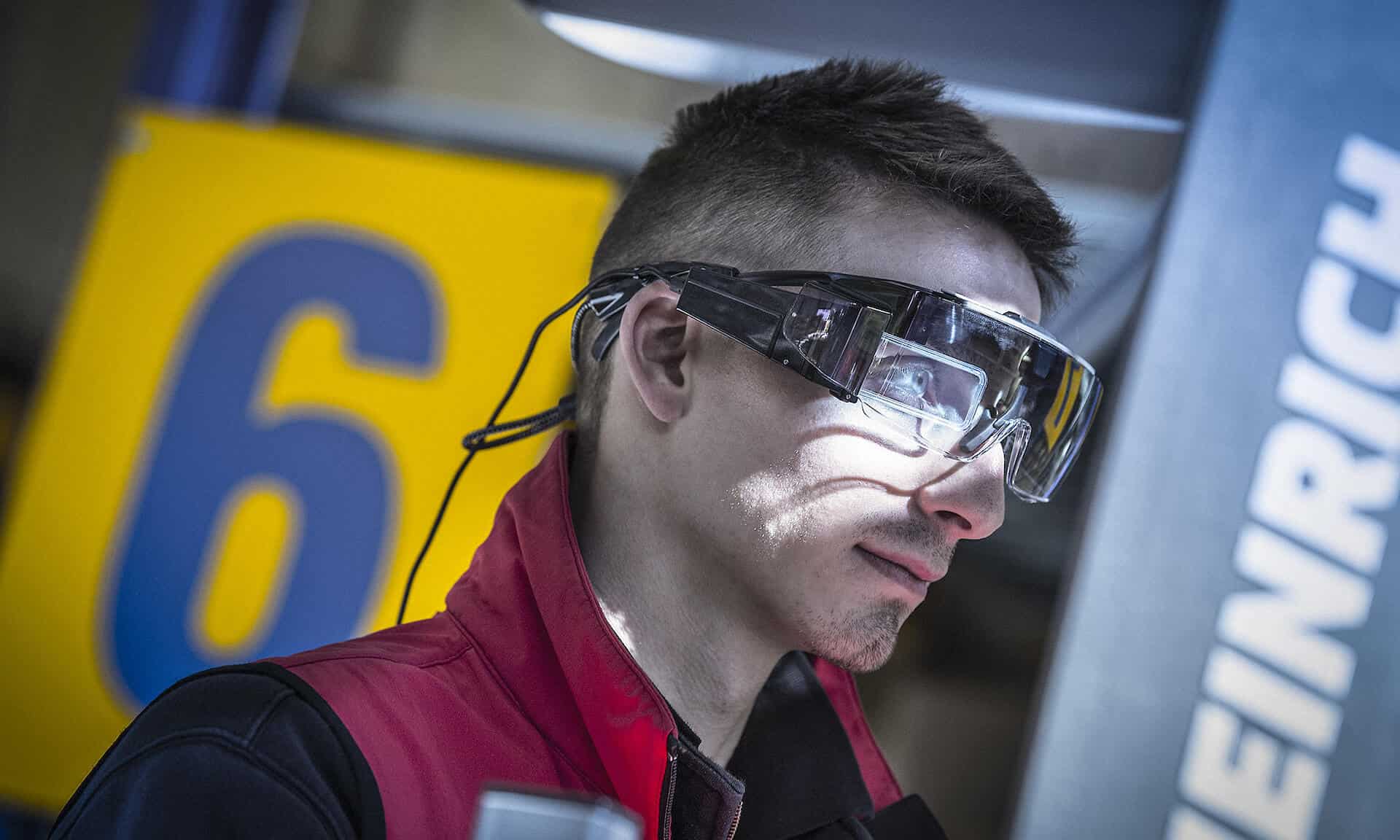
VisionAR is a Safety Augmented Reality smartglass developed by Univet, an Italian multinational specialized in manufacturing safety, laser and medical protective eyewear products. EyeTechLab is the Univet’s Division of the new products, including the adoption of the most disruptive technologies into the eyewear protection products, including companies like Sony for the adoption of their waveguides display technology in safety Augmented Reality devices.
One of the reasons why this product is so appealing for industrial use cases is because this is a ANSI Z87.1+ and EN166 certified device thus it meets the maximum level of safety PPE standards.
Univet’s VisionAR is a Safety Glass with a green scale monocular Augmented Reality projector with a 20° FOV (field of view). Moreover it features a capacitive touch area with four available commands: swipe forward; swipe backward; tap and double tap.
The battery module ensures up to 9 hours of autonomy for the typical use, allowing workers to fully cover an entire shift.
Source: Univet
On the top of the VisionAR smart glasses there is a camera that enables a number of capabilities, from video streaming to gesture recognition. Additional components that can be mounted on the top of the glasses include: a status LED, a temperature sensor, an IR sensor, a light sensor, a barometer sensor or a microphone for voice control.
For developers willing to access the devices resources and drivers, it is possible to connect to VisionAR Control Unit that can easily communicate with Windows, Linux and Android operating systems.
Suitable Use Cases with Univet’s VisionAR
At Inglobe Technologies, having tested and worked with plenty of wearable devices, we are aware of the technical limitations and constraints of many of them, such as heavy to wear, tethered to an external unit, low battery life and more…
For the aformentioned reasons, we were particulary happy with VisionAR after testing it, since it is a light, ergonomic and certified device, with a long lasting battery and thus it is particularly fit for certain use cases including Manufacturing, Logistics and Remote Support.
The Smartglass can be easily integrated into picking processes in warehouses as well as a support for complex operations thanks to its Remote Support capabilities enabled by the camera module.
Augmented and Virtual Reality technologies are proving their impressive potential in the Rail Industry, providing a strategic leverage to the digital transformation of this vertical. It is no mystery that AR and VR can support a wide range of industrial activities and processes, but we will focus on specific Rail use cases in this article.
We identified two main application domains for Augmented Reality in the Rail Industry:
1) Augmented Reality Rail Use Cases for Operators
1.1) Design and Validation of Infrastructure Projects
One of the most interesting applications of Augmented and Virtual Reality in the Rail field is linked to the design and virtual prototyping of infrastructural assets, such as the renovation or new construction of train stations and railway lines.
In October 2019, the British infrastructure operator Network Rail carried out a project of this type, when it created an app that allows project stakeholders to preview the replacement of the walkways in the stations. The app, called ARki, was designed to allow local communities to preview future infrastructure prior to Network Rail’s launch of a new generation of gangways.
In general Mixed Reality applications in the Rail industry can support building and renovation of infrastructures by providing assistance for processes like Design, Building, Environmental Impact Assessment and Maintenance.
1.2) Management and Maintenance of Railway Stations and Infrastructures
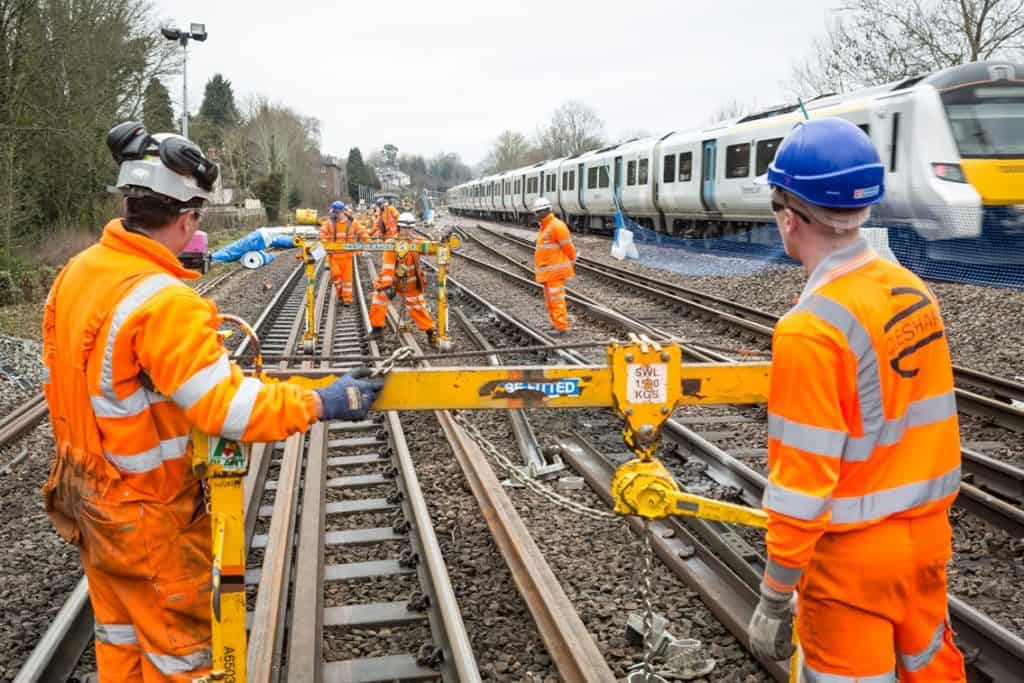
The maintenance of stations and railway infrastructures is certainly one of the sectors in which Augmented Reality technologies can be most useful.
Augmented Reality allows you to remotely control the status of the tracks and railway infrastructure and, when combined with other technologies, including sensors and artificial intelligence, can provide a great deal of support with predictive maintenance.
In the United Kingdom, a startup has experimented with a technology capable of predicting faults in the tracks and the infrastructure-train communication system, tracing problems in the field in real time with wearable devices. Similar trials were also carried out in Germany by another startup.
Drones or other rail vehicles can perform a semantic segmentation of lines, vegetation and any other obstacles that could be risk factors for operations.
Through an appropriate extension of a Facility Management platform, it is possible to enter the company’s infrastructures and assets in the registry in order to manage maintenance activities efficiently and quickly, with the aid of Augmented Reality features.
1.3) Safety Management of Railway Infrastructures
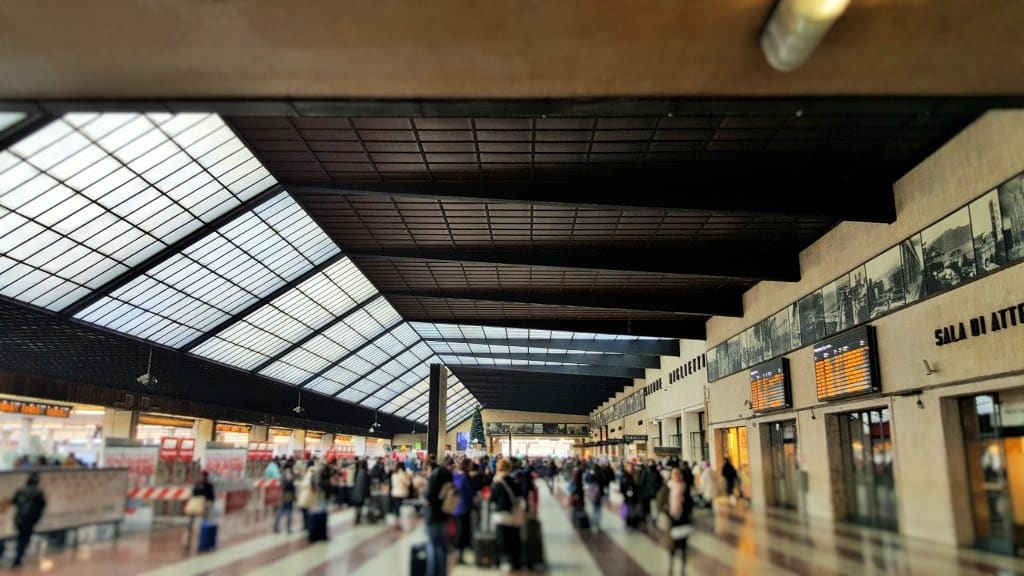
The management of infrastructure safety is back in great relevance with the COVID-19 outbreak, especially in large communication HUBs, such as airports and railway stations.
The COVID-19 pandemic has triggered a series of complications in the management of infrastructure security that AR technologies, in close combination with those of machine learning, allow to manage in an optimal way. For example:
– Temperature control: thanks to thermal cameras or cameras installed on Smart Helmet, together with with computer vision techniques it is possible to detect the temperature of the passengers, identify and retain them for further checks
– Social distancing: the same technologies can be used to detect the distances between people in a given space and to calculate appropriate “safety indicators” accordingly
1.4) Management of passenger flows
Except for the effect of the pandemic, the number of rail passengers has been on the rise worldwide, with traffic peaking near major metropolitan cities. Thanks to the new Computer Vision technologies it is possible to monitor the flow of travelers. It is in fact possible to detect and map the flows of travelers thanks to a variety of artificial vision techniques, that, combined with advanced Augmented Reality interfaces, would allow the flow of travelers to be optimally managed within the railway stations.
In October, the Chinese city of Shanghai, plagued by the critical effects of congestion, tested AR Smart Glasses to facilitate passenger flows ahead of the China International Import Expo. Equipped with cameras that stream commuter traffic directly to a station’s control room, they can help agents quickly identify bottlenecks. The product also helps with security checks, as the glasses offer facial recognition and have built-in speech recognition systems. Following a successful application on a single event, the glasses have now been adopted in various subway systems from Shanghai to Luoyang and Gansu.
AR technologies, in close combination with those of machine learning, make it possible to optimize passenger flows and study the patterns of passenger movements in the station spaces.
1.5) Staff Training
In the railway sector, just like many other sectors, AR and VR are making staff training more dynamic, engaging and efficient. The use of this technology for training purposes has increased in recent years as it helps simplify and speed up the learning process.
In the UK, HS2, the new high-speed rail line currently under construction, is using Augmented Reality for staff training processes. During the summer of 2019, the company rolled out immersive AR technology that created a replica of its new London hub, Old Oak Common station. Prior to its opening, staff are using this solution to train on the customer experience, safety and maintenance of the station, which is set to handle 275,000 commuters per day.
In a sector where by definition the staff are geographically dispersed and work in shifts, the idea of ??in-person training sessions is particularly challenging from an organizational point of view.
With this in mind, Augmented Reality represents the ideal solution, offering the possibility of a step-by-step visual guide, as well as that of the support of a remotely connected expert who sees what the user is working on and can direct him.
2) Augmented Reality Rail Use Cases for Passengers
2.1) Customer Engagement
With a user base that increasingly uses digital tools to search for entertainment and information, the railway sector today has the opportunity to use immersive technologies to set up a more modern and engaging communication: this can mean giving new life to channels that have already been tested, such as brochures or on-board magazines, but also to consider totally innovative approaches tailored to the type of clients and itinerary.
In recent years, Mixed Reality solutions have been put in place by various players aimed directly at users of railway services in support of a series of use cases.
Almost all companies that provide transport services offer their customers magazines to be consulted on board the vehicles with journalistic and promotional information. The contents of these magazines can be enriched with digital information that can be consulted from your mobile device. Trenitalia implemented such a solution some time ago, albeit in a very light way.
HyperLoop has experimented with immersive touch windows dedicated to the entertainment of travelers, allowing them to simulate an external panorama, but also to take advantage of entertainment and shopping services.
Since a growing number of travelers say they prefer the trip itself to the final destination, as evidenced by a survey conducted by Booking.com in 2018, and since typically these lines are characterized by a theme of high historical, geographical or artistic interest, equipping travelers with a Virtual Reality viewer through which they can immerse themselves in some of the worlds linked to the journey they are making – also in consideration of the long time available to them during the itinerary – can represent a significant added value with interesting monetization possibilities.
2.2) Wayfinding and Services
The information relevant to a traveler is manifold and concerns that to be acquired before the trip, during the planning phase, and during the trip, when the customer is interested in entertainment services, shopping and information about the trip (eg. delays). There is also an intermediate phase, when the traveler is at the station and needs to locate their carriage, but also to use the services inside the station while waiting, such as lounge and restaurant services.
In 2019, Zurich’s “Z?rich Hauptbahnhof” train station launched an app dedicated to travelers with the aim of providing information on timetables and destinations starting from the station itself. The “SBB AR” app allows you to view digital content in space using environmental mapping (using Google ARCore) inside and GPS outside the structure. On Android devices alone, the application has been used by over 10,000 travelers.
In all these cases, immersive technologies help people to retrieve relevant information in a more engaging and in some cases more useful way, see the applications for wayfinding that in complex spaces, such as in very large stations or airports, can add a lot of value for the user.
An established player in the Italian tech ecosystem, throughout the years Inglobe Technologies has strengthened the position it held since pioneering immersive technologies in our technological and economic landscape.
Such firm position held in a market which is undergoing an explosive growth led us to define an ambitious corporate strategy with market and thought leadership as ultimate goal: it is indeed within this strategy that we have refocused and sharpened our brand identity.
As such, we are contextually launching the new version of our website – which organises all our activities in one place – and a new company logo with the aim of conveying effectively Inglobe Technologies’ key attributes and ambitions.
Unparalleled technical capabilities coupled with creativity and vision
Both the website’s graphics and structure as well as the new logo design convey the firm technical capabilities that represent Inglobe’s key asset in a market that is increasingly attracting new entrants.
In such a dynamic and ever-changing environment, however, such capabilities would not bear fruits without the creativity and the imagination to constantly look for new opportunities and fields of application.
Complexity, made simple
The ability to specialise per vertical markets and yet maintain a cohesive holding structure can be a differentiator in building a credible and focused value proposition.
This has been one of the crucial considerations leading to structure the new website, as well as to design a logo where different elements are encompassed within the main shape to form a unique ensemble.
Said design, with a standing-out central element and openness on the sides, also represent the ideals of inclusion and co-design: our approach to projects is systemic, open to interactions and puts the customer right at its centre.
Another important feature of Inglobe’s identity is its role of connector and network orchestrator: in delivering projects characterised by novelty, variety and complexity we pride ourselves with the ability of pulling together the best professional skills available in the market and with a proven record of successfully fulfilled project management challenges.
In. Globe.
Finally, the red globe – an element that also resounds in our very name – state clearly both our global ambitions and our central role in an increasingly complex and crowded arena: our strategy leads to reach both market and thought leadership.
So much so, that in 2008 we launched the first generation of tools to allow content creators without coding skills (architects, teachers, marketers…) to power up their work with Augmented Reality.
The massive success of this intuition – confirmed by over 50k registered users worldwide – led us to explore how to improve the tool in order to exploit the full potential of the latest mobile devices.
The exciting result is the new AR-Media Platform, which we will launch in September under a brand new logo.
We are heading toward an era where everybody will be able to create immersive contents: Inglobe Technologies is paving the road.
The retail industry has experienced numerous changes in recent decades and is one of the sectors of the economy that has benefited most from digitalization. The physical store is no longer the only sales channel, it has been joined by ecommerce and a whole series of hybrid modalities between physical and online stores.
After examining why and how retail is a fast evolving vertical, we?ll take a look at the opportunities offered by Augmented Reality to upgrade how retail sales are managed.
Current trends in Retail
There are a number of current trends that directly and powerfully impact the world of retail and that are worth analyzing. Many of these have emerged in the last decade, or limited in the last two, also thanks to the contribution of the so-called e-tailers, Amazon in the first place.
These trend include:
? Long Tail: the tendency of large online retailers to generate the majority of revenues from the sale of niche products, rather than from the more popular products. In practice, players like Amazon and Netflix have overturned the Pareto principle. Physical stores, as they are organized today, find it very difficult to follow the long tail model, because of physical and logistical constraints they tend to favor the best selling products, despite an extremely wide proposal in terms of references.
? Mass Customization: a complementary trend compared to the previous one is mass customization, that is the ability of retailers to sell highly personalized products in terms of characteristics (material, color, configuration, etc.), highly appreciated by consumers who are increasingly looking for unique products and fewer and fewer standard products. This trend has also had a strong impact on production systems which have inevitably become more flexible and which carry out less and less series production.
? Showrooming: this trend identifies the behavior of those consumers who use physical stores as product showcases and as places to try the product, finalizing the purchase process online. It is a very common behavior in the clothing sector, as showrooming allows people to try on shoes or clothes in order to identify the right size and evaluate comfort/fit.
? Superior Customer Service: although physical store managers have the advantage of having a direct relationship with their customers, online stores, over time, have come to offer extremely high and flexible levels of service, to which people got used very soon. The areas where online retailers make a difference include flexibility in the management of dissatisfied customers, for example by offering free returns and full refunds even up to 30 days after purchase; offers in all seasons of the year; the order processing times (often in less than 24 hours customers receive the goods at home); loyalty and reward mechanisms; multiple payment methods, from credit card to cryptocurrency wallet; even the “lowest price guaranteed” policy with the possibility of refunding the difference if the same product is available at a lower price on other stores.
Retail markets size and growth rate
The global retail market, online and offline, in 2017 reached a value of 23.460 billion dollars and for the period 2018-2023 an average growth rate of 5.3% per year is expected, up to the value of 31.881 billions of dollars in 2023 (Source: Markets and Markets).
Although in the last ten years eCommerce has grown at an average of +15% per year, it now represents only about 10% of the global retail market, therefore 90% of today?s purchases still take place in physical stores. According to the most recent forecasts, e-commerce will reach 17.5% of the value of the Retail market in 2021 (Source: Statista).
The most competitive categories in offline retail are food, household goods and cosmetics; while the three most competitive categories in online channels are products for entertainment (music, books, films), electronics (computers and smartphones) and products for the home.
Depending on the nature of the product, some categories find a more natural outlet in offline rather than online channels. For example, all food products, especially fresh ones, have, and will have, for a certain period of time still, a more advantageous outlet in the offline channel; while digital services such as streaming platforms and entertainment hubs, including online casino zonder Cruks, are increasingly gaining traction in online channels due to their accessibility and user-friendly nature, catering to a broader audience with minimal barriers. Products that are easily dematerialized, such as music and films, can also be sold more easily through online channels.
Since data and forecasts still see a large share of sales for physical stores in Retail, we will focus on both online and offline Augmented Reality solutions.
Augmented Reality solutions for Retail
After explaining why users expect to experiment a customer-centric shopping experience, focused on customization rather than standardization, we?ll take a look at some of the most interesting Augmented Reality use cases for the Retail industry.
Augmented Reality Product Presentation
Online
When a customer is considering buying a physical product online, she may put a lot of emphasis on the product presentation, especially for certain categories including furniture, clothing and technology.? The presentation of products through the online channels can be made more engaging and realistic using Augmented Reality techniques like AR product visualization with spatial mapping. In most cases this goal can be achieved by using the customer?s device, typically a smartphone or a tablet.
Offline
Even if in a store you are able to see the products in person it can be more interactive to provide innovative interfaces to customers, allowing them to discover in-depth features of the product. In terms of hardware, in-store Augmented Reality requires dedicated devices such as big touch screens and/or wearable devices.
Augmented Reality Configuration
Online
Enabling Augmented Reality product presentation could not be enough, since the customer that is buying online may want to evaluate different configurations of the product to find the one that satisfies her the most. This process involves picking different colors, materials, sizes and can be a great addition to your marketing strategy.
Offline
The product configuration process can be implemented in stores to allow potential customers to experiment with all the possible product declinations in order to find the most suited one. At this stage customers can use the same devices used at the product presentation stage.
Augmented Reality Try On
Online
When the potential customer has narrowed the choice among a handful of products, she may want to try them on, depending on the product category. This is a doable approach for clothes, make-up, jewelry, and watches. The technology today offers the tools to enable Augmented Reality try on by recognizing the users? body, face and hands, following her movements and adapting accordingly.
Offline
In a in-store context virtual try on can be achieved by using large interactive mirrors, special displays endowed with depth cameras, and by visualizing the customer?s shape on the screen with additional (augmented) digital contents such as clothes.
Back in 2008 when the first generation of AR-media Plugins was released, Augmented Reality wasn’t the solid and promising technology it is today, but was probably more of a very risky bet. As Inglobe Technologies we have been among the pioneering companies worldwide to believe in AR and to invest in the development of products and solutions for Creators, Developers and Enterprises.
Since then the AR-media Plugins have written an important page in the history of Augmented Reality, conquering the trust of over 50.000 registered users worldwide who have been creating immersive contents at an amazing pace over the years.
Why have the AR-media Plugins been so successful?
The reason for such a big success relies on the fact that Inglobe Technologies understood that there were so many Content Creators out there that were looking for innovative ways to present their work to their clients, colleagues or students, even if they had no coding skills. The plugins have been used with satisfaction by Designers, Architects, Engineers, Marketers, Publishers, Teachers and many more.
The AR-media Plugins were designed starting from that intuition, providing 3D content creators with user-friendly coding-free tools that allowed for an easy authoring workflow starting from the 3D modeling software of choice. Among the supported products there were Sketchup; 3D Studio Max; Maya; Cinema 4D; Vectorworks and Scia Engineering.
Users could easily prepare their Augmented Reality experiences and then visualize them by means of the AR-media Player. Back then Augmented Reality visualization wasn’t an all mobile and wearable thing, it was rather more frequent to view AR contents using a webcam connected to a personal computer, pointing to a previously printed marker.
The Smartphone changed… everything
Exactly in 2008, when we were releasing the first generation of AR-media Plugins, Apple presented the first iPhone, paving the way for a revolution in the area of mobile devices that is still changing our lives as of today. The advent of the smartphone era is of vital importance for the affirmation of Augmented and Virtual Reality because it made it much easier to interact with AR contents and this trend kept growing over time as smartphones became more and more powerful.
A more recent and inevitable revolution started with the advent of wearable devices as we know them today, as Google released the Google Glass in 2013. This type of device has not yet reached the maturity of smartphones, but it is changing the way AR and VR contents get enjoyed.
Mobile and Wearable devices have changed so much our lives and brought at our fingertips an insane amount of technology and computational power for a relatively low price, opening the way for a major jump in the Augmented Reality market. For this reason we thought it was about time we totally redesigned our AR-media Plugins and platform in order to provide to the Content Creators a renewed and more powerful set of tools.
What can you expect from the next generation of the AR-media Platform?
We are actively working towards the release of the new generation of AR-media platform, currently testing some of the new exciting features that will be included in the new version. In the new version you will find a cloud based authoring tool, the AR-media Platform, where you will be able to easily create advanced AR and VR contents without any coding, as well as a set of exporters, the AR-media Plugins, that we’ll be releasing gradually for the major 3D modeling software (Trimble SketchUp, 3ds Max, etc…) and a companion mobile AR-media App.
Note that the AR-media Plugins will be a support to export the contents properly from their native programs, but they won’t be mandatory, as you will be able to export any model following our guidelines and to upload them directly to the AR-media platform.
The viewer for the previously created experiences will be the AR-media Player as usual, that will be made available for both iOS and Android from day 1.
Among the new features we can already disclose the following will be included:
Cloud based Experience Creation (AR-media Studio)
Optional exporters for the major 3D modeling software (AR-media Plugins)
Mobile viewer app for iOS and Android (AR-media Player)
Spatial mapping to view your contents in the environment (indoor and outdoor) for a markerless experience
Many more to come…
The new generation of AR-media platform will be made available in the coming weeks, please keep following our channels for more updates.
ABB is a Swiss Swedish multinational company operating in robotics, energy and automation, with a global turnover of 28 billion dollars. For some years the management has decided to start a series of projects in the Industry 4.0 field to test the most promising technological innovations for the Manufacturing sector, including an Augmented Reality project to improving how corrective maintenance was handled.
Inglobe Technologies has been involved in an Augmented Reality project aimed at testing the usefulness of the technology in some maintenance processes, in particular corrective maintenance, to allow operators to promptly intervene on certain types of faults without involving specialized maintenance personnel and in order to reduce downtime.
The activities carried out
The project had three phases: one for analysis and planning of activities; one for the execution of the project; the last one to evaluate the results.
During the planning phase, the Inglobe team and the ABB engineers of the Frosinone plant identified the most sensible use cases on which to develop the pilot project, identifying a series of equipment and technical procedures to be digitized.
The next phase saw the actual realization of the project with the following activities:
Creation of 3D targets for object recognition and tracking
Creation of digital operating procedures with the HyperIndustry platform
Customization of the mobile app for mobile devices
Deployment and Training
The operating procedures, organized in sequences of non-linear steps, therefore including branches, were created with the HyperIndustry industrial Augmented Reality platform, using a visual workflow, without any need for coding.
Finally, the procedures were published and made available on the mobile application, which in this case ran on an Android tablet. ABB staff has been trained to use the mobile application autonomously.
In the last phase of the project, ABB management carried out assessments on the main KPIs of the project in order to evaluate the quality of the technology.
Challenges of the project
The implementation of projects concerning new technologies, and therefore also Augmented Reality, in a factory, is almost always challenging since they introduce various new elements.
Among the challenges of the project we can mention:
Choice of the most appropriate device
Choice of the most appropriate use case
The choice of a device in an Augmented Reality project requires careful and thoughtful assessments as the success or otherwise of the initiative may depend on this single variable. In the case of ABB it was required that multiple operators could use the same device and it was not required that at the time of use the operator had both hands free.
These initial requirements, and the due assessments in terms of the impact of hardware on the project costs, prompted us to opt for a mobile device rather than a smartglass, also based on the battery life compared to the duration of the work shifts.
For the choice of the use case, ABB has assessed on which machines the stoppages were more frequent and could be solved with low complexity interventions, such as the replacement of small accessories. The choice fell on a machine that is part of the assembly process of industrial switches. The reason is that one of the most frequent causes of machine downtime was the breakage of the screwdriver insert, a component that can be easily replaced by line staff without requiring the booking of the intervention of a specialized maintenance technician.
The results of the corrective maintenance project
Thanks to the Augmented Reality pilot project to support maintenance, ABB has managed to provide an easy-to-use tool to its operators, allowing them to carry out a first level maintenance with the Augmented Reality app, which acts both as an instruction manual (and therefore training tool) and troubleshooting tool, supporting operators to intervene and repair the fault.
The ABB plant in Frosinone has continued to implement Augmented Reality in its industrial processes by involving staff in this transition from paper to digital and by adopting the HyperIndustry platform to extend the technology to other production lines of the plant.
In the last few months we have been busy developing, together with our partner RealPlan, a web platform for Facility Management, with the goal to release a product that innovates how building related processes are managed. Anàbasi is the startup born thanks to this partnership.
The result of this collaboration is AbCube, a new generation web platform for Building & Facility Management, designed to make processes faster and more effective and to improve collaboration between the various actors involved.
The Facility Management Web Platform
The AbCube platform integrates with the main CAD and BIM software, in order to easily and automatically import building data, making the process of data entry immediate. The software structure is modular, allows for a high degree of customization and includes new features in the Facility Management scenario, such as Augmented Reality and Virtual Reality applied to the design, visualization and maintenance processes.
Among the distinctive feature of the software there are:
AutoCAD® Plugin The plugin takes advantage of the latest Autodesk APIs, integrating the web elements of the platform directly within the Autocad interface, ensuring compatibility also with future versions of the software
Material Design The platform’s U.I. is made using Material Design, a design developed by Google and used for the user interfaces of Google products, including Android
Polymorphic Database The polymorphic structure provides a high adaptability of data to different kind of projects and buildings
DWJ Proprietary File Format Development and use of a custom semantic structure for data communication between AutoCAD and the Facility Management software
DXF Visualization Development of a parser to enable the rendering of the AutoCAD floor plan on an interactive Web viewer within the Platform
Why AR and VR are great for Building Management
Since Building Information Modeling (BIM) practices are now widespread, it is much easier for companies operating in the Architecture, Engineering and Construction (AEC) sector to approach technologies such as Augmented Reality and Virtual Reality.
AEC and Facility Management companies can rely on immersive technologies in order to improve the following processes:
Design and Visualization Augmented Reality visualization of a building when the design process is still ongoing provides a tool to take action early on potential design flaws. Moreover it enables a collaborative process around the 3D model
Construction Site Management The ability to view the progress of the works in real time with respect to the schedule allows for an immediate evaluation of the project
Maintenance Inspection points identification can become extremely easy thanks to Augmented Reality tools that can literally let technicians see through walls
The global health emergency caused by the Covid-19 virus, in addition to having generated a profound impact on the industrial sector of our country and in the rest of the world, has profoundly affected a sector that in Italy is worth 13% of GDP, it is tourism.
The estimated crisis and post-crisis losses are in billions of euros and are mainly caused by limitations on travel, especially international ones, and by the rules of social distancing which will constitute a brake on prosperity of the tourism and cultural heritage sector which employs 15% of the overall Italian workers.
The Italian cultural sector will have to deal with a 2020 that will see a drop in the number of visitors from abroad throughout the year, which in our country represent 50.3% of the total. So at least initially we will focus on domestic tourism, since even the Italians who would have traveled abroad will likely look with greater interest to the domestic offer.
In addition to dealing with the obvious losses in turnover that will affect the tourism sector, both in Italy and in the rest of the world, operators and managers of cultural heritage, are beginning to realize that the main road to overcome the crisis is that of “digital transformation”. Thanks to these solutions, it will be possible to make cultural heritage available to everyone, including tourists who cannot travel. The digital solutions will, in fact, lead institutions towards a phase of renewal in which the transformation of flows and the availability of more tools will allow to create more sustainable and higher quality models.
In some use cases the immersive technologies, Virtual Reality and Augmented Reality, have shown not only to be able to overcome the problem of remote use, but also to have the ability to enrich the visiting experience with content and information normally not available.
Here are some possibilities for operators of museum structures and sites of interest in general:
Digitization of the exhibition spaces It is a photogrammetric or laser scanner reconstruction of the real spaces of places such as museums. This activity allows you to create a digital version of the museum, on which various types of experiences can be grafted, from browsing the environments, in Google Streetview style, to enabling multimedia points of interest with voice, video or simply narrations associated. This type of use case can be made usable by both web browsers and mobile applications.
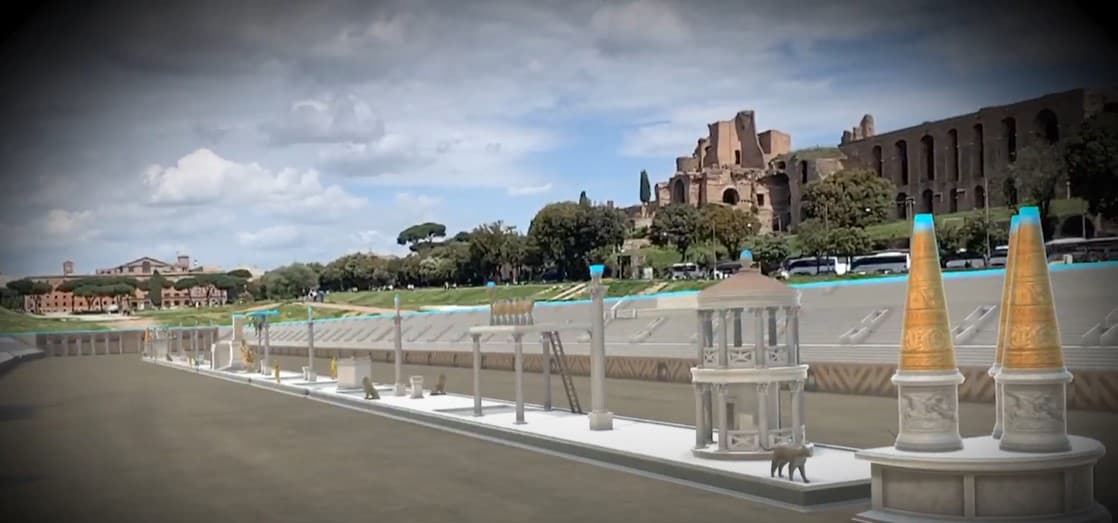
Virtual Reality Routes This use case involves the artificial reconstruction of spaces, in their current state or in a state that corresponds to a different historical period. It is mainly used when you want to show content and routes related to sites that have been lost in whole or in part. This category includes some of the stages of the Circo Maximo Experience project, through which you can relive the chariot races in ancient Rome.
Mixed Reality Routes To make the most of digital content and apply it not only to the virtual context, but also to the physical assets available within a site of interest, Mixed Reality techniques are used, they exploit the coexistence of VR and AR, allowing visitors to immerse themselves in reconstructions anchored to real objects (e.g. ruins), and to view completely artificial contents. The result can be obtained both by using Mixed Reality headsets and mobile devices, even the latter, in fact, with dedicated technologies, are able to perform very well object recognition and tracking.
Simple Digital Routes One possibility that does not contemplate the use of immersive technologies, but which still allows a light digitization of the visit experience, is the creation of applications that provide digital access to content, presenting it in traditional ways, such as image galleries, video and audio narrations.
In conclusion, the digitization process of entities operating in the cultural heritage sector can only be accelerated due to the Coronavirus emergency, but the road has already been traced by a series of successful experiences, both in Italy and abroad.
The advantage for operators in the sector is therefore to facilitate access to the sites of interest at a time when these will be subject to rules that will provide for the quota of entrances, social distancing and the use of personal protection devices. The digital experience can to some extent make up for the drop in turnover that operators will most likely face this season and we do not rule out even in the years to come.
The current Covid-19 pandemic situation has forced the subjects of the entire economic system to rethink work in many new ways and in no time. Even if the companies all reacted rather quickly to the changes imposed by the workers’ health protection measures, this does not mean that they managed to do it in the best way.
In almost all cases of readjustment of working conditions, the digitization of processes is involved at different depth levels.
Depending on the nature of the activity carried out, some companies had only to have their employees work from home, while for others, especially those of the industry, more structured changes were needed.
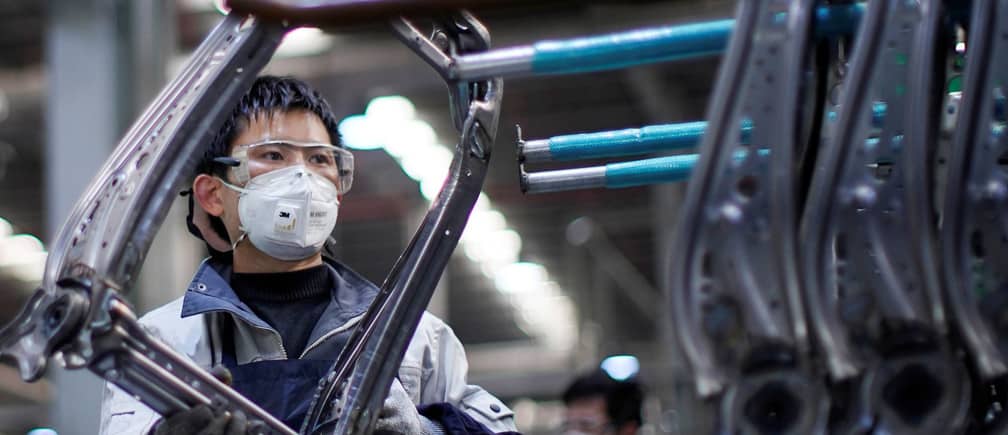
Industrial companies base their activity on the production of goods, therefore the factory is the beating heart of their processes. To guarantee production continuity to the factories, it was necessary to introduce very strict rules in protection of the health of workers, providing them with personal protective equipment, reviewing the mode and duration of shifts, sanitizing the work areas with a certain frequency and monitoring the temperature of the workers at the entrance.
Factories, by their nature, being places with a high social interaction, are very exposed to contagion and therefore must manage a series of risks that concern not only production, but also other processes including logistics, administration and in general staff. The contingencies due to the measures required to deal with Covid-19 have imposed a limitation of business travel, forcing companies to search for alternative ways of managing operations.
Below is a list of some of the industrial processes impacted by the health emergency, with an indication of how Augmented Reality can support certain activities, and some considerations on what will await us once the emergency ends. Personnel Management
It has now become a practice, not only in companies, but also in some public bodies and commercial activities, to measure the temperature at the entrance. High temperature is one of the possible symptoms of Covid-19 positive and verifying that it does not exceed a certain threshold is fundamental in environments with many people. In this case, using computer vision solutions that leverage cameras or Smartglasses equipped with thermal imaging cameras, could speed up operations and streamline the queues at the entrance, without the need to point a laser at people.
Maintenance Management
One of the reasons that determine the greatest movement of personnel in the field concerns the management of maintenance. Even during the health emergency, it is essential for companies in certain sectors to ensure continuity and therefore they cannot afford to keep production or parts of it steady. In order to limit the movements of specialized maintenance personnel, it is possible to provide workers with practical tools that through the use of Augmented Reality help them to identify and solve problems, at least for those of small and medium size.
Inspection
Some industrial activities resort, in certain cases by law, to inspections of work areas or equipment, in order to carry out checks, measurements and other controls. During the pandemic, it was particularly critical in certain sectors to ensure inspection activities, in order not to endanger the health of inspectors. To this end, advanced computer vision systems, equipped on board of drones or other equipment, could guarantee the correct conduct of inspections without compromising human health.
Both during the Phase 1 and Phase 2 of the Covid-19 emergency, the factories have reviewed the relationship between people and the work environment in a very profound way, making a number of choices aimed at limiting the density of people in the space, aimed at providing protection tools and aimed at informing workers about risks. Augmented Reality has already proven to be a very effective tool in the field of risk management in the workplace, thanks to its ability to allow an “augmented” visualization of the surrounding space, associated with rules and actions to be carried out to manage risks .
Except for the temperature control at the factory entrance, it can be said that all the other use cases in which Augmented Reality can support workers to contain risks by helping them to reduce travel and contacts with colleagues, are intended to prove useful even in a post-pandemic phase. Several of these scenarios are already reality in many industrial contexts, although often only for experimental purposes.
The emergency we are experiencing has only increased the awareness that digitization in industry is no longer just an option, but has in fact become the main road to rethinking processes.
On 3 and 4 October 2019 Inglobe Technologies will take part in the XV edition of LuBeC (Lucca Cultural Heritage), the exhibition dedicated to Cultural Heritage and which will focus on innovation in the sector with respect to sustainable management of culture between public and private. During the two days dedicated to the event, debates, exhibitions and training sessions will take place in 6 areas:
management models for cultural heritage
digitization, archives and open data
cultural heritage and sustainability
culture and wellness
museums and innovation
cultural heritage and Made in Italy
Inglobe Technologies will be involved in the InterAction cultural experience debate. It is a focus on products and tools to use, enhance and narrate the territories by creating interactive and emotional experiences, which lead the visitor through paths and discover new places, through digital storytelling. The debate will be coordinated by Marta Piacente, Head of the Promotion and Development Service for Companies of the Chamber of Commerce of Lucca and will include the following speakers:
Luna Meli, for Hi.Stories
Marina Samarotto for Xenia
Massimo Spaggiari for GSnet Italia
Graziano Terenzi for Inglobe Technologies
Andrea Tagliasacchi for Unione Comuni Garfagnana
Graziano Terenzi of Inglobe Technologies, who will intervene during Lubec 2019 in collaboration with Massimo Spaggiari of GSNet Italia, anticipates some topics of the speech entitled “Enhancing outdoor cultural sites with Mixed Reality: the case of Circo Maximo Experience“.
“Designing and implementing immersive experiences for outdoor cultural sites is a complex task that requires to handle various technical problems and to simultaneously harmonize different constraints. The purpose of the speech is to discuss the problems that the use of immersive technologies requires to address as well as the technological options that best lend themselves to their solution, with reference to the remarkable example of the “Circo Maximo Experience“.
“Circo Maximo Experience” is a project of the Capitolina Superintendency for Cultural Heritage, curated by Zetema and developed by GSnet and Inglobe Technologies, which allows visitors to the Circus Maximus in Rome to immerse themselves in the history of the largest entertainment building of all time through Augmented and Virtual Reality, directly within the site. The discussion will show how it is possible to enhance outdoor cultural sites through new technologies and immersive storytelling, which, unlike indoor sites, present difficult and multiple challenges, which in addition to balancing scientific accuracy, narrative structure and of the entertainment of the visitors, they also include the management of the complex interaction between the technological solution and the physical and environmental context of reference. ”
The course will be dedicated to identifying the most suitable technological solutions to support rehabilitation programs and there will be many specialized medical figures. Particular attention will be paid to the relationship between ethics and innovation.
Among the topics addressed by the course there will be:
the development of the movement
motion control
motion learning
movement analysis
robotics
virtual reality
the formulation of descriptive and predictive models
the technology assessment process (HTA)
Inglobe Technologies, already partner of the Bambino Ges? Children?s Hospital in a project to develop a robotic platform with Virtual Reality, is a sponsor of the event.
Thanks to an innovative cultural heritage valorisation project that relies on Augmented and Virtual Reality technologies, it’s now possible to experience the Circus Maximus – one of the most significant places in the Roman history – in its original splendour.
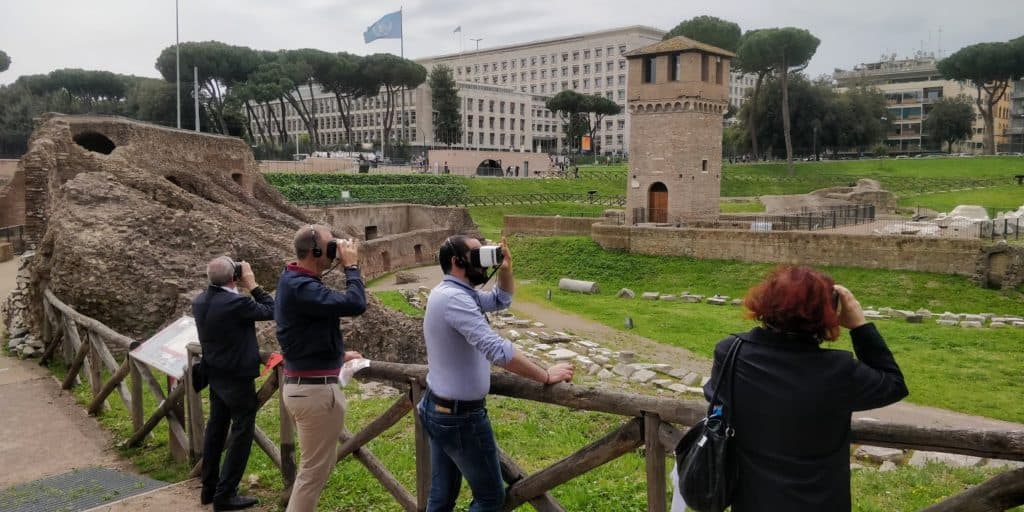
By means of an immersive tour and by wearing Mixed Reality headsets, visitors will be able to admire the monument across all the transformations that it went through during the different ages. Starting from the first wooden structures, to the glory of the imperial age, from the Middle Ages to the first decades of the ‘900, visitors will be engaged in an exciting journey through history.
Circo Maximo Experience is a particularly complex engineering challenge that required the collaboration of an interdisciplinary team called to harmonize the historical, archaeological, architectural and cultural dimensions of the project with the constraints of the site and the power of the technology.
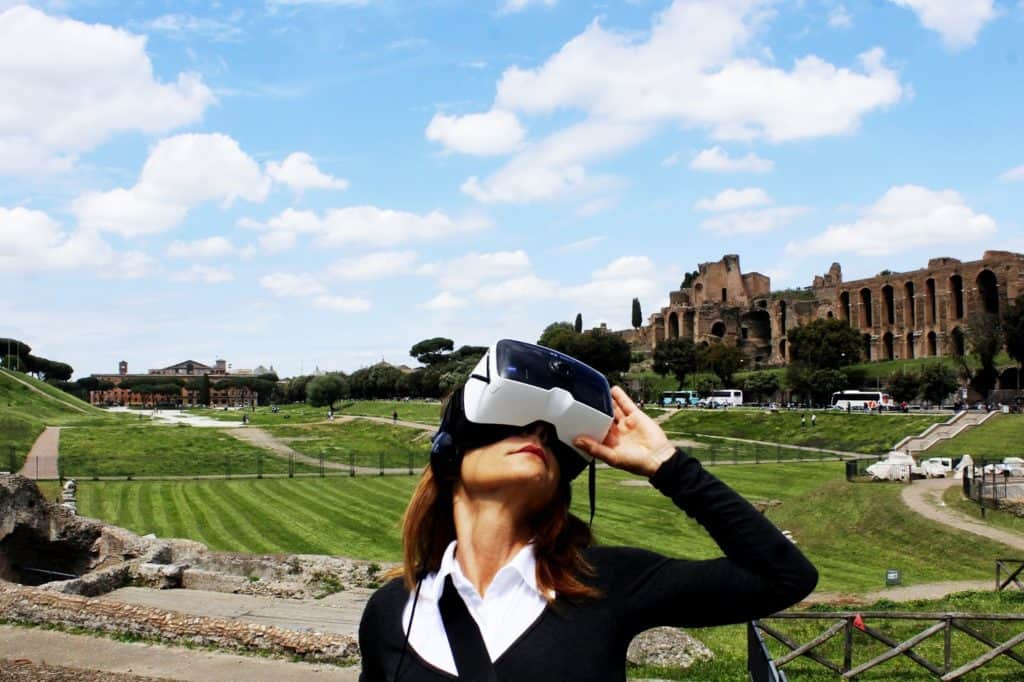
Circus Maximus in Rome AR VR Headset
The project, promoted by Roma Capitale – Department of Cultural Growth, Capitolina Superintendency for Cultural Heritage – and organized by Zètema Progetto Cultura, has been developed by Inglobe Technologies in collaboration with GS NET Italia. The scientific direction is by the Capitolina Superintendency to Cultural Heritage. The solution is based on the coupling of Zeiss VR One Plus headsets with iPhone 6S Plus smartphones and headphones to engage visitors in a unique visit experience of an archaeological site.
A challenging cultural heritage project
The available headsets create a virtual rendering of the Circus Maximus by overlapping 3D reconstructions of the past to the present-day reality to highlight its original magnificence: in particular, the Arch of Titus will appear in its original majestic height. Circo Maximo Experience, through continuous flashbacks to the past thanks to reconstructions in augmented and virtual reality, will enable visitors to see the life of the age-old valley unfold before their eyes, stroll through the Roman shops and watch a chariot race among shouts of encouragement and overturned chariots.
This is a cutting-edge project that implements interactive technologies never before employed in an outdoor area of such a significant size. The reconstruction in augmented and virtual reality is also exceptionally usable regardless of the daily lighting variations and seasonal climatic changes. The 3D contents and the experiences – under the Artistic Direction/Supervision of Tiziana Primavera and under the scientific direction of the Capitolina Superintendency for Cultural Heritage – have been appropriately calibrated to be able to work in real time on a mobile device with limited computing capabilities.
On the software side, we implemented an engine based on Inglobe’s ARmedia SDK with a wrapper to Apple’s ARkit. We have implemented stereoscopic rendering both in VR and AR. We have relied on a specific and extremely accurate 3D mapping method to create maps of the area. We have supported rendering for complex 3D scenes in real-time.
The highlights of the cultural heritage project
Here go just a few figures of the project:
7 historical phases: the study and reconstructions have been extended to the various historical phases of the Circus, requiring the modeling of elements and configurations that span over 2000 years of history
+250,000 Lines of Code: more than 250,000 lines of code have been written for the implementation of the project; they manage the different aspects of the application, from localization and tracking to content visualization, all aimed at making the experiences work robustly in time real in an outdoor site
3 Modelled versions of the Circus: the Circus has been reconstructed through the three main historical phases – the Archaic Age, the Circus from the 1st century BC the first century AD, the Circus of the Imperial Age – to continue with the Middle Ages, the industrial age and the end of the Second World War
+40 minutes is the total duration of the experience: the visit route that can be enjoyed over a period of time ranging from 45 to 80 minutes
+1800 3D models created: the project is strongly characterized by the use of 3D technologies and to support the narration, numerous elements and details have been modeled
8 original songs created by the italian Composer Vito Terribile act as a soundtrack during the emotional journey of the visitors giving an extraordinary emphasis to each stage of the visual tour, enriching it with great suggestion through the different historical periods, with the aim of making the experience even more unique and compelling.
The tour is available in six languages (Italian, English, French, German, Spanish and Russian). The 8 Points of Interest in which the tour is organized include: the Valley and the origins of the Circus, the Circus from Julius Caesar to Trajan, the Circus in the imperial age, the Cavea, the Arch of Titus, the Shops (tabernae), the Circus in the Middle and Modern Ages and finally “A day at the Circus”.
From 28 to 30 March 2019 Inglobe Technologies will take part in MECSPE, the reference fair for the manufacturing industry to be held in Parma. Together with ABB Inglobe will demonstrate its solutions in the Innovation Tunnel as part of the Lighthouse Plant project.
This is an initiative that aims at showcasing the excellence of innovation in Industry 4.0 and that includes, in addition to ABB, Ansaldo Energia, Hitachi Rail and Tenova / Ori Martin. Each of these companies will exhibit the most recent innovations implemented in some of their plants in Italy, the so-called Lighthouse Plants.
In this context, Inglobe will support ABB as a provider of one of the solutions adopted by the Swiss-Swedish multinational, in particular HyperIndustry, a web-based and mobile platform that allows to digitize technical equipment and to build in a simple and intuitive manner step-by-step technical instructions with the visual aid of Augmented Reality.
MECSPE 2019 in Parma will therefore be an excellent opportunity to come and discover how immersive technologies, AR, VR and MR, can support companies in the digitalization of processes, providing added value that translates into greater efficiency and lower operational costs. Inglobe and ABB will allow visitors to have a hands-on experience and to participate in live Augmented Reality demonstrations using mobile and wearable devices.
Last week in Milan Inglobe has been selected as the best company in the “Digitalization” area of Eni’s CallForGrowth ‒ an initiative in partnership with growITup, the open innovation platform which supports major companies in forming new partnerships with start-ups and scale-ups. In the digitalization area ENI aims at making operating manuals completely digital, interactive and integrated with the digital twins.
Inglobe pitched in front of about 30 ENI key managers, providing an overview of HyperIndustry, its Industry 4.0 platform with Augmented Reality features, and sharing ideas on how its adoption could benefit ENI in processes like smart operations, maintenance and training.
Over the next three months ENI and Inglobe will work together to identify the most suitable use cases in order to test the technology in the field.
The Call has involved 119 participants and just 11 of them were invited to pitch ENI in Milan at Cariplo Factory, the head office of the GrowItUp initiative. Other areas of the contest included solutions to improve health and safety of ENI’s workers and innovative retail ideas for ENI’s service stations.
Logistics is certainly one the most crucial processes for production and services companies. Even though it is still perceived as a traditional set of activities, Logistics is rapidly evolving and is set to be a key area for digital transformation and automation. For some of the players in this area, innovation in the logistics department has determined a transformation of the entire company, making this process the strength of their business.
Examples abound, but probably one of the most well known is Amazon’s: indeed the tech giant has built an entirely new business model around sorting efficiency and speed of delivery, creating the “Amazon Prime” set of premium services, which currently have more than 100 million subscribers worldwide.
The two most debated topics in the logistics industry today are automation and the role of man. McKinsey has predicted that around 57% of existing warehousing and logistics functions will be automated and handled by a variety of different robots and machines. Some trends already in place, including autonomous driving, advanced robotics and the advancements of AI, will dramatically change the logistics industry in the next 20 years.
We are not yet to the point where complete automation of warehouses is easily doable and convenient. Automation has a high cost and we are likely going to see these drastic changes within a few years rather than all of a sudden, also considering that managing a fully automated warehouse requires new skills from warehouse managers and staff that take some time to be developed.
Despite the fast evolution and automation of the logistics 4.0 supply chain, data tell us that the job market in this industry is exhibiting a growth in demand of workers and managers, so we don’t see a short term substitution effect of machines over humans, rather we see a collaboration between human and artificial intelligence.
What do we mean by Logistics 4.0?
Just like Industry 4.0 is the evolution of how industrial facilities work, similarly Logistics 4.0 or Supply Chain Management 4.0, is the next step towards the smart warehouse and its connected processes. Logistics 4.0 will help warehouse managers make their facilities more efficient by reducing and anticipating possible mistakes, and by using the large amount of data at their advantage. The workers in turn will cooperate with machines being one of the many elements of the interconnected network.
In terms of definition, Logistics 4.0 is the process of making the current logistics industry more technologically advanced by transforming and digitalizing parts of the process using an advanced network of data, efficient robots, AI algorithms and computer vision techniques like Augmented Reality.
According to BIS Research, in 2017 the Enterprise Augmented Reality market was worth 3.5 billion dollars, while it will reach almost 200 billion dollars by 2025. The sales of smartglasses in 2017, according to ABI Research, reached the value 52.9 million dollars and about one out of four smartglasses was bought by the logistics industry.
Inglobe Technologies contribution to the Logistics 4.0 debate
Inglobe Technologies is a recognized player in the transformation and digitalization of industrial processes. The company is working with key industrial players to deliver innovative and effective solutions based on Inglobe’s Industry 4.0 AR Platform, HyperIndustry.
Together with Metra, a fast growing italian group in Logistics – serving relevant clients in several verticals including Pharma, Fashion, Food & Beverage and Furniture -, Inglobe have started to explore how Augmented Reality and IoT Platforms, integrated with a typical WMS workflow, could impact key processes like Picking, Sorting and Cargo Loading, helping workers to perform their tasks more efficiently.
The concept video below illustrates some of the use cases being explored.
Logistics 4.0 Use Cases
Here are some of the most common use cases in which innovations in the logistics industry make sense:
Augmented Reality Picking
AR can support picking operations by helping the operators identify the picking points, suggesting the most efficient route and providing a digital checklist of work orders. AR can be helpful both for picking by hand and picking by forklift.
Augmented Reality Sorting
Sorting the items on a pallet exhibits a number of critical issues, such as positioning the items according to their weight and degree of fragility, in order to avoid breaking or damaging them. AR can suggest the operators the best possible sorting order, help avoid damages and optimize the pallet size.
Augmented Reality Cargo Loading
Loading a truck with items of different size, shape and weight can generate inefficiencies such as damaging the goods and not optimizing the truck capacity. AR can help the operators load the good in the best possible sequence in order to optimize the truck capacity, reduce the risk of damage and reduce the execution times.
Safety Management
Augmented Reality, and Computer Vision in general, can be helpful in the identification of risks and damages inside a warehouse thanks to the date coming from sensors and cameras placed in the environment. Moreover Safety Management solutions can be used in order to train workers about the risks in the working environment and get them to learn safety procedures faster and better.
Smart Warehouse
Aside from the core logistics processes such as picking and sorting, there are large benefits to be expected in terms of energy savings of a warehouse by leveraging IoT by making smarter the functioning of lights, heating and installations in general. Useful technologies for this use case are beacons, wifi networks and indoor positioning services.
Warehouse Remote Assistance
By providing mobile or wearable devices to the operators inside a Warehouse together with a Remote Assistance solution, can allow them to get help from a Remote Expert and obtain the real time instructions on how to fix certain problems on equipment or forklifts. AR can help minimize the involvement of specialized maintainers and reduce the stops in the process.
The aforementioned use cases can be implemented with a variety of devices and systems, including smartphones and smartglasses. It is here, however, that the use of smartglasses could make life easier and processes more efficient, as the need for hands free operations and wearable computing can be a strong constraint.
Expected Benefits of Augmented Reality Logistics for the Warehouse Managers
Many players have already started to include Augmented Reality in their Logistics 4.0 innovation strategies. Among the players which have carried pilot project involving the use of Augmented Reality in the logistics processes there are DHL and General Electric. At the end of these projects DHL stated they experienced an average increase in productivity of 15%, while GE stated the were able to reach performance improvements up to 46%.
Investment in new technologies and in process reengineering is motivated by the expected benefits. Regarding managing complex warehouses, we tried to list some of the advantages that could be achieved by transitioning to a Logistics 4.0 approach:
Increase in the bulk of goods handled (increased revenues in turn)
Reduction of good returned and reduction of human errors
More effective training. Reduction in cost and learning time
Reduction of accidents and injuries in the warehouse
Energy savings
Conclusions
It is evident from what has been said above that the changes promised by the aforementioned technologies could be disruptive in the Logistics sector, thus forcing players across the whole value chain redesign their business models. Indeed, investing in this kind of innovation today could demarcate the line between the players that will embrace the Logistics 4.0 revolution and those who will not, striving to keep their market share.
Taking advantage of these changes will be harder for small players in the value chain of Logistics as their business model strongly relies exactly on the processes that will be most impacted by the coming changes. Biggest players, on the other hand, are in the condition to best explore different alternatives and evaluate their decisions thus finally investing in those innovations that would bring additional value to their business.
This does not definitely means that small player will be thrown out of the game. Some of them will be forced to change their processes and business model. Others will embrace and further develop specific innovations in the area thus setting themselves as market leaders of the future.














![[Case Study] How ABB managed corrective maintenance with Augmented Reality](https://www.inglobetechnologies.com/wp-content/uploads/2020/07/How-ABB-managed-corrective-maintenance-with-Augmented-Reality.jpg)