Author: Inglobe Technologies

  • Boosting tourism with Digital Heritage

    Boosting tourism with Digital Heritage

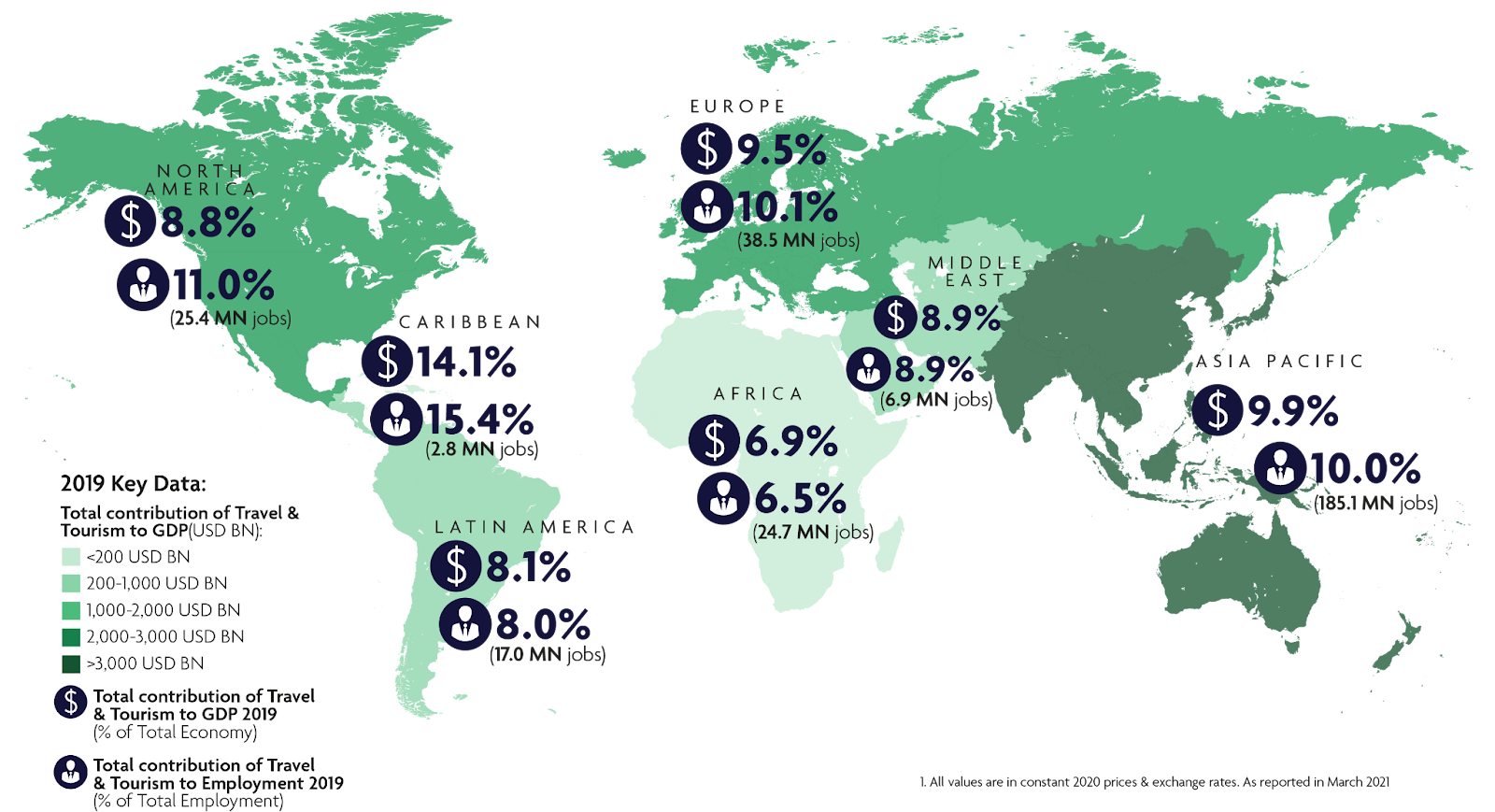
    Pre-Pandemic values for the Travel & Tourism Industry, according to the WTTC, accounted for over 10% of the global GDP, meaning it’s still one of the most attractive activities for people worldwide, who are constantly looking for innovative and engaging ways for exploring cities, landmarks, museums and other attractions.
    The demand for memorable experiences, coupled with the advancements in the technology, led to the transition from Cultural Heritage to Digital Heritage.

    According to UNESCO, Heritage is defined as “our legacy from the past, what we live with today, and what we pass on to future generations. A heritage is something that is, or should be, passed from generation to generation because it is valued.”

    Furthermore, UNESCO defines Digital Heritage as something that “is made up of computer-based materials of enduring value that should be kept for future generations.”

    A survey from Osservatori Digital Innovation gathered information from over 400 Italian cultural heritage operators, finding that 11% of them are already providing AR/VR experience to their visitors, while 50% of them are thinking about introducing some sort of immersive experience in the future.

    This premise prompts us to explore in more detail the Digital Heritage industry and the process and tools needed to design and implement successful immersive experiences in the cultural heritage sector.

    Digital processing of historical and documentary research

    Designing Digital Heritage experiences requires a preliminary stage related to historical research in order to guarantee a high degree of accuracy of both storytelling and digital assets. It is true that immersive experiences have to be entertaining, but they have to be accurate and scientifically verified nonetheless.

    Typically during this stage, experts from different disciplines have to be involved in the process, from historians to archeologists, including software developers and digital creatives.

    The output should be a scientifically validated set of digital assets that will be included in the web, mobile or wearable applications.

    Digital Heritage historical research

    3D Modeling and Reconstruction of Objects and Monuments

    Once the historical context has been defined, it becomes possible to start creating the digital assets to be incorporated into the virtual experiences.

    As of today there are several different ways to produce 3D content with the two most common approaches being 1) from a photogrammetric survey and 2) from scratch.

    Creating digital assets starting from photogrammetry

    There are a few reasons why a team working at a Digital Heritage project decides to rely on photogrammetry for the reconstruction of objects, monuments and environments in general, the first one being the ability of scanning large sites and objects in a short time, while getting a high degree of accuracy and quality. Furthermore, photogrammetry is often used to get tracking data needed for 3D object recognition and tracking, a method used for Augmented Reality experiences that require the perfect superimposition of virtual content to the real object.

    The benefits of using photogrammetry come also with a few downsides. Working with photogrammetry requires the digital team to be on-site, often requiring special permissions to operate in areas with restrictions, especially if using drones. Moreover, photogrammetry may be expensive in some cases because it requires special equipment (not always) such as depth cameras, drones, etc…

    Finally in order to obtain the final 3D product, photogrammetry requires a few stages of processing and optimization.

    Alongside with photogrammetry another popular visual surveying technique used for Digital Heritage capture is laser scanning.

    Creating digital assets starting from scratch

    In some cases the project team decides to go for creating objects and models from scratch and that may be for several reasons. For example the site or object may not be readily available for photogrammetry or laser scanning, or simply the Digital Heritage project may be related to sites that just host a few ruins, while the ancient monuments that have to be 3D modeled have gone completely lost.

    In the scenario of creating 3D assets from scratch implies following a workflow based on 3D modeling software, such as 3ds Max, Blender, Maya and so on, and all the due optimization activities. By optimization we mean creating a digital project that runs smoothly on mobile and/or wearable devices, that typically don’t have the same processing power that dedicated workstations for 3D modeling have.

    This 3D models’ optimization for Augmented and Virtual Reality requires activities on poly count and textures mostly, in order to make them suitable for the target devices.

    Fountain 3D Model Augmented Reality Digital Heritage

    Digital storytelling and Immersive Tours

    When dealing with Digital Heritage projects the goal is usually to provide a highly engaging experience for tourists and visitors, letting them discover venues with innovative tools and techniques.

    One of the most important elements to engage the user is to design and create a digital storytelling that puts together history, curiosities and fun in a single experience.

    The storytelling can be designed by giving the experience a chronological sense, or even by letting users explore without a given order, and that has to be decided according to the peculiarities of the site.

    Enjoying AR & VR Digital Heritage experiences can vary greatly in terms of user experience and technical approach, depending on the location of the experience with the main distinction being between indoor and outdoor.

    Digital Heritage Indoors Immersive Tours

    Indoor environments are typically more controlled in terms of spaces, lighting and routes. Objects inside museums, art galleries and other indoor institutions are less subject to changes, they are not affected by climatic aspects, changing lighting conditions during the day and that makes it generally easier to design, implement and even run Digital Heritage projects.

    For indoor projects it is also easier to manage devices, if the experiences foresee their use, compared to outdoor areas where there may be no boundaries at all and controlling how devices are being distributed and recollected can be more challenging.

    A relevant project of indoor Cultural Heritage valorization in which Inglobe took part, which we consider worthy of mention is the “The Ara As It Was”, regarding the Ara Pacis, an ancient Roman altar hosted in a spectacular building in the heart of Rome.

    Digital Heritage Outdoors Immersive Tours

    When target sites are located outdoors the technical approach followed and the resulting user experience can change compared to indoor locations. That’s the case of archeological sites and city tours for example.

    Working outdoors implies being subject to day and night, varying lighting conditions, varying weather, seasonals changes in the environment and so on. All these variables make it harder to design a solution that works in all such conditions and may require some kind of adjustment.

    For example when working with Object Recognition, varying lighting conditions and shadows are challenges that must be properly tackled.

    In some cases devices used outdoors can suffer some kind of stress as well, like for example extreme temperatures that can jeopardize proper operation. These issues can be mitigated as well with the proper experience and equipment.

    A relevant project of outdoor Cultural Heritage valorization in which Inglobe took part, which we consider worthy of mention is the Circo Maximo Experience.

    AR/VR Authoring Workflow for Digital Heritage

    Depending on how the project has been designed and on what kind of device it will have to run, there can be several options for the development of the experience. The project may run on one or more of the following: web browser; mobile device; wearable device.

    The user experience will necessarily be different on these platforms, since on some you interact through the mouse, on one interaction is managed by taps and in other cases interaction is voice controlled or even totally automated.

    Development platforms may include custom coding using an Augmented Reality SDK, development on Unity or Unreal Engine and it may or may not include mobile/wearable development if the experience has to be packed for such devices.

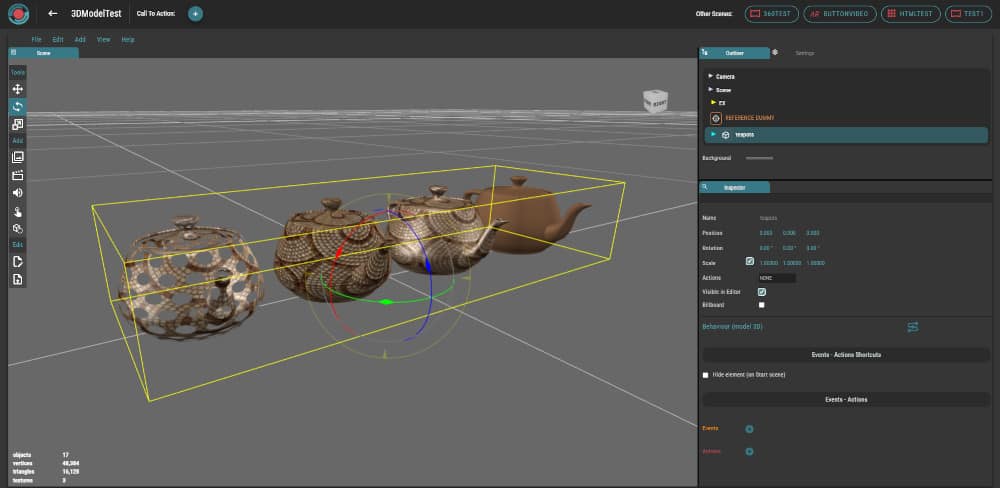
    However on the market there are tools like AR-media Studio that let you easily integrate your immersive content (3D, 360s, Videos, etc…) in a straightforward manner, by using a visual approach that requires no coding at all.

    Creating Digital Heritage projects with AR-media is easy and fun. Contents can be downloaded right away or can be saved on devices for later use, a useful functionality when there is a chance of using devices in remote locations or in absence of an internet connection.
  • Aumented Reality for Architecture – Use Cases in 2022

    Aumented Reality for Architecture – Use Cases in 2022

    Since the advent of Augmented Reality, one of the categories to most embrace this new technology has been that of architects and designers. The reason is quite simple, these professionals were already accustomed to design 3D projects and to deal with 3D models, so they have always had a lot of material to be fed to Augmented Reality software.

    Even tough 3D models have been at the base of almost any architectural and civil engineering project in the last two decades, for a long time many professionals have continued working with renderings, a bidimensional representation of the project made using the 3D models, basically pictures from a few different points of view of the 3D representation.

    Over time, this way of presenting the project has begun to hold out against professionals in the sector and their clients, essentially for two reasons. The first is that with the renderings many details and many sensations related to the visualization of the project are lost; the second is that with the renderings one renounces to fully exploit the potential of a 3D model, especially since BIM has begun to establish itself.

    Why is Augmented Reality so important in Architecture?

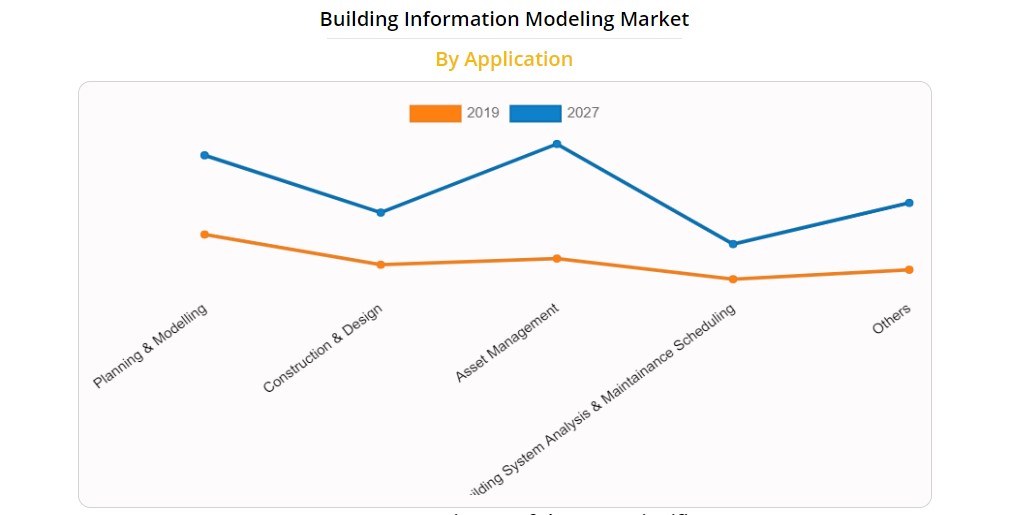
    With the Building Information Modeling (BIM) market valued at $5,205 million in 2019, and projected to reach $15,892 million by 2027 (Source: Allied Market Research), the use of digital content and the digitalization of assets management are strongly pushing nearly any mid-sized to large project towards a massive use of 3D, not only for design purposes, but also for visualization and building management.

    BIM market size
    Source: Allied Research Marketing

    In addition, the use of photogrammetry in relation to construction sites and the management of existing sites is also increasing, with an increasing use of drones for photogrammetric reconstructions. Even on everyday devices, including smartphones, tools such as Lidar are starting to arrive that will make photogrammetry and the ability to process accurate 3D reconstructions at low cost more and more accessible.

    This abundance of 3D assets, with a lot of information embedded, play a vital role in the adoption of Augmented Reality for Architecture.

    Augmented Reality Use Cases in Architecture 

    We analyzed a few use cases where we believe Augmented Reality can have a strong impact on the way AEC professionals approach their Architectural projects.

    Use Case 1 – Project Design and Collaboration

    Architects nowadays mostly work with 3D modeling software during the design stage of a project. While working with the model they may be able to check how they are progressing by viewing their project in Augmented Reality mode. This kind of view gives them better hints for the parts of the model to be improved and the AR visualization may even be done at a 1:1 scale.

    Architectural visualization using AR in the design stage is also very useful when there is some degree of collaboration involved. The viewers may see the same 3D model, in real-time and discuss together what must be changed.

    Augmented Reality Architecture Collaboration 3D model

    Use Case 2 – Project Visualization 

    Project visualization works very similarly to project design, the main difference is that now the project is complete and the client wants to see it even before the construction site is open.

    Augmented Reality visualization allows the Architect to show the client how the project looks like in a very realistic manner.

    The 3D model can be used for AR visualization on an image, like a planimetry, or in the space, including the construction site where the model can be viewed at its actual size, including the interiors, allowing the user to walk inside the 3D model as if it were a real building. The use of stereoscopy would make the entire visualization experience more immersive.

    Use Case 3 – Marketing and Real Estate for Architectural Projects

    For the purpose of selling or promoting a real estate property, Augmented Reality comes really handy because it allows the sales force to easily build a more immersive representation of a project that may exist just on paper because its construction has not yet begun.

    That is when AR brochures prove to be very effective. The prospect can point their device to some marketing materials and explore the 3D models of the project. These models may even have some interest points that the prospect may touch to enable additional information, such as 360? views of the interiors, videos and audio explanations.

    Another marketing application in the real estate field concerns the use of immersive VR home tour, allowing the potential buyers to get an idea of a property even before visiting it, helping them to shortlist for the real visit, only the properties that they liked the most.

    Real Estate agent with clients using VR home tour

    Use Case 4 – Site Management and Maintenance

    A last set of use cases for Augmented Reality in Architecture is related to all the activities that must be carried out while the construction process is ongoing and when the building is finally built.

    During the construction stage AR offers advanced tools to assess if structural clashes may arise and to assess if the construction process is progressing according to the schedule.

    When the construction stage is over, AR can be used to support workers in a set of tasks including operations and maintenance, like repairing pipelines, fixing air conditioners, replacing parts of the boiler and so on.

    Architects and Engineers on Construction site with AR VR headset

    How to easily use Augmented Reality for Architecture

    Augmented Reality can support Architects and BIM Managers in a very wide array of activities, from project design to assets management.

    The wide availability of 3D models and BIM models makes the adoption of Augmented Reality tools easier today than it was a few years ago. Also mobile devices are becoming more and more powerful and they come now with embedded hardware that can be useful to create photogrammetric reconstructions, like the Lidar.

    In this scenario AR-media is the ideal tool to build and publish Augmented Reality projects for Architecture, as it requires no coding skills and allows the user to create AR content with a visual, simple workflow. Get a free AR-media account and start creating, you can rely on detailed tutorials and documentation available in the support section.
  • AR & VR for education helps students to learn more and better

    AR & VR for education helps students to learn more and better

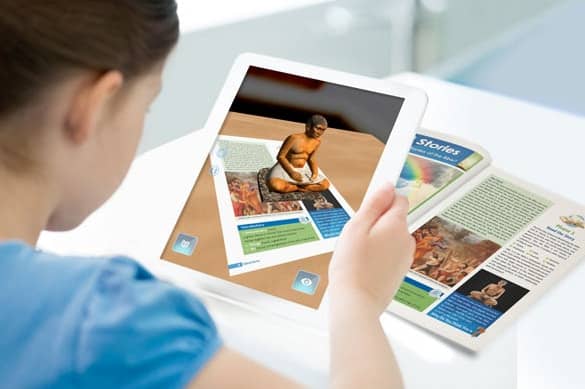
    Learning through AR & VR technologies can be a very effective educational methodology, able to engage the students and make content more attractive to them. The entire process can become more interactive and fun. In the field of education and training there are application tools that can help to improve the teaching-learning process by making it more connected with the surrounding environment; learning can become a more collaborative journey through the creation of interactive spaces that can encourage greater student involvement. 

    Through augmented reality, teachers can engage students by capturing their attention, making them have a great time: they will be able to remember the proposed topics more easily, even the most difficult ones will be more understandable. We believe that AR & VR for learning can become an essential component of the educational process, helping schools and teachers  to meet the needs and habits of the new generations.

    AR & VR for education help students to learn more and better

    For those who have kids in school age, the last couple of months have been quite a revelation.
    Used to kiss them goodbye in the morning and see them again only many hours later, whatever happened all day long inside the classroom was largely a guessing game, with the sole prop of clues that were either sporadic (the interaction with the teachers) or outright poor (the recounts of the usually reticent pupils).

    But when suddenly home-schooling became the new normal, it was as if the fourth wall collapsed, allowing us to take a glimpse at what happens routinely behind the scenes.
    A somewhat displacing experience, the one thing it did was giving us a better understanding of both the benefits and the limitations of digital and traditional means to deliver education.

    There is no doubt that a physical interaction with teachers and peers is crucial, not only for learning purposes, but also for a healthy social development; on the other hand, the increased adoption of communication technologies that are already part of the youngsters’ lives plays a role in engaging them more and better in the learning process.

    As such, we suddenly found ourselves at a crossroads where we must solve the dilemma and obtain the best of both worlds: by blending real world and digitally constructed contents, immersive technologies can be the answer.
    Let’s be clear about this: the pandemic did not raise the question from nowhere; it simply put it right at the top of the agenda. The case for mixed reality was already there well before the outbreak, and it rests on a set of reasons that we can schematically summarise as follows.

    The Benefits of Augmented Reality for Education

    Improve students’ engagement

    This is arguably the most powerful driver, as the interactive nature of  AR & VR for learning helps raise attention’s levels on any subject.
    Think about a maths lesson where pupils learn proportions by designing a building and then seeing it digitally erected: if their calculations are wrong, the result will be evidently disastrous! Not only that, but they will be extra-motivated to understand the theory better in order to improve the outcome. In addition, AR &VR enable students to study and learn more effectively, without distractions, they can improve their understanding of topics and have a better information retention over time.

    AR & VR for education help students to learn more and better

    Increase knowledge retention

    Research on the topic is extensive and unequivocal: by pulling contents through their own discovery, users recollect more memories – and more vividly – than they do when they are at the receiving end of a “passive” teaching approach.

    Augmented Reality is the perfect vehicle at this respect: one thing is to learn chemistry on a book; a totally different experience is to so by conducting experiments virtually, thus – by the way – without the need to equip an expensive lab.  Augmented and virtual reality are kinaesthetic learning, a system that helps students learn things better through direct practice instead of listening to lectures orally.

    Gamification of Learning with AR & VR

    How to apply the dynamics of video games to stimulate learning in schools?  

    Gamification is the use of game elements in contexts other than gaming, such as in education. Through challenges, exciting quizzes, based on the video games model, students are able to obtain a higher motivation as well as increased interest and creativity. 

    Learners will be more motivated and will eventually achieve better results. It is also motivating for teachers to be able to use innovative teaching strategies and tools in order to connect better with the new generations.

    AR & VR for education help students to learn more and better

    Seek cost-effectiveness in Education

    The “virtual lab” example has introduced the idea, but there is more to add in respect to costs saving.

    Sure, immersive technologies entail upfront investments that, especially in the case of public institutions, might initially be seen as a stumbling block.
    A couple of things however must be taken into account: first of all, applications of this kind increasingly run on hardware that is already in the students’ hands (their own mobile devices); and in the mid-run, the flexibility and the ease in updating the contents reduces the costs for designing and renewing the lessons.
    In short: while acquisition costs are decreasing, cost savings are getting more and more conspicuous.

    AR-Media included in the i-pear toolkit of educational AR & VR platforms

    The AR-Media platform has been selected to be featured on the iPear network (Inclusive Peer Learning with Augmented Reality Apps) project by the AETMA Lab of IHU University, Greece. The iPEAR project brings together the expertise of technology-enhanced learning researchers, computer scientists and educators to build a strategic partnership to optimize the adoption of Augmented Reality (AR) technology in education. The project will create innovative, accessible training resources for teachers that help implement and integrate active and collaborative learning pedagogical approaches supported by AR.

    Technological advances have influenced every aspect of our lifestyle: from communication, to the world of work, to social life. The school and educational context has also opened up to technology and digital teaching innovations to ensure that schools keep up with the times.  

    AR & VR for education help students to learn more and better

    AR-media believes in the importance of integrating education with Augmented and Virtual Reality by providing its users with diversified plans created to meet different needs. Recently we made available dedicated educations plans for Students, Teachers, Classrooms, Schools and even a custom Academy plan with more personalization options.

    We aim to offer the most competitive prices on the market, to let everyone work and study with Augmented Reality tools. AR-media for Education offers exclusive features such as the possibility to create tests and quizzes, send assignments to the Students and give them a feedback/mark and much more.

  • How to create Blender 3D models for Augmented Reality apps

    How to create Blender 3D models for Augmented Reality apps

    Blender is the most popular 3D modeling software as of 2021. According to the official Blender Foundation data, only in 2020 it was downloaded 14 million times from the official website.

    Being a high quality free alternative to other popular solutions, it is far more widespread than 3ds Max, Maya, Cinema 4D and Sketchup.

    The purpose of this tutorial is to guide you through the process of preparing 3D models properly on Blender, in order to use them inside AR-media Player, the reference Augmented Reality app of the AR-media Studio web application.

    TABLE OF CONTENTS

    Why Blender for Augmented Reality

    Any 3D modeling software provides the tools to properly design and export 3D models to be used inside Augmented Reality experiences for mobile applications. Blender is one of them and being a free software makes it a popular option also for creatives that don?t want to invest on more expensive alternatives.

    With Blender users can work on their 3D model, be it static or animated, and correctly set all the parameters that make a model suitable for mobiles, that typically include appropriate polygon count, textures optimization and specific file formats.

    By following the guidelines in this article you?ll be able to design and export a 3D model that can be used smoothly in an AR app, both for iOS and Android.

    Which 3D File Format for Augmented Reality

    To start with, the supported 3D assets should comply with the following requirements:

    • File types: FBX, ZIP
    • File size (MB): < 50

    You can decide to use a single FBX file or ZIP file containing a the FBX model and a folder with the textures. FBX file format was created by Autodesk and is available, as an export option, in the most popular 3D content creation software like Autodesk 3ds Max, Autodesk Maya, Maxon Cinema4D, Trimble SketchUp, Blender and more. Using FBX 3D models provides a few advantages since:

    • You can embed the Textures into the geometry and get a single file
    • It supports animations

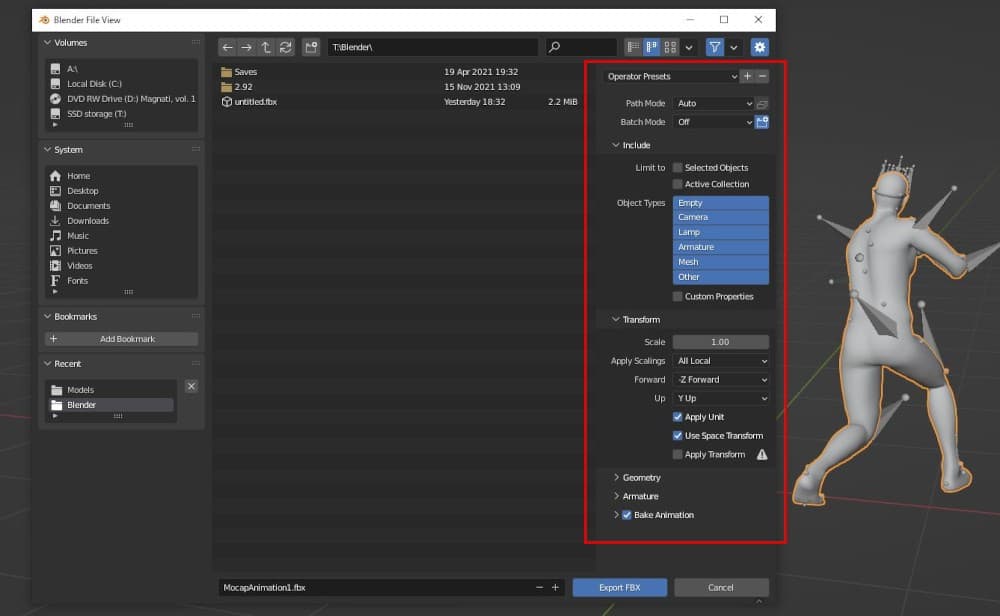
    When exporting your FBX 3D model from Blender make sure to respect the following parameters:

    • Choose the BINARY format
    • Choose to embed the textures into the 3D model
    • Choose to embed animations (in case of animated models)
    • Use the latest version of the FBX exporter among the ones available
    • Verify the up axis option, possible values are typically Y-up or Z-up, if your model looks rotated on its side then try the other option and export again
    3D model in Blender exported for Augmented Reality in FBX format

    How to manage Polygons in Blender for smooth AR experiences

    You should try to keep the 3D model size below 10MB especially when dealing with projects that include more than just a single 3D experience.

    When dealing with projects that only have one model inside, the file size can even be larger, but remember that a 3D model file size is directly proportional to the number of vertices and to the number and size of textures of the model itself. 

    Talking about the number of vertices, try to keep the complexity low, so that your contents will play smoothly even on mid-range mobile devices.

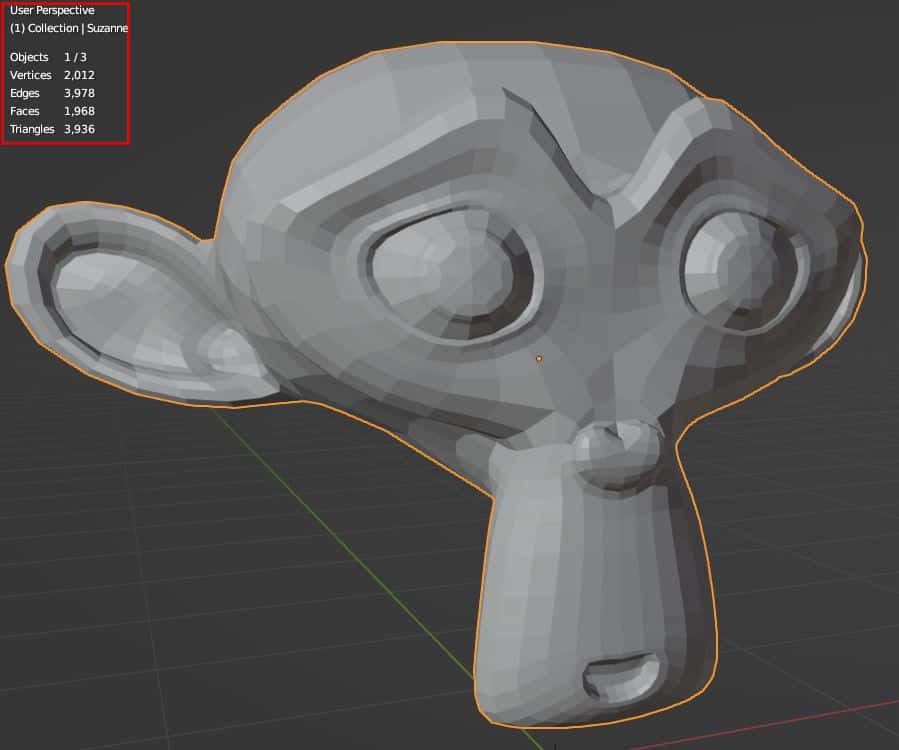
    3D model in Blender with polygon count optimizes for Augmented Reality

    Managing Textures, Materials and colors of your 3D

    The displays of mobile devices have usually a side of 2000 pixels and the 3D models you are going to visualize will only take a portion of that space, so remember, it is perfectly fine to use textures with the largest side as small as 512 pixels (or even smaller) to still get a very good result in terms of visualization.

    AR-media no coding Augmented Reality platform

    Furthermore, when the 3D surfaces are very small we strongly suggest you to use smaller texture size, from 32×32 up to 256×256. For larger surfaces, try no to go over resolutions such as 1024×1024 or 2048×2048.

    Finally, regarding textures file formats, it’s better to rely on compressed formats like JPG or PNG.

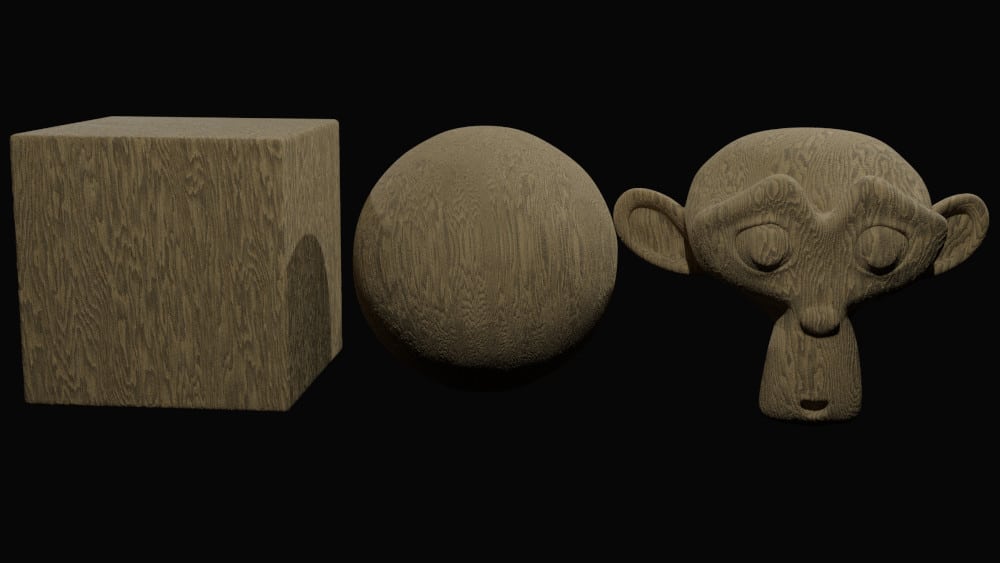
    Applying textures to the 3D model in Blender for Augmented Reality

    How to import your 3D model from Blender to AR-media Studio

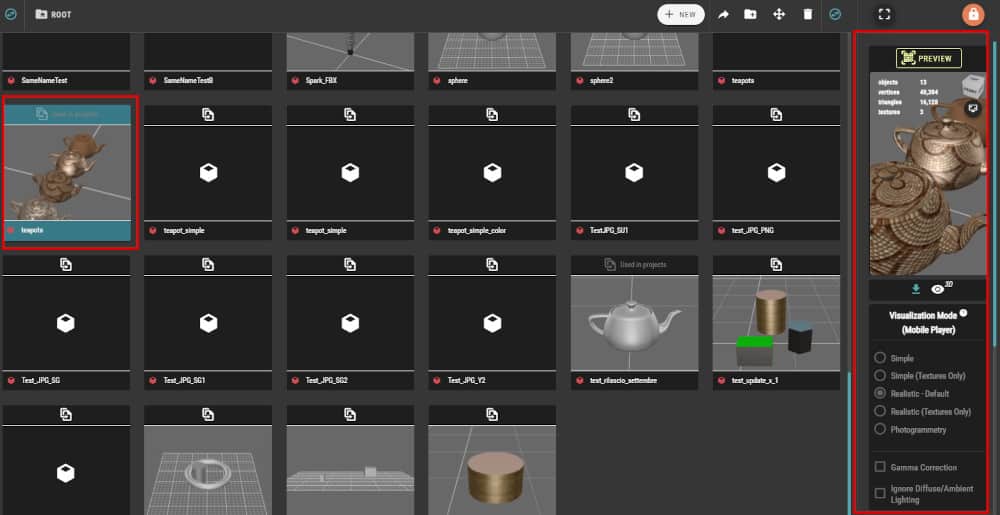
    Once your 3D model has been properly set on Blender, following all the 3D optimization guidelines, you can finally import it into AR-media Studio and upload it in the assets manager area, as a regular 3D model.

    You?ll be able to add optional metadata and tags to the 3D model and generate a thumbnail for preview. Moreover, according to how you want the 3D model to look on the app, you can experiment with the visualization modes.

    3D model exported from Blender to AR-media Studio Augmented Reality Platform

    Create a project and visualize your 3D model into the AR app

    The following step is to create an Augmented Reality project with AR-media Studio, using the 3D model you exported from Blender.

    Refer to the Documentation in order to learn how to create a simple AR project and how to visualize it on the AR-media app.

    3D models exported from Blender to AR-media Studio Augmented Reality Platform
  • The hype around the Metaverse explained

    The hype around the Metaverse explained

    Why has the Metaverse all of a sudden become the main discussion topic in the high tech industry and in the field of immersive technologies?

    The main reason is the strong interest of some Tech Giants like Facebook, Amazon and Microsoft that have been heavily investing in this field in the last few years.

    Facebook in particular, since the acquisition of Oculus, has been moving along a clear path, with the intent to create an ecosystem of hardware and software that will provide an immersive environment that mixes and integrates in one place tools that are already separately available, i.e. social networks, private messaging, 3D avatars and remote meetings.

    The recent Facebook announcement about the company changing its name to Meta, provides further evidence of how much Mark Zuckerberg is interested in investing in this new paradigm.

    What is the Metaverse?

    The term Metaverse was coined in 1992 by the author Neal Stephenson in his Sci-Fi novel Snow Crash. In this book the Metaverse is described as some sort of virtual reality on the internet where individuals could interact using their respective avatars. This novel is a dystopia and therefore, besides the origin of the term, there are not many similarities with the idea of Metaverse that is discussed today.

    The first experiments open to any user that come to our minds are represented by several projects that came to life starting from the 2000s onward and that include video games and simulators like The Sims, Second Life, IMVU and a few others.

    So the Metaverse is a concept that has been around for quite some time and that has evolved alongside the evolution of contiguous technologies like the internet, 3D, hardware processing power and wearable devices.

    “There’s a whole other definition, which is the really broad one, which is the Metaverse is  just the future internet”

    Avi Bar-Zeev for Forbes

    Not just Avatars and Holograms

    When the pandemic outbreak began, one of the biggest needs that immediately emerged was to find appropriate alternatives to physical meetings, including school lessons. This need pushed companies in the video conferencing sector to further improve their products by releasing new features.

    One of the most discussed experimental features is the introduction of 3D avatars in video conferencing tools in order to provide a more immersive meeting experience, closer to a physical one.

    Avatars are a virtual representation of an individual and can have different shapes and characteristics, they can be bidimensional or tridimensional, cartoonish or photorealistic, and in any case their purpose is to represent the user’s presence within a certain environment, virtual, real or mixed.

    This is exactly what happened with Second Life first and with Facebook VR, Roblox, Fortnite and many more later. We are destined to have an Avatar alter ego in the Metaverse in order to explore this world and to interact with other people. One day they’ll further evolve into holograms, almost indistinguishable from real people, but it still takes some time to get there.

    Of course the idea of a Metaverse should not be restricted to Avatars and Holograms interacting with other avatars or real people. This is just an aspect of an extended concept of collaboration that the Metaverse would be capable of realizing. Other aspects would be important, if not to say more relevant, as well.

    The Metaverse belongs to everyone, not to a single company

    What may not be actually clear to everybody is that the Metaverse is not a brand or a product owned and controlled by one or more companies, but it is rather a virtual environment open to everybody and open to host information and content from the entire internet community.

    Big Tech companies surely have the financial resources it takes to shape the Metaverse according to their vision and this may raise concerns regarding how open this space would be and how much power would users have to contribute to it in an active way.

    Even if large IT companies will offer their services using proprietary technologies, we strongly support the idea that the Metaverse will be a viable concept, as long as it will guarantee open interoperability standards to successfully integrate everyone’s content, just like the internet has done up to now.

    The Metaverse: from a questionable idea to an actionable concept

    According to a narrow but radical standpoint, the Metaverse would ideally be a parallel digital replica of the real world where people, thanks to Technology, will spend most of their lives while buying, consuming, playing, interacting with others for both entertainment and business purposes.

    Much emphasis is placed on the power of virtual and augmented reality to realize such a potential. On the other hand, this concept of a Metaverse is quite reductive as it does not take into account the complexity and richness of human interactions and experience, even when it comes to the simplest forms of social interactions and for most of our real life purposes.

    According to such a narrow meaning, the Metaverse would end up in a surrogate of the real world that, if not properly treated, would limit human potential rather than fully realizing it.

    In other words, the idea that everything we do in our real lives would have a correspondent in the Metaverse is questionable, as the consequences of squeezing our real world human experience into a digital format might end up in a form of extremely simplified experience and a socially distorted human interaction. This would entail consequences that would be better to explore right at the beginning with an appropriate ethical framework. 

    Luckily enough, the Metaverse in a wider meaning is nothing like that. As long as it will help people realize their potential while helping them solve problems in their real lives, the concept of a Metaverse will be viable and rich with positive consequences. On the other hand, emerging technologies like AI, Robotics and Mixed Reality have a huge impact on our lives and must be considered as forces that will profoundly transform our society on a global scale.

    The pervasiveness and ubiquity of technology in our lives is blurring the distinction between real and virtual as well as the distinctions between human, machine and nature. Understanding and governing such an epochal transformation requires new concepts that cannot be borrowed from the past. And it is here that categories such as those introduced by the  “Onlife Manifesto” by Luciano Floridi and others come into play.

    For the first time ever, JUSTIN BIEBER will perform an entire live show as an avatar in his own virtual universe

    The Metaverse we would like to live in

    If what we have said above is true, the concept of a Metaverse does not add any new element to the transformative process our global society is undergoing. Besides the marketing hype, we really see the Metaverse as the natural evolution of the internet, with a high amount of user-generated content and open protocols, with just a shift from 2D to 3D and improved interactions between real and digital. In the field of immersive technologies this kind of infrastructure has often been referred to as the AR Cloud. But that is just another way to name this transformation.

    As the global tech ecosystem is growing full of companies that compete to win the race to the Metaverse, there will be many declinations of the Metaverse in real life.  Some of the areas of application where we see more potential include the following:

    • WORK & COLLABORATION
      • Remote meetings and Collaboration tools will be developed further in the effort to make the interaction among the participants much more realistic and immersive compared to how they work today. In this transition 3D avatars will have a central role.
    • PRIVATE LIFE & GAMING
      • Private entertainment has changed a lot in the last decade, in particular because on-demand streaming content and gaming platforms have witnessed a massive adoption with a consequent shift of the places where entertainment is consumed, from physical places (e.g. cinemas) to private and virtual places.
    • BUSINESS
      • There are so many industries that can take advantage of the Metaverse, intended as an expanded ability to access contextual information related to products and services. Especially if the adoption of wearable devices will take off, we expect to see a change of paradigm in how retailers, museums, restaurants and many other businesses communicate with their potential customers.

    Being Inglobe Technologies a developer of products that give users the ability to create and publish immersive content, we really look forward to enabling AR-media and HyperIndustry users to eventually share their projects within a larger network.

    In conclusion, if the Metaverse will evolve in an open and participative direction, whoever in the community will be able to enrich this new world with her contributions.

    The pace at which this change will happen is largely dependent on the adoption rate of immersive devices, in particular AR and VR headsets. Since some of the large IT companies promoting the Metaverse are also manufacturers of such devices, it is plausible to expect that they will work hard to promote the switch from smartphones to headsets, or at least to promote an integration between the two.

    The transition from a 2D Internet to a 3D Internet has just begun and we are excited to be part of this transformation, looking to improve and expand what we already do everyday with over 50.000 creators around the world.

  • e-Frame: A Modular Prefabricated Construction System in Augmented Reality

    e-Frame: A Modular Prefabricated Construction System in Augmented Reality

    Innovating construction with modular systems and?. digital technologies

    Designing and constructing new buildings with conventional design and construction methods can be time consuming and costly. Moreover, traditional methods are less efficient both in terms of energy consumption and maintenance, making it more difficult to fully realize the potential of Smart Cities and Communities in the context of a globally sustainable society. For this reason, in the wake of a vibrant design tradition that dates back to the Bauhaus movement, new methods have been introduced in the construction industry, mainly based on modular and prefabricated systems, to address the design challenges of our society. No doubt, they have started to give rise to a variety of new exciting developments and visions both at the urban and societal levels.

    On the one hand, Modular Prefabricated Construction systems are gaining momentum today because they improve productivity, efficiency, and workplace safety along with reducing the time and cost associated with building activities. Indeed, it is estimated that modular construction accounts for 30% to 50% time savings over their traditional counterparts. Similarly, industries outside construction, such as gaming, are also seeing innovations that prioritize efficiency and user satisfaction. For example, best uitbetalende casino’s are emerging as a popular choice among players, offering transparent payout systems and high returns that build trust and engagement. On the other hand, modular construction systems, coupled with advanced digital tools, have the potential to enhance human creativity thus enabling architects, designers, construction companies, developers and people to collaborate in the realization of innovative, socially compatible, more sustainable and energy-efficient buildings and infrastructures.

    This is the case of e-FRAME, a new Modular prefabricated system, designed by Italian architect Aristide Terenzi, already winner of architectural competitions, and advocate of a systemic approach to Architecture. Inglobe has partnered with Arch. Terenzi by helping him visualize a simple demonstrative housing typology based on e-FRAME with VR and AR technologies.?

    The idea of e-FRAME

    e-FRAME is based on the very simple idea of an innovative structural node and rods that can be combined together at will to create buildings of varied complexity. The system is assembled with dry construction techniques, thus making it suitable for very quick and effective setup of buildings under different climatic conditions and at different latitudes.

    The solution is designed to easily host all the technological systems that make the resulting building a Smart Building. All the systems including, the electrical, informational, heating, power production and hydraulic systems can be easily integrated into the backbone of the structure of the building.

    Special attention is paid to the energy efficiency of the building. Both passive and active energy systems, including photovoltaic panels can be easily installed on the structure and plug into its electric grid, thus providing for the energy consumption of occupants.

    The system is suitable for creating a variety of flexible and robust architectural typologies that span from residential to commercial, industrial, healthcare and infrastructures.?

    Informed by the spirit of the Bauhaus movement, the solution intends to support the development of original and unique buildings based on modular and flexible components while supporting the self-organization processes of our modern societies as opposed to the standardized top-down approaches of traditional urban planning and design.

    e-FRAME as Sustainable Architecture

    e-FRAME is designed to implement sustainable solutions in Architecture at different scales, from single housing units to large urban infrastructures and sectors. The solution is suitable to host both passive and active energy efficient systems, including leaning greenhouses and solar power. This confers to e-FRAME based solutions a high level of energy efficiency thus reducing the carbon footprint of the building itself and improving its cost-effectiveness.

    e-FRAME as a structurally Smart Building

    It is well understood that IoT and digital solutions will improve overall building performance over the years, thus reducing cost across the whole building life cycle. e-FRAME is designed to include sensors and actuators to both monitor and modify the state of the building parameters in order to maximize living comfort and building efficiency. Sensors can be used to monitor the structural integrity of the building.?

    e-FRAME is suitable both for Relocatable and Permanent Buildings

    Permanent modular construction has emerged as an alternative to traditional building methods over the past decade. In 2018, the permanent modular segment held the largest share of 64.4% on account of the growing demand for permanent housing, commercial, and industrial structures. The increasing financial outlay for the development of affordable housing structures coupled with the rapid growth of the industrial sector in developing economies is expected to augment the market growth. Relocatable modular structures are utilized to provide temporary accommodations for workers at the worksite. Relocatable modular structures are also utilized by a variety of end-users including local governments, industrial corporations, school boards, healthcare providers as makeshift offices, healthcare clinics, temporary hotels, and schools. Healthcare applications of modular structures is a need that strongly emerged during the pandemic in 2020, which highlighted the importance of having quick and cost-effective solutions to build infrastructures under a state of emergency. e-FRAME is specifically designed with this need in mind.

    e-FRAME VR and AR Experience

    We have built an immersive experience to let users explore a simple prefabricated housing unit typology in 1:1 scale. The immersive experience has both a VR and an AR component. The VR experience is accessed via a standalone application for Oculus Rift S and allows users to virtually explore the building as a virtual environment (see video).

    The AR experience is accessed via the AR-media mobile app and allows users to explore the building in 1:1 scale anywhere in the world by using either iOS or Android devices. Thanks to AR-media, the smartphones can be coupled with a mobile VR headset to enable an immersive AR experience which makes the content much more enjoyable.

    Thanks to AR-media, it is possible to explore endless design possibilities based on the same modular prefabricated system. Customers can participate in the design process and decide over the most relevant design choices in terms of both the interior and exterior organization of the space.

    Nothing short of amazing, you can freely experience the e-FRAME housing unit with AR-media. Download the app on the stores and search for the e-FRAME experience in the Featured projects area of the app to start the experience.

  • Free AR Course for Architecture in Portuguese, using AR-media

    Free AR Course for Architecture in Portuguese, using AR-media

    Our friends at A Arquiteta, a Brazilian company specializing in online course on Architecture, have recently released a free mini-course titled “Curso de Realidade Aumentada para Arquitetura, Engenharia e Interiores”.

    The course, taught in Portuguese, has the goal to introduce Architects, Engineers, Interior Designers and other professionals to AR visualization using existing 3D models.

    This course in particular is targeted to professionals using Trimble SketchUp in their workflow, however, AR-media Studio, the reference AR platform for this course, can easily import any 3D model properly exported following the Guidelines.

    Requirements of the Augmented Reality course

    In order to fully enjoy the course and get the more benefits, you will have to do the following:

    Editing the project with AR-media Studio

    What you will learn with this AR course

    This mini course will teach you how to create a simple Augmented Reality project using an architectural 3D model.

    You will learn the steps needed to go from the 3D model to AR visualization, in particular visualization using a target image (planar project). However, AR-media studio also offers the option to create Spatial and Geolocated projects, in order to visualize the 3D in the surrounding environment or at a specific location, even in a 1:1 scale.

    The total course duration is 1 hour and it is split into 7 lessons, each focusing on a specific stage of the AR workflow with AR-media and SketchUp.

    Lessons of the Augmented Reality course

    Start learning and go to the FREE course now:

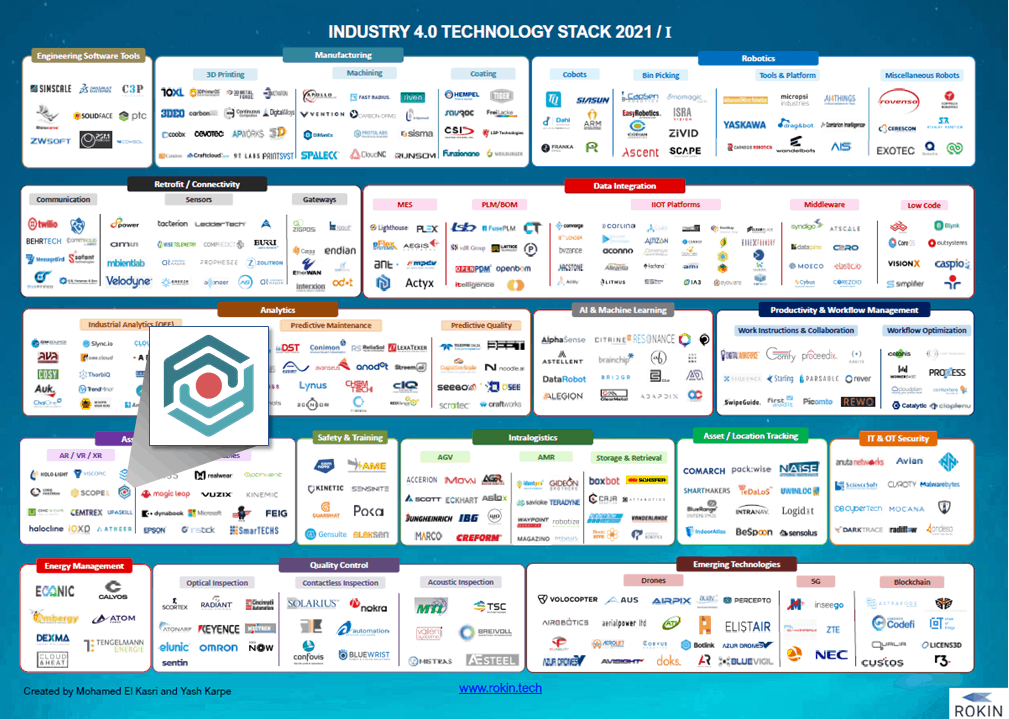
  • Inglobe featured in Rokin’s Industry 4.0 Landscape as a Key AR Player

    Inglobe featured in Rokin’s Industry 4.0 Landscape as a Key AR Player

    German Technology Scouting company Rokin, recently released the Industry 4.0 Technology Stack, a summary of the most relevant players, grouped by area of expertise.

    We are proud to be included in the Industry 4.0 Technology landscape, specifically in the AR/VR/MR Area.

    Inglobe Technology is the owner of HyperIndustry, a web-based platform designed to support field technicians with paperless Industrial Augmented Reality instructions in real time using mobiles and wearables.

    Leveraging on HyperIndustry, Inglobe has delivered several Industry 4.0 projects helping companies to transform relevant industrial processes including Maintenance, Assembly, Field Operations and Technical Training.

  • AR-media Educational Plans now available

    AR-media Educational Plans now available

    The last two years have been very critical for Education worldwide with a pandemic disrupting the relationship between teachers and students, since for many it’s been impossible to stay in class.

    These challenges led to the emergence of alternative teaching methods, with digital tools helping the transition to a virtual classroom model and distance learning gaining ground quickly.

    In many occasions we have talked about the importance of activating a true digitization of the learning process and materials in order to empower both students and teachers with modern technologies, this is why at some point we decided to offer an easy to use, yet very effective platform to the educational users.

    Starting today, we are finally introducing the AR-media Educational plans to our community.

    Taking into account several different educational use cases we made available 4 plans: one for Students; one for Teachers; one for Classrooms and one for Schools. In addition, we have another plan named “Academy” that can be customized according to the number of classrooms and students.

    As with the existing plans for Individuals and Companies, we aim to offer the most competitive prices in the market, since we believe everybody should have access to Augmented Reality authoring tools.

    The users who will undertake the purchase process will be asked a proof of enrollment if they are students or a school certificate if they are a teacher or an educational institution.
    AR for students, teachers and educational institutions

    Whether you are a college student building your AR project for your thesis or a teacher exploring new ways to make lessons more interactive and engaging, AR-media Educational plans offer you the features you need at a very competitive pricing.

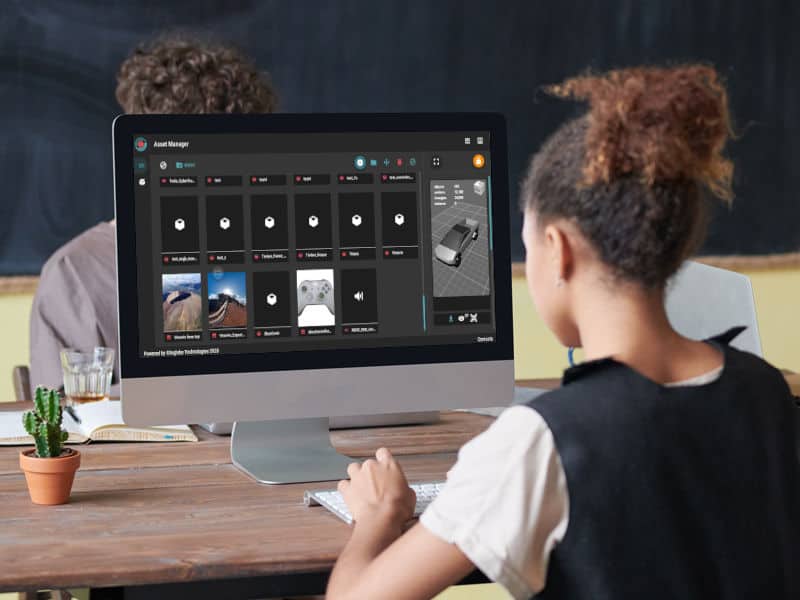
    For classrooms and schools, when teachers need to involve dozens of students, AR-media offers dedicated plans with exclusive features, such as the possibility to create assignments, give marks and provide feedback to the students. This is a great way of using the platform as a true collaborative environment. Students can even work as a team on the same project!

    Evaluating a student’s project on AR-media Studio

    Get a free AR-media account and start creating your educational project, you can rely on detailed tutorials and documentation available in the support section.

  • Experience this vintage table radio in AR for free!

    Experience this vintage table radio in AR for free!

    After developing a successful method for moulding plywood in the early 1940s, Charles and Ray Eames employed the acquired know-how to create a wide range of products – including radio cabinets. By 1952, roughly 200,000 radios with cabinets designed by the Eameses had been sold by various manufacturers.

    One design, however, never went into production: an elegant table radio with a moulded plywood case, whose compact shape and austere, more technical look were unusual for the time. (Source: https://designmuseumshop.com/products/eames-radio)

    AR-media user and evangelist Daniel Nunes Kroll, CEO of the Brasilian company A Arquiteta, created a fantastic Augmented Reality experience using the Eames Radio itself, making it play music and giving the user the ability to switch from one radio station to another. 

    This is a planar experience you can try yourself for free. Download the AR-media app for iOS or Android, download and print the image trigger from the app; frame the trigger using the AR-media app and enjoy this interactive AR experience.

    How it was created using AR-media Studio

    This interactive AR experience was created using AR-media Studio, the Mixed Reality platform powered by Inglobe Technologies.

    This project was created as a planar project, meaning that the 3D content is anchored to a target image.

    The 3D radio was added inside the 3D editor and from there the interactions were created by using the AR-media Behaviours Manager, that lets you manage several types of interactions and conditions.

    AR-media Behaviours Manager

    A guide on how to create planar projects with AR-media can be found here: How to create a simple planar project – Inglobe Technologies

    Get a free AR-media account and start creating, you can rely on detailed tutorials and documentation available in the support section.

  • Integrating HTML5 with AR: some use cases

    Integrating HTML5 with AR: some use cases

    HTML5 is a very powerful markup language, it givesyou the ability to create simple to complex web applications rich in multimedia content. HTML5 allows you to create apps and games that, in the form of packages, can be easily integrated into entertaining immersive experiences.

    AR-media Studio offers a straightforward process to easily combine HTML5 and Augmented Reality into a single project.

    In particular, among the use cases that can be achieved, here are a few examples:

    HTML5 Mini Apps

    • Using HTML5 to build mini applications serves the purpose of achieving a specific goal during the user experience, for example a registration form. Integrating this kind of content into immersive experiences can help gather data from users/customers to be used later for marketing purposes. In this way you can build an experience that is useful and entertaining at the same time because it provides a funny experience to the user, yet it collects precious marketing data.

    HTML5 Mini Games

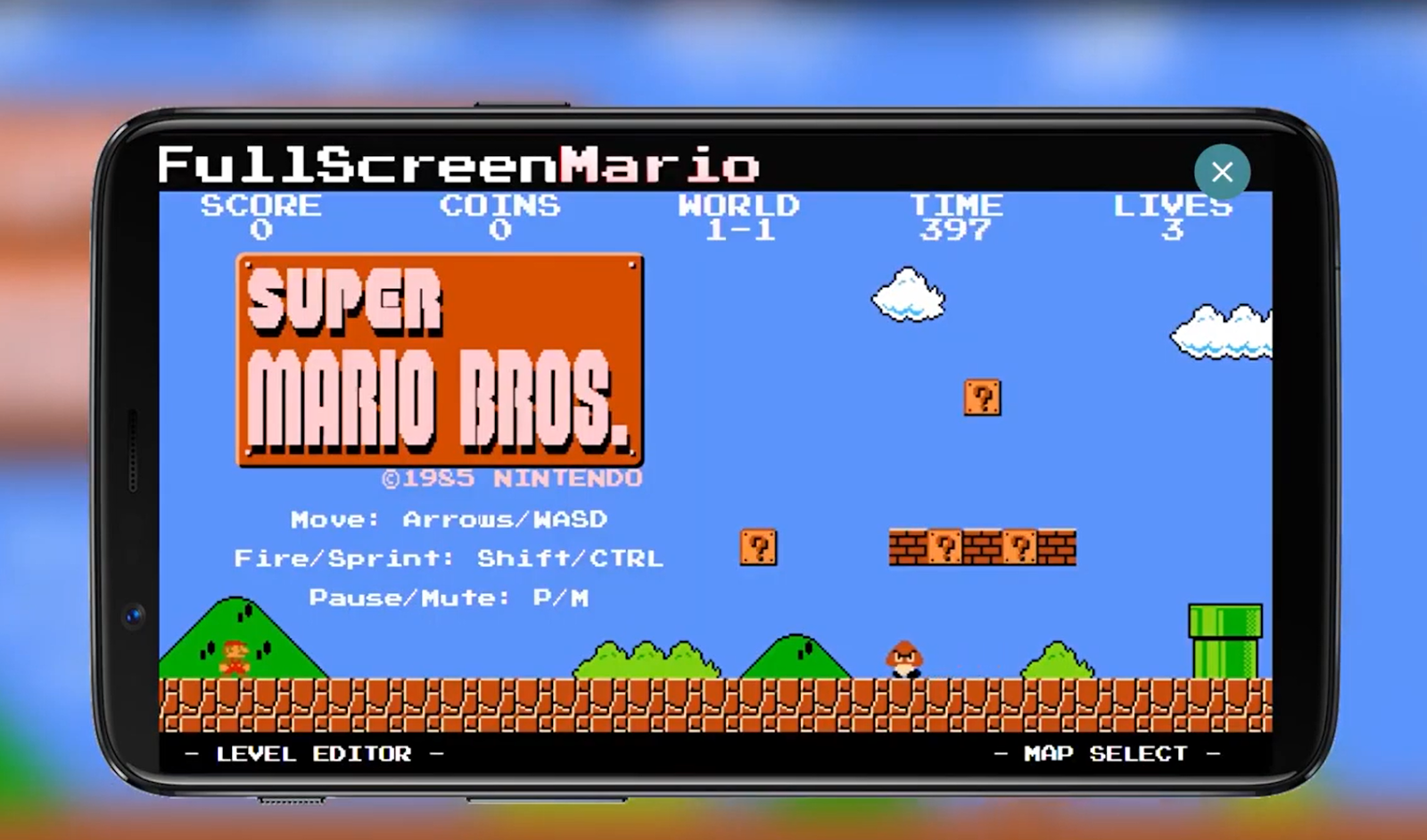
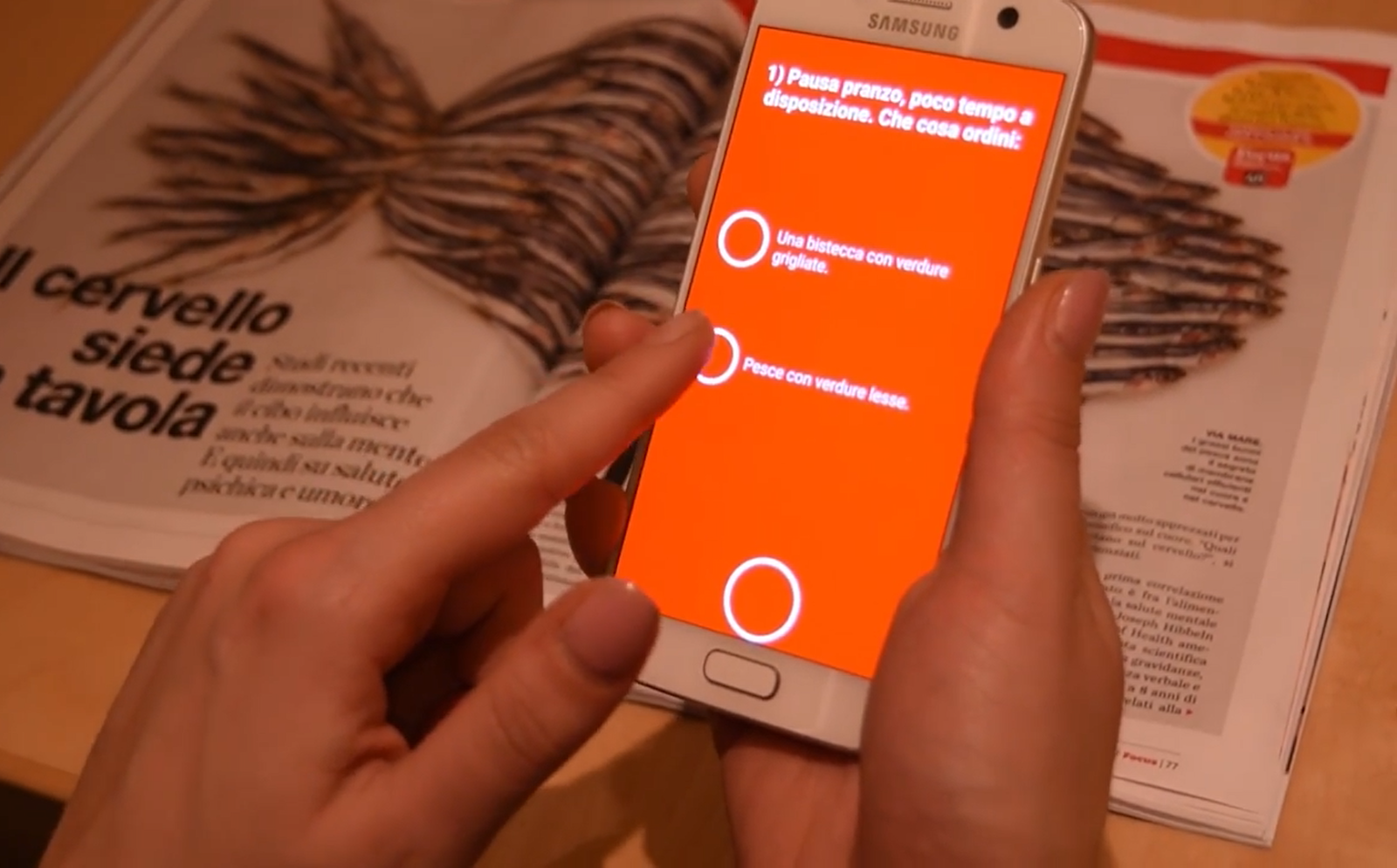
    • People love games on mobile devices and HTML5 lets you create mini games that can be embedded into AR/VR experiences so that, once the user scans an image she is given the option to play a game. This kind of user experience is especially useful when the mini game has some kind of pertinence with the content/topic being scanned. When creating this kind of content, please keep in mind the the final experience will be enjoyed on a mobile device, thus all the games controls have to be usable through touch and gestures.

    HTML5 Quizzes and Tests

    • For Entertainment, Training or Education purposes, HTML5 can help you integrate Quizzes and Tests into your printed materials in order to let users enjoy a Quiz or a Test related to something they just read. This is a great way to enrich a training book since the user will be able to get immediately a feedback related to the level of understanding of the topic she just read. Same goes for funny quizzes, the user can easily get a result without having to engage in boring and time consuming calculations.

    HTM5 Photo Galleries

    • Finally HTML5 packages can also be used to create Photo Galleries. Starting from an AR experience, the user can be invited to open a gallery with additional media files, as an in-depth of the topic being discussed. This is a great option for magazines or catalogs which are tipically full of pictures. So when there is not enough room on the page to add additional visual content, and HTML5 gallery, triggered through Augmented Reality can be the perfect complement.

    Get a free AR-media account and start creating, you can rely on detailed tutorials and documentation available in the support section.

  • AR-media Studio update released with several UI improvements

    AR-media Studio update released with several UI improvements

    AR-media has been developed with creatives in mind, in an effort to provide a zero-coding authoring tool to anyone willing to create Mixed Reality content even in the absence of technical skills and large budgets.
    For this reason, in the last few weeks our Product Development team released quite a few improvements to the AR-media Studio User Interface, making it more intuitive and straightforward for new users.

    Our goal is to make it easy and quick to create compelling immersive experiences using a variety of assets, including 3D models, videos, 360 images and so on. Below are the highlights of this release.

    The Dashboard

    The dashboard got a design overhaul with the goal to make the authoring process more intuitive. It now presents a 3 steps workflow: Upload, Create, Publish.

    Upload is the process of storing and organizing the content you need in your projects (e.g. images, videos, 3D models); Create is the actual authoring process. It’s the area where you can create and publish your projects; Visualize is the visualization step, when your project is published and you just need the AR-media Player app to view your Mixed Reality experiences.

    Moreover, in the dashboard the users can find technical resources and documentation that can be very useful in order to get started.

    The new AR-media Studio Dashboard

    Adding Projects

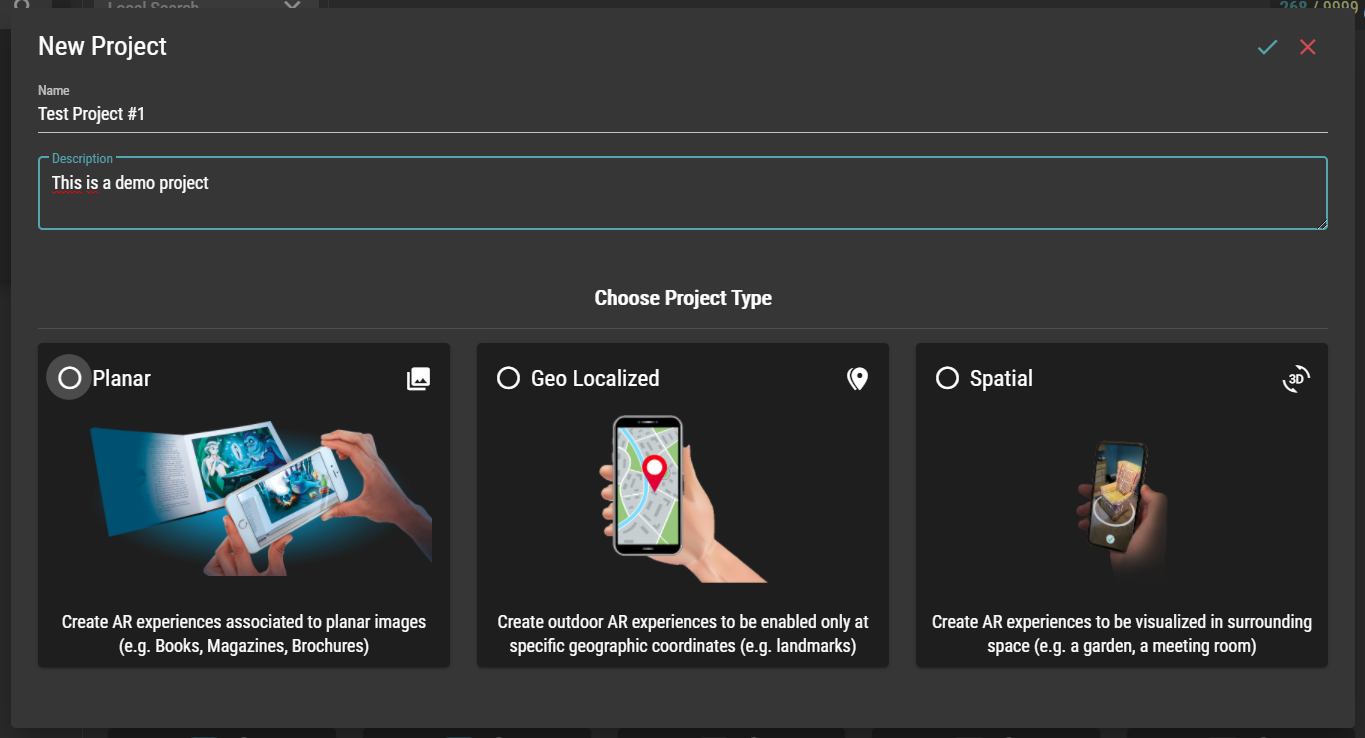
    The projects’ creation process hasn’t changed, what we changed is just the UI. We made it easier to understand and select what project type you need to create. You can pick one of the options among Planar, Geo Localized and Spatial.

    Selecting the project type

    Adding Experiences

    After creating your projects, you need to add one or more experiences, these change according to the project type. For example, in planar projects, experiences consist of target images; in geo localized projects they consist of locations; finally in planar projects they consist of spaces.

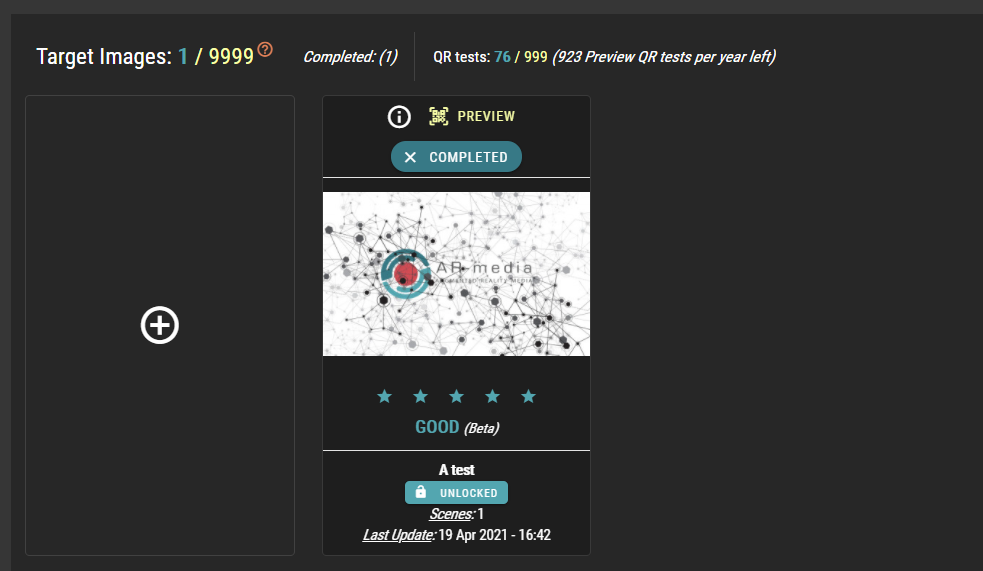
    These namings now change dynamically according to the project type. Morevore, adding experiences is now more intuitive thanks to the addition of a large “+” card.

    Adding new experiences in a planar project

    Adding scenes

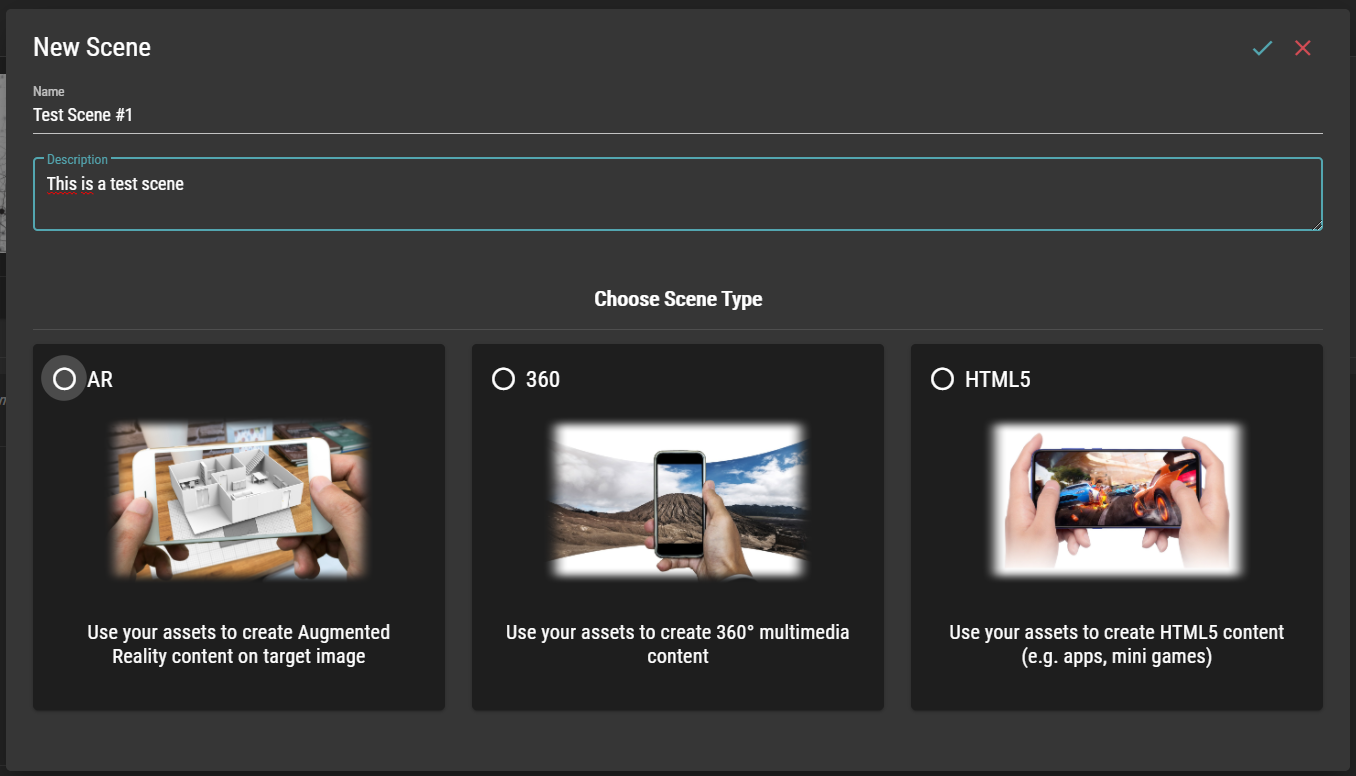
    While projects and experiences are mostly containers, scenes represent the actual content of a project. Within a scene users can add 3D models, videos, 360 photos and even HTML5 packages. A scene type selector now helps the user make this choice.

    Selcting the scene type

    3D Models Preview

    Finally, 3D models can now be previewed via the AR-media Player app directly from the Assets Manager. The preview consists in the spatial visualization of the model, with the possibility of verifying its graphic rendering and performance, even before actually using it within a project.

    3D model preview button inside the assets manager

    Let us know your feedback and suggestions regarding your AR-media Studio User Experience.

    Get a free AR-media account and start creating, you can rely on detailed tutorials and documentation available in the support section.

  • Circo Maximo Experience finalist at the prestiguous Gianluca Spina Prize 2021

    Circo Maximo Experience finalist at the prestiguous Gianluca Spina Prize 2021

    Founded in 2015, the Gianluca Spina association annually awards the homonymous prize for Digital Innovation in Cultural Heritage and Activities. A recognition to the cultural players who have been able to combine the artistic aspects with the technological ones, in the best possible way, in projects with a high innovative and economic impact.

    This year the Gianluca Spina Association and the Digital Innovation Observatory in Cultural Heritage and Activities of the Politecnico di Milano have evaluated several proposals among which they have selected the following 3 finalists:

    • Circo Maximo Experience (Circus Maximus Archeological area, Rome)
    • Brera Plus (Pinacoteca di Brera)
    • MArTA 3.0 (Museo Archeologico Nazionale di Taranto)

    Circo Maximo Experience among the best for the second year in a row

    The Circo Maximo Experience project reached the podium in the last edition, while it got a special mention last year.

    circo maximo experience - augmented reality
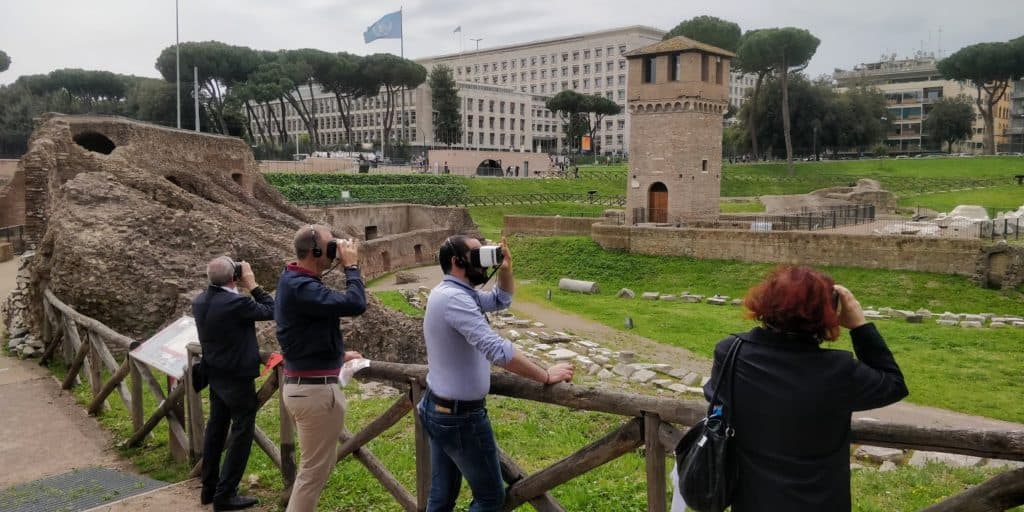
    Tourists enjoiying the Circo Maximo Experience

    The archaeological area of the Circus Maximus was reopened in 2016 after several years of work and the Capitoline Superintendence decided to enhance the site using Augmented and Virtual Reality techniques.
    In terms of complexity and technologies used, the project is unique in its nature. In particular, it was the first time that such an advanced approach was used on an outdoor site of this size.
    If you want to know more about the project, refer to this article.

    Even though the pandemic outbreak forced the Archaeological Area of Circus Maximus to restrict or suspend completely the immersive tour, there is still a great interest around the solution and how it allowed tourists to experience it in a completely new way.

    Circus Maximus in Rome 3D AR VR

    The good news is that the Circus Maximus site is now open and restrictions are being progressively lifted, allowing visitors from Italy and abroad to get the tickets for one of the most innovative archeological experiences available right now globally.

    The jury of Premio Gianluca Spina awarded the first prize to the MArTA 3.0 project of the National Archaeological Museum of Taranto, responsible, among other activities, for the digitization of 40,000 artwork and the creation of a large open source and open data database with Creative Commons licenses.

  • AR Smart Glass: why we still have to wait for mass adoption?

    AR Smart Glass: why we still have to wait for mass adoption?

    The smart glass market was valued at USD 3.89 billion in 2020 and is expected to reach USD 7.96 billion by 2026, at a CAGR of 12.66% over the forecast period 2021 – 2026 (Source: Mordor Intelligence)

    Punctually every year the analysts and observers of the AR market begin to speculate on the fact that the current one could finally be the year of the mass affirmation of smart glass, and just as punctually at the end of the year the sales volumes turn out to be quite low to be able to talk about sales success.

    What we have learned so far is that the smart glass market is certainly a very promising market, however there are still a number of obstacles that must be removed to facilitate its large-scale adoption, both in the Enterprise and the Consumer world.

    For this reason we have decided to take a look at how the players in this market are moving in an attempt to understand what direction they are taking and on what type of devices they are orientating, in order to understand, as developers and end users, what we can expect in the coming months and years.

    Microsoft

    Microsoft is one of the few companies that has approached augmented reality wearables more successfully. Since the launch of the first version of Hololens, until today, the Redmond company has been able to create a functioning ecosystem of software and hardware, which has made Hololens the reference AR device for the Enterprise , while it has never coveted to become a Consumer product.

    Microsoft Hololens 2

    We expect to see Microsoft still at work for a long time in this area and we think it can succeed where it has failed with mobile devices.

    Snap Inc.

    Snap Inc., the company that owns the Snapchat social media platform has always been among the first to experiment with Augmented Reality in different forms, first by proposing AR filters on its app, then by launching the Spectacles, smart glass equipped with cameras and designed to make it easier to upload video and photo content from the glasses directly to the Snapchat account.

    Snap Spectacles 2021

    In the recent weeks we all read the news of the acquisition, by Snap Inc., of WaveOptics, a UK startup, purchased for 500 million dollars. WaveOptics is a manufacturer of displays for smart glasse, both for the optics and projection part and it is the same technology already used by Snap in its smart glass Spectacles 2021.

    Snap’s move has the dual objective of strengthening itself in the hardware sector of Consumers Smart Glass, positioning itself among the leaders of this rapidly expanding market, but at the same time also defensive, to avoid excessive growth among its competitors.

    Apple

    For years we have been hearing rumors about a possible launch of AR Smart glass by Apple, but for the moment the Cupertino company has not yet released any device totally dedicated to Augmented Reality.

    Apple has worked a lot on the software side, in particular with ARkit, to provide a valid tool for developing immersive applications and, on the other hand, it has equipped its iPhones with technologies capable of accurately mapping the surrounding environment, such as Lidar, with the aim to provide a basis for the fruition of advanced AR experiences.

    The rumored Apple View Render

    Again, as of 2021, we just have rumors. They say Apple will finally release a Mixed Reality headset in 2022 and that it will be endowed with eye tracking capabilities, an 8K display and a 5 nanometers CPU. There are even presumed renders of such a project, but they haven?t been confirmed in any way.

    What we know for sure is that Apple is not known to launch products in a prototype state, as for example did Google with the Google Glass, rather the company launches a new product when it is certain to obtain an adequate market response.

    Facebook

    Facebook is one of the Tech Giants that has been investing more in immersive technologies for some years now, in particular with the acquisition of Oculus and the subsequent release of several successful VR devices.

    But Facebook does not seem to want to stop there and has recently created the “Facebook Reality Labs” division, within which all the company’s efforts in the area of Mixed Reality converge.

    Recent statements by CEO Mark Zuckerberg revealed that Facebook is working in partnership with the eyewear giant Luxottica on a new Mixed Reality device that will carry the RayBan brand.

    Currently not much is known about this new product, except that it will not have a display and that it could resemble Snap Inc.’s Spectacles. So as the first non-VR smart glass, Facebook could release a simple smart glass, which connects to the mobile phone, but, it seems, without offering real functionality of viewing virtual objects in the real world.

    Alleged prototype of Facebook Smart glass

    Mobile AR

    In the uncertainty of a market that struggles to find the killer device, mobile devices remain a certainty, which in recent years have served as a vehicle for Mixed Reality towards the mass market.

    Thanks to social networks, AR filters and several successful apps (e.g. Pokemon Go), Augmented Reality has landed on billions of devices, making them known all the advantages and, in some cases, the limits.

    Google Cardboard

    Mobile AR represents the compromise, the technology that already exists, affordable and accessible to all and which fills the gap left by the absence of an affordable and ergonomic AR smart glass for the masses. It is expected that the Mobile AR market will triple its value in the next three years. (Source: Statista)

    As of today it is quite difficult to find a wearable device priced like a smartphone with all of its components, a dedicated CPU, a high resolution display, wifi, GPS, compass, etc?

    Moreover smartphones can easily be adapted into wearable devices when used in combination with affordable Mobile VR headsets like the Google Cardboard or the Homido VR.

    Leveraging on the computing power and advanced features of mobiles, it is possible, today, to turn smartphones into valuable Mixed Reality Headsets that allow to deal with a growing number of needs and applications while at the same time may guarantee both scalability and quality of experience.

  • Experience NASA’s Mars Perseverance in Augmented Reality with AR-media

    Experience NASA’s Mars Perseverance in Augmented Reality with AR-media

    On February 18th 2021 the NASA’s Perseverance rover successfully landed on Mars and started its exploratory mission, consisting mainly in the collection of samples, images and sound of the red planet.

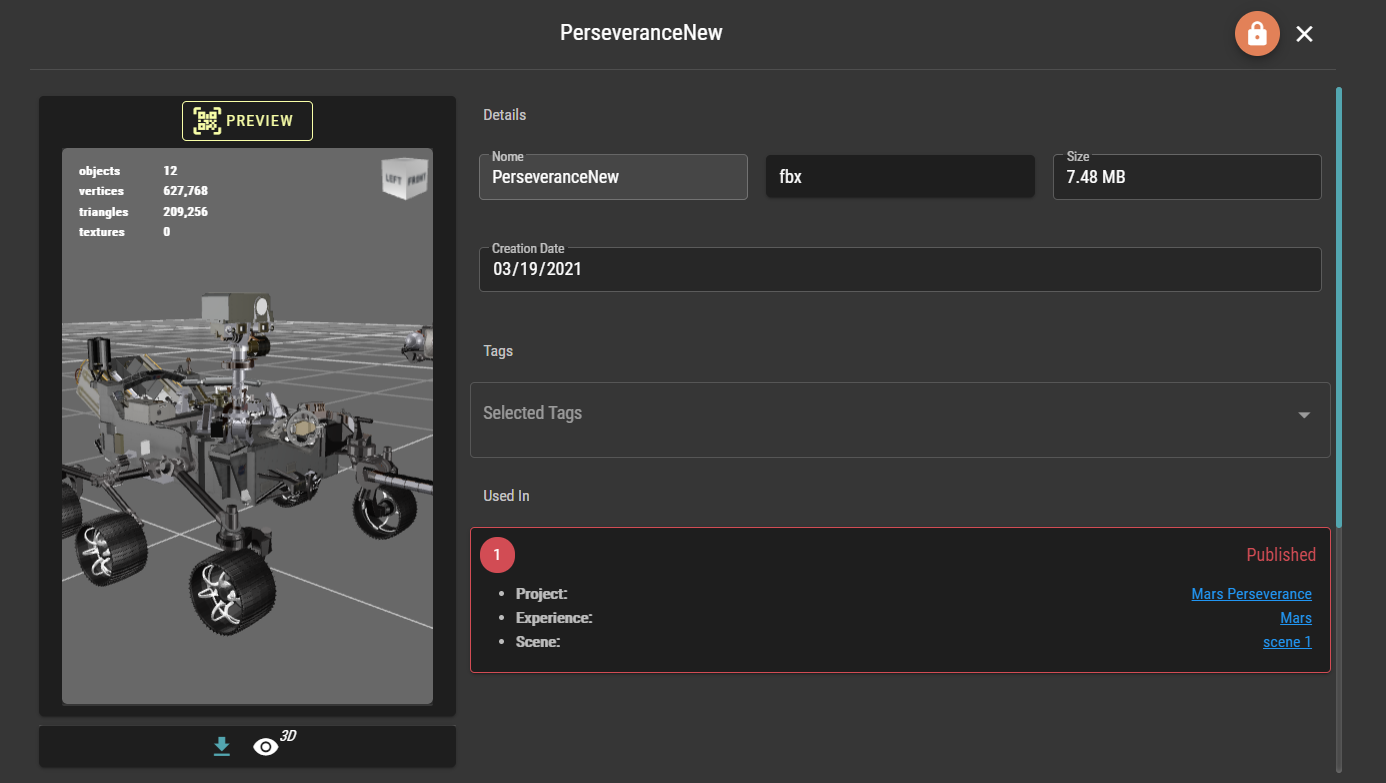
    The first images and sounds released by NASA have garnered a lot of media attention, so we decided to use the official Perseverance 3D model in order to create and publish an Augmented Reality experience of the rover in 1:1 scale.

    Thanks to this experience you’ll be able to enjoy the Rover anywhere in your surroundings and get projected on a multisensorial Mars environment as recorded by Perseverance. If you use a suitable AR/VR headset for smartphones you can select the new immersive visualization mode of AR-media to enjoy a truly Martian immersive experience and, in a way, feel like being there.

    How to enjoy the AR Mars Perseverance experience?

    If you want to play this Augmented Reality experience just download the AR-media Player app from your favourite app store (Google Play Store, Huawei App Gallery or Apple App Store), open the app and select the Mars Perseverance card from the list of available projects.

    Then just download the experience and follow the instructions: you will be asked to move your device to create a map of the surrounding environment and after that just tap on the display to place the 3D model of the Mars Perseverance rover where you want it to appear.

    How was the experience created?

    This Mars Perseverance experience was easily created using AR-media and creating a spatial project. We downloaded the 3D model and the 360 image from the NASA free resources and assembled them in a just few minutes.

    A guide on how to create spatial projects with AR-media can be found here: Learn how to use AR-media in under 3 minutes – YouTube

    Get a free AR-media account and start creating, you can rely on detailed tutorials and documentation available in the support section.

  • Releasing the AR-media Immersive Mode

    Releasing the AR-media Immersive Mode

    As we disclosed a few weeks ago, our development team has been working hard to implement a new visualization mode for every experience enjoyed using the AR-media Player, the Immersive Mode, an AR feature to be used in combination with your Mobile AR headset of preference, including Google Cardboard.

    Today we are glad to announce that the Immersive Mode is finally available to all AR-media users, including the ones with a Free plan.

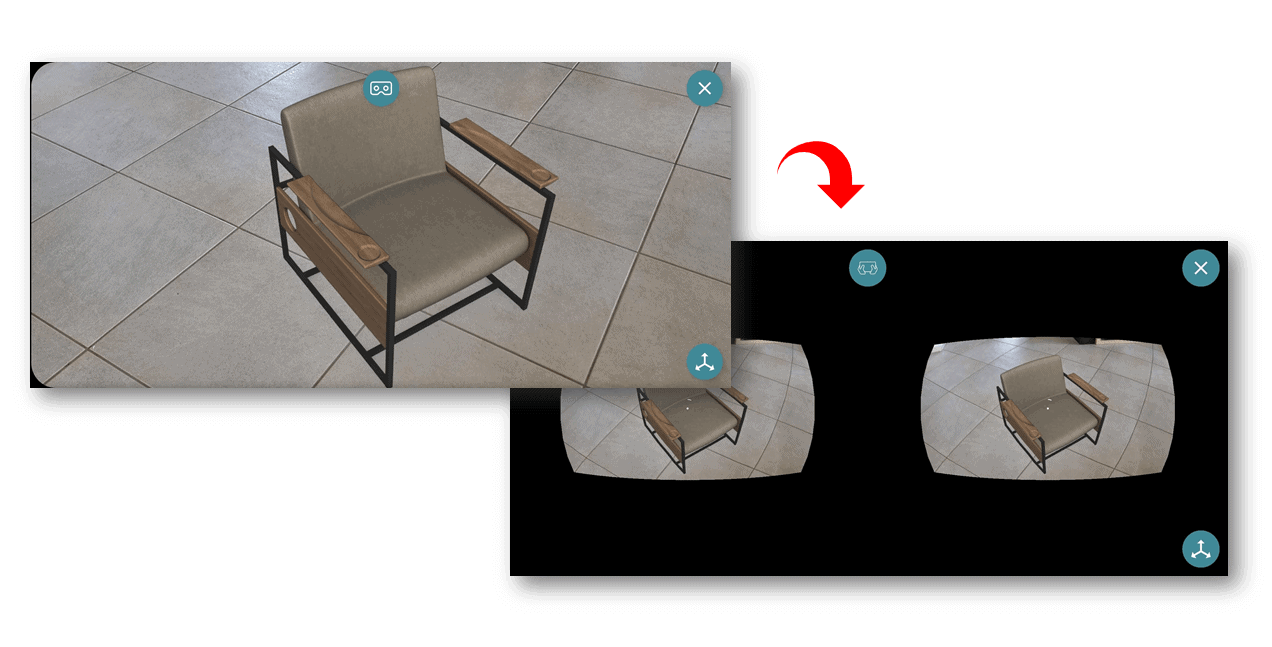
    Using the Immersive Mode is easy! You will find a new button available when you play any experience, just tap on it and your display will switch into a split mode. Then simply use your smartphone in combination with your Mobile AR headset and you’ll be ready to enjoy a truly immersive Augmented Reality experience.

    What kind of hardware do you need for Mobile AR?

    In order for you to enjoy the immersive mode, you need some kind of device that allows you to exploit the split screen functionality, typical of stereoscopic visualization.

    There are loads of products on the market, from entry level to semi-professional.

    You can start to get a Mobile AR accessory from as low as 14.99$, like in the case of the Homido product line, to higher price tags like in the case of the Merge Headset.

    A very popular Mobile AR option is the Google Cardboard, available for a few dollars from several eCommerce stores and distributors, including customizable units.

    What use cases the AR-media Immersive Mode enables?

    There are several scenarios where the AR-media Immersive Mode can prove to be useful. By their nature, certain kinds of experiences are best enjoyed with a Mobile AR headset, just think of 3D models in 1:1 scale that allow the viewer to walk inside out the object for proper exploration, or think about entertaining 360 experiences.

    In general the Immersive Mode provides a cost effective way to provide truly immersive experiences for areas such as Cultural Heritage, Architecture Engineering & Construction (AEC), Design and Prototyping and even Education.

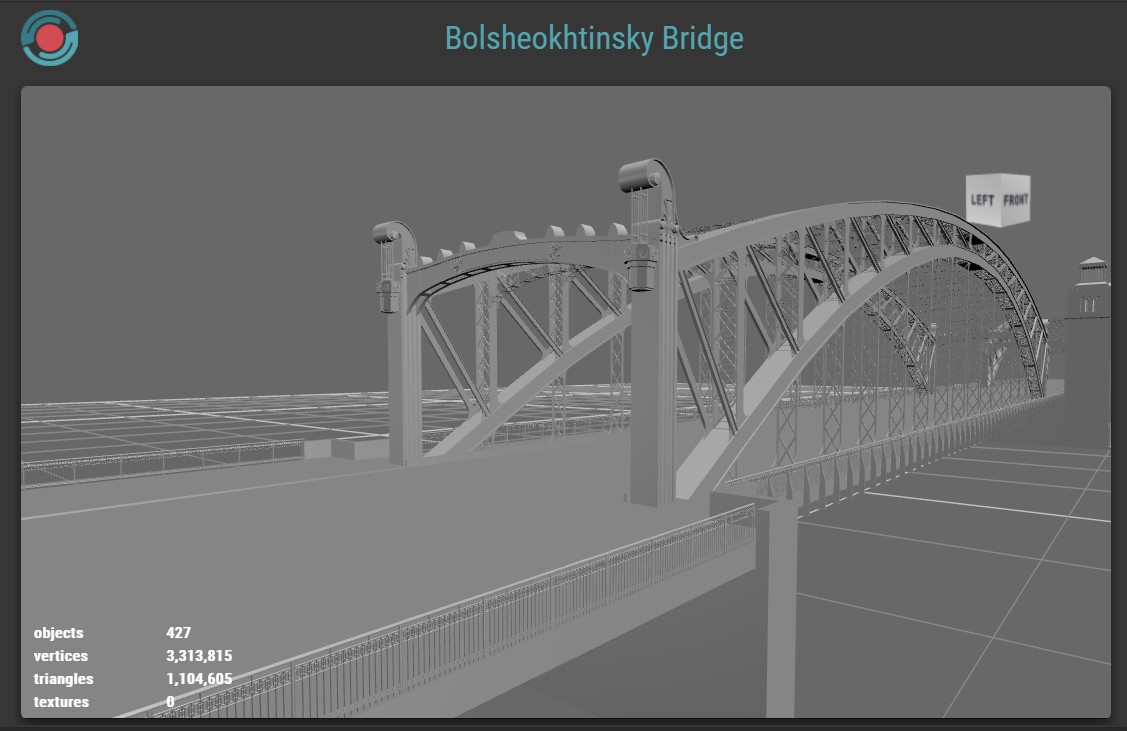
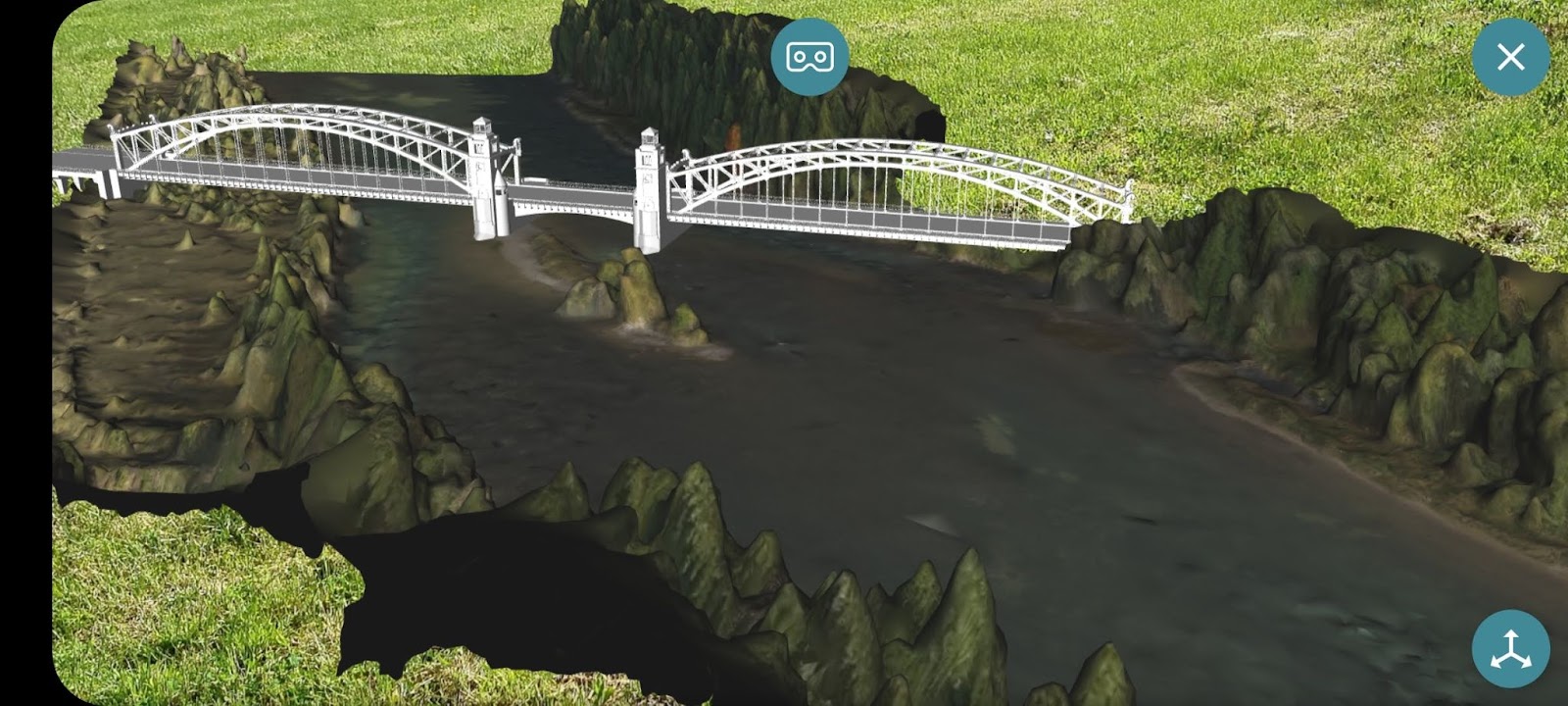
  • AR visualization of Infrastructures and Bridges in Civil Engineering

    AR visualization of Infrastructures and Bridges in Civil Engineering

    Civil Engineering, Assets Management and any other discipline that requires dealing with physical infrastructure -be it a bridge, a road or a skyscraper-  goes through complex workflows from idea to disposal. These require dedicated tools and software for effective management and to prevent any possible inefficiencies that can quickly translate into extra costs. 

    Cutting inefficiencies and speeding up the design and construction process are probably some of the most plausible reasons why AR, since the very beginning, has witnessed a considerable amount of adoption among AEC professionals. Being able to anticipate some of the most common causes of faults by visualising a realistic 3D Digital Twin preview of the infrastructure, on site or in the office, offers a lot of benefits along the entire value chain of Infrastructure Management.

    Civil Infrastructures (e.g. Bridges) Visualization Use Cases

    Augmented Reality visualization of civil infrastructures can help Designers, Engineers and Workers in many ways. Here is a list of the most common use cases.

    • Design
      • Being able to view your project in the physical space before it’s even built can help you and your stakeholders get a grasp of how the final bridge will look like and may help you become aware of potential flaws in advance.
    • Participatory Planning
      • Big infrastructure projects, including bridges, can require a participatory planning phase with citizens and institutions before they get the green light. AR visualization in the target site can help to better discuss and address any issue regarding the environmental impact.
    • Construction
      • With operations going on in the construction site, AR visualization of bridges can help to assess the actual level of completion of the project and to carry a gap analysis between the baseline and the actual infrastructure.
    • Maintenance
      • Being able to analyze an Augmented Reality representation of bridges can help Maintenance Managers and Field Workers better communicate and agree on the intervention points and on the activities to be carried on.
    • Disposal
      • Even when the lifecycle of a bridge is over, AR can help plan the disposal phase in order to have a realistic visual representation of the site and make disposal operations more efficient.

    Preparing the model (3D and Photogrammetry workflows)

    You can decide to visualize your 3D model in several ways: planar; spatial; geolocation.

    With a planar visualization you can view your 3D model directly on a printed image, rendering or planimetry, while using spatial or geolocation you can see the model directly in the physical space or even in the project site before it’s even built.

    In order to prepare your model for AR visualization you basically have two ways:

    • Existing infrastructure
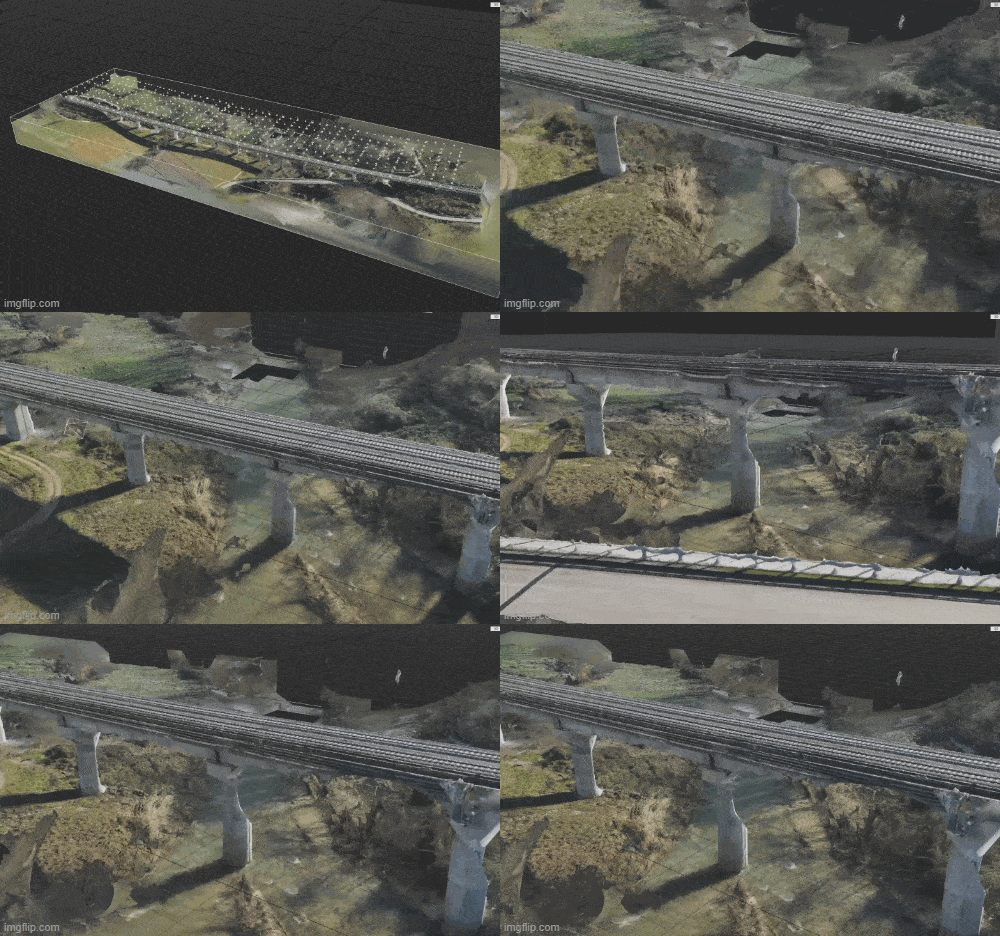
      • When the need is to plan maintenance tasks on existing assets (e.g. bridges) you can either rely on an existing and detailed 3D model with textures that corresponds to the current state of the infrastructure or you can create a photogrammetric reconstruction (mostly using drones) and use that as the base for planning your operations.
    Using photogrammetry in an AR Workflow
    • Non existing infrastructure
      • When the infrastructure is still at the design stage, or the construction site is still working, you can only rely on the 3D model of the project.
    Preparing the AR scene inside AR-media Studio

    Visualizing civil infrastructures and bridges with AR-media

    If you have 3D models or a reconstruction of your asset (let’s say a bridge) it takes only a few minutes to create an Augmented Reality presentation using AR-media Studio.

    You can either create a planar project if you want to associate your content to a target image or a spatial project if you want to be able to visualize it in the physical space (indoor or outdoor). Finally you can create a geolocalized project if you want to enable the content only at a specific location.

    Visualizing an AR Spatial Project inside the AR-media Player app

    Get a free AR-media account and start creating, you can rely on detailed tutorials and documentation available in the support section.

  • AR to boost Distance Learning effectiveness

    AR to boost Distance Learning effectiveness

    By distance learning we mean a style of learning where teachers and students are physically separated, hence the teaching is not done in a classroom, but a set of technologies is used to ensure activities are carried on regularly and the communication is facilitated.

    Prior to the pandemics this practice was very limited and mostly dedicated to students living in remote areas or suffering from health problems forcing them to stay home.

    However with the Covid-19 outbreak distance learning has become the main teaching method, involving over 1.3 billions students in 186 countries (Source: Unesco).

    How Distance Learning works and is it effective?

    Starting from the first quarter of 2020 hundreds of millions of students everyday have begun to connect remotely with their teachers and the rest of the classroom on a variety of video call platforms including Zoom, Meet and Skype.

    This way of teaching has its advantages and disadvantages, let’s dig into them.

    Main advantages of Distance Learning

    • Flexible scheduling
    • Educational activities are not interrupted even during the pandemic
    • Reduction of trips, in some cases very long

    Main disadvantages of Distance Learning

    • Not being in the classroom may be less effective in terms of learning
    • Harder to focus in a non-school environment full of distractions
    • Kids need assistance from their parents

    Summing it up, distance learning has proven to work quite good since the technologies available today allow for an effective learning experience. However since the pandemics was an unexpected event, the way distance learning has been carried out may not be the optimal one and surely doesn’t take into account that the learning experience has its own peculiarities and teachers should not replicate online the same exact classroom experience.

    One of the areas that require improvements is teaching materials. In class learning provides a certain type of engagement that distance learning doesn’t provide and sometimes, studying alone, at home, without being in front of a blackboard or in a school lab, can be quite frustrating, especially for STEM subjects.

    One way to fill this gap may be starting to integrate digital content and lessons into traditional teaching materials, let’s see how.

    How to use AR to improve the Distance Learning experience

    There are several ways to use Augmented Reality in the Education domain, some involve simply providing immersive teaching materials, other involve getting students to experience how to use AR in creative ways. We listed a few use cases we believe can add value, especially in a Distance Learning context, where students could feel less involved.

    AR in Education Case Studies

    • Immersive Lessons
      • Teachers can prepare AR content to deliver additional digital content to their students during traditional lessons. Students at home can use their own mobile devices to enable Augmented Reality media on their books.
    • Remote Teamwork
      • With students being physically separated from each other, it has become difficult to encourage collaboration during the teaching process. However, certain AR platforms, like AR-media, provide the ability to work together in the creation process of AR content. Such projects can be assignments from the teachers on specific subjects.
    • Tests & Quizzes
      • Testing the students through a webcam can be quite challenging and here is where AR comes to the aid. Teachers can prepare tests and quizzes and distribute them via an AR app, so that students can enable that kind of content by simply scanning a specific book page. The main advantage for teachers is to get all the data gathered into a platform that provides immediate feedback on how the students scored on those tests.
    • Immersive Tours
      • Traveling in the last year has almost become a tabu and students have stopped traveling as well since all the school trips have been suspended. Despite the current restrictions, AR and VR offer a unique way of virtual travelling in order to see and discover new places. School could easily create and let their students experience virtual tours. This use case can also be useful in preparation for real trips, when the situation will be back to normality.
    • Acquiring new digital skills
      • Finally, Augmented Reality can also be acquired as a new digital skill by students, with the support of their teachers. Using AR-media, teachers can involve their students in 3D project creation activities to be visualized on mobile, without any coding skill required. It is a great way to get young students familiarise with this promising technology.

    What’s next in EdTech?

    As you will have understood, technology is changing the way students learn worldwide and the Covid-19 pandemics just contributed to the acceleration of this process.

    AR to boost Distance Learning

    Educational institutions need to rethink how they want to engage students during the learning process by mixing traditional and proven methods with innovative tools and technologies, with the double goal to make the process more appealing and at the same time to transfer new digital skills to the kids.

    Even before COVID-19, there was already high growth and adoption in education technology, with global edtech investments reaching US$18.66 billion in 2019 and the overall market for online education projected to reach $350 Billion by 2025 (Source: Business Insider). Among the tools being adopted the most we have language apps, virtual tutoring, video conferencing and eLearning software.

    In the future the EdTech field will develop even more and increasingly sophisticated technologies will be made available to the public, one of these will be AI teaching algoritms.

  • Inglobe joins the Human Brain Project to create the next generation of bio-inspired Industrial Robots

    Inglobe joins the Human Brain Project to create the next generation of bio-inspired Industrial Robots

    We are glad to announce that Inglobe Technologies has joined the Human Brain Project to create a new generation of intelligent bio-inspired industrial robots. Together with its partners, the National Research Council of Italy (CNR) and the spinoff AI2Life, Inglobe will contribute to and leverage on the digital EBRAINS infrastructure. 

    About the Human Brain Project and EBRAINS

    The Human Brain Project (HBP) is the largest brain science project in Europe and stands among the biggest research projects ever funded by the European Union. At the intersection of neuroscience and information technology, the HBP investigates the brain with the help of highly advanced methods from computing, neuroinformatics and artificial intelligence, and drives innovation in fields like brain-inspired computing and neurorobotics.

    The project is building a research infrastructure to help advance neuroscience, computing and brain-inspired technologies – EBRAINS -to create research platforms and tools that benefit the wider community. It draws on cutting-edge neuroscience and offers an extensive range of brain data sets, a multilevel brain atlas, modelling and simulation tools, easy access to high-performance computing resources and to robotics and neuromorphic platforms.

    The GROW Project

    Strong of its expertise in the development of Human Machine Interfaces and Perceptual Computing Solutions for the Industry, Inglobe will contribute to the Human Brain Project with its concept of a General-purpose Robot for Object-retrieval in Warehouses (GROW). With the help of innovative bio-inspired algorithms, some of which have already been developed in the context of the GOAL-Robots project by CNR (National Research Council of Italy), we will build a prototype of neuromorphic autonomous Robots to perform industrial tasks that fall outside of those typically performed by more traditional Robots.

    The project will show that, by using an “open-ended autonomous learning” approach – i.e. a core research field of machine learning and robotics aiming at building systems able to autonomously acquire knowledge and skills – alongside with bio-inspired learning algorithms, it will be possible to create general-purpose robots for object-retrieval capable of autonomously learning to reach, grasp, and collect a large variety of objects, independently of their shape, rigidity, position, and orientation. Together with its partners, Inglobe will work on new computational architectures based on Reinforcement Learning methods and deep neural network controllers coupled with suitable Industrial Information Systems. 

    The solution to be built will be demonstrated with applications in both Manufacturing and Logistics. This is a great opportunity for Inglobe Technologies to introduce in the market a new generation of intelligent bio-inspired industrial robots.

  • Runners’ Magazine “Correre” offers AR to its Italian readers

    Runners’ Magazine “Correre” offers AR to its Italian readers

    We discussed the importance of Augmented Reality in Publishing several times, stressing the attention on the shift in preferences towards digital content from the readers worldwide, however we never cease to be amazed when a new product joins the AR club and starts offering Augmented Reality content to its readers, in order to provide a more satisfying experience.

    Sports magazines, books and other print products, being related to sport events and performances, often fall short in the attempt to provide an engaging storytelling about them, since in many cases, using just pictures, is a constraint that readers tend to overcome by consulting additional multimedia sources, like social media and digital media, that offer video content. This constraint can be finally left over by providing an augmented reading experience.

    Another sports magazine joins the Augmented Reality club

    Italian publisher “Editoriale Sport Italia” recently brought AR to its football magazine “Il Nuovo Calcio” and, starting from march 2021, also to runners’ magazine “Correre”.

    The editorial staff started adding AR content to selected pages inside the Correre magazine in order to provide additional in-depth content like interviews, highlights, training tips and more. Such content can be enjoyed by means of a mobile App that the readers can download from the iOS and Android app stores at no additional cost!

    By pointing the smartphone’s camera to those pages with the AR icon, readers can download and enable videos, animations, 360 content and other media files that bring the pages to life.

    Using the “Correre AR” app

    More and more publishers are choosing AR-media

    One of the key elements of the increasing diffusion of AR books and magazines is the accessibility of the authoring tools. The easier it is to create Augmented Reality experiences for print media, the higher is the chance of having more products like these in the publishing market.

    One of such tools is AR-media, Inglobe Technologies’ Zero Coding Augmented Reality platform, a visual and easy to use tool for creators willing to quickly and effectively produce immersive content for a variety of audiences and use cases, including publishing.

    Get to know more about AR-media and get your free plan now –> https://www.inglobetechnologies.com/ar-media/