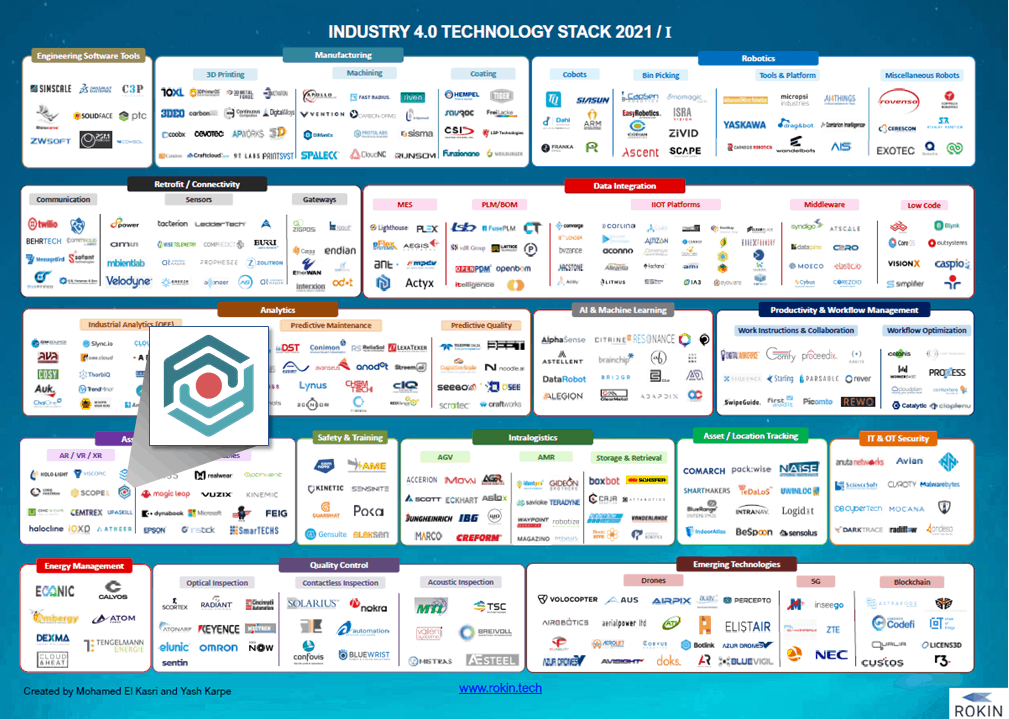
German Technology Scouting company Rokin, recently released the Industry 4.0 Technology Stack, a summary of the most relevant players, grouped by area of expertise.
We are proud to be included in the Industry 4.0 Technology landscape, specifically in the AR/VR/MR Area.
Inglobe Technology is the owner of HyperIndustry, a web-based platform designed to support field technicians with paperless Industrial Augmented Reality instructions in real time using mobiles and wearables.
Leveraging on HyperIndustry, Inglobe has delivered several Industry 4.0 projects helping companies to transform relevant industrial processes including Maintenance, Assembly, Field Operations and Technical Training.
We are glad to announce that Inglobe Technologies has joined the Human Brain Project to create a new generation of intelligent bio-inspired industrial robots. Together with its partners, the National Research Council of Italy (CNR) and the spinoff AI2Life, Inglobe will contribute to and leverage on the digital EBRAINS infrastructure.
About the Human Brain Project and EBRAINS
The Human Brain Project (HBP) is the largest brain science project in Europe and stands among the biggest research projects ever funded by the European Union. At the intersection of neuroscience and information technology, the HBP investigates the brain with the help of highly advanced methods from computing, neuroinformatics and artificial intelligence, and drives innovation in fields like brain-inspired computing and neurorobotics.
The project is building a research infrastructure to help advance neuroscience, computing and brain-inspired technologies – EBRAINS -to create research platforms and tools that benefit the wider community. It draws on cutting-edge neuroscience and offers an extensive range of brain data sets, a multilevel brain atlas, modelling and simulation tools, easy access to high-performance computing resources and to robotics and neuromorphic platforms.
The GROW Project
Strong of its expertise in the development of Human Machine Interfaces and Perceptual Computing Solutions for the Industry, Inglobe will contribute to the Human Brain Project with its concept of a General-purpose Robot for Object-retrieval in Warehouses (GROW). With the help of innovative bio-inspired algorithms, some of which have already been developed in the context of the GOAL-Robots project by CNR (National Research Council of Italy), we will build a prototype of neuromorphic autonomous Robots to perform industrial tasks that fall outside of those typically performed by more traditional Robots.
The project will show that, by using an “open-ended autonomous learning” approach – i.e. a core research field of machine learning and robotics aiming at building systems able to autonomously acquire knowledge and skills – alongside with bio-inspired learning algorithms, it will be possible to create general-purpose robots for object-retrieval capable of autonomously learning to reach, grasp, and collect a large variety of objects, independently of their shape, rigidity, position, and orientation. Together with its partners, Inglobe will work on new computational architectures based on Reinforcement Learning methods and deep neural network controllers coupled with suitable Industrial Information Systems.
The solution to be built will be demonstrated with applications in both Manufacturing and Logistics. This is a great opportunity for Inglobe Technologies to introduce in the market a new generation of intelligent bio-inspired industrial robots.
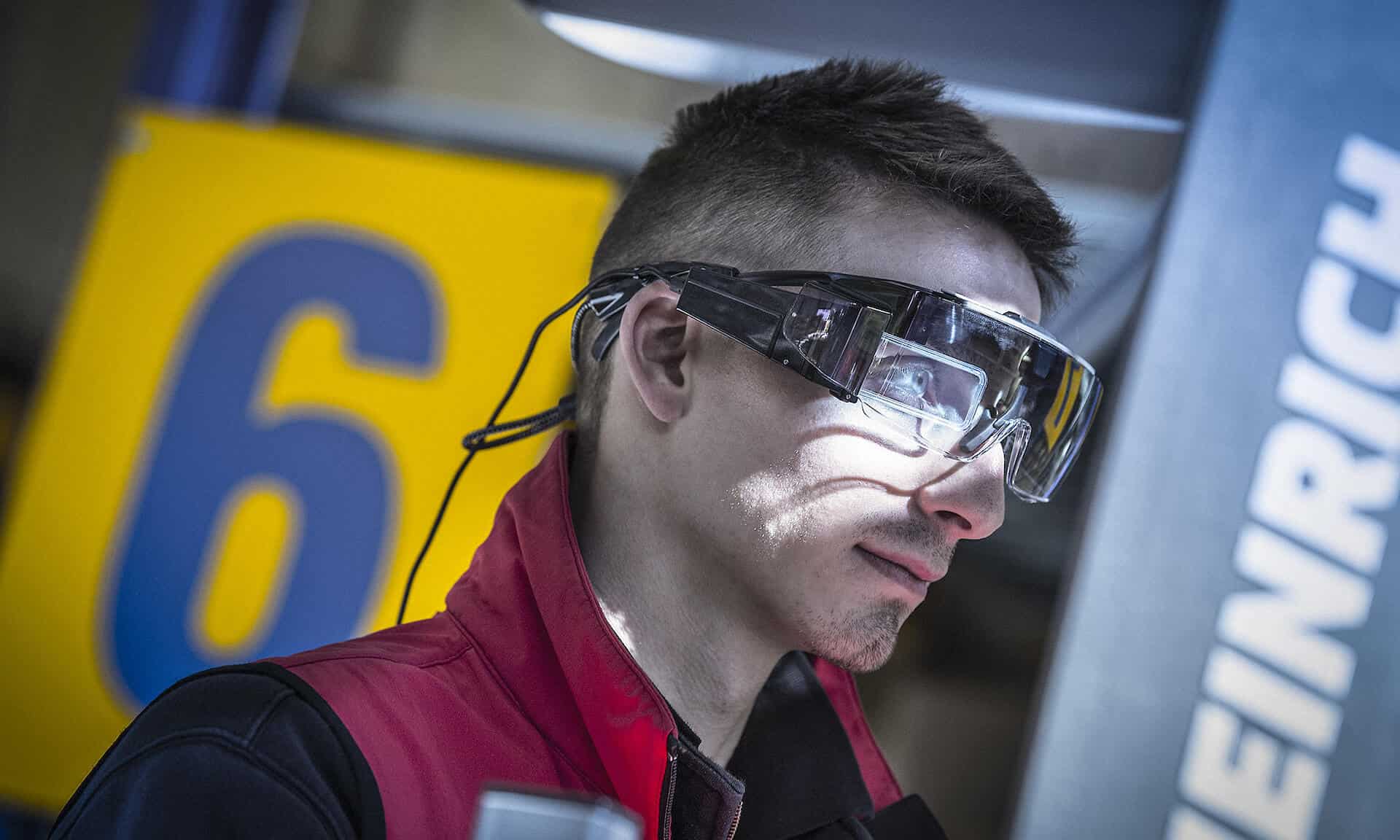
VisionAR is a Safety Augmented Reality smartglass developed by Univet, an Italian multinational specialized in manufacturing safety, laser and medical protective eyewear products. EyeTechLab is the Univet’s Division of the new products, including the adoption of the most disruptive technologies into the eyewear protection products, including companies like Sony for the adoption of their waveguides display technology in safety Augmented Reality devices.
One of the reasons why this product is so appealing for industrial use cases is because this is a ANSI Z87.1+ and EN166 certified device thus it meets the maximum level of safety PPE standards.
Univet’s VisionAR is a Safety Glass with a green scale monocular Augmented Reality projector with a 20° FOV (field of view). Moreover it features a capacitive touch area with four available commands: swipe forward; swipe backward; tap and double tap.
The battery module ensures up to 9 hours of autonomy for the typical use, allowing workers to fully cover an entire shift.
Source: Univet
On the top of the VisionAR smart glasses there is a camera that enables a number of capabilities, from video streaming to gesture recognition. Additional components that can be mounted on the top of the glasses include: a status LED, a temperature sensor, an IR sensor, a light sensor, a barometer sensor or a microphone for voice control.
For developers willing to access the devices resources and drivers, it is possible to connect to VisionAR Control Unit that can easily communicate with Windows, Linux and Android operating systems.
Suitable Use Cases with Univet’s VisionAR
At Inglobe Technologies, having tested and worked with plenty of wearable devices, we are aware of the technical limitations and constraints of many of them, such as heavy to wear, tethered to an external unit, low battery life and more…
For the aformentioned reasons, we were particulary happy with VisionAR after testing it, since it is a light, ergonomic and certified device, with a long lasting battery and thus it is particularly fit for certain use cases including Manufacturing, Logistics and Remote Support.
The Smartglass can be easily integrated into picking processes in warehouses as well as a support for complex operations thanks to its Remote Support capabilities enabled by the camera module.
Augmented and Virtual Reality technologies are proving their impressive potential in the Rail Industry, providing a strategic leverage to the digital transformation of this vertical. It is no mystery that AR and VR can support a wide range of industrial activities and processes, but we will focus on specific Rail use cases in this article.
We identified two main application domains for Augmented Reality in the Rail Industry:
1) Augmented Reality Rail Use Cases for Operators
1.1) Design and Validation of Infrastructure Projects
One of the most interesting applications of Augmented and Virtual Reality in the Rail field is linked to the design and virtual prototyping of infrastructural assets, such as the renovation or new construction of train stations and railway lines.
In October 2019, the British infrastructure operator Network Rail carried out a project of this type, when it created an app that allows project stakeholders to preview the replacement of the walkways in the stations. The app, called ARki, was designed to allow local communities to preview future infrastructure prior to Network Rail’s launch of a new generation of gangways.
In general Mixed Reality applications in the Rail industry can support building and renovation of infrastructures by providing assistance for processes like Design, Building, Environmental Impact Assessment and Maintenance.
1.2) Management and Maintenance of Railway Stations and Infrastructures
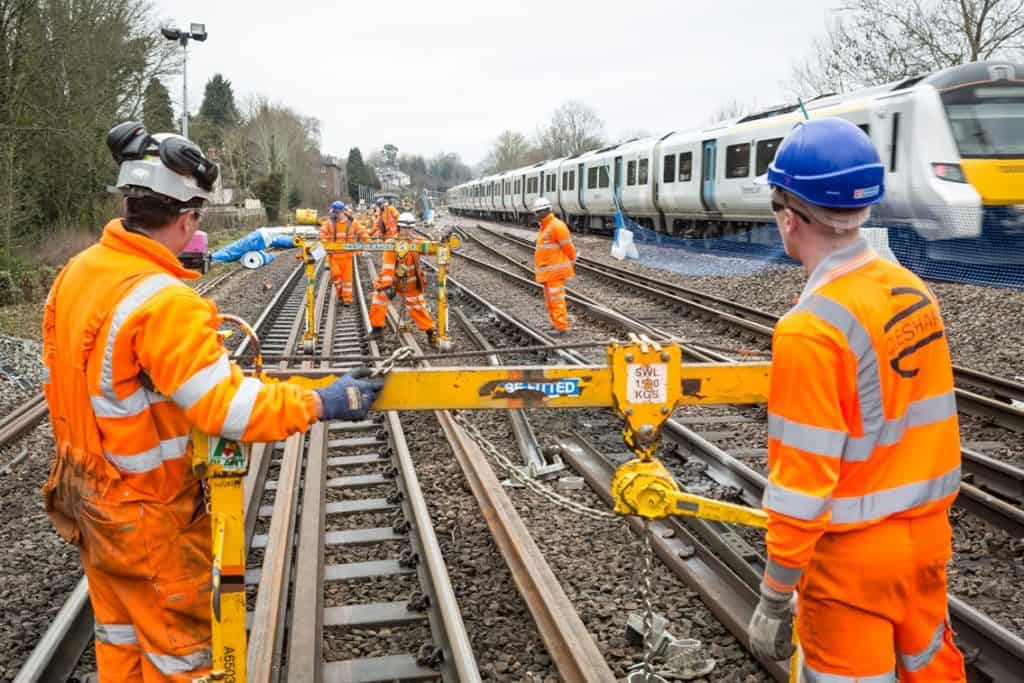
The maintenance of stations and railway infrastructures is certainly one of the sectors in which Augmented Reality technologies can be most useful.
Augmented Reality allows you to remotely control the status of the tracks and railway infrastructure and, when combined with other technologies, including sensors and artificial intelligence, can provide a great deal of support with predictive maintenance.
In the United Kingdom, a startup has experimented with a technology capable of predicting faults in the tracks and the infrastructure-train communication system, tracing problems in the field in real time with wearable devices. Similar trials were also carried out in Germany by another startup.
Drones or other rail vehicles can perform a semantic segmentation of lines, vegetation and any other obstacles that could be risk factors for operations.
Through an appropriate extension of a Facility Management platform, it is possible to enter the company’s infrastructures and assets in the registry in order to manage maintenance activities efficiently and quickly, with the aid of Augmented Reality features.
1.3) Safety Management of Railway Infrastructures
The management of infrastructure safety is back in great relevance with the COVID-19 outbreak, especially in large communication HUBs, such as airports and railway stations.
The COVID-19 pandemic has triggered a series of complications in the management of infrastructure security that AR technologies, in close combination with those of machine learning, allow to manage in an optimal way. For example:
– Temperature control: thanks to thermal cameras or cameras installed on Smart Helmet, together with with computer vision techniques it is possible to detect the temperature of the passengers, identify and retain them for further checks
– Social distancing: the same technologies can be used to detect the distances between people in a given space and to calculate appropriate “safety indicators” accordingly
1.4) Management of passenger flows
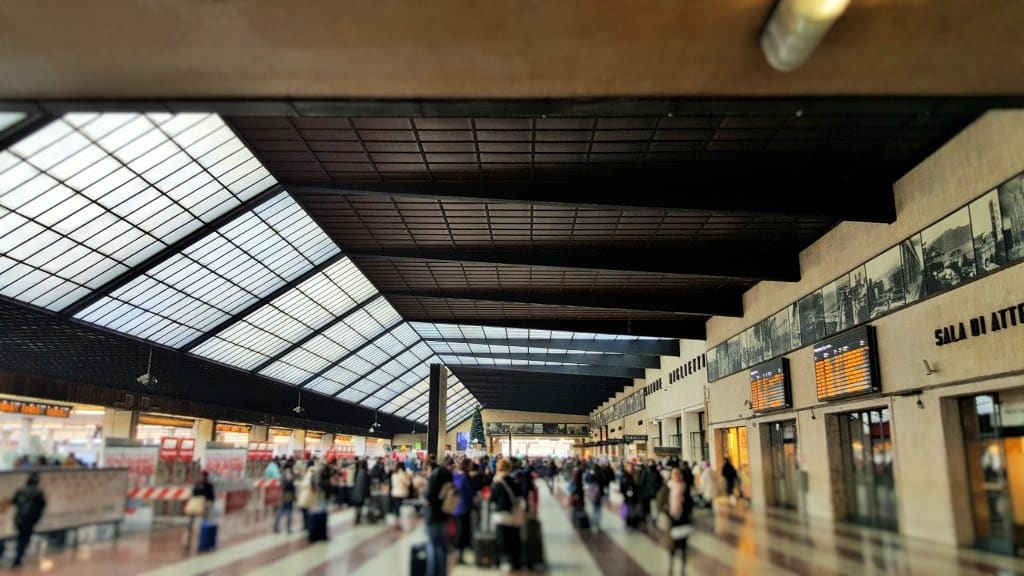
Except for the effect of the pandemic, the number of rail passengers has been on the rise worldwide, with traffic peaking near major metropolitan cities. Thanks to the new Computer Vision technologies it is possible to monitor the flow of travelers. It is in fact possible to detect and map the flows of travelers thanks to a variety of artificial vision techniques, that, combined with advanced Augmented Reality interfaces, would allow the flow of travelers to be optimally managed within the railway stations.
In October, the Chinese city of Shanghai, plagued by the critical effects of congestion, tested AR Smart Glasses to facilitate passenger flows ahead of the China International Import Expo. Equipped with cameras that stream commuter traffic directly to a station’s control room, they can help agents quickly identify bottlenecks. The product also helps with security checks, as the glasses offer facial recognition and have built-in speech recognition systems. Following a successful application on a single event, the glasses have now been adopted in various subway systems from Shanghai to Luoyang and Gansu.
AR technologies, in close combination with those of machine learning, make it possible to optimize passenger flows and study the patterns of passenger movements in the station spaces.
1.5) Staff Training
In the railway sector, just like many other sectors, AR and VR are making staff training more dynamic, engaging and efficient. The use of this technology for training purposes has increased in recent years as it helps simplify and speed up the learning process.
In the UK, HS2, the new high-speed rail line currently under construction, is using Augmented Reality for staff training processes. During the summer of 2019, the company rolled out immersive AR technology that created a replica of its new London hub, Old Oak Common station. Prior to its opening, staff are using this solution to train on the customer experience, safety and maintenance of the station, which is set to handle 275,000 commuters per day.
In a sector where by definition the staff are geographically dispersed and work in shifts, the idea of ??in-person training sessions is particularly challenging from an organizational point of view.
With this in mind, Augmented Reality represents the ideal solution, offering the possibility of a step-by-step visual guide, as well as that of the support of a remotely connected expert who sees what the user is working on and can direct him.
2) Augmented Reality Rail Use Cases for Passengers
2.1) Customer Engagement
With a user base that increasingly uses digital tools to search for entertainment and information, the railway sector today has the opportunity to use immersive technologies to set up a more modern and engaging communication: this can mean giving new life to channels that have already been tested, such as brochures or on-board magazines, but also to consider totally innovative approaches tailored to the type of clients and itinerary.
In recent years, Mixed Reality solutions have been put in place by various players aimed directly at users of railway services in support of a series of use cases.
Almost all companies that provide transport services offer their customers magazines to be consulted on board the vehicles with journalistic and promotional information. The contents of these magazines can be enriched with digital information that can be consulted from your mobile device. Trenitalia implemented such a solution some time ago, albeit in a very light way.
HyperLoop has experimented with immersive touch windows dedicated to the entertainment of travelers, allowing them to simulate an external panorama, but also to take advantage of entertainment and shopping services.
Since a growing number of travelers say they prefer the trip itself to the final destination, as evidenced by a survey conducted by Booking.com in 2018, and since typically these lines are characterized by a theme of high historical, geographical or artistic interest, equipping travelers with a Virtual Reality viewer through which they can immerse themselves in some of the worlds linked to the journey they are making – also in consideration of the long time available to them during the itinerary – can represent a significant added value with interesting monetization possibilities.
2.2) Wayfinding and Services
The information relevant to a traveler is manifold and concerns that to be acquired before the trip, during the planning phase, and during the trip, when the customer is interested in entertainment services, shopping and information about the trip (eg. delays). There is also an intermediate phase, when the traveler is at the station and needs to locate their carriage, but also to use the services inside the station while waiting, such as lounge and restaurant services.
In 2019, Zurich’s “Z?rich Hauptbahnhof” train station launched an app dedicated to travelers with the aim of providing information on timetables and destinations starting from the station itself. The “SBB AR” app allows you to view digital content in space using environmental mapping (using Google ARCore) inside and GPS outside the structure. On Android devices alone, the application has been used by over 10,000 travelers.
In all these cases, immersive technologies help people to retrieve relevant information in a more engaging and in some cases more useful way, see the applications for wayfinding that in complex spaces, such as in very large stations or airports, can add a lot of value for the user.
ABB is a Swiss Swedish multinational company operating in robotics, energy and automation, with a global turnover of 28 billion dollars. For some years the management has decided to start a series of projects in the Industry 4.0 field to test the most promising technological innovations for the Manufacturing sector, including an Augmented Reality project to improving how corrective maintenance was handled.
Inglobe Technologies has been involved in an Augmented Reality project aimed at testing the usefulness of the technology in some maintenance processes, in particular corrective maintenance, to allow operators to promptly intervene on certain types of faults without involving specialized maintenance personnel and in order to reduce downtime.
The activities carried out
The project had three phases: one for analysis and planning of activities; one for the execution of the project; the last one to evaluate the results.
During the planning phase, the Inglobe team and the ABB engineers of the Frosinone plant identified the most sensible use cases on which to develop the pilot project, identifying a series of equipment and technical procedures to be digitized.
The next phase saw the actual realization of the project with the following activities:
Creation of 3D targets for object recognition and tracking
Creation of digital operating procedures with the HyperIndustry platform
Customization of the mobile app for mobile devices
Deployment and Training
The operating procedures, organized in sequences of non-linear steps, therefore including branches, were created with the HyperIndustry industrial Augmented Reality platform, using a visual workflow, without any need for coding.
Finally, the procedures were published and made available on the mobile application, which in this case ran on an Android tablet. ABB staff has been trained to use the mobile application autonomously.
In the last phase of the project, ABB management carried out assessments on the main KPIs of the project in order to evaluate the quality of the technology.
Challenges of the project
The implementation of projects concerning new technologies, and therefore also Augmented Reality, in a factory, is almost always challenging since they introduce various new elements.
Among the challenges of the project we can mention:
Choice of the most appropriate device
Choice of the most appropriate use case
The choice of a device in an Augmented Reality project requires careful and thoughtful assessments as the success or otherwise of the initiative may depend on this single variable. In the case of ABB it was required that multiple operators could use the same device and it was not required that at the time of use the operator had both hands free.
These initial requirements, and the due assessments in terms of the impact of hardware on the project costs, prompted us to opt for a mobile device rather than a smartglass, also based on the battery life compared to the duration of the work shifts.
For the choice of the use case, ABB has assessed on which machines the stoppages were more frequent and could be solved with low complexity interventions, such as the replacement of small accessories. The choice fell on a machine that is part of the assembly process of industrial switches. The reason is that one of the most frequent causes of machine downtime was the breakage of the screwdriver insert, a component that can be easily replaced by line staff without requiring the booking of the intervention of a specialized maintenance technician.
The results of the corrective maintenance project
Thanks to the Augmented Reality pilot project to support maintenance, ABB has managed to provide an easy-to-use tool to its operators, allowing them to carry out a first level maintenance with the Augmented Reality app, which acts both as an instruction manual (and therefore training tool) and troubleshooting tool, supporting operators to intervene and repair the fault.
The ABB plant in Frosinone has continued to implement Augmented Reality in its industrial processes by involving staff in this transition from paper to digital and by adopting the HyperIndustry platform to extend the technology to other production lines of the plant.
The current Covid-19 pandemic situation has forced the subjects of the entire economic system to rethink work in many new ways and in no time. Even if the companies all reacted rather quickly to the changes imposed by the workers’ health protection measures, this does not mean that they managed to do it in the best way.
In almost all cases of readjustment of working conditions, the digitization of processes is involved at different depth levels.
Depending on the nature of the activity carried out, some companies had only to have their employees work from home, while for others, especially those of the industry, more structured changes were needed.
Industrial companies base their activity on the production of goods, therefore the factory is the beating heart of their processes. To guarantee production continuity to the factories, it was necessary to introduce very strict rules in protection of the health of workers, providing them with personal protective equipment, reviewing the mode and duration of shifts, sanitizing the work areas with a certain frequency and monitoring the temperature of the workers at the entrance.
Factories, by their nature, being places with a high social interaction, are very exposed to contagion and therefore must manage a series of risks that concern not only production, but also other processes including logistics, administration and in general staff. The contingencies due to the measures required to deal with Covid-19 have imposed a limitation of business travel, forcing companies to search for alternative ways of managing operations.
Below is a list of some of the industrial processes impacted by the health emergency, with an indication of how Augmented Reality can support certain activities, and some considerations on what will await us once the emergency ends. Personnel Management
It has now become a practice, not only in companies, but also in some public bodies and commercial activities, to measure the temperature at the entrance. High temperature is one of the possible symptoms of Covid-19 positive and verifying that it does not exceed a certain threshold is fundamental in environments with many people. In this case, using computer vision solutions that leverage cameras or Smartglasses equipped with thermal imaging cameras, could speed up operations and streamline the queues at the entrance, without the need to point a laser at people.
Maintenance Management
One of the reasons that determine the greatest movement of personnel in the field concerns the management of maintenance. Even during the health emergency, it is essential for companies in certain sectors to ensure continuity and therefore they cannot afford to keep production or parts of it steady. In order to limit the movements of specialized maintenance personnel, it is possible to provide workers with practical tools that through the use of Augmented Reality help them to identify and solve problems, at least for those of small and medium size.
Inspection
Some industrial activities resort, in certain cases by law, to inspections of work areas or equipment, in order to carry out checks, measurements and other controls. During the pandemic, it was particularly critical in certain sectors to ensure inspection activities, in order not to endanger the health of inspectors. To this end, advanced computer vision systems, equipped on board of drones or other equipment, could guarantee the correct conduct of inspections without compromising human health.
Both during the Phase 1 and Phase 2 of the Covid-19 emergency, the factories have reviewed the relationship between people and the work environment in a very profound way, making a number of choices aimed at limiting the density of people in the space, aimed at providing protection tools and aimed at informing workers about risks. Augmented Reality has already proven to be a very effective tool in the field of risk management in the workplace, thanks to its ability to allow an “augmented” visualization of the surrounding space, associated with rules and actions to be carried out to manage risks .
Except for the temperature control at the factory entrance, it can be said that all the other use cases in which Augmented Reality can support workers to contain risks by helping them to reduce travel and contacts with colleagues, are intended to prove useful even in a post-pandemic phase. Several of these scenarios are already reality in many industrial contexts, although often only for experimental purposes.
The emergency we are experiencing has only increased the awareness that digitization in industry is no longer just an option, but has in fact become the main road to rethinking processes.
From 28 to 30 March 2019 Inglobe Technologies will take part in MECSPE, the reference fair for the manufacturing industry to be held in Parma. Together with ABB Inglobe will demonstrate its solutions in the Innovation Tunnel as part of the Lighthouse Plant project.
This is an initiative that aims at showcasing the excellence of innovation in Industry 4.0 and that includes, in addition to ABB, Ansaldo Energia, Hitachi Rail and Tenova / Ori Martin. Each of these companies will exhibit the most recent innovations implemented in some of their plants in Italy, the so-called Lighthouse Plants.
In this context, Inglobe will support ABB as a provider of one of the solutions adopted by the Swiss-Swedish multinational, in particular HyperIndustry, a web-based and mobile platform that allows to digitize technical equipment and to build in a simple and intuitive manner step-by-step technical instructions with the visual aid of Augmented Reality.
MECSPE 2019 in Parma will therefore be an excellent opportunity to come and discover how immersive technologies, AR, VR and MR, can support companies in the digitalization of processes, providing added value that translates into greater efficiency and lower operational costs. Inglobe and ABB will allow visitors to have a hands-on experience and to participate in live Augmented Reality demonstrations using mobile and wearable devices.
Last week in Milan Inglobe has been selected as the best company in the “Digitalization” area of Eni’s CallForGrowth ‒ an initiative in partnership with growITup, the open innovation platform which supports major companies in forming new partnerships with start-ups and scale-ups. In the digitalization area ENI aims at making operating manuals completely digital, interactive and integrated with the digital twins.
Inglobe pitched in front of about 30 ENI key managers, providing an overview of HyperIndustry, its Industry 4.0 platform with Augmented Reality features, and sharing ideas on how its adoption could benefit ENI in processes like smart operations, maintenance and training.
Over the next three months ENI and Inglobe will work together to identify the most suitable use cases in order to test the technology in the field.
The Call has involved 119 participants and just 11 of them were invited to pitch ENI in Milan at Cariplo Factory, the head office of the GrowItUp initiative. Other areas of the contest included solutions to improve health and safety of ENI’s workers and innovative retail ideas for ENI’s service stations.
Logistics is certainly one the most crucial processes for production and services companies. Even though it is still perceived as a traditional set of activities, Logistics is rapidly evolving and is set to be a key area for digital transformation and automation. For some of the players in this area, innovation in the logistics department has determined a transformation of the entire company, making this process the strength of their business.
Examples abound, but probably one of the most well known is Amazon’s: indeed the tech giant has built an entirely new business model around sorting efficiency and speed of delivery, creating the “Amazon Prime” set of premium services, which currently have more than 100 million subscribers worldwide.
The two most debated topics in the logistics industry today are automation and the role of man. McKinsey has predicted that around 57% of existing warehousing and logistics functions will be automated and handled by a variety of different robots and machines. Some trends already in place, including autonomous driving, advanced robotics and the advancements of AI, will dramatically change the logistics industry in the next 20 years.
We are not yet to the point where complete automation of warehouses is easily doable and convenient. Automation has a high cost and we are likely going to see these drastic changes within a few years rather than all of a sudden, also considering that managing a fully automated warehouse requires new skills from warehouse managers and staff that take some time to be developed.
Despite the fast evolution and automation of the logistics 4.0 supply chain, data tell us that the job market in this industry is exhibiting a growth in demand of workers and managers, so we don’t see a short term substitution effect of machines over humans, rather we see a collaboration between human and artificial intelligence.
What do we mean by Logistics 4.0?
Just like Industry 4.0 is the evolution of how industrial facilities work, similarly Logistics 4.0 or Supply Chain Management 4.0, is the next step towards the smart warehouse and its connected processes. Logistics 4.0 will help warehouse managers make their facilities more efficient by reducing and anticipating possible mistakes, and by using the large amount of data at their advantage. The workers in turn will cooperate with machines being one of the many elements of the interconnected network.
In terms of definition, Logistics 4.0 is the process of making the current logistics industry more technologically advanced by transforming and digitalizing parts of the process using an advanced network of data, efficient robots, AI algorithms and computer vision techniques like Augmented Reality.
According to BIS Research, in 2017 the Enterprise Augmented Reality market was worth 3.5 billion dollars, while it will reach almost 200 billion dollars by 2025. The sales of smartglasses in 2017, according to ABI Research, reached the value 52.9 million dollars and about one out of four smartglasses was bought by the logistics industry.
Inglobe Technologies contribution to the Logistics 4.0 debate
Inglobe Technologies is a recognized player in the transformation and digitalization of industrial processes. The company is working with key industrial players to deliver innovative and effective solutions based on Inglobe’s Industry 4.0 AR Platform, HyperIndustry.
Together with Metra, a fast growing italian group in Logistics – serving relevant clients in several verticals including Pharma, Fashion, Food & Beverage and Furniture -, Inglobe have started to explore how Augmented Reality and IoT Platforms, integrated with a typical WMS workflow, could impact key processes like Picking, Sorting and Cargo Loading, helping workers to perform their tasks more efficiently.
The concept video below illustrates some of the use cases being explored.
Logistics 4.0 Use Cases
Here are some of the most common use cases in which innovations in the logistics industry make sense:
Augmented Reality Picking
AR can support picking operations by helping the operators identify the picking points, suggesting the most efficient route and providing a digital checklist of work orders. AR can be helpful both for picking by hand and picking by forklift.
Augmented Reality Sorting
Sorting the items on a pallet exhibits a number of critical issues, such as positioning the items according to their weight and degree of fragility, in order to avoid breaking or damaging them. AR can suggest the operators the best possible sorting order, help avoid damages and optimize the pallet size.
Augmented Reality Cargo Loading
Loading a truck with items of different size, shape and weight can generate inefficiencies such as damaging the goods and not optimizing the truck capacity. AR can help the operators load the good in the best possible sequence in order to optimize the truck capacity, reduce the risk of damage and reduce the execution times.
Safety Management
Augmented Reality, and Computer Vision in general, can be helpful in the identification of risks and damages inside a warehouse thanks to the date coming from sensors and cameras placed in the environment. Moreover Safety Management solutions can be used in order to train workers about the risks in the working environment and get them to learn safety procedures faster and better.
Smart Warehouse
Aside from the core logistics processes such as picking and sorting, there are large benefits to be expected in terms of energy savings of a warehouse by leveraging IoT by making smarter the functioning of lights, heating and installations in general. Useful technologies for this use case are beacons, wifi networks and indoor positioning services.
Warehouse Remote Assistance
By providing mobile or wearable devices to the operators inside a Warehouse together with a Remote Assistance solution, can allow them to get help from a Remote Expert and obtain the real time instructions on how to fix certain problems on equipment or forklifts. AR can help minimize the involvement of specialized maintainers and reduce the stops in the process.
The aforementioned use cases can be implemented with a variety of devices and systems, including smartphones and smartglasses. It is here, however, that the use of smartglasses could make life easier and processes more efficient, as the need for hands free operations and wearable computing can be a strong constraint.
Expected Benefits of Augmented Reality Logistics for the Warehouse Managers
Many players have already started to include Augmented Reality in their Logistics 4.0 innovation strategies. Among the players which have carried pilot project involving the use of Augmented Reality in the logistics processes there are DHL and General Electric. At the end of these projects DHL stated they experienced an average increase in productivity of 15%, while GE stated the were able to reach performance improvements up to 46%.
Investment in new technologies and in process reengineering is motivated by the expected benefits. Regarding managing complex warehouses, we tried to list some of the advantages that could be achieved by transitioning to a Logistics 4.0 approach:
Increase in the bulk of goods handled (increased revenues in turn)
Reduction of good returned and reduction of human errors
More effective training. Reduction in cost and learning time
Reduction of accidents and injuries in the warehouse
Energy savings
Conclusions
It is evident from what has been said above that the changes promised by the aforementioned technologies could be disruptive in the Logistics sector, thus forcing players across the whole value chain redesign their business models. Indeed, investing in this kind of innovation today could demarcate the line between the players that will embrace the Logistics 4.0 revolution and those who will not, striving to keep their market share.
Taking advantage of these changes will be harder for small players in the value chain of Logistics as their business model strongly relies exactly on the processes that will be most impacted by the coming changes. Biggest players, on the other hand, are in the condition to best explore different alternatives and evaluate their decisions thus finally investing in those innovations that would bring additional value to their business.
This does not definitely means that small player will be thrown out of the game. Some of them will be forced to change their processes and business model. Others will embrace and further develop specific innovations in the area thus setting themselves as market leaders of the future.
Last week we had the pleasure to be invited to the “Data Driven Innovation for Industry 4.0 Enterprises” event hosted by Marconi University in Rome. The topic involved several entities and companies telling their Industry 4.0 practical experiences in different fields including law, consulting and manufacturing.
As Inglobe Technologies we shared a couple of projects we made in the industrial sector, explaining which problems led the companies to pick Industry 4.0 technologies to solve their problems and finally we shared results and implications of using Augmented Reality in a manufacturing environment.
Inglobe has been selected among the 5 winners of the Terna Next Energy call managed by Cariplo Factory’s GrowItUp and will now enter the Engage stage which aims at starting a collaboration phase between Terna and the companies in order to identify a set of challenges to be tackled by means of the proposed solutions.
12 out of the 85 companies which joined the call were invited to pitch in Rome during the Selection Workshop in front of the Terna Management. Right after the pitch session, 8 of the participants were invited to one-to-one interviews with a delegation of Terna managers and finally 5 of them were selected for the “Engage” stage.
During the pitch session Inglobe presented its technological solutions for the Utilities, that include, for example, the Hyperindustry AR Platform, and identified some of the Terna processes on which industrial AR could have a positive impact.
Huawei, China’s cellphone and connectivity technology giant, and Inglobe Technologies, the leading Italian Mixed Reality company, continue their collaboration in developing Augmented Reality solutions to make operations more efficient. The collaboration aims at providing field engineers with innovative tools meant to reduce execution time and errors. One of the products on which a post-installation check solution has been deployed is the SUN2000-25KTL inverter, a piece of equipment employed in large industrial photovoltaic fields.
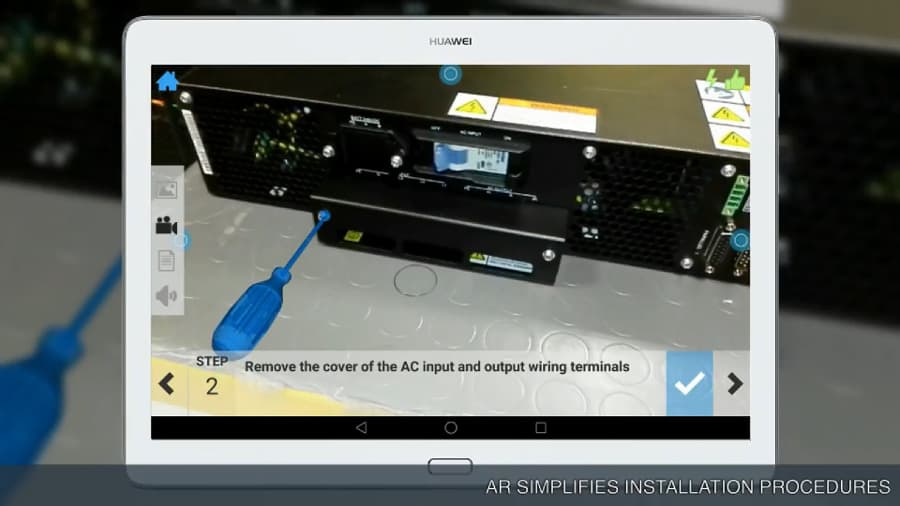
A more recent application the Chinese manufacturer focused on regards the Huawei UPS2000-G installation procedures, used to power the network infrastructure support equipment. This scenario requires the technician to use step-by-step instructions with Augmented Reality graphic elements and animations to perform assembly and wiring operations, quickly and easily locating the intervention areas on the equipment and performing her technical assignments. During the process, the technician is supported in choosing the most suitable tools for executing individual tasks.
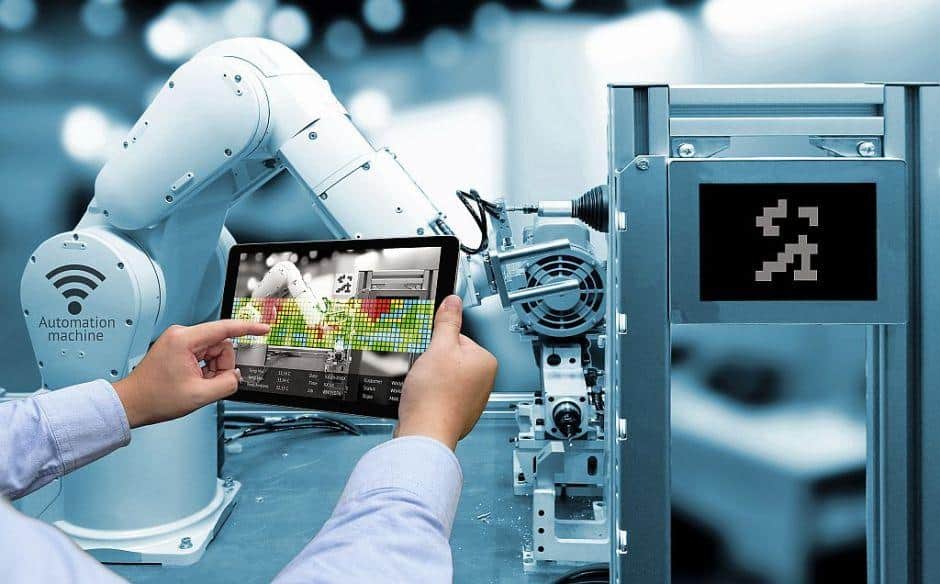
The solution has been implemented by means of HyperIndustry. Hyperindustry is Inglobe Technologies’ Augmented Reality Platform for industrial enterprises. It is composed by two modules: a web-based backend that allows you to run the procedures authoring workflow; and a mobile client that can be deployed on iOS, Android, and wearable devices, allowing field technicians to receive directly assignments on their own devices and to synchronize the outcome of their activities on the platform.
The manufacturing environment is a great source of new ideas, especially when it comes to efficiency gains. Starting from the end of the 80’s the lean thinking approach and its methodologies have changed the way factories work and perform, targeting waste and giving people the most appropriate training to give their best.
The increasing digitalization of industrial processes has led to the formalization of theIndustry 4.0 trend, which tries to group a bunch of new technologies which are capable to bring manufacturing operations to the next level.
Among the lean methodologies, World Class Manufacturing (WCM) has conquered many leading manufacturers worldwide which implemented it in their processes and obtained consistent performance improvements.
World Class Manufacturing Pillars impacted by Augmented Reality
The World Class Manufacturing methodology is structured into 10 technical pillars and 10 management pillars, each one focusing on a specific aspect of the industrial organization.
While Augmented Reality is potentially useful to a wide range of scenarios, what we know for sure is that the technology is capable of making a great impact on the following WCM pillars:
Autonomous Maintenance
This pillar refers to the set of simpler maintenance tasks that can be carried out by the machine operators without a dedicated intervention from the maintenance department. It involves operations like cleaning, lubrication and inspection. Autonomous Maintenance reduces pressure on maintenance professionals and avoids the machines are run up to the breaking point. In this context Augmented Reality is of great help in the process of training operators to perform simple maintenance tasks they never run before.
Professional Maintenance
While Autonomous Maintenance is performed by machine operators, Professional Maintenance requires a higher level of specialization and a dedicated maintenance team. PM concerns taking care of machine breakdowns and more complex preventive and predictive maintenance tasks. Augmented Reality is particularly suited to support PM activities as a training technology as well as a step by step support in complex maintenance procedures. It is also very useful at standardizing procedures referred to same activities, but that are performed differently at different locations, something not uncommon in the case of companies with widespread operations.
People Development
Tightly linked to the development of human resources skills is the PD pillar. When the workforce has been involved and when training gaps have been identified, then Augmented Reality, and Virtual Reality as well, come into play. AR has proven to be an excellent technology to speed up the learning process in many fields, including industrial training. The people to be trained has the chance of learning something new directly on the field with the aid of visually presented information.
How to implement AR into industrial processes
Companies who understand the huge potential of Augmented Reality in industrial contexts and may want to evaluate whether the technology works as expected in their context, should take into account the following industrial roadmap we suggest.
According to this approach companies should consider to start with a pilot project on a real application case inside the company in order to experiment and assess if AR delivers what expected in terms of benefits. After a successful pilot the company will be ready to extend the technology to other use cases in a structured manner using an appropriate software platform.
For these purposes take a look at our HyperIndustry platform, designed to provide manufacturers with a vertical tool which enables the power of Augmented Reality to support multiple operations in the shop floor.
When people think of improving efficiency in a business with digital technology, they often have an image of a robot on an Industry 4.0 assembly line. In practice, tasks involving people are also being performed more smoothly and rapidly with the help of technology. This case study describes a project that Inglobe has delivered for Huawei Technologies to provide its technicians Industrial Augmented Reality tools to carry out common tasks more efficiently.
Background of the project
Installation and maintenance of IT equipment can be complex. The outcome of a work order is affected by a number of issues. The technicians have too many procedures to remember and even with the best documentation, reading text and looking at images of a product can be misunderstood or time consuming. Extra time must be taken to avoid errors, which leads to inefficiencies in the performance of assigned tasks, security problems and, ultimately, higher costs.
Working with Huawei’s Technical Documentation Innovation team, Perey Research & Consulting invited Inglobe Technologies to provide an appropriate solution for developing AR-enhanced installation and inspection instructions through its HyperIndustry platform.
The HyperIndustry platform is the basis for delivering targeted applications to support field technicians during installation, assembly and maintenance of some enterprise-class equipment, improving their performance. This project focused on the SUN2000-KTL inverter, a device that converts DC power from photovoltaic power systems on commercial rooftops and in large power stations into AC power and feeds it into the power grid.
The goal of the project was to assess how HyperIndustry – Inglobe’s Augmented Reality platform for Industry 4.0 – could improve the installation and maintenance processes of Huawei’s SUN2000-KTL product.
The challenges of the Industrial Augmented Reality project
The project presented a series of technical and organizational challenges to the partners. First, the team members collaborating on the project were in different regions of the world (US, Europe and China) and all development had to be performed remotely. The Inglobe technical team never had direct access to the devices on which the project was to bring value. Nevertheless, all the tracking and testing operations were successfully completed on schedule.
The installation steps tested for AR-enhancement are complex. Huawei has published videos and images to support the technician, as well as specialized tools. Each step must be completed in order for the correct installation.
Further, Huawei required that the application rely entirely on natural feature tracking. Finally, the solution needs to work outdoors, in highly variable climatic and lighting conditions in which the SUN2000 inverters must be installed. Without use of any marker and relying solely on 3D models based on photographs, Inglobe Technologies’ 3D tracking component delivered excellent results on systems mounted on building rooftops.
How the AR experience is structured
AR-assisted procedures developed by Inglobe Technologies for Huawei focus on installation and maintenance instructions of SUN2000 inverters in photovoltaic systems installed outdoors.
The AR experience was created rapidly based on a detailed storyboard and using the HyperIndustry platform, an Experience Management System for Industry 4.0. The platform compiles all the necessary content and interactive modules into native mobile applications for use on Android and iOS smartphones and tablets.
First the technician can choose either English or Mandarin instructions. The Industrial Augmented Reality experience starts when the technician points the camera of the mobile device on which the application is running at the inverter. The target is automatically recognized, and a list of procedures available for the model appears on the screen. The procedures may be assigned by the maintenance manager to one or more technicians, or they can be initiated entirely by the engineer in the field.
Once the technician begins a procedure, a series of steps are shown, each accompanied by instructions that simplify the operation to be performed and by Augmented Reality elements which, depending on the need, may be highlights of the intervention points or procedural animations. HyperIndustry platform by Inglobe Technologies allows the developer to associate additional contextual information, such as technical documents, photos and videos previously prepared by the technical documentation team, with each step.
Field technicians independently perform technical procedures by executing all required steps. The procedures may be either followed linearly or accessed as required, as a result of the definition of branches and paths depending on the use case or the context. Checklists and steps in the application help the operator to perform inspections and audits. The platform records the technician’s performance, then sends all of the performance metrics and analytics to managers so they can assess the processes.
The technologies involved in the project
HyperIndustry is a modular platform based on a content management system that allows corporate asset management in the context of an Augmented Reality workflow for Industry 4.0. The project consists of 3D models, tracking data of the equipment, images, videos, animations, documents, and other information considered valuable for the design of procedures, and management of users and assignments.
The platform includes a series of profiles to be associated with business roles including technical manager, who can create and assign tasks with a user-friendly interface and the field technician who receives the requests on his device. An analytics control panel is included in order to analyze data and customizable indicators (KPIs).
The platform’s recognition of 3D objects uses an advanced 3D tracking technology designed to deliver AR experiences efficiently and reliably on mobile and wearable devices.
The Benefits for Huawei
Existing studies show that the use of Augmented Reality when performing complex procedures in the field can improve performance of technicians in the workplace. Augmented Reality–assisted instructions help the professional access all the relevant information where and when needed. By reducing the need for training and avoiding errors during the performance of tasks, AR can significantly reduce costs, compared to traditional methods of delivering documentation.
Compared with the traditional paper-based or digital instructions, one of the most obvious benefits related to the installation and maintenance instructions is the technician’s immediate understanding of each step in the operation. The use of Industrial Augmented Reality has, in fact, allowed Huawei to make understanding procedures faster and less ambiguous, reducing the cognitive load for the operator. Consequently, the average execution time of the procedures could decrease.
This ease of access to information is a key factor that not only speeds up the execution of procedures by new technicians, but can also help the experienced staff in solving occasional and complex problems, through a true “perceptual intelligence system”.
Rhonda Truitt, Director of US R&D Technical Communication Innovation & Best Practices at Huawei, referring to the project declared: “The results we achieved on this project through Inglobe’s HyperIndustry were nothing short of amazing. Object recognition on outdoor equipment was something other vendors told us could not be done. Our customers have responded overwhelmingly positive about this experience. I am confident that we will see a sharp decline in installation errors due to this AR experience for post installation checks. Inglobe has really impressed me.”
Plans for the future
Huawei plans to continue working on Augmented Reality workflows that integrate Technical Documentation, Product Lines and support for Customers and Technicians in the field.
The debate around industry 4.0 and smart manufacturing is involving an increasing number of execs worldwide, but that doesn?t mean they are all aware of the potential benefits of this trend for their companies. Same goes for the challenges to be tackled before a company can speak the industry 4.0 language.
Augmented reality is one of the cutting edge technologies involved in the industry 4.0 trend when talking about smart manufacturing, it is a technology which was seen just as a fancy toy until a few years back, but which has now reached the right level of maturity to be employed in a productive environment.
The truth is many actors in the industry field still feel like something big is going to happen on their shop floor in the next future, but they don?t know exactly when and what.
As for the when, we are much more advanced in the adoption of industry 4.0 practices than the non-experts may understand. There are so many investments and pilot projects going on out there which are speeding up the process of refining the technology and getting companies ready to improve their processes. In fact, sectors such as gaming are not lagging behind, with initiatives like ξενα καζινο στην ελλαδα paving the way for innovative solutions and new market opportunities, driving competition and technological adoption. So the right time is right now, at least for those who want to be the leaders.
As for the what, the range of potential applications is very wide, although some trends have emerged where augmented reality has proven to increase process and people performances as well as being effective at driving down costs in so many departments.
Critical issues in Industry 4.0 environments
Processes in the productive environment exhibit a number of critical issues that make operations less efficient, as well as more risky for technicians working in the field. These are the areas of focus according to our experience:
Human error: even the most experienced workers may suffer from an information overload resulting from excessive amounts of procedures to remember and difficulty in identifying the exact intervention points
Inefficiencies: according to some empirical studies traditional assembly and maintenance operations require longer execution times compared to the same operations carried on with the assistance of augmented reality. Use of wrong tools, inadequate training received by technicians and poor to none access to operations? analytics are some of the most recurring inefficiencies inside factories
Cost: all of the above translates into higher workforce costs due to longer operations, recurring errors and damage to components due to incorrect procedures execution
Empirical studies and the evidence of performance improvement
There is a number of empirical studies conducted on the field in order to research the effectiveness of AR applied to industrial operations. This set of studies compares the performance of two groups of workers carrying on the same assembly or maintenance operations, one group operates with the aid of AR instructions, the other group with the support of traditional printed instructions.
What researchers have highlighted is a performance improvement up to 50%, which means AR enables workers to perform a given task faster and with a lower possibility of error. All of this evidence translates into economical benefits as well, since reduced execution times means a lower cost of labor.
Potential usage scenarios for Industry 4.0
The range of possible use cases is really wide and involves nearly all kind of operations that can be executed on the shop floor, from core manufacturing activities such as production to support processes such as maintenance, training and so on. The following is a list of potential usage scenarios according to our experience.
Operations: any kind of operation which requires some step by step procedure can benefit from the introduction of augmented reality. Installation, assembly, machinery tool change are just some of the processes where AR can make a difference and make manufacturing really smart
Maintenance and Remote Assistance: industrial companies know how much time-consuming the maintenance tasks can be. Preventive, corrective and in some cases predictive maintenance requires companies to allocate many human and financial resources to guarantee the operations smoothness and minimize machinery faults. In this context AR is extremely effective at reducing execution times, minimizing human errors and sending the relevant performance analytics to maintenance managers.
Training: especially for those companies where training is a critical process involving many field technicians AR guided training mode can be very effective both for experienced people and new technicians at the beginning of the learning curve
Quality control: AR support in quality control processes allows to check wether the items produced respect or not the best manufacturing standards.
Design and visualization: in this scenario of usage augmented reality comes into play providing tools that improve design, prototyping and visualization in the design phase
Inglobe Technologies? solution is a mobile and wearable platform designed to support smart manufacturing activities; it is equipped with advanced Augmented Reality features that can be integrated into technical processes in different industries. It enables a more effective communication between field workers and business infrastructure in order to provide contextual and smart information about installation and maintenance.
The platform allows key people inside companies to create and manage augmented reality experiences including object tracking, tasks creation and assignment, data analytics management.
Our Mixed Reality platform can be integrated into IoT solutions and Advanced Visualization / Interaction, includes different customizable modules and supports mobile devices, smart glasses and standalone systems.
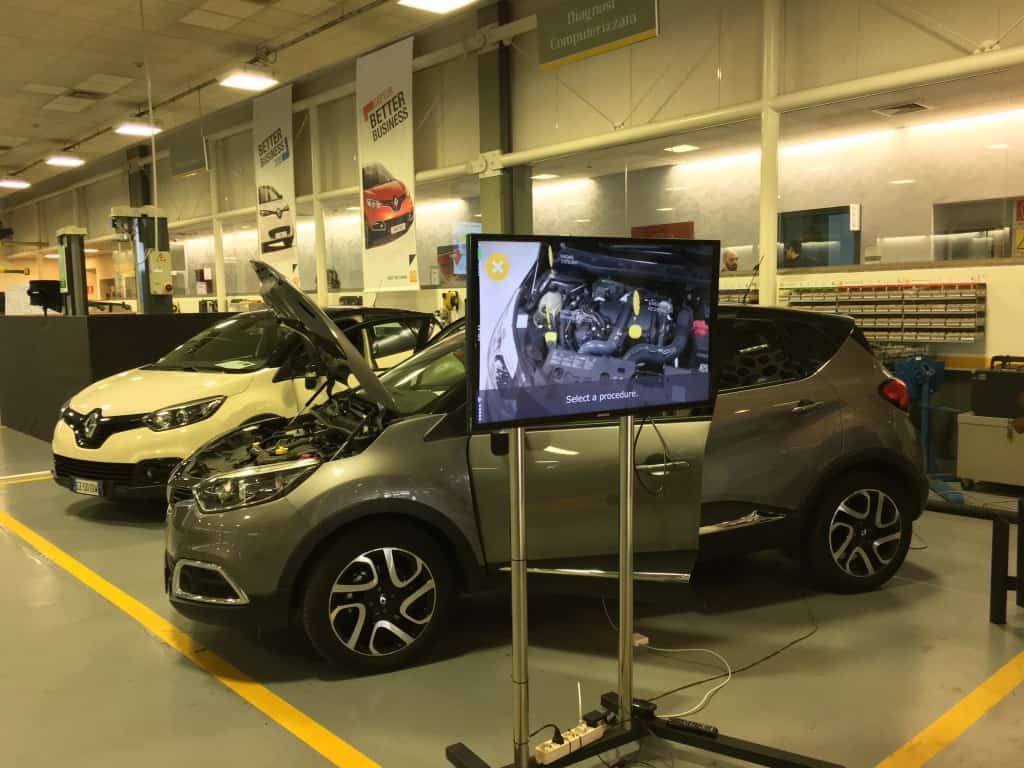
Many vendors in the Augmented Reality space today provide platforms that promise to support technicians with AR enabled procedures for service and maintenance also in the automotive sector. But few do really offer the technical features that are required to deal with the complexities of the real world.
The majority of the platforms use planar images to trigger the AR contents. On the other hand, one of the key requirements of any enterprise class AR maintenance solution is the capability to deal with real systems and parts. Indeed, not always engines or mechanical parts can be identified or tracked by means of 2D images. Thanks to AR-media powerful tracking methods, the AR-media Dealer 2.0 solution provides the functionalities that are needed to identify and track 3D parts with the required flexibility, while at the same time enabling the access to step-by-step instructions and information relevant for diagnostics.
The solution is the outcome of the joint effort of Inglobe Technologies, a leading Augmented Reality Developer, and Lynx International. The platform that enables AR information for diagnostic and maintenance purposes is thought for Tablets and Smartglasses (Epson Moverio) and has the flexibility to extend the support to other devices as well. Thanks to a unique Mixed Reality feature, the platform can be used in association also with Virtual Reality glasses, like Samsung Gear, in low-cost blended AR/VR Training experiences.
The videos below show the AR-media Dealer solution in action:
On December 14th, 2015 Inglobe Technologies took part to Renault Innovation Day in Rome. In the splendid setting of a memorable event, linked to the themes of innovation in Smart Cities, lifestyles and technologies – not only those found in the cars-, Inglobe Technologies presented the Dealer 2.0 Solution addressed to enhancing diagnostics and maintenance through Augmented Reality.
The solutions presented at the Renault Innovation Day have shown how it is possible, through our HyperIndustry platform, to interact in real-time with the vehicle and display data through smartphones and smartglasses, thus overlapping the data onto the vision of the vehicle. Thanks to the high degree of integration, the platform can significantly reduce the time needed to identify problems and quickly take action to resolve them. Thanks to the tight integration with the e-Dealer solution by Lynx International, the technology now fits into a broader platform that includes diagnostics, maintenance and e-check.
The white paper discusses a selection of Inglobe Technologies Augmented Reality (AR) solutions to enhance both training and operations in different industrial maintenance scenarios.
AR applications provide a technology that has the potential to support and speed up training, while at the same time increasing performance and effectiveness levels. Some statistics suggest performance improvements up to 30% with involved employees reporting higher levels of engagement. Applications of AR that support technicians in the field have the potential of reducing costs up to 25% throughout quicker maintenance or component substitution, identification and setup of new connections, solution of faults and misconfigurations, with less burden on backend personnel and system resources. Additionally, thanks to the information that operators collect on the field, the AR technology contributes to an improvement of the quality of enterprise data.
Development of AR applications in an industrial setting is a complex task, made even more challenging by the need to leverage the full power of native platforms (iOS, Android, Windows). This is certainly the case of modern, cutting edge AR mobile applications. Inglobe Technologies simplifies this complex task by providing software components, technology, expertise and customizable solutions that help managing complexity with reduced time from requirement analysis to deployment.
In order to present and educate on the software components needed to develop an effective AR solution for industrial maintenance, the document offers an overview of the challenges, enabling technologies and required solutions.
The document also clarifies how, according to the authors, the adoption of an AR strategy (i.e. a strategy for the introduction of AR for industrial maintenance), is not a consequence of an improvised choice, but rather the result of a path that requires the definition of a?Roadmap?for the development of Enterprise Class AR solutions.
The document addresses the challenge of making industrial maintenance more efficient under two main respects, i.e. the intelligent support of field force operations and training; section 1 introduces the dimensions from which the need for developing a Smart Maintenance solution derives; section 2 introduces the technologies that enable AR solutions for maintenance, including positioning technologies, pattern recognition, tracking and artificial vision as they allow to create effective and enhanced industrial solutions; section 3 offers an overview on the architecture of the proposed solution; a generic use case which is relevant in this context is discussed in section 4; section 5 discusses an approach to estimate the ROI (return on investment) by clarifying the reference parameters for evaluating quantitatively the benefits that the adoption of an AR strategy for maintenance provides; finally, section 6 offers an approach and Roadmap for the design and implementation of an enterprise class industrial Augmented Reality solution.


![[Case Study] How ABB managed corrective maintenance with Augmented Reality](https://www.inglobetechnologies.com/wp-content/uploads/2020/07/How-ABB-managed-corrective-maintenance-with-Augmented-Reality.jpg)