Tag: object tracking

  • Augmented Reality in Medicine: new frontiers of Healthcare

    Augmented Reality in Medicine: new frontiers of Healthcare

    “When using augmented reality in the operating room, it’s like having a GPS navigator in front of your eyes in a natural way so you don’t have to look at a separate screen to see your patient’s CT scan”, said Dr. Timothy Witham, professor of neurosurgery at the Johns Hopkins University School of Medicine. And this is only one of numerous benefits that the adoption of augmented reality in medicine field has generated. Augmented reality (AR), as we know, is the technology that allows digital contents (such as images, video, objects, animation ecc..) to take place in the real world. It’s a technology that is changing the way we live, we think and most of all it’s shaping the future, leading us towards new innovative, smarter and improved lifestyles. 

    In the medicine aerea, AR is creating new ways of helping people and saving lives like never before. It allows doctors to have more accuracy, more focus, more information and, of course, a better outcome and diagnosis. Including virtual objects and tools in the real world, doctors can see things right in front of them and in terms of accuracy this is a huge step forward. Also, timing speaking, it cuts all the waiting, looking, searching moments, increasingly reducing time of operations.

    ar in medicine
    electronic medical record concept. medical technology.

    How Augmented Reality in medicine works

    In order to integrate the Augmented Reality in medicine we need to define some technical practical aspects that allow us to use it properly. 

    • Among the main actions in using AR in medicine, the camera calibration is one of the most important one. In this process, the camera needs to “understand” the environment that will host the Augmented Reality object. 
    • In the medicine AR, the crucial action to take is the patient registration. A computed tomography (CT) or magnetic resonance imaging (MRI) provides a view of the internal anatomy of the patient and also the target points in case of surgery operations. 
    • Another essential component is object tracking which is essential in order to calculate the exact position that it will be necessary to operate.
    augmented reality in medicine field

    Why Augmented Reality in medicine is so important

    AR can let us know if there are defibrillators nearby

    It could happen all the time, while walking in a street, that you might see someone who suddenly collapsed and of course the first thing you’ll do is to call an ambulance. Now, though, there are some apps that, using AR, can also tell you if there are defibrillators nearby, so that you might be able to give additional help in the meantime. There could also be other applications that thanks to the AR localization can be crucial in saving lives, giving essential information to the individuals.

    AR can teach us about the human body

    Augmented reality is every year more used also in the education field, especially when talking about medicine. It is studied that studying (or teaching) by welcoming the help of Augmented reality can help students to learn better, faster and especially to understand in a deeper way difficult concepts. Being able to see and try in a more 3dimensional and immersive way, rather than reading a book, allows students to remember more and assimilate better. In fact, it is known that learning using other senses rather than just reading enhances the chances to remember, internalize and  elaborate harder and more articulated topics. 

    AR can be very appreciated both for kids who are willing to learn more about the human body in a funnier, immersive way and for medicine students at the University that can learn faster, better and though become better doctors. For instance, during a lecture it could be possible to show a certain part of the body such as a heart or a bone and have the chance to study it by watching it on your tablet or phone in 3D.

    ar medical education
    Doctor uses augmented reality goggles and human skeleton for teaching student

    It’s marking the new frontiers of the surgery

    Everyone knows that when it comes to surgery, precision is the crucial element for the outcome of an intervention and here it is where AR can really show all its potential. Augmented Reality in medicine allows surgeons to be more precise ( Studies affirmed that AR gives the 98% of the accuracy, which makes it at the same level or even higher of other methods). 

    In June 2020, for instance, for the first time at Johns Hopkins a spinal surgery has been made using AR technology in living patient , and one of the first sentences that came out from the surgeon when talking whether to use AR or not he says “I feel more comfortable when I use it”.

    This was the first AR surgery and it was a spinal surgery on a living patient, but, as we have seen,  AR surgery is expanding very fast and also more complicated operations have been conducted with success. For example, AR surgery can involve cardiac operations, such as the removal or alterations of heart parts, and also bone tumor resection, allowing doctors to be more accurate and precise and that make patients feel safer and calmer.

    augmented reality in medicine

    AR in medicine might also detect mental illnesses

    Did you know that when talking, humans send unconscious messages through their facial movements, the position of the body and also their tone of voice and that they have nothing to do with what they are saying? Well, a lot of us already knew that by analyzing a person’s gesture and expressions, or the way he/she talks, for instance, it is possible to understand if that person seems attracted or interested to us, but, did you know that it is also possible to understand if that person might suffer from depression, anxiety or other mental conditions? Well, Augmented Reality can help with that too. 

    Through the scanning of a human body in movement, AR can detect if some gesture or expression might mean something serious and thus give us more awareness about our conditions. The other innovative part is that you might do the scanning on your own, or with the help of a familiar person, and only after your personal diagnosis, you can go to the doctor. In this way you could spare time trying to do a personal diagnosis and/or help the doctor with a better and deeper diagnosis since you are able to give him more information about your condition.

    biopsy ar

    Our Augmented Reality in medicine expertise

    Inglobe Technologies is a well known company in AR medical field with projects that involve techniques such as Rehabilitative Robotic Platform and Risk Management. On March 25, 2015, Inglobe Technologies and Tecres joined forces to create one of the first immersive experiences in the medical field: the Tecres interactive Mirror and App. In this experience, we created a set of tools that make the communication of advanced orthopedic technology not only effective but also amusing. The system recognizes humans in the interaction area that are scanned in the metaphorical X-ray Mirror, where an X-ray skeleton, controlled by the user, interacts with the products.
  • Inglobe speech about “Object Tracking for Augmented Reality” at AWE Europe 2017

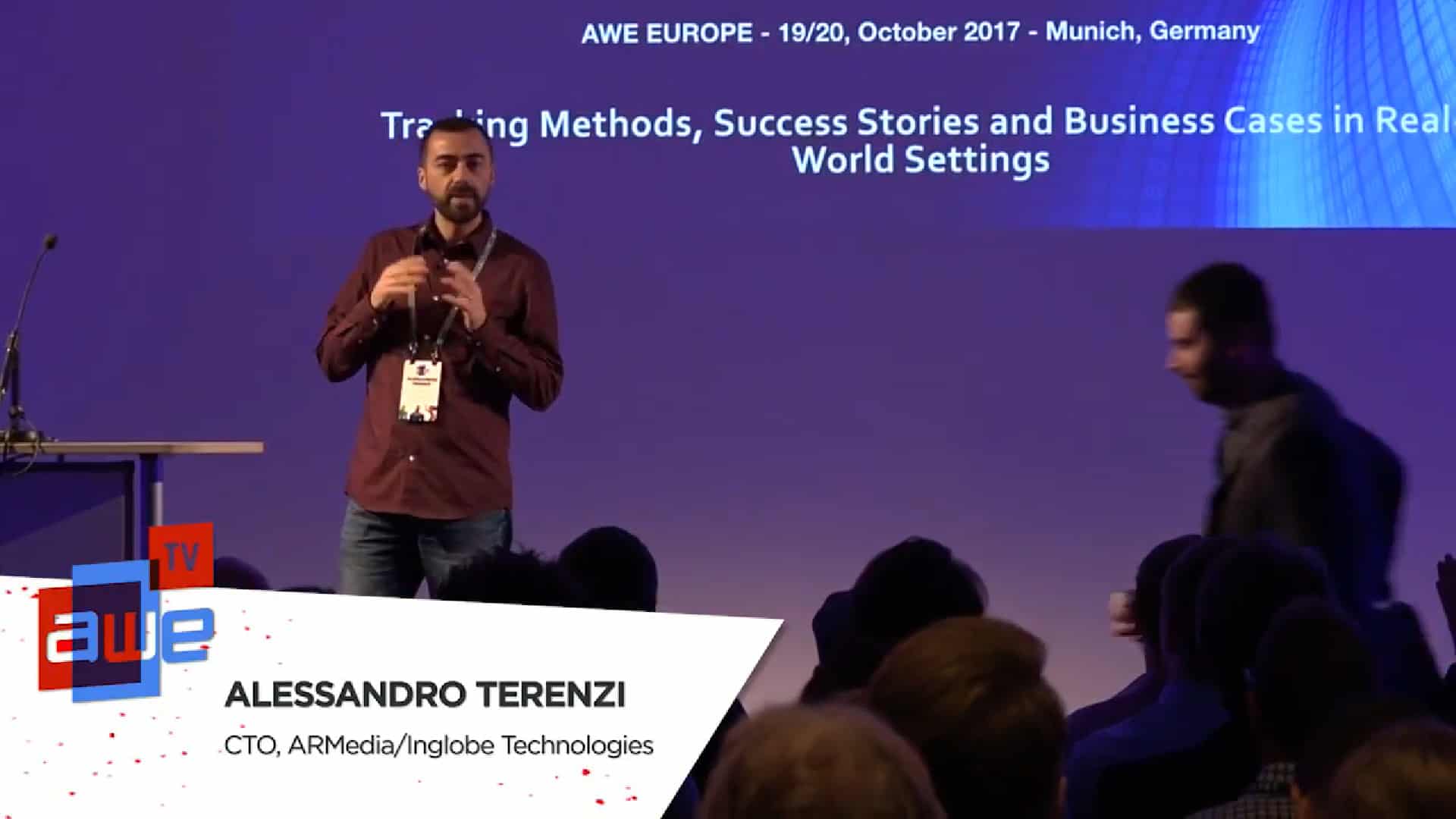
    Inglobe speech about “Object Tracking for Augmented Reality” at AWE Europe 2017

    During the Creators Track at the recent AWE Europe 2017 event in Munich, Inglobe Technologies? CTO Alessandro Terenzi gave a speech about?Object Tracking for Augmented Reality, explaining pros and cons of each approach and the technical workflow behind the creation of 3D targets of Augmented Reality applications, especially in an industrial environment.

    Here is the full video of the speech:

  • Inglobe to participate in AWE Europe 2017

    Inglobe to participate in AWE Europe 2017

    On October 19th and 20th 2017, the European edition of AWE, Augmented World Expo, the most important event in the world on the topic of Mixed Reality, will be held in Munich, Germany.
    AWE Europe 2017 is structured in a number of activities that include keynote speeches, specialist speeches from AR and VR industry experts, developer workshops, pitches of some of the most promising startups, and more.

    This edition of AWE Europe promises to be particularly interesting as it is the first appointment that follows the release of ARkit by Apple and ARcore by Google, namely the tools that have been animating the debate over the past few weeks, demonstrating the potential of native mobile AR in countless demo applications that developers around the world have begun to share. Another key topic will be the so much debated AR Cloud as a viable scenario of mass adoption of the technology.

    As usual, both for the American and European editions, Inglobe Technologies will take part in the conference with a speech by our CTO Alessandro Terenzi on “Practical Object Tracking for Augmented Reality“, a session devoted to exploring the methods and bounds Object Recognition with AR, in a number of areas spanning from Cultural Heritage to Smart Manufacturing.

    Alessandro Terenzi, speaker AWE 2017 Object Tracking
  • Inglobe Technologies is attending IT Weekend Ukraine 2017

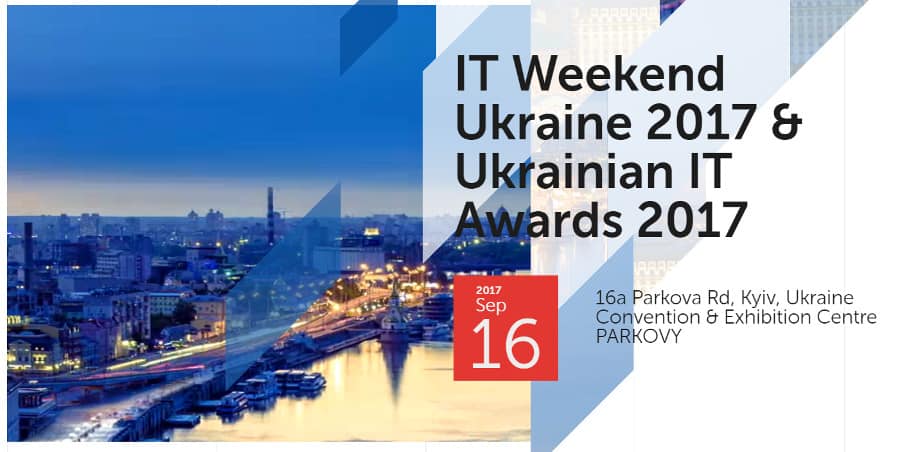
    Inglobe Technologies is attending IT Weekend Ukraine 2017

    The annual IT Weekend Ukraine has been bringing together 1000+ attendees to dive into the world of innovations together with global tech experts. During 5 years, the event presented speakers from SAP, Skype, IBM, Intel, HP, Dell.
    For 2017 IT Weekend Ukraine will be exploring digital transformation by showcasing the latest developments in Robots & Machines direction with a focus on Artificial Intelligence, Virtual and Augmented Reality, Big Data and Data Science as well as Bots and Machine Learning.

    IT-Weekend 2017 Ukraine Speakers, Alessandro Terenzi

    We proudly take part to the event and will be contributing with a speech about “Practical Object Tracking for Augmented Reality“, a talk about the State of Art of Augmented Reality technologies with a focus on the latest achievements related to 3D object tracking.
    The typical processes involved in the creation of robust 3D trackable data will be discussed using both CAD-based and photogrammetry-based approaches, showing the strengths and weaknesses of each. Practical use cases will be discussed with meaningful examples taken from the Industry, Cultural Heritage, AEC, Gaming and Publishing sectors.

  • AR-Media SDK 2.1.0 released with multiple object tracking and more

    AR-Media SDK 2.1.0 released with multiple object tracking and more

    Inglobe Technologies recently released a new version of its popular AR-Media SDK, now available as version 2.1.0.
    New sophisticated features, alongside with bug fixing and general improvements, are now implemented into the SDK in order to satisfy even the most demanding developers, willing to create memorable augmented reality experiences.

    AR-media SDK 2.1.0 release highlights

    Multiple object tracking

    This is a new unique and exciting feature of the AR-Media SDK, which enables you to recognize multiple objects at a time enabling the respective contents at the same time.
    Multiple object tracking works with 3D objects as well as with planar images and a mix of the two.
    New advanced augmented reality experiences are now possible thanks to this feature.

    Android camera performance

    Camera performance on some Android devices has been improved and made much more smooth.

    API documentation

    AR-Media SDK API documentation is now complete and exhaustive. Check it out.

    Upcoming features

    Even though only available upon request, by the moment, the SDK will soon include a specific support for Samsung Gear-VR, enabling the creation of applications which can run on such device in Augmented Reality mode!
    This feature has been deployed in a relevant project in which we recently took part in the field of cultural heritage enhancement.

    Tourist with AR VR headset inside Ara Pacis in Rome for the Ara as it Was experience
  • Inglobe presents an Industrial Augmented Reality case study with Huawei

    Inglobe presents an Industrial Augmented Reality case study with Huawei

    When people think of improving efficiency in a business with digital technology, they often have an image of a robot on an Industry 4.0 assembly line. In practice, tasks involving people are also being performed more smoothly and rapidly with the help of technology.
    This case study describes a project that Inglobe has delivered for Huawei Technologies to provide its technicians Industrial Augmented Reality tools to carry out common tasks more efficiently.

    Background of the project

    Installation and maintenance of IT equipment can be complex. The outcome of a work order is affected by a number of issues. The technicians have too many procedures to remember and even with the best documentation, reading text and looking at images of a product can be misunderstood or time consuming. Extra time must be taken to avoid errors, which leads to inefficiencies in the performance of assigned tasks, security problems and, ultimately, higher costs.

    Working with Huawei’s Technical Documentation Innovation team, Perey Research & Consulting invited Inglobe Technologies to provide an appropriate solution for developing AR-enhanced installation and inspection instructions through its HyperIndustry platform.

    The HyperIndustry platform is the basis for delivering targeted applications to support field technicians during installation, assembly and maintenance of some enterprise-class equipment, improving their performance. This project focused on the SUN2000-KTL inverter, a device that converts DC power from photovoltaic power systems on commercial rooftops and in large power stations into AC power and feeds it into the power grid.

    The goal of the project was to assess how HyperIndustry – Inglobe’s Augmented Reality platform for Industry 4.0 – could improve the installation and maintenance processes of Huawei’s SUN2000-KTL product.

    The challenges of the Industrial Augmented Reality project

    The project presented a series of technical and organizational challenges to the partners. First, the team members collaborating on the project were in different regions of the world (US, Europe and China) and all development had to be performed remotely. The Inglobe technical team never had direct access to the devices on which the project was to bring value. Nevertheless, all the tracking and testing operations were successfully completed on schedule.

    The installation steps tested for AR-enhancement are complex. Huawei has published videos and images to support the technician, as well as specialized tools. Each step must be completed in order for the correct installation.

    Further, Huawei required that the application rely entirely on natural feature tracking. Finally, the solution needs to work outdoors, in highly variable climatic and lighting conditions in which the SUN2000 inverters must be installed. Without use of any marker and relying solely on 3D models based on photographs, Inglobe Technologies’ 3D tracking component delivered excellent results on systems mounted on building rooftops.

    How the AR experience is structured

    AR-assisted procedures developed by Inglobe Technologies for Huawei focus on installation and maintenance instructions of SUN2000 inverters in photovoltaic systems installed outdoors.

    The AR experience was created rapidly based on a detailed storyboard and using the HyperIndustry platform, an Experience Management System for Industry 4.0. The platform compiles all the necessary content and interactive modules into native mobile applications for use on Android and iOS smartphones and tablets.

    First the technician can choose either English or Mandarin instructions. The Industrial Augmented Reality experience starts when the technician points the camera of the mobile device on which the application is running at the inverter. The target is automatically recognized, and a list of procedures available for the model appears on the screen. The procedures may be assigned by the maintenance manager to one or more technicians, or they can be initiated entirely by the engineer in the field.

    Once the technician begins a procedure, a series of steps are shown, each accompanied by instructions that simplify the operation to be performed and by Augmented Reality elements which, depending on the need, may be highlights of the intervention points or procedural animations. HyperIndustry platform by Inglobe Technologies allows the developer to associate additional contextual information, such as technical documents, photos and videos previously prepared by the technical documentation team, with each step.

    Field technicians independently perform technical procedures by executing all required steps. The procedures may be either followed linearly or accessed as required, as a result of the definition of branches and paths depending on the use case or the context. Checklists and steps in the application help the operator to perform inspections and audits. The platform records the technician’s performance, then sends all of the performance metrics and analytics to managers so they can assess the processes.

    The technologies involved in the project

    HyperIndustry is a modular platform based on a content management system that allows corporate asset management in the context of an Augmented Reality workflow for Industry 4.0. The project consists of 3D models, tracking data of the equipment, images, videos, animations, documents, and other information considered valuable for the design of procedures, and management of users and assignments.

    The platform includes a series of profiles to be associated with business roles including technical manager, who can create and assign tasks with a user-friendly interface and the field technician who receives the requests on his device. An analytics control panel is included in order to analyze data and customizable indicators (KPIs).

    The platform’s recognition of 3D objects uses an advanced 3D tracking technology designed to deliver AR experiences efficiently and reliably on mobile and wearable devices.

    The Benefits for Huawei

    Existing studies show that the use of Augmented Reality when performing complex procedures in the field can improve performance of technicians in the workplace. Augmented Reality–assisted instructions help the professional access all the relevant information where and when needed. By reducing the need for training and avoiding errors during the performance of tasks, AR can significantly reduce costs, compared to traditional methods of delivering documentation.

    Compared with the traditional paper-based or digital instructions, one of the most obvious benefits related to the installation and maintenance instructions is the technician’s immediate understanding of each step in the operation. The use of Industrial Augmented Reality has, in fact, allowed Huawei to make understanding procedures faster and less ambiguous, reducing the cognitive load for the operator. Consequently, the average execution time of the procedures could decrease.

    This ease of access to information is a key factor that not only speeds up the execution of procedures by new technicians, but can also help the experienced staff in solving occasional and complex problems, through a true “perceptual intelligence system”.

    Rhonda Truitt, Director of US R&D Technical Communication Innovation & Best Practices at Huawei, referring to the project declared: “The results we achieved on this project through Inglobe’s HyperIndustry were nothing short of amazing. Object recognition on outdoor equipment was something other vendors told us could not be done. Our customers have responded overwhelmingly positive about this experience. I am confident that we will see a sharp decline in installation errors due to this AR experience for post installation checks. Inglobe has really impressed me.”

    Plans for the future

    Huawei plans to continue working on Augmented Reality workflows that integrate Technical Documentation, Product Lines and support for Customers and Technicians in the field.

    >>> Download Case Study PDF <<<

  • Inglobe Technologies releases AR-media 3D SDK with Unique Object 3D Tracking Features

    Inglobe Technologies releases AR-media 3D SDK with Unique Object 3D Tracking Features

    The Development Lab of Inglobe Technologies announced the release of the AR-media 3D SDK and platform on the first day of Augmented World Expo in Santa Clara, CA. The AR-media 3D SDK v.1.0.0 features advanced 3D object tracking, a new 3D mapping and tracking approach that allows to create first of a class augmented reality (AR) applications capable of recognizing and tracking objects independently of their size and geometry.

    Inglobe Technologies first demonstrated the AR-media 3D Tracker prototype working on mobile devices in Santa Clara during Augmented World Expo 2013 catching the eye of many interested users. The new release will bring an enhanced version of the technology to the community of developers with extended support for multiple platforms and authoring environments, like for example Unity3D.

    With the AR-media 3D SDK users will be able to create applications and systems that link the digital and physical world in ways never experienced before. The AR-media SDK enables a new generation of applications that redefine the boundary of indoor and outdoor augmented reality in domains like industrial maintenance, interactive gaming, architectural visualization and cultural heritage, just to mention some.

    “While developing the AR-media 3D SDK we have tried to bridge the gap between what users and developers expect from augmented reality technology and what they actually have.” Said Graziano Terenzi, CEO at Inglobe Technologies. “Our 3D tracking technology adds a new form of intelligence to the environment and allows users to develop products and solutions never imagined before”.

    The AR-media 3D SDK allows to create a new generation of gaming applications on site thus allowing developers to add digital interaction to real world objects around us and create funny and engaging experiences. By using the AR-media 3D SDK technology users can populate a historical site with virtual characters, help represent and reconstruct the past, like for example a battle or even take part to a battle as an active player and try to change the course of events.

    The 3D object recognition and tracking technology of the AR-media 3D SDK does not just recognize planar images, but also complex 3D objects and is suitable for applications in the industry. This capability will address the growing need of different industries (like AEC, Aerospace, Automotive and Process Industry) to enhance their processes by means of the interaction of physical and digital information.