Tag: coronavirus

  • The Contribution of Mixed Reality to Cultural Heritage during the pandemic

    The Contribution of Mixed Reality to Cultural Heritage during the pandemic

    The global health emergency caused by the Covid-19 virus, in addition to having generated a profound impact on the industrial sector of our country and in the rest of the world, has profoundly affected a sector that in Italy is worth 13% of GDP, it is tourism.

    The estimated crisis and post-crisis losses are in billions of euros and are mainly caused by limitations on travel, especially international ones, and by the rules of social distancing which will constitute a brake on prosperity of the tourism and cultural heritage sector which employs 15% of the overall Italian workers.

    The Italian cultural sector will have to deal with a 2020 that will see a drop in the number of visitors from abroad throughout the year, which in our country represent 50.3% of the total.
    So at least initially we will focus on domestic tourism, since even the Italians who would have traveled abroad will likely look with greater interest to the domestic offer.

    In addition to dealing with the obvious losses in turnover that will affect the tourism sector, both in Italy and in the rest of the world, operators and managers of cultural heritage, are beginning to realize that the main road to overcome the crisis is that of “digital transformation”. Thanks to these solutions, it will be possible to make cultural heritage available to everyone, including tourists who cannot travel. The digital solutions will, in fact, lead institutions towards a phase of renewal in which the transformation of flows and the availability of more tools will allow to create more sustainable and higher quality models.

    In some use cases the immersive technologies, Virtual Reality and Augmented Reality, have shown not only to be able to overcome the problem of remote use, but also to have the ability to enrich the visiting experience with content and information normally not available.

    tourist using mixed reality headsets at Ara Pacis in Rome

    Here are some possibilities for operators of museum structures and sites of interest in general:

    • Digitization of the exhibition spaces
      It is a photogrammetric or laser scanner reconstruction of the real spaces of places such as museums. This activity allows you to create a digital version of the museum, on which various types of experiences can be grafted, from browsing the environments, in Google Streetview style, to enabling multimedia points of interest with voice, video or simply narrations associated. This type of use case can be made usable by both web browsers and mobile applications.
    • Virtual Reality Routes
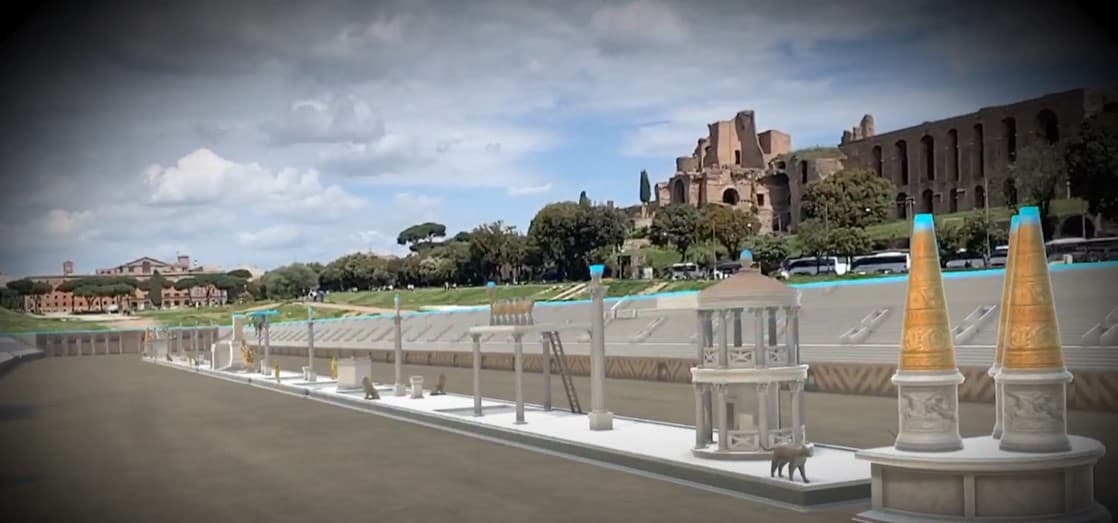
      This use case involves the artificial reconstruction of spaces, in their current state or in a state that corresponds to a different historical period. It is mainly used when you want to show content and routes related to sites that have been lost in whole or in part. This category includes some of the stages of the Circo Maximo Experience project, through which you can relive the chariot races in ancient Rome.
    • Mixed Reality Routes
      To make the most of digital content and apply it not only to the virtual context, but also to the physical assets available within a site of interest, Mixed Reality techniques are used, they exploit the coexistence of VR and AR, allowing visitors to immerse themselves in reconstructions anchored to real objects (e.g. ruins), and to view completely artificial contents. The result can be obtained both by using Mixed Reality headsets and mobile devices, even the latter, in fact, with dedicated technologies, are able to perform very well object recognition and tracking.
    • Simple Digital Routes
      One possibility that does not contemplate the use of immersive technologies, but which still allows a light digitization of the visit experience, is the creation of applications that provide digital access to content, presenting it in traditional ways, such as image galleries, video and audio narrations.

    In conclusion, the digitization process of entities operating in the cultural heritage sector can only be accelerated due to the Coronavirus emergency, but the road has already been traced by a series of successful experiences, both in Italy and abroad.

    The advantage for operators in the sector is therefore to facilitate access to the sites of interest at a time when these will be subject to rules that will provide for the quota of entrances, social distancing and the use of personal protection devices. The digital experience can to some extent make up for the drop in turnover that operators will most likely face this season and we do not rule out even in the years to come.
  • How Mixed Reality can support Industry during the Covid-19 outbreak

    How Mixed Reality can support Industry during the Covid-19 outbreak

    The current Covid-19 pandemic situation has forced the subjects of the entire economic system to rethink work in many new ways and in no time. Even if the companies all reacted rather quickly to the changes imposed by the workers’ health protection measures, this does not mean that they managed to do it in the best way.

    In almost all cases of readjustment of working conditions, the digitization of processes is involved at different depth levels.

    Depending on the nature of the activity carried out, some companies had only to have their employees work from home, while for others, especially those of the industry, more structured changes were needed.

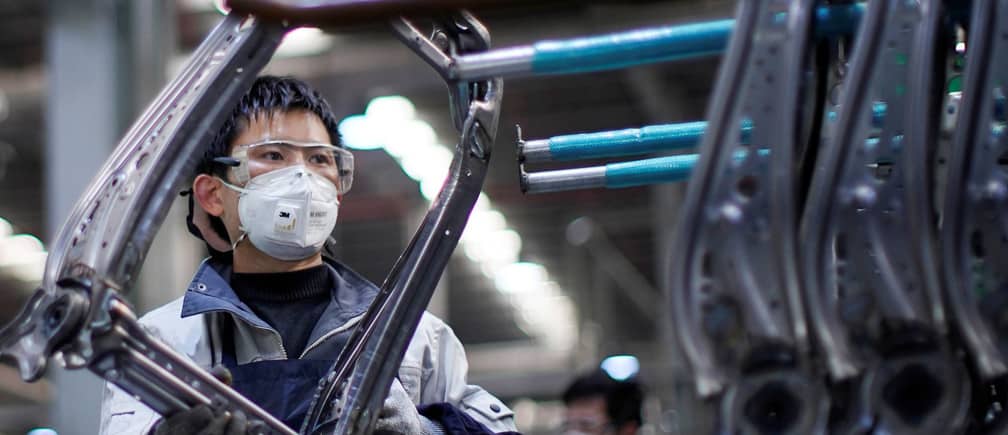
    Industrial companies base their activity on the production of goods, therefore the factory is the beating heart of their processes. To guarantee production continuity to the factories, it was necessary to introduce very strict rules in protection of the health of workers, providing them with personal protective equipment, reviewing the mode and duration of shifts, sanitizing the work areas with a certain frequency and monitoring the temperature of the workers at the entrance.

    worker with thermal camera measuring temperature to detect covid-19 sympthoms

    Factories, by their nature, being places with a high social interaction, are very exposed to contagion and therefore must manage a series of risks that concern not only production, but also other processes including logistics, administration and in general staff. The contingencies due to the measures required to deal with Covid-19 have imposed a limitation of business travel, forcing companies to search for alternative ways of managing operations.

    Below is a list of some of the industrial processes impacted by the health emergency, with an indication of how Augmented Reality can support certain activities, and some considerations on what will await us once the emergency ends.
    Personnel Management

    It has now become a practice, not only in companies, but also in some public bodies and commercial activities, to measure the temperature at the entrance. High temperature is one of the possible symptoms of Covid-19 positive and verifying that it does not exceed a certain threshold is fundamental in environments with many people. In this case, using computer vision solutions that leverage cameras or Smartglasses equipped with thermal imaging cameras, could speed up operations and streamline the queues at the entrance, without the need to point a laser at people.

    Maintenance Management

    One of the reasons that determine the greatest movement of personnel in the field concerns the management of maintenance. Even during the health emergency, it is essential for companies in certain sectors to ensure continuity and therefore they cannot afford to keep production or parts of it steady. In order to limit the movements of specialized maintenance personnel, it is possible to provide workers with practical tools that through the use of Augmented Reality help them to identify and solve problems, at least for those of small and medium size.

    Inspection

    Some industrial activities resort, in certain cases by law, to inspections of work areas or equipment, in order to carry out checks, measurements and other controls. During the pandemic, it was particularly critical in certain sectors to ensure inspection activities, in order not to endanger the health of inspectors. To this end, advanced computer vision systems, equipped on board of drones or other equipment, could guarantee the correct conduct of inspections without compromising human health.

    Training

    Since classroom training activities are discouraged, and considering the difficulty of training staff by making them work side by side with expert workers, Virtual Reality and Augmented Reality technologies offer excellent training aid to people, protecting them from prolonged contact with other individuals .

    Risk Management

    Both during the Phase 1 and Phase 2 of the Covid-19 emergency, the factories have reviewed the relationship between people and the work environment in a very profound way, making a number of choices aimed at limiting the density of people in the space, aimed at providing protection tools and aimed at informing workers about risks. Augmented Reality has already proven to be a very effective tool in the field of risk management in the workplace, thanks to its ability to allow an “augmented” visualization of the surrounding space, associated with rules and actions to be carried out to manage risks .

    Except for the temperature control at the factory entrance, it can be said that all the other use cases in which Augmented Reality can support workers to contain risks by helping them to reduce travel and contacts with colleagues, are intended to prove useful even in a post-pandemic phase. Several of these scenarios are already reality in many industrial contexts, although often only for experimental purposes.

    The emergency we are experiencing has only increased the awareness that digitization in industry is no longer just an option, but has in fact become the main road to rethinking processes.