Tag: augmented reality

  • How to create Blender 3D models for Augmented Reality apps

    How to create Blender 3D models for Augmented Reality apps

    Blender is the most popular 3D modeling software as of 2021. According to the official Blender Foundation data, only in 2020 it was downloaded 14 million times from the official website.

    Being a high quality free alternative to other popular solutions, it is far more widespread than 3ds Max, Maya, Cinema 4D and Sketchup.

    The purpose of this tutorial is to guide you through the process of preparing 3D models properly on Blender, in order to use them inside AR-media Player, the reference Augmented Reality app of the AR-media Studio web application.

    TABLE OF CONTENTS

    Why Blender for Augmented Reality

    Any 3D modeling software provides the tools to properly design and export 3D models to be used inside Augmented Reality experiences for mobile applications. Blender is one of them and being a free software makes it a popular option also for creatives that don?t want to invest on more expensive alternatives.

    With Blender users can work on their 3D model, be it static or animated, and correctly set all the parameters that make a model suitable for mobiles, that typically include appropriate polygon count, textures optimization and specific file formats.

    By following the guidelines in this article you?ll be able to design and export a 3D model that can be used smoothly in an AR app, both for iOS and Android.

    Which 3D File Format for Augmented Reality

    To start with, the supported 3D assets should comply with the following requirements:

    • File types: FBX, ZIP
    • File size (MB): < 50

    You can decide to use a single FBX file or ZIP file containing a the FBX model and a folder with the textures. FBX file format was created by Autodesk and is available, as an export option, in the most popular 3D content creation software like Autodesk 3ds Max, Autodesk Maya, Maxon Cinema4D, Trimble SketchUp, Blender and more. Using FBX 3D models provides a few advantages since:

    • You can embed the Textures into the geometry and get a single file
    • It supports animations

    When exporting your FBX 3D model from Blender make sure to respect the following parameters:

    • Choose the BINARY format
    • Choose to embed the textures into the 3D model
    • Choose to embed animations (in case of animated models)
    • Use the latest version of the FBX exporter among the ones available
    • Verify the up axis option, possible values are typically Y-up or Z-up, if your model looks rotated on its side then try the other option and export again
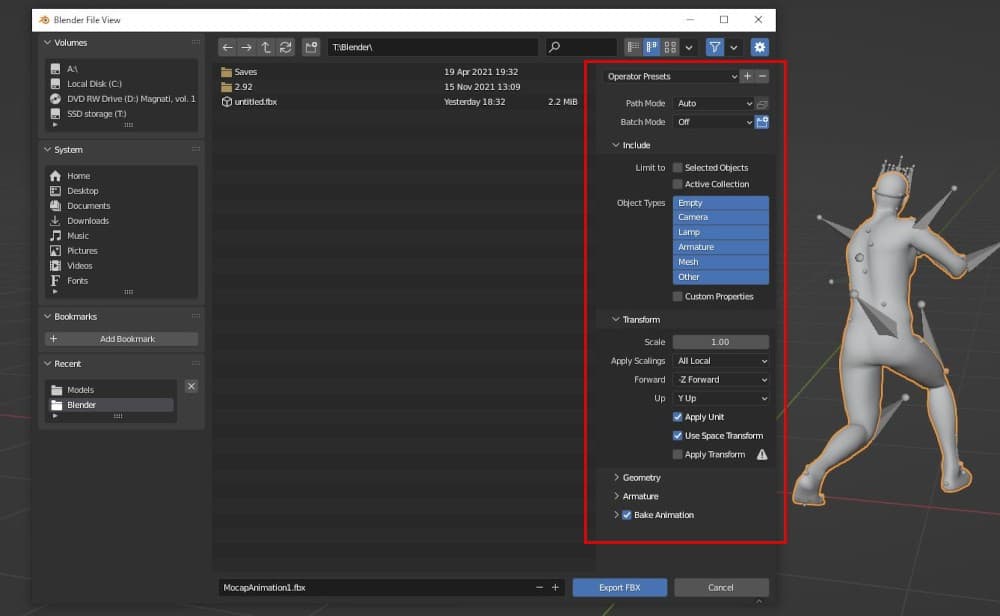
    3D model in Blender exported for Augmented Reality in FBX format

    How to manage Polygons in Blender for smooth AR experiences

    You should try to keep the 3D model size below 10MB especially when dealing with projects that include more than just a single 3D experience.

    When dealing with projects that only have one model inside, the file size can even be larger, but remember that a 3D model file size is directly proportional to the number of vertices and to the number and size of textures of the model itself. 

    Talking about the number of vertices, try to keep the complexity low, so that your contents will play smoothly even on mid-range mobile devices.
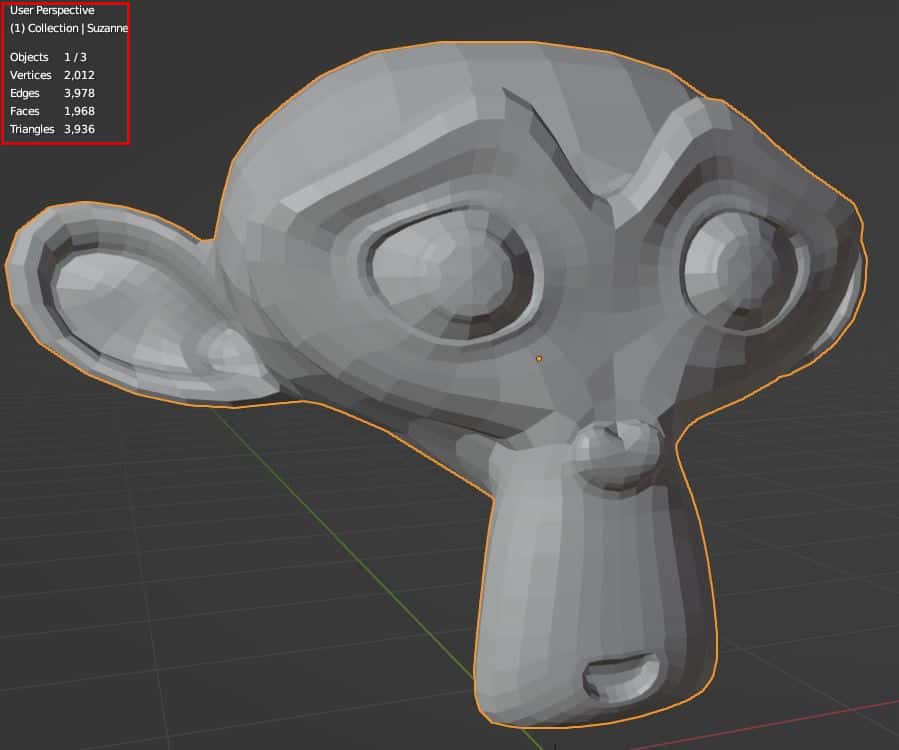
    3D model in Blender with polygon count optimizes for Augmented Reality

    Managing Textures, Materials and colors of your 3D

    The displays of mobile devices have usually a side of 2000 pixels and the 3D models you are going to visualize will only take a portion of that space, so remember, it is perfectly fine to use textures with the largest side as small as 512 pixels (or even smaller) to still get a very good result in terms of visualization.
    AR-media no coding Augmented Reality platform

    Furthermore, when the 3D surfaces are very small we strongly suggest you to use smaller texture size, from 32×32 up to 256×256. For larger surfaces, try no to go over resolutions such as 1024×1024 or 2048×2048.

    Finally, regarding textures file formats, it’s better to rely on compressed formats like JPG or PNG.
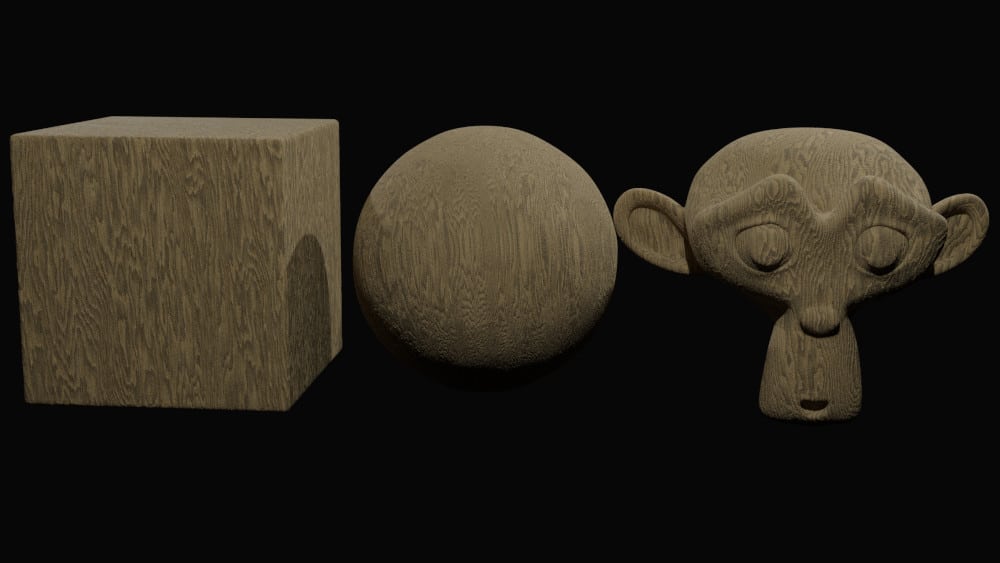
    Applying textures to the 3D model in Blender for Augmented Reality

    How to import your 3D model from Blender to AR-media Studio

    Once your 3D model has been properly set on Blender, following all the 3D optimization guidelines, you can finally import it into AR-media Studio and upload it in the assets manager area, as a regular 3D model.

    You?ll be able to add optional metadata and tags to the 3D model and generate a thumbnail for preview. Moreover, according to how you want the 3D model to look on the app, you can experiment with the visualization modes.
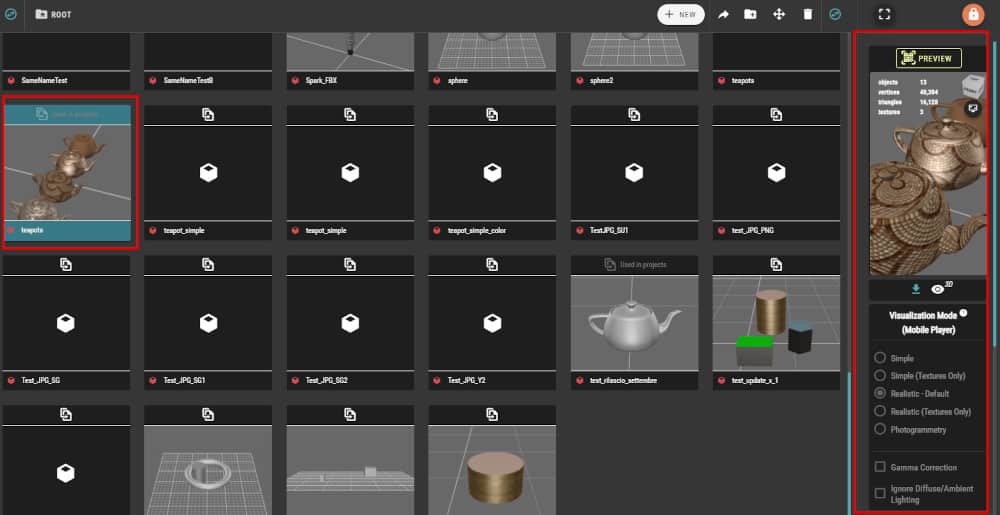
    3D model exported from Blender to AR-media Studio Augmented Reality Platform

    Create a project and visualize your 3D model into the AR app

    The following step is to create an Augmented Reality project with AR-media Studio, using the 3D model you exported from Blender.

    Refer to the Documentation in order to learn how to create a simple AR project and how to visualize it on the AR-media app.
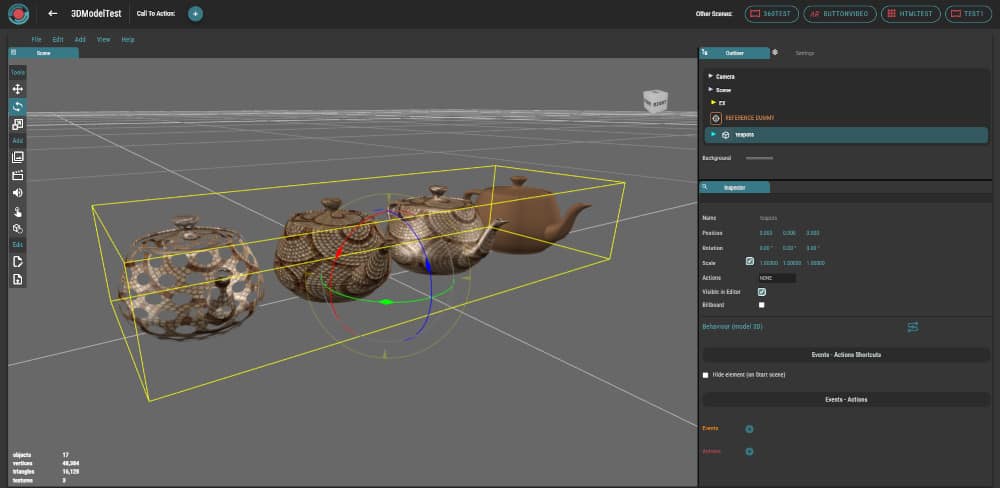
    3D models exported from Blender to AR-media Studio Augmented Reality Platform
  • AR and VR can make your museum a memorable experience

    AR and VR can make your museum a memorable experience

    AR,VR and museums may seem two distant concepts, but they are perfectly synergistic since, if used in combination, can create profound and memorable experiences.

    The digital evolution that is affecting many areas of the economy also concerns museums. More and more visitors demand for emotional, engaging and more informative experiences.

    Augmented and Virtual Reality can be the perfect tools to provide a real immersive visit experience, since that can enrich the existing environment with new elements and help the visitors retain their memories for longer. Moreover, such an increased engagement makes them want to share their experiences with other potential visitors, both by word or month or by sharing their thoughts on social media.

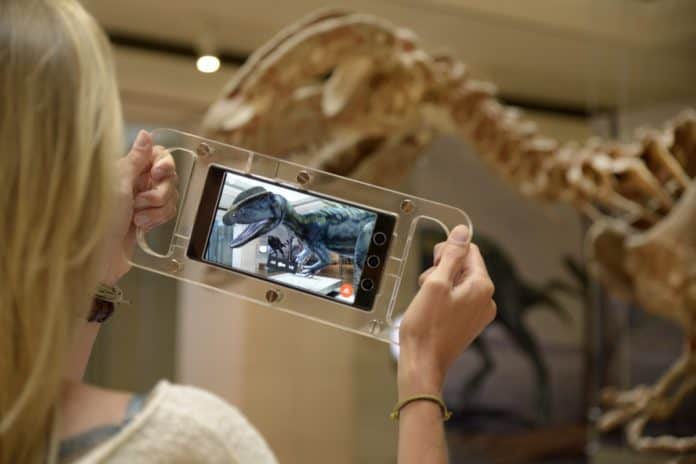
    AR technologies support museums to reach a new level of interaction with visitors and offer them a unique opportunity to look at the world around them from a different perspective. Augmented reality gives traditional museums the possibility to incorporate elements of dynamism and movement into their interiors, catching the attention of the public and engaging new visitors.

    The relationship between Augmented Reality and museums aims to enhance the artistic and cultural heritage and to offer a memorable journey, fully involving the visitor, making her feel an integral part of the experience, enriching the enjoyment of works of art with extra information and interactive content. By connecting with some kind of devices, for example a smartphone or a tablet, offered by the museum itself, the visitor becomes more involved and active. In some cases Museums may also release some kind of mobile app that visitors can download and experience on their own devices.

    In order to engage visitors through Augmented and Virtual Reality, museums must integrate innovative but also functional technologies. No visitor would be attracted by applications or devices that are too difficult or cumbersome to use. The visitor experience must be easy and intuitive, and the solutions adopted must be almost invisible and non-invasive.

    What are the benefits and advantages of AR in museums?

    The choice of integrating Augmented Reality in museums gives the possibility to expand the target audience. Experiences can be created with customised thematic paths for children, combining the experience of learning and knowledge with play. Gamification, for example, is an experience that is enriched by the addition of fun challenges, quizzes, puzzles and much more. The more fun it is, the more little visitors will learn and remember. With gamification, visitors can be taken on a journey that includes small mysteries to be solved in order to discover curiosities and include fun and engaging elements into the journey. 

    AR technologies help museums to reach a new level of interaction with visitors and offer them a unique opportunity to look at the world around them from a different perspective.

    The decision to offer visitors an emotional as well as informative and experiential path of knowledge transmission is effective and attractive especially for the younger generations.

    Augmented reality technologies can also help visitors interact with different touchpoints, online and offline, from the website, social media, brochures to multimedia guides, increasing engagement.

    Summing it up, AR and VR have many important advantages for museums such as:

    • Engaging and expanding the target audience
    • Creating increasingly personalised experiences
    • Offering visitors a new, fun and memorable way of learning
    • Creating additional revenue streams through Premium tickets

    What are the most common AR and VR use cases for a museum?

    Depending on the nature and typology of Musemus, Augmented and Virtual Reality can enable a number of different use cases, let?s explore them together.

    A new way to look at paintings with AR and VR

    With the use of Augmented Reality, the visitor pointing the phone?s camera towards a work of art can experience additional content. The user can listen to the description and the story of a work directly from the artist; they can hear ancient songs, street noises, chattering, bringing back to the present the typical environment of the time when the work was created. Extinct animals may come back to life, interacting with the little ones.

    The various ancient wars and battles could be relieved at first hand, scientific demonstrations would be explained with concrete examples. Frescos could be seen by the visitor as new or retrace with the artist the creation of the artwork; paintings could be brought to life and interact with the visitor.

    AR VR IN THE MUSEUM

    Sculptures and buildings can be brought back to life

    The same is true for sculptures or other tridimensional objects exhibited in museums. Immersive technologies can help focus the visitors? attention on specific elements of a work of art, with the help of 3D highlights superimposed on the real object.

    AR and VR have proven to be very useful especially when the goal is to show a visitor how certain pieces of art or ruines used to look like in their former glory.

    AR VR IN THE MUSEUM

    Discover museums through a virtual tour guide

    When guide tours are not available AR and VR come in support by providing 3D avatars or holograms that can guide the visitors through a predefined path and help them get the best out of the Museum, helping them to discover and experience even the most hidden gems.

    ar and vr in the museums

    Preview the museum experience at home

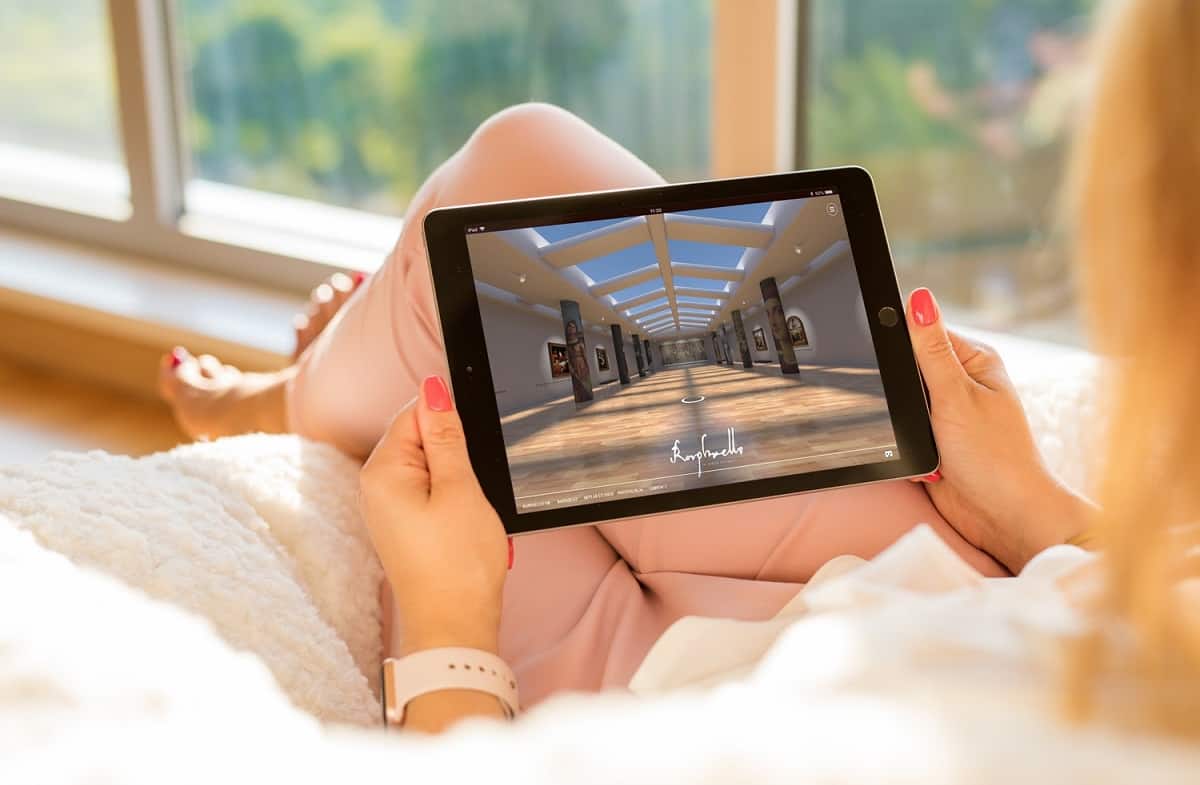
    Who said Augmented and Virtual Reality can only be used inside a museum? In order to tempt and intrigue potential visitors, Museums may release public AR/VR mobile apps that let users get some anticipation of what they can find inside the museum, something very similar to what happens with movie trailers.

    A visitors? journey can start comfortably from the sofa, at home, and continue with the real visit in the museum. App in this case may even provide a way to buy the tickets at a special discount.

    AR VR IN THE MUSEUM

  • The transformative power of AR in Real Estate: the take of an industry expert

    The transformative power of AR in Real Estate: the take of an industry expert

    A new AR product has been recently released in collaboration with Bruce Kulpaca, principal broker at Commercial Venture Group (CVG). Bruce felt the need of enhancing the selling experience in his industry, transforming it into something more efficient for both the seller and the buyer by using AR in Real Estate. 

    His will to explore the transformative power of AR in Real Estate led him to us, and we worked together to develop a pilot project and to launch the Ding Dang app about a Real Estate property located in Springville (Utah), named Springpointe. Once again, a new project where the Real Estate Industry and AR-media converged together to create a magnified and transformative experience. 

    Keep discovering this project by reading the whole interview with Bruce Kulpaca below.

    Interviewing Bruce Kulpaca on how Ding Dang uses Augmented Reality in Real Estate

    Q: Hello Bruce, you started your Real Estate career in 1996, tell us something about the beginnings.

    A. Well, as you noted, I started my career in commercial real estate in 1996. At that time, I worked in commercial development; primarily retail in Florida. I was based out of Tampa. It was an exciting time. Drug stores were moving out out in-line space and pushing hard for stand alone sites and grocery anchored projects featuring local space; outparcels were very much in demand. The commercial real estate was redefining retail in the context of intersections and population centers.

    Q. The advent of the Internet in the 1990s was a great revolution for its impact on commercial real estate. What kind of practical impact did it have on you and your clients?

    A. It was evolutionary. The Internet changed how real estate is marketed. If you go back in time and think of how commercial real estate was marketed before the internet, it was very much of an “in market” approach. That is, a tenant or developer spent a great deal of time in the market…driving the streets, going on-site to look at locations, taking pictures from different angles, drawing rings on paper maps and annotating with sticky notes.

    During the pre-internet era even taking aerial pictures required a great effort. Once I rented a plane, since I had my private pilot’s license, and my colleague snapped photos. It may seem ridiculous now, using a drone in 20 minutes, for pennies, you can do the same job and even more. Today property ownership information is readily available, zoning is readily available. Also, the reach of our market has really expanded.

    Q. What do you mean the market reach has expanded?

    A. I used to spend a great deal of time putting together marketing packages that were then physically mailed out. It was a really slow process and depended on a somewhat limited mailing list. Now, we can quickly approach our market through websites and email campaigns. Not only that but social media allows others seeking our product to find us. It’s a significant change; a lot of market inefficiencies have been removed.

    Q. Market inefficiencies… How does that relate to commercial real estate?

    A. In my view, market inefficiencies are removed as more buyers and sellers become aware of each other. It’s my job to seek out as many buyers and sellers; through this process the best price discovery is achieved for my client or project. I want to take every opportunity to make sure buyers and sellers are given the best information that technology can provide. You never really know what little piece of information will turn a prospect into a buyer.

    Even today, much of the marketing is limited to photographs, flyers and renderings. These tools leave a lot to the imagination and can be subject to a whole range of subjective influences….maybe the rendering is not quite as good as another project, maybe the site plan is unclear, maybe the flyer is unclear. If our goal is to eliminate market inefficiencies, then the tools we use should be aboutpresenting the project with minimal subjective influences.

    Q. After the Internet revolution, the next one in real estate will be related to 3D and Augmented Reality. You recently founded a real estate app called Ding Dang. Can you explain your vision with respect to these technologies?

    A. Well, it’s part of the evolutionary process we discussed. It is the next step in making projects real for our customers and removing subjective influences. For example, we are beginning to see more and more use of 3D technology in commercial real estate. This is a big step beyond renderings and site plans. The goal of Ding Dang is to take the evolutionary step even further with augmented reality. Ding and Dang are Utah slot canyons. The name reflects my love of the outdoors and experiencing, in my view, the sublime power of nature. Hopefully, I can express through the app a sublime experience of architecture. In my view, augmented reality is the next step past 3D. Like 3D, it operates on multiple perspectives or planes.

    Augmented reality takes the next step by placing the project in your environment. You are not looking at a movie which is how 3D tends to be presented. Rather, you have an image in front of you in your environment and this image can be engaged with by the viewer. The audience can actively participate. I think anytime you can engage the audience, challenge the audience to participate, the project has a better chance of avoiding the subjective pitfalls of that are prone with non-participating marketing tools like flyers, movies and renderings.

    Q. The Ding Dang app has three visualization modes: On-Site; Site Plan and Anywhere Anytime. Can you explain how they differ?

    A. Sure. Let’s take the first approach: On-site. Here were are dealing with basically an onsite experience. We can project the proposed building onto the site via an iPhone. The site is viewed on a 1:1 scale. The advantage of this approach over a site project sign is obvious. When you can walk around the site and actually see how it will be sited, the customer is an active participant and is able to view the building as it will actually be built. It is even possible to create an experience where the customer can walk up to the building and even go inside. With community projects, this opens the possibility of having the community give its input on a project before it is ever built.

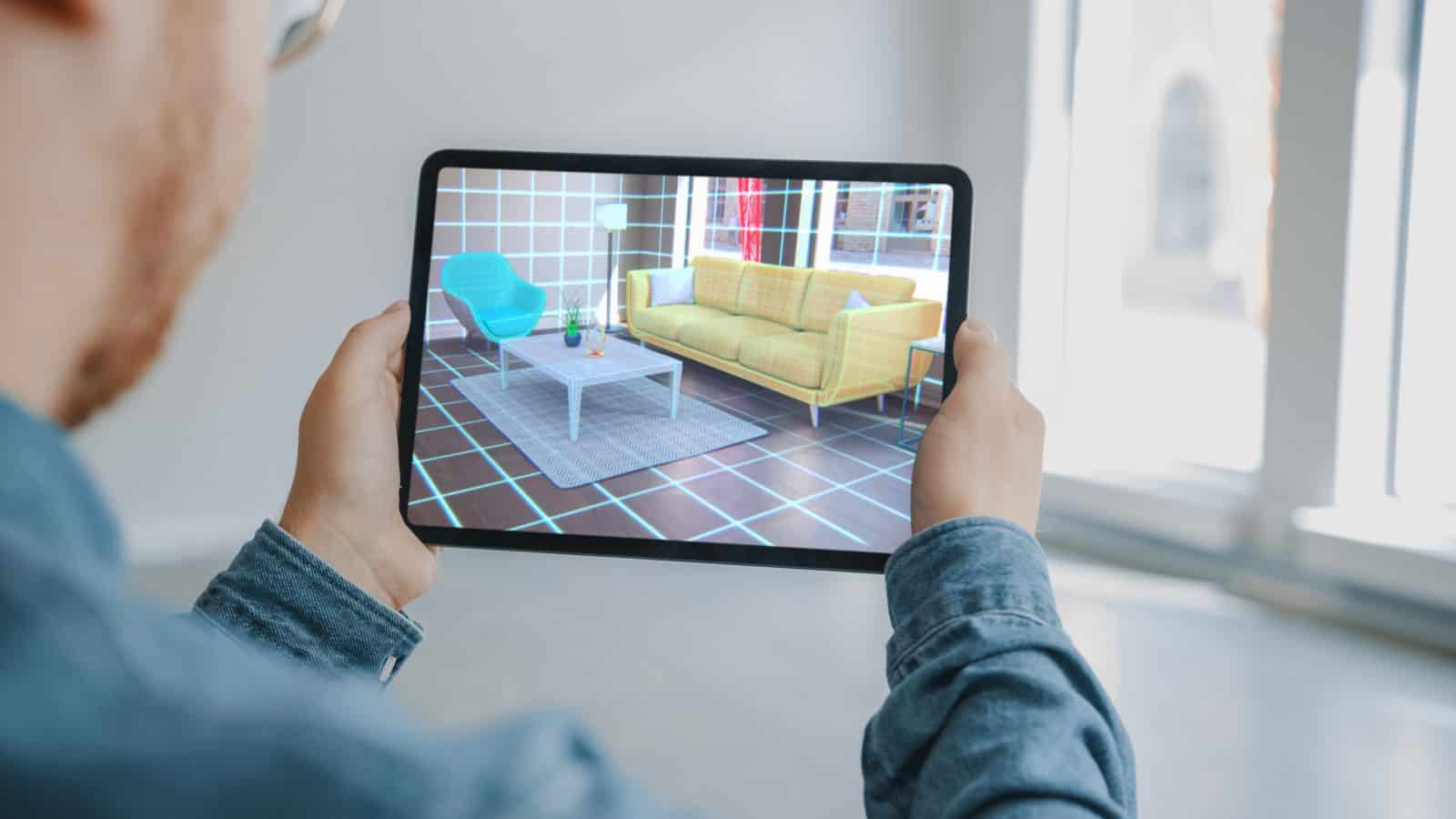
    With site plan, we can project the architecture onto a flat site plan. This approach allows the viewer to experience the project in multiple dimension and how the architecture relates to the site. The last approach, Anywhere Anytime, allows the project to be projected onto any flat surface and can then be viewed from any angle. The viewer can walk around the project or the viewer can remain stationary and use the viewer tools to move the project.

    Q. You say project…what does that mean? How is the architecture projected?

    A. There needs to a means to view the projection. Currently, the architecture viewed either through the screen on the iPhone or the user can enable the viewer tool and use an inexpensive viewing device such as the Homido Grab for a more immersive experience.

    Q. Why did you choose to use an App for this technology?

    A. In my opinion, the smartphone is the one device we all carry with us at all times. The app is superior because it is easily accessible. One only needs to open the app, click on the appropriate project and the experience can begin. If the experience is downloaded onto the phone, there isn’t any need for internet. I was demonstrating this technology to a seat mate on a flight recently, We were flying so my phone was on airplane mode. However, I was able to call up the project on my phone and show my seat mate the project.

    Q. Where do you see this technology going?

    A. As companies develop smart glass, the experience will become more and more immersive. I think within the next 5 years we will be able to put on a pair of smart glasses, call up any project through the app and not only experience the architecture but have access to a host of other important marketing materials such as spread sheets, rent rolls, permitting schedules etc. All of this accessible via the same app and tied together on a project by project basis. As this develops, those that are part of the technology will be part of an ever more efficient marketplace.

    Well, thank you Bruce and we certainly look forward to finding out how this technology develops…

  • This Roman colony comes to life through Virtual & Augmented Reality

    This Roman colony comes to life through Virtual & Augmented Reality

    Enjoy the ancient Roman colony experience with augmented reality

    The ancient Roman colony Fregellae was an important Roman colony located on the Via Latina near the left branch of the Liri river. The city was probably founded by the Oscans and then occupied by the Volsci, before the destruction by the Samnites in 330 BC. In that year the people of Fabrateria Vetus (modern Ceccano) sought the help of Rome against the Samnites. In 328 BC a Latin colony was established near the site of the Volscian Fregellae. Not everybody knows that Fregellae faced the advance of Hannibal in 212 BC by destroying the bridge over the Liri river. During its existence Fregellae was a flourishing center in southern Lazio.

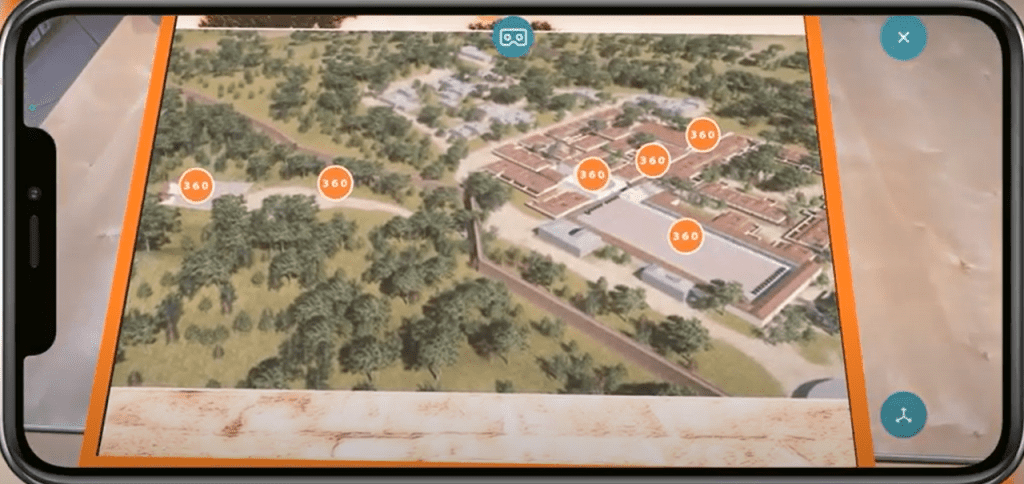
    The Fregellae experience with augmented reality offers an immersive and interactive reconstruction of the area of the archaeological excavations. It provides information about its history and meaning. Thanks to the 360° experience, users can navigate and interact with 3D reconstructions of the colony.

    Download the app and experience the ancient Roman colony with augmented reality for free

    Download the app and experience Ancient Roman colony with  augmented reality for free
    Download the app and experience Ancient Roman colony with  augmented reality for free

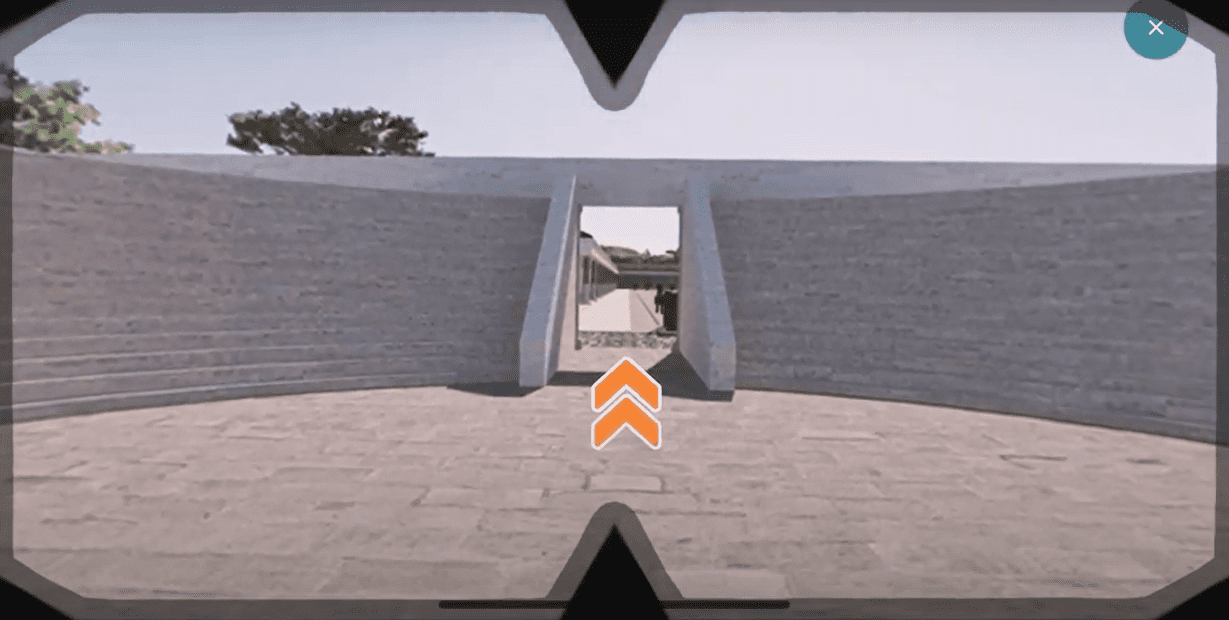
    Starting from a spatial visualization of the map, users can select the points of interest and enable an immersive visualization of 3D reconstructions based on the use of device sensors (gyroscope and accelerometer).

    How to experience Roman colony with augmented reality thanks to the AR-media Player app

    Created by AR-media “the Fregellae experience” is an immersive experience in the area of the archaeological excavations with the aim of innovating cultural heritage experiences through the power of emotions, opening the way to new audience segments with dynamism and interactivity to increase their involvement. Users see the life of the important Roman colony “Fregellae” flowing before their eyes through a more complete and varied view of history. They travel new roads, immerse themselves in the city’s lesser-known spaces and discover colonies, sanctuaries, underground passages and side streets.

    You can try this experience by downloading the free AR-media App for iOS or Android. Download the app and frame the QR Code using the button at the top right of the app. Click on the “save” button and then the “open” button, project the camera of your phone/tablet on the floor and begin to immerse yourself in this experience.  

    Thanks to reconstructions made with attention, even to the smallest details, you go back to the past and get in touch with the architecture as it was; through the application the user can move freely by touching on specific arrows and travel in this virtual 360° world.

    To make this experience more immersive and evocative, it is possible to go inside each construction, giving the illusion of being physically where you are not. By pointing the phone at a building and tapping on the “i” button, the user can listen to audio explanations, information and other useful data.

    In this way the ancient Roman colony “Fregellae” comes back to life, upgrading and showcasing its beauty. The visitor is invited to perform a series of actions that will further engage the perceptual channels for a memorable experience. 

    How to experience Roman colony with augmented reality thanks to the AR-media Player app

    Build AR and VR experiences for archaeological areas with AR-media

    The relationship between AR-media and the archaeological sector represents a long process of digital evolution that is taking place in different archaeological areas. The choice of AR-media is to be able to give users a journey that is not only informative but also emotional. The AR-media application transforms the visit into a multisensory experience, involving the visitor, transforming her into a participating and active actor and expanding the journey with interactive content. By connecting from a smartphone or tablet the user is immersed in a unique virtual context with a high emotional impact. 

    AR-media’s augmented reality helps to connect history with the new digital reality and is particularly suited for:

    • Virtual tours both indoors and outdoors
    • Augmentation of ruins, helping the visitor to visualize the ancient beauty of the sites
    • Sites with visitors from many countries, thanks to the support for multi language projects
    • Increasing the sites’ revenues by providing a premium immersive experience alongside the more traditional visit experience

    Augmented and Virtual Reality make the cultural experience immersive and engages users before, during and after the visit.

  • Augmented Reality in Marketing and AR use cases

    Augmented Reality in Marketing and AR use cases

    Industry experts have long known that Augmented Reality is a powerful marketing tool, while in more recent times the Pokémon Go boom has made everyone understand the huge business impact of the technology.

    There have been many businesses that have ridden the wave exploiting PokeStop and Pokémon gyms in order to attract a greater number of customers, and getting some success.

    Pokémon Go, to be honest, is not the world’s most powerful implementation of Augmented Reality, although in its simplicity it was able to achieve unprecedented success.

    Application scenarios of Augmented Reality in marketing are numerous and require a dedicated study.

    AR for print products

    Although the digital revolution has dramatically changed the way we use information, still a relevant piece of information is conveyed through paper, such as newspapers, magazines, catalogs, flyers, books, etc …

    Despite having lost ground to digital, paper products are still a powerful means of communication and this is confirmed by the McKinsey Global Media Report 2015 which basically highlights two trends: the first concerns the maturity of the print media (+ 1.7% growth from 2014 to 2019); the second a steady growth of the digital (+ 9.5% in the same period).

    This suggests that these two seemingly distant worlds, can live well together, and indeed they can also cooperate. In fact, according to research by Digimarc, 75% of consumers think that digital media is a complement to paper, rather than a replacement.

    Marketers from all sectors can think of innovative ways for presenting their products and services, combining greater clarity of the offer to a greater customer engagement. It has been demonstrated, according to the claim made by Lisa Hu, that using Augmented Reality you can get a dwell time 2.5 times higher than that of traditional media (TV, radio and newspapers).

    To date, cases of successful Augmented Reality implementations in the publishing area relate to, among others, the creation of immersive catalogs, magazines and books with AR.

    Augmented Reality for events and trade shows

    The promotional environment for excellence, for many companies, is that of fairs and events in general. These are special occasions for companies to show off theirs strengths and to try to engage visitors in order to convert them into customers or at least into leads.

    In this context, companies focus a lot on entertainment, giving visitors the opportunity to try the products and to make the time spent at the stands a memorable experience.

    The use cases of marketing actions with the support of Augmented Reality in this area are diverse, ranging from brochures and catalogs with immersive 3D visualization of the product, to the organization of contests and gaming experiences to engage and amaze visitors giving them a concrete idea of the real potential of the product.

    AR for packaging

    A sub-set of paper products, to which more and more companies turn their attention to design marketing actions with Augmented Reality, is packaging.

    What better time to engage the customer and to provide additional information on the product except when she is face to face with the package?

    There are interesting use cases of interactive packaging that put people in a position to activate additional content or mini-games that come to life from a bottle of a soft drink, rather than from the foil of the chips of a fast food and so on.

    The result is an increase in brand reputation and customer loyalty, because when customers are faced with a similar product, they tend to pick the more exciting purchase experience.

    Augmented Reality for in-store experiences

    The natural ability of Augmented Reality to expand people’s vision makes it particularly suited to design in-store marketing experiences, allowing retail companies to offer additional layers of information to the visitors.

    This category of use cases includes indoor navigation to guide people in a particular area of the store, maybe to locate special deals; the display of products and information that is not physically present in the stores because of space limitations; the possibility to sort or read the data on the origin, understand the production process, watch a promotional video, etc …

    These experiences can be enriched by the gamification of the buying process with premium and retention mechanisms.

  • AR beauty filters and their (not so beauty) reality

    AR beauty filters and their (not so beauty) reality

    “In a world full of Kardashians be… yourself” says one of the popular ‘memes’ on the internet. What does it actually mean? Well, all you need to do is scrolling your Instagram/Facebook/Snapchat/Tik Tok feed for about five minutes to figure it out: in no time, you will be overwhelmed by the distorted-almost-unrecognisable faces of your friends, changed by the ultimate face or AR beauty filters found on a Social Media.

    What is a face filter? An AR face filter is a sort of mask created with Augmented Reality that can add virtual objects, images, sounds and any kind of make-up to your face by simply framing it with your smartphone camera, whereas an AR beauty filter, besides adding make-up and changing the color of your hair, can also distort (or beautify) your entire face and body, making your eyes look bigger, your lips fuller, your nose thinner, your waist smaller than Dita Von Tees’s and so on… causing a large number of critics, psychological issues, especially among younger people, and self-esteem doubts!

    The pioneer of the face filters is Snapchat, when years ago it had the idea of putting facial filters to its stories in order to add amusement and fun to the regular photos. The response was huge! Within months all the other Social Platforms had to update and add different kinds of filters to keep up with it. Nowadays, more than 600 million people use AR filters to their stories and posts across Instagram and Facebook and more than 75% of Snapchat users create content using filters everyday. 

    AR beauty filters are not just trouble-maker

    It is fair to say, though, that thanks to the introduction of AR beauty filters on Social Media, especially during these past two years of pandemic, both people and companies had the opportunity to “live their lives” in a more standard environment. Considering the Beauty Industry, for instance, Augmented Reality is changing the way some brands approach their customers, creating a more personalised experience for them. Hence, the women and men who wanted to try on new products or see how they look like with different hair were able to have a taste of how they could look like without leaving the house and the companies which encouraged the realisation of such filters, on their side, were more than glad to offer the tool and help them finding their favourite product that they would buy right after.

    This is a considerable improvement in the beauty industry, allowing the companies to predict which product can have more success, facilitating the visual merchandising and also the inventory. Moreover, it has been studied that people who use AR beauty filters help the companies to improve the quality of their products and set higher standards thanks to the availability of monitoring a million different kinds of facial features.

    In addition, it is necessary to say that augmented reality AR beauty filters can also be a new digital tool for all the make-up artists that want to share their art with the world. They can create their digital make-up and make users try it and if they like it, they will be (obviously) more keen to reproduce it on their very face!

    But the reality is way more complicated

    As Spiderman once said: “with great power comes great responsibility” and the impact of augmented reality AR beauty filters in terms of psychology and education on people’s minds is far from being optimistic. Studies revealed that the spasmodic use of AR beauty filters especially in young girls may cause a significant increase of negative self-perceptions, encouraging young girls towards the use of cosmetic surgery, with the aim of becoming exactly like the beauty filter they use everyday. Apparently, though, this is only the tip of the iceberg. In fact, it is not only about cosmetic surgery, but it is the whole way in which a person sees herself or himself that is concerning.

    The Augmented Reality sector put these filters under the category of “deformations” and “face distortion” and if it is not enough to make us think about the disturbing effect that this may cause us, it seems that the “deformation” happens even beyond the physical aspect, going straight to the psychological one, “deforming” our way of thinking about ourselves and how we should look like. Hence, some women now refuse to be seen without AR beauty filters as if they somewhat think they look that way, so now it is common to see photos where girls wear inhumanely long lashes artistically designed and an amazing silk skin beautifully coloured, forgetting how they looked in the first place. 

    There are plenty of these filters and you can recognise them just by their name. On Instagram, for instance, in the story filters section, you just need to choose the “selfie” category and you will find dozens of AR beauty filters usually named something like: SilkLashes, BeautyFace, CuteFace, FoxyEyes, PrettyFace, PerfectEyes etc…

    Finally some changes are being made in the AR beauty filters sector

    Seeing the concerning amount of anxiety, depression, and suicidal thoughts among girls, apparently caused by the negative way they perceive themselves outside the “filtered reality”, some companies and countries decided to do something about it: Facebook banned face-distortion filters in 2019 (reintroducing them again after a few months), countries like Norway and UK forbad AR beauty filters and photos where the image of the body appeared too far from reality, unless clearly declared in the caption and lots of influencers campaigns touch the topic too, encouraging people to post their natural face by using referred hashtags like #filterdrop and #naturalbeauty.

    Undoubtedly, this is only one first small step towards a better awareness on the subject and a lot of work still needs to be done. Especially among the young people, educational awareness on how some technological tools work and their impact on their mental behaviours are necessary. The world of Augmented Reality and new technologies is still a mix of wonder and mystery and it is our duty to recognise the real beauty of it and use it to improve our daily reality.

  • Integrating HTML5 with AR: some use cases

    Integrating HTML5 with AR: some use cases

    HTML5 is a very powerful markup language, it givesyou the ability to create simple to complex web applications rich in multimedia content. HTML5 allows you to create apps and games that, in the form of packages, can be easily integrated into entertaining immersive experiences.

    AR-media Studio offers a straightforward process to easily combine HTML5 and Augmented Reality into a single project.

    In particular, among the use cases that can be achieved, here are a few examples:

    HTML5 Mini Apps

    • Using HTML5 to build mini applications serves the purpose of achieving a specific goal during the user experience, for example a registration form. Integrating this kind of content into immersive experiences can help gather data from users/customers to be used later for marketing purposes. In this way you can build an experience that is useful and entertaining at the same time because it provides a funny experience to the user, yet it collects precious marketing data.

    HTML5 Mini Games

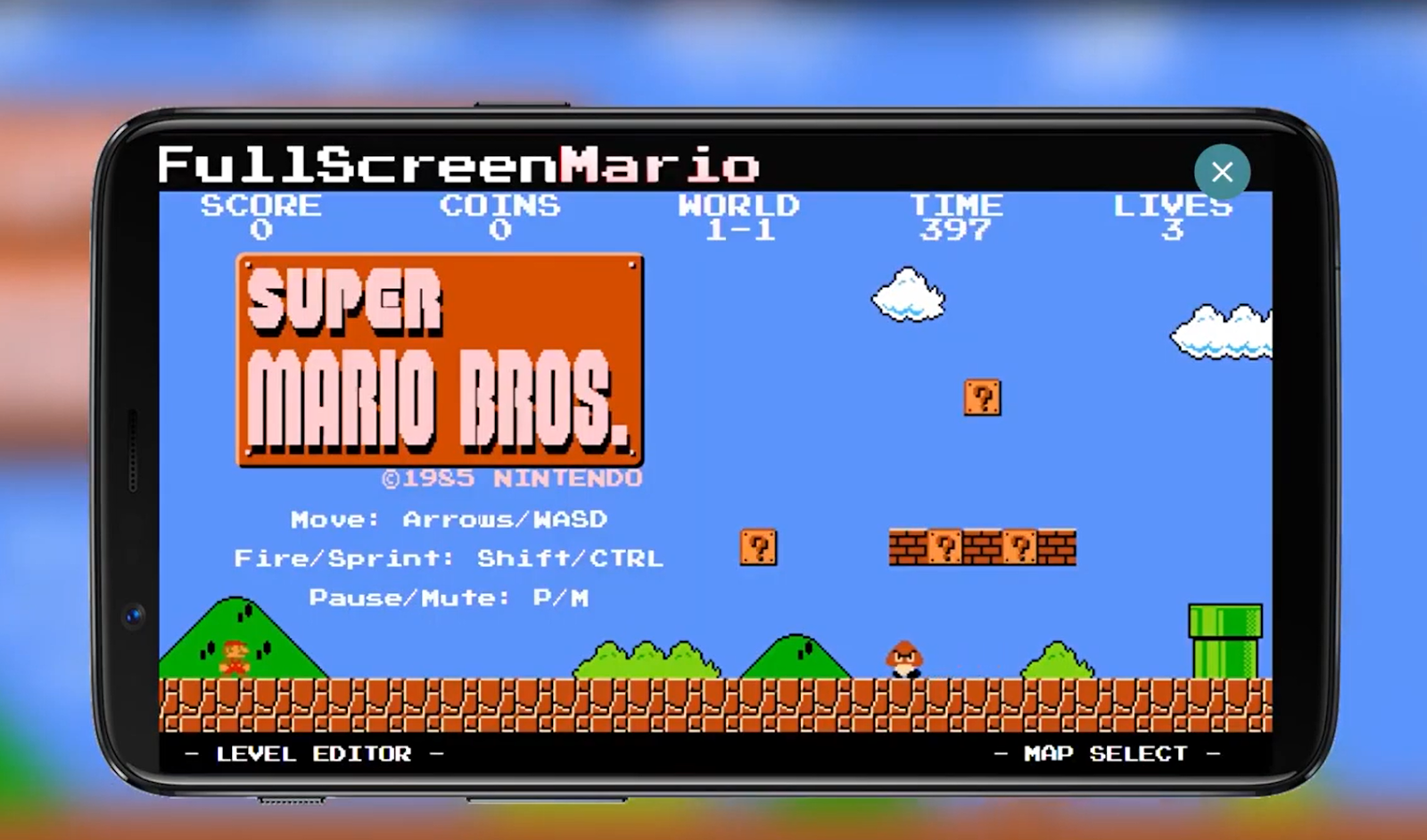
    • People love games on mobile devices and HTML5 lets you create mini games that can be embedded into AR/VR experiences so that, once the user scans an image she is given the option to play a game. This kind of user experience is especially useful when the mini game has some kind of pertinence with the content/topic being scanned. When creating this kind of content, please keep in mind the the final experience will be enjoyed on a mobile device, thus all the games controls have to be usable through touch and gestures.

    HTML5 Quizzes and Tests

    • For Entertainment, Training or Education purposes, HTML5 can help you integrate Quizzes and Tests into your printed materials in order to let users enjoy a Quiz or a Test related to something they just read. This is a great way to enrich a training book since the user will be able to get immediately a feedback related to the level of understanding of the topic she just read. Same goes for funny quizzes, the user can easily get a result without having to engage in boring and time consuming calculations.

    HTM5 Photo Galleries

    • Finally HTML5 packages can also be used to create Photo Galleries. Starting from an AR experience, the user can be invited to open a gallery with additional media files, as an in-depth of the topic being discussed. This is a great option for magazines or catalogs which are tipically full of pictures. So when there is not enough room on the page to add additional visual content, and HTML5 gallery, triggered through Augmented Reality can be the perfect complement.

    Get a free AR-media account and start creating, you can rely on detailed tutorials and documentation available in the support section.

  • Getting started with Augmented Reality as a BIM Manager

    Getting started with Augmented Reality as a BIM Manager

    Building Information Modeling (BIM) has made the entire building lifecycle management much more efficient thanks to an effective and practical approach to handling project information regarding planning, building, maintenance and disposal.

    This methodology is widely supported by a large number of software today, including Revit and Archicad many of which have become a standard in the AEC industry, however BIM managers and designers willing to get started with Augmented Reality in Architectural visualization can rely on other options in order to quickly achieve their visualization needs.

    How can you combine BIM and Augmented Reality?

    Using BIM models in combination with Augmented Reality enables some very interesting use cases for BIM managers and architects.

    1. Visualizing an entire project/building before it is even built, in its future location
    2. Selectively visualizing specific layers of the BIM model, over an existing building or over a 3D model, for example the water or the electrical system
    3. Early identification and correction of structural problems like pipeline clashes 
    [embedyt] https://www.youtube.com/watch?v=g031Odlm5zI[/embedyt]

    How to make your BIM models interactive?

    The AR-media platform is a tool particularly suited for BIM models Augmented Reality visualization, since it is very easy to prepare and upload a 3D project to AR-media Studio and visualize it using spatial mapping or geolocation.

    An interesting feature of AR-media Studio that BIM managers can leverage on in order to create interactive Augmented Reality visualization projects is the Behaviours Manager. This feature of the platform can be used to add buttons and touch interactions that allow you to associate actions to events. For example one of such events can be switching from one layer to another.

  • Towards the Smart Warehouse: Logistics 4.0 with Augmented Reality

    Towards the Smart Warehouse: Logistics 4.0 with Augmented Reality

    Logistics is certainly one the most crucial processes for production and services companies. Even though it is still perceived as a traditional set of activities, Logistics is rapidly evolving and is set to be a key area for digital transformation and automation. For some of the players in this area, innovation in the logistics department has determined a transformation of the entire company, making this process the strength of their business.

    Examples abound, but probably one of the most well known is Amazon’s: indeed the tech giant has built an entirely new business model around sorting efficiency and speed of delivery, creating the “Amazon Prime” set of premium services, which currently have more than 100 million subscribers worldwide.

    The two most debated topics in the logistics industry today are automation and the role of man.
    McKinsey has predicted that around 57% of existing warehousing and logistics functions will be automated and handled by a variety of different robots and machines. Some trends already in place, including autonomous driving, advanced robotics and the advancements of AI, will dramatically change the logistics industry in the next 20 years.

    We are not yet to the point where complete automation of warehouses is easily doable and convenient. Automation has a high cost and we are likely going to see these drastic changes within a few years rather than all of a sudden, also considering that managing a fully automated warehouse requires new skills from warehouse managers and staff that take some time to be developed.

    Despite the fast evolution and automation of the logistics 4.0 supply chain, data tell us that the job market in this industry is exhibiting a growth in demand of workers and managers, so we don’t see a short term substitution effect of machines over humans, rather we see a collaboration between human and artificial intelligence.

    Towards the Smart Warehouse Logistics 4.0 with Augmented Reality

    What do we mean by Logistics 4.0?

    Just like Industry 4.0 is the evolution of how industrial facilities work, similarly Logistics 4.0 or Supply Chain Management 4.0, is the next step towards the smart warehouse and its connected processes. Logistics 4.0 will help warehouse managers make their facilities more efficient by reducing and anticipating possible mistakes, and by using the large amount of data at their advantage. The workers in turn will cooperate with machines being one of the many elements of the interconnected network.

    In terms of definition, Logistics 4.0 is the process of making the current logistics industry more technologically advanced by transforming and digitalizing parts of the process using an advanced network of data, efficient robots, AI algorithms and computer vision techniques like Augmented Reality.

    According to BIS Research, in 2017 the Enterprise Augmented Reality market was worth 3.5 billion dollars, while it will reach almost 200 billion dollars by 2025.
    The sales of smartglasses in 2017, according to ABI Research, reached the value 52.9 million dollars and about one out of four smartglasses was bought by the logistics industry.

    Towards the Smart Warehouse Logistics 4.0 with Augmented Reality

    Inglobe Technologies contribution to the Logistics 4.0 debate

    Inglobe Technologies is a recognized player in the transformation and digitalization of industrial processes. The company is working with key industrial players to deliver innovative and effective solutions based on Inglobe’s Industry 4.0 AR Platform, HyperIndustry.

    Together with Metra, a fast growing italian group in Logistics – serving relevant clients in several verticals including Pharma, Fashion, Food & Beverage and Furniture -, Inglobe have started to explore how Augmented Reality and IoT Platforms, integrated with a typical WMS workflow, could impact key processes like Picking, Sorting and Cargo Loading, helping workers to perform their tasks more efficiently.

    The concept video below illustrates some of the use cases being explored.

    Logistics 4.0 Use Cases

    Here are some of the most common use cases in which innovations in the logistics industry make sense:

    Augmented Reality Picking

    AR can support picking operations by helping the operators identify the picking points, suggesting the most efficient route and providing a digital checklist of work orders. AR can be helpful both for picking by hand and picking by forklift.

    Augmented Reality Sorting

    Sorting the items on a pallet exhibits a number of critical issues, such as positioning the items according to their weight and degree of fragility, in order to avoid breaking or damaging them. AR can suggest the operators the best possible sorting order, help avoid damages and optimize the pallet size.

    Augmented Reality Cargo Loading

    Loading a truck with items of different size, shape and weight can generate inefficiencies such as damaging the goods and not optimizing the truck capacity. AR can help the operators load the good in the best possible sequence in order to optimize the truck capacity, reduce the risk of damage and reduce the execution times.

    Safety Management

    Augmented Reality, and Computer Vision in general, can be helpful in the identification of risks and damages inside a warehouse thanks to the date coming from sensors and cameras placed in the environment. Moreover Safety Management solutions can be used in order to train workers about the risks in the working environment and get them to learn safety procedures faster and better.

    Smart Warehouse

    Aside from the core logistics processes such as picking and sorting, there are large benefits to be expected in terms of energy savings of a warehouse by leveraging IoT by making smarter the functioning of lights, heating and installations in general. Useful technologies for this use case are beacons, wifi networks and indoor positioning services.

    Warehouse Remote Assistance

    By providing mobile or wearable devices to the operators inside a Warehouse together with a Remote Assistance solution, can allow them to get help from a Remote Expert and obtain the real time instructions on how to fix certain problems on equipment or forklifts. AR can help minimize the involvement of specialized maintainers and reduce the stops in the process.

    The aforementioned use cases can be implemented with a variety of devices and systems, including smartphones and smartglasses. It is here, however, that the use of smartglasses could make life easier and processes more efficient, as the need for hands free operations and wearable computing can be a strong constraint.

    Towards the Smart Warehouse Logistics 4.0 with Augmented Reality

    Expected Benefits of Augmented Reality Logistics for the Warehouse Managers

    Many players have already started to include Augmented Reality in their Logistics 4.0 innovation strategies. Among the players which have carried pilot project involving the use of Augmented Reality in the logistics processes there are DHL and General Electric. At the end of these projects DHL stated they experienced an average increase in productivity of 15%, while GE stated the were able to reach performance improvements up to 46%.

    Investment in new technologies and in process reengineering is motivated by the expected benefits. Regarding managing complex warehouses, we tried to list some of the advantages that could be achieved by transitioning to a Logistics 4.0 approach:

    • Increase in the bulk of goods handled (increased revenues in turn)
    • Reduction of good returned and reduction of human errors
    • More effective training. Reduction in cost and learning time
    • Reduction of accidents and injuries in the warehouse
    • Energy savings

    Conclusions

    It is evident from what has been said above that the changes promised by the aforementioned technologies could be disruptive in the Logistics sector, thus forcing players across the whole value chain redesign their business models. Indeed, investing in this kind of innovation today could demarcate the line between the players that will embrace the Logistics 4.0 revolution and those who will not, striving to keep their market share.

    Taking advantage of these changes will be harder for small players in the value chain of Logistics as their business model strongly relies exactly on the processes that will be most impacted by the coming changes. Biggest players, on the other hand, are in the condition to best explore different alternatives and evaluate their decisions thus finally investing in those innovations that would bring additional value to their business.

    This does not definitely means that small player will be thrown out of the game. Some of them will be forced to change their processes and business model. Others will embrace and further develop specific innovations in the area thus setting themselves as market leaders of the future.

  • Inglobe speech about “Object Tracking for Augmented Reality” at AWE Europe 2017

    Inglobe speech about “Object Tracking for Augmented Reality” at AWE Europe 2017

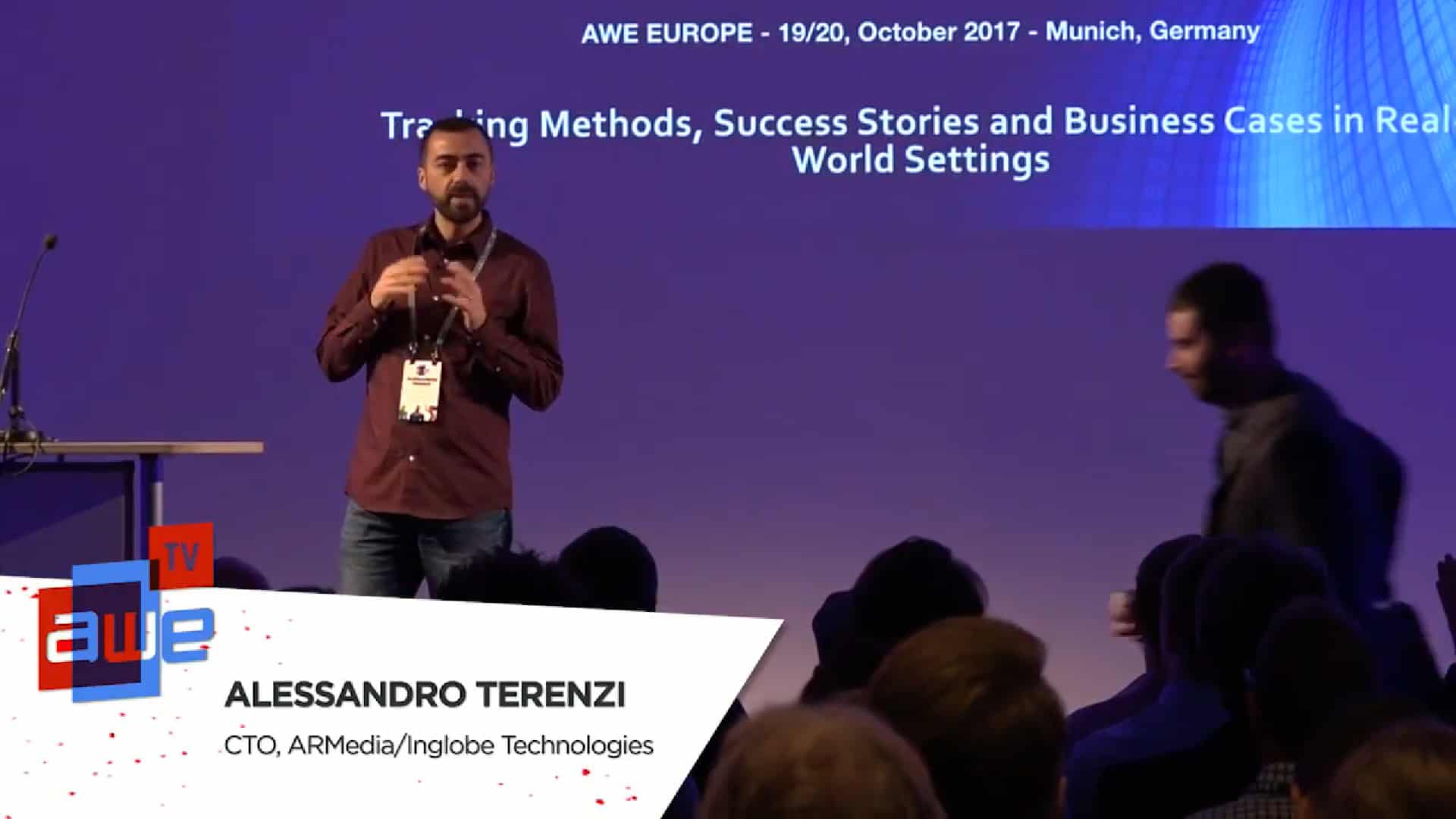
    During the Creators Track at the recent AWE Europe 2017 event in Munich, Inglobe Technologies? CTO Alessandro Terenzi gave a speech about?Object Tracking for Augmented Reality, explaining pros and cons of each approach and the technical workflow behind the creation of 3D targets of Augmented Reality applications, especially in an industrial environment.

    Here is the full video of the speech:

  • Mondadori embraces Inglobe’s Augmented Reality for its best-selling magazine

    Mondadori embraces Inglobe’s Augmented Reality for its best-selling magazine

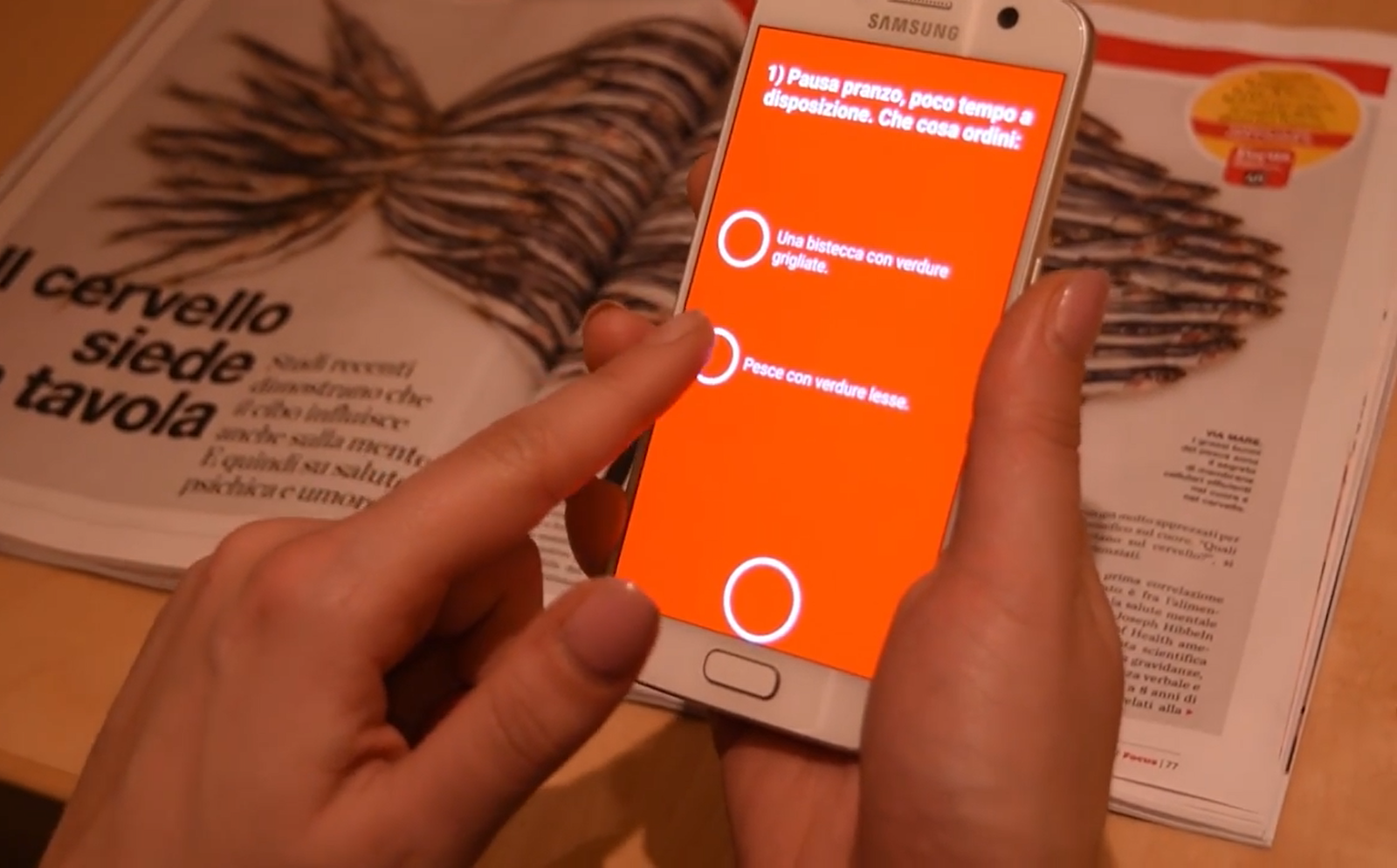
    On december the 20th 2016 issue #291 of Focus was released on newsstands, the historical magazine published by Mondadori which explores topical themes such as science, innovation, behavior and culture, which is also the most read magazine in Italy.
    The novelty is that starting from this issue, Focus is enriched with immersive content with augmented reality, making the reading experience even more engaging and exciting.

    How does the Augmented Reality magazine works

    Focus readers with a smartphone or tablet can download from the stores the app Focus Realt? Aumentata for Android and iOS, which enables content in AR by simply framing the pages of the magazine to which are associated ?augmented? contents.
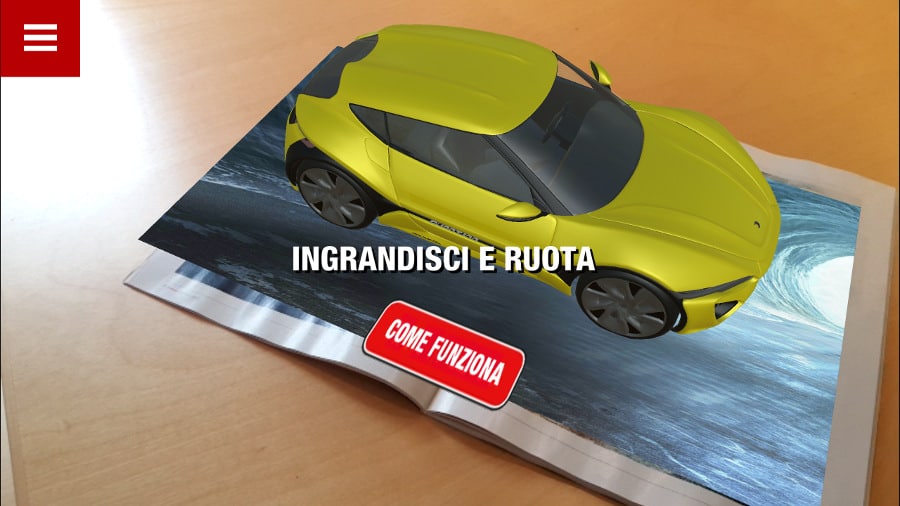
    The cover of issue #291 of Focus and several inside pages of the Augmented Reality magazine come to life by showing the reader immersive multimedia experiences related to the contents.

    We are talking about 3D animations, 360? videos, thematic tests, mini games and panoramic photos that add information and understanding to the text and images available to the reader, which is not limited to view only, but can interact with and activate a series of additional content according to her curiosity.

    Inglobe Technologies innovation in the solution for Mondadori

    The Augmented Reality technology is provided by Inglobe Technologies, which for ten years has been involved in the development of pioneering AR solutions. Back in 2007, when the advent of smartphones had not yet occurred, Inglobe had launched the idea of an AR book on the solar system. A few years later, in 2011, Inglobe has released a whitepaper on innovation in publishing through Augmented Reality.

    Today, almost 10 years later, thanks to the advent of the mobile and AR technologies into the mainstream, Focus Mondadori has embarked on a path of high-impact product innovation. In this context, Inglobe oversaw the entire development of the apps for Android and iOS working on contents edited by Mondadori.

    The technical features of the project include the recognition of planar images -the pages that trigger AR experiences-, gamification experiences, which allow readers to interact with contents, 360? photos and videos and a range of interactive and 3D tests.

    Augmented Reality Magazine with 3D model of Car

    Augmented Reality in Publishing and the future issues of Focus

    The path taken by Mondadori with the introduction of Augmented Reality in one of its leading editorial products highlights?two trends in the publishing industry: the first one concerns the strong need to give new life to this medium that always suffers more competition from new media and new ways of information fruition; the second one concerns the possibility of offering highly engaging content to readers thanks to the opportunities made available by the Mixed Reality. The?leading players in Publishing?are likely to move towards this direction if they want to keep an updated and attractive product for readers.

    Issue #291 of Focus’s Augmented Reality magazine is not a random experiment, but a path that will continue in the future with the regular publication of monthly issues enriched by augmented reality experiences, providing for the adoption of a technological solution specially designed for the publishing industry.
    We look forward to the next issue #292, to be published at the end of January.

  • How Augmented Reality can support World Class Manufacturing

    How Augmented Reality can support World Class Manufacturing

    The manufacturing environment is a great source of new ideas, especially when it comes to efficiency gains. Starting from the end of the 80’s the lean thinking approach and its methodologies have changed the way factories work and perform, targeting waste and giving people the most appropriate training to give their best.

    The increasing digitalization of industrial processes has led to the formalization of the Industry 4.0 trend, which tries to group a bunch of new technologies which are capable to bring manufacturing operations to the next level.

    Among the lean methodologies, World Class Manufacturing (WCM) has conquered many leading manufacturers worldwide which implemented it in their processes and obtained consistent performance improvements.

    World Class Manufacturing Pillars impacted by Augmented Reality

    The World Class Manufacturing methodology is structured into 10 technical pillars and 10 management pillars, each one focusing on a specific aspect of the industrial organization.

    WCM Pillars

    While Augmented Reality is potentially useful to a wide range of scenarios, what we know for sure is that the technology is capable of making a great impact on the following WCM pillars:

    Autonomous Maintenance

    This pillar refers to the set of simpler maintenance tasks that can be carried out by the machine operators without a dedicated intervention from the maintenance department. It involves operations like cleaning, lubrication and inspection. Autonomous Maintenance reduces pressure on maintenance professionals and avoids the machines are run up to the breaking point.
    In this context Augmented Reality is of great help in the process of training operators to perform simple maintenance tasks they never run before.

    Professional Maintenance

    While Autonomous Maintenance is performed by machine operators, Professional Maintenance requires a higher level of specialization and a dedicated maintenance team. PM concerns taking care of machine breakdowns and more complex preventive and predictive maintenance tasks.
    Augmented Reality is particularly suited to support PM activities as a training technology as well as a step by step support in complex maintenance procedures. It is also very useful at standardizing procedures referred to same activities, but that are performed differently at different locations, something not uncommon in the case of companies with widespread operations.

    People Development

    Tightly linked to the development of human resources skills is the PD pillar. When the workforce has been involved and when training gaps have been identified, then Augmented Reality, and Virtual Reality as well, come into play. AR has proven to be an excellent technology to speed up the learning process in many fields, including industrial training. The people to be trained has the chance of learning something new directly on the field with the aid of visually presented information.

    How to implement AR into industrial processes

    Companies who understand the huge potential of Augmented Reality in industrial contexts and may want to evaluate whether the technology works as expected in their context, should take into account the following industrial roadmap we suggest.

    Industrial Augmented Reality Roadmap

    According to this approach companies should consider to start with a pilot project on a real application case inside the company in order to experiment and assess if AR delivers what expected in terms of benefits.
    After a successful pilot the company will be ready to extend the technology to other use cases in a structured manner using an appropriate software platform.

    For these purposes take a look at our HyperIndustry platform, designed to provide manufacturers with a vertical tool which enables the power of Augmented Reality to support multiple operations in the shop floor.

  • “ARA as it was”, a first of a kind Immersive Augmented Reality experience for Cultural Heritage

    “ARA as it was”, a first of a kind Immersive Augmented Reality experience for Cultural Heritage

    Immersivity is referred today as one of the most important attributes of high quality Virtual Reality experiences. Indeed, much attention has been recently devoted to technologies that enable immersivity mainly as a consequence of the widespread adoption of Virtual Reality headsets, such as Google Cardboard, Oculus Rift, HTC Vive and Samsung Gear. Seldomly the term ?immersive? is used today to make reference to Augmented Reality experiences, as, notwithstanding the promises, they mainly run on smartphones or not yet fully developed Smartglasses. This happens mainly because of the limitation of current AR displays.

    On Monday 10th October 2016, the city of Rome together with Zetema, one of the most important Italian cultural heritage management organizations, launched and opened to the public the “ARA as it was“, namely the first large scale augmented reality valorization project for the roman cultural heritage. Hosted in a beautiful building designed by the famous American architect Richard Meyer, Ara Pacis is the symbol of the power exerted by the Augustan lineage across the Roman Empire.

    The Project

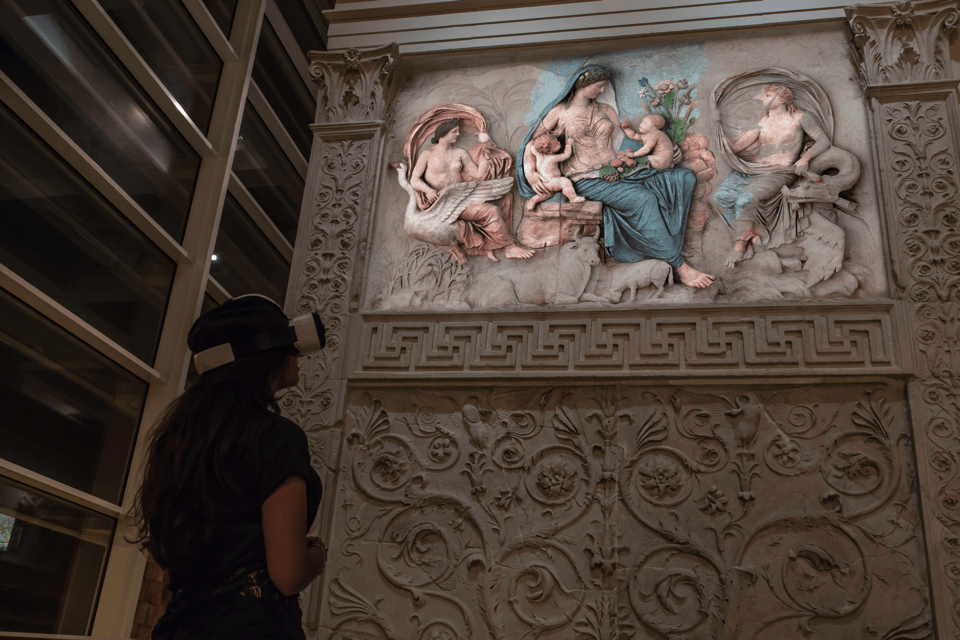
    The project has been developed by ETT Solutions in collaboration with the Augmented Reality vendor, Inglobe Technologies, that provided the AR technology that made it possible. Basically, the Ara Pacis Augmented Reality system is based on immersive AR headsets that work in association with an Application that assists visitors through the discovery of the monument and its history.

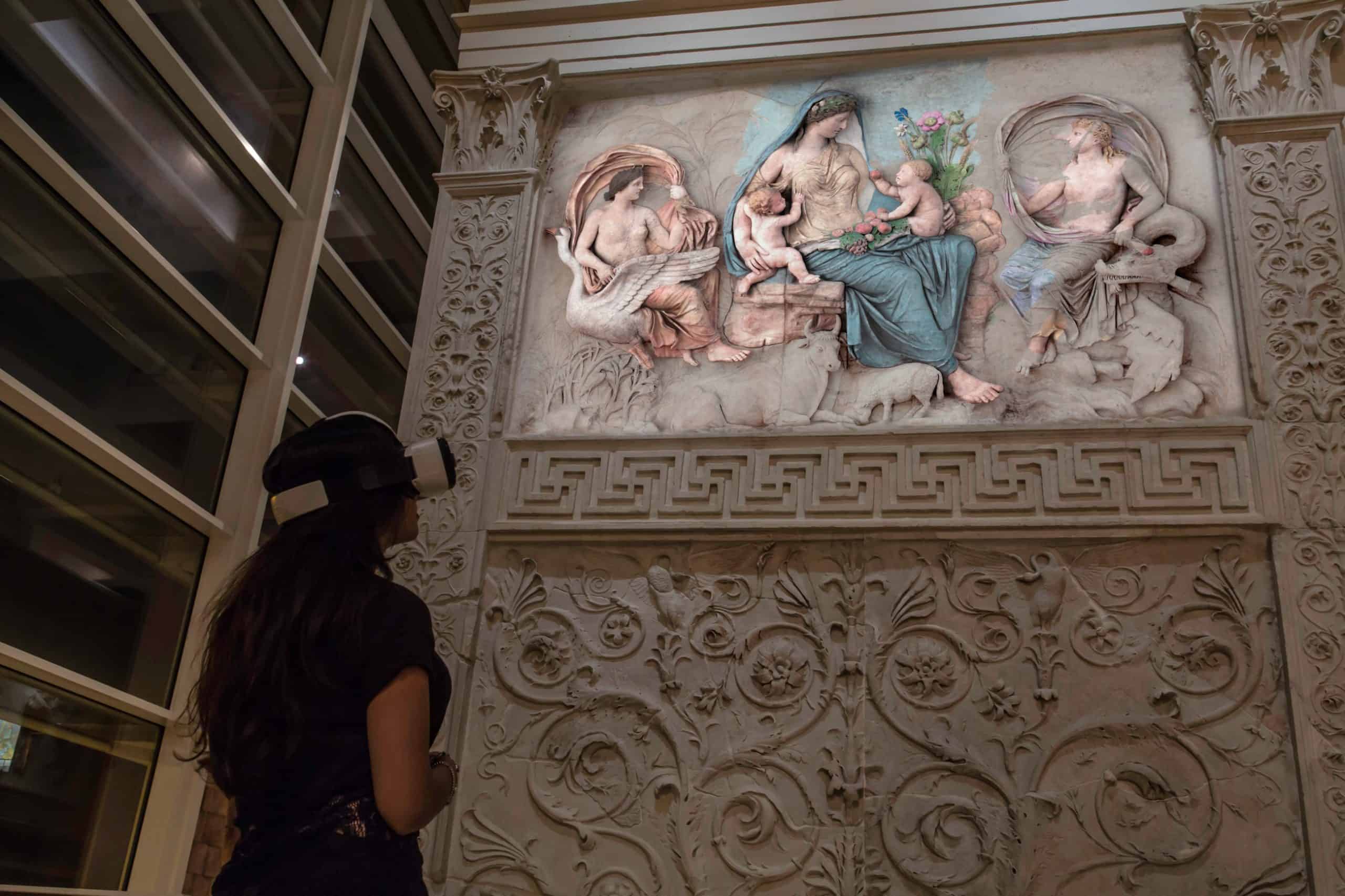
    We expect that this is going to be one of the most important benchmarks for Augmented Reality projects for Cultural Heritage as Zetema has already a business model around this project. Paying visitors are provided with Immersive Smartglasses, namely Samsung GearVR, powered by a Samsung S7 smartphone that runs the “Ara as it was” application.

    The application is based on a unique feature of Inglobe’s AR technology that provides high performance 3D Tracking on a variety of devices, including Samsung Gear VR. This feature, together with the other features of the technology by Inglobe has made it possible to develop such an incredible and unique experience.

    The Experience of an immersive Cultural Heritage site

    Thanks to this approach, visitors can immerse themselves in the narrative path of the museum in first person. They can see the bas-reliefs and elements of the monument come to life in AR by providing the original shapes and colors together with information related to their history.

    The experience is personalized and is based on a hybrid and multi-sensorial approach as it relies on sensorimotor, visual and auditory interaction, right there in the real world.

    Ara Pacis Virtual Reality & Augmented Reality headset
    Tourist with VR AR headset visiting Ara Pacis in Rome

    Talking about the solution, it allows to navigate through the different POIs of the monument. Each POI is a gateway to an immersive AR experience that leverages 3D object recognition and tracking (unique features of Inglobe’s AR technology) to provide visitors with information related to digital reconstructions both in terms of architecture and socio-historical meaning of the monument. Large FOV, precision of 3D Tracking, accuracy of Computer Graphics overlays and personalization of experience are just some of the takeaways of the solution.

  • A Pocket-size Augmented Reality System for Flight Control

    A Pocket-size Augmented Reality System for Flight Control

    Many of us are not aware of the level visualization technologies have reached in aircrafts today. It is commonly believed that advanced visualization technologies are available exclusively in the helmets of military pilots. That is not the case anymore.

    Indeed, things have changed thanks to the fact that Head-up displays (HUDs) have become common equipment also in civil aircraft cockpits. One of the uses of HUDs is to provide a specific visual interface for pilots to help them perform their tasks more efficiently. Some of these interfaces take the form of what is called a “tunnel-in-the-sky“, a 3D geometry representing the navigation path that is displayed on a flat screen.

    Despite its advantages, “Tunnel in the sky” systems are not as widespread as one may think, although they are available in some aircrafts as modern HUDs. The reasons why standard TS systems are not so widespread appear to reside on the following circumstances:

    a) existing TS solutions are not as compact and cost-effective as they should be in order to be easily adopted for the general aviation;

    b) according to recent studies the standard “tunnel-in-the-sky” system do not provide any crucial advantage in comparison with more traditional methods of presenting navigation information to pilots.

    In order to overcome such difficulties, Inglobe Technologies, in collaboration with MSTUCA -Moscow State Technical University for Civil Aviation-, developed and evaluated experimentally a totally new “pocket-size” AR system that has capabilities that help pilots during operations. The results of this experimental study have been discussed in a paper titled “A Pocket-size Augmented Reality System for Flight Control“. The paper that has been presented at EuroVR 2014, 11th Conference and Exhibition of the European Association of Virtual and Augmented Reality 2014, held in Bremen (Germany) on December 10th has been awarded the “Best Paper Award” in the Conference.

    The new AR system consists of low-cost items and does not suffer from the drawbacks tied with existing enhanced vision systems for pilots. The experiments made so far prove the effectiveness of the new AR solution. A series of flight tests have been also performed on small airplanes, one of which running on a Cessna 172 aircraft can be seen in the video below.

    The benefits of the Flight Control System

    The system has a number of advantages with respect to existing solutions:

    1) it is low cost -dozens of times than traditional systems- and wearable –does not require any special installation-

    2) it is accurate -because of the stereo mode- and natural -because of the extremely simple interface-

    3) it helps solve the problem of flight safety.

    When can the system be best employed? First, the system can be employed as an aid for commercial aircrafts during emergency situations when the standard systems fail (e.g. the crash of Air France A-330 in the Atlantic in 2009) or while landing in low visibility conditions (e.g. the crash of Polish president Tu-154 in 2010).

    In the future the system may become the main way of presenting navigation information to pilots of general flying vehicles. The system itself could also be employed to make naval and terrain operations even safer.

    Now, can you imagine what in the future the sky motorways will look like? We do have a bunch of ideas.

  • Augmented Reality to Support Risk Management in Hospitals

    Augmented Reality to Support Risk Management in Hospitals

    The development of new technological systems to improve the performance in the healthcare sector is one of the most challenging issues that we face today. There are several aspects of this problem though, including advanced medical visualization techniques, improved surgical procedures, improved safety in healthcare environments, improved training methods for healthcare staff.

    The  Augmented Reality community has recently started to provide solutions to problems emerging in this field. But in which way could augmented reality technology help healthcare staff improve their performance with respect to managing risks in a more effective way? The goal of the ongoing ANGELS Project, co-funded by European Commission, is to provide an answer to this question.

    The video below shows some of the features of the current implementation of the system, including indoor location of risks, access to contextual information, management of risks, users and environments.

    Basically, at this stage the system has the following main features:

    • it is capable of recognizing and identifying users profiles, thus providing them with contextual information about risk management in the environment
    • it helps users manage specific risk situations by means of  AR guided procedures using mobile devices
    • it provides a real time update of data related with the risks in the environment
    • it allows to assess the understanding of risks and procedures by users and managers
    • it is a general purpose Risk Management tool: no restriction to specific environments in the Hospital
    • it allows to create structured, semi-structured and open training paths

    More information about the project will be disclosed in the next few months as the pilot studies and large scale trials will be run in the partnering European Hospitals.

    The consortium is formed by Policlinico Tor Vergata (Italy), Inglobe Technologies (Italy), Entropy Knowledge Network (Italy), University Jaume I (Spain), NCONZO (Chzech Republic), Hopital Broca (France).