Tag: publishing

  • AR in Educational Books: how to use it?

    AR in Educational Books: how to use it?

    Augmented Reality in education is considered today as an indispensable tool of the whole educational system, from the primary school to university. 

    The use of Augmented Reality in education allows the transition from the so-called “teaching-listening” to an active and participative method of study, in which children, class and teachers are involved in the learning process. They are no longer just observers, but protagonists. We talk about ‘augmented learning‘, which aims to stimulate students’ creative and communicative abilities. 

    Augmented reality applied to education actively involves students of all ages, giving them real learning experiences that improve their understanding of what they are studying and that foster interaction with the content, thus improving not only learning but also the level of attention, thanks to the effect of surprise and wonder. 

    AR in education is also an inclusive tool that allows teachers to integrate communication and to simplify it: from primary schools to higher education or university, extended realities can help teachers to explain complex concepts and visualise physical objects that are difficult to understand presented by the flattened and unrealistic images of books; thus allowing to study all subjects in an engaging way: from biology to art, from physics to chemistry up to computer science and languages.  

    Interactive content with Augmented Reality in Educational Books

    Is it really essential to make use of Augmented Reality in school books and teaching materials? The answer is yes. Numerous studies on the brain provide evidence that the best way to learn and therefore remember what you are studying for longer is to “do”. Studies have shown that, after two weeks, students remember only 10% of what they have read, but as much as 90% of what they have actively done. 

    Augmented Reality in education

    Augmented reality makes the learning experience immersive and therefore exciting, the more the material to be learned is linked to emotions the longer the memory retention will be, because it is designed to be relevant to the brain.

    What are the benefits of Augmented Reality for Education in school books?

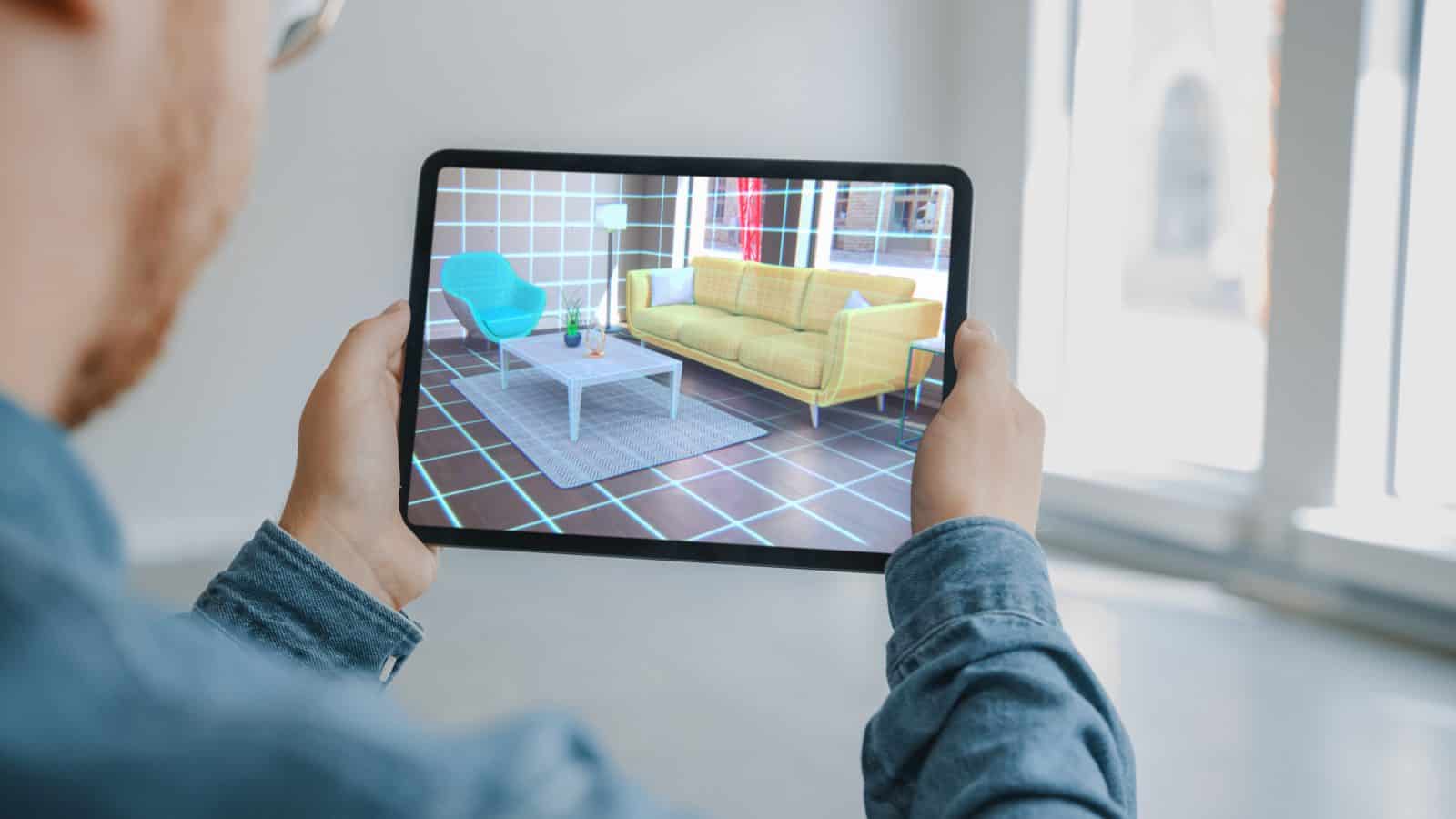
    – Making connections and stimulating curiosity: augmented reality (AR) allows students and teachers to superimpose information, images and other content onto real-world scenes. This creates new contexts and effective connections that enhance learning and promote understanding. Teachers can use augmented reality apps in the classroom to turn it into a planetarium, making a science lesson more relevant;

    – Stimulate engagement through realistic explorations in motion; visualise and experiment during science or physics lessons; 

    Augmented Reality in educational books

    – Delving into hidden levels and systems based not only on theory but also on pratice part to become more familiar with the teaching material by allowing students to move and explore;

    – Enriching existing programmes with extra content in the form of video, audio, animation and immersive storytelling;

    – Carrying out large-scale projects and proposing challenges, the student will also stimulate problem solving skills and teamwork through the use of AR.

    New Ideas for STEM Subjects Lessons 

    You can imagine how many things can be done during STEM (science, technology, engineering and mathematics) lessons from the primary school to the university. During math lessons students can move between 3D shapes and graphs.

    In science classes, students can see the life cycle of an animal they are studying, study a live specimen in AR and explore its organs, systems and vocabulary as if they were looking at the animal in the flesh. 

    AR is used for learning during physics lessons, allowing students to experiment with atomic nuclei and the reactions in which they are involved. 

    STEM educational content with AR

    Use cases of Augmented Reality in education

    We have analysed some use cases where we believe augmented reality can have a strong impact on school books.

    Use case 1: Getting in touch with the studied content

    A software platform was designed to let students immerse themselves in the ecosystem of a river and explore how water interacts with animals, plants and human habitats. They could also discover what happens when the balance is altered. The learners came into contact with animals, discovered rivers, dams and ecosystems in other parts of the world. 

    Case study 2: The development of an educational video game.

    A video game platform was developed to engage its students and assign them ‘alternative’ tasks.

    By modifying even just the form of classic mathematical problems and inserting invented characters or simple stories, the students worked more enthusiastically and with better results. To find out how the story ended and what happened to the main characters, students had to solve the maths and physics problems they encounter each time. 

    Kid reading an education book with AR

    The Liquid Book. Updating existing materials with AR.

    In the effort of offering up to date and fresh educational content, most publishers release annual updates of their books and student, in turn, have to buy them even if they owned an older edition of the very same title. This need of continuously updating educational books may not be percieved positively from families that can’t pass the books of their first born to their second child.

    AR actually offers a solution to this problem by providing the updates, and even selling them, through a mobile app, in association with the book. Publishers can monetise on the updates only, without needing to produce a new edition altogether (with all its relevant costs) and the book enjoys an extended lifespan.

    No longer an enemy to fight, the second hand market becomes in fact an indirect ally for the circulation of the “cornerstone-book” upon which to build a new way of enjoying contents (with even vertical integration opportunities). Families attain significant savings. Think of a case where, instead of 50 euro for a brand new book, one can pay 25 euro for its second hand version plus 7 euro for the relevant updates: savings in the region of 35/40% are not unreasonable to imagine.

    Augmented Reality in education

    This hypothesis of “liquid book” would then resolve the false trade-off between publishers’ profits and unwarranted costs out the families’ pockets, while allowing a plunge in the digital era without leaving the reassuring presence of the physical book.

    But there is more. Employing augmented reality would open endless possibilities in terms of innovative contents, as well as offer a helpful tool for students with special needs – all stemming from the very same cornerstone: the good old schoolbook.

    Finally, there is a significant environment-related consideration to make: not only would the liquid book model reduce the waste of quickly dismissed books, but also the Co2 emissions linked to the production and distribution of the final product.

    A win for all, then? Well, not really, as it would appear. In the depicted scenario, the actual manufacturers of the books, that is, the printing companies, seem to be the ones losing out.

    Not so fast, though. This proposal does not threaten the book: it saves it.

    The most likely alternative scenario, in fact, is not the indefinite conservation of the status quo – clearly unrealistic – but a radical online shift instead: augmented reality can give paper a new life.

    In a such re-designed value chain, printing companies should in fact consider to include augmented reality within their products’ portfolio: by using ad-hoc platforms they can do so without developing in-house technical competences – hence without shifting their focus away from their core business – thus innovate in a planned and strategic manner, not in a panicky response to a sudden threat.
  • Give new life to your Newspaper using AR

    Give new life to your Newspaper using AR

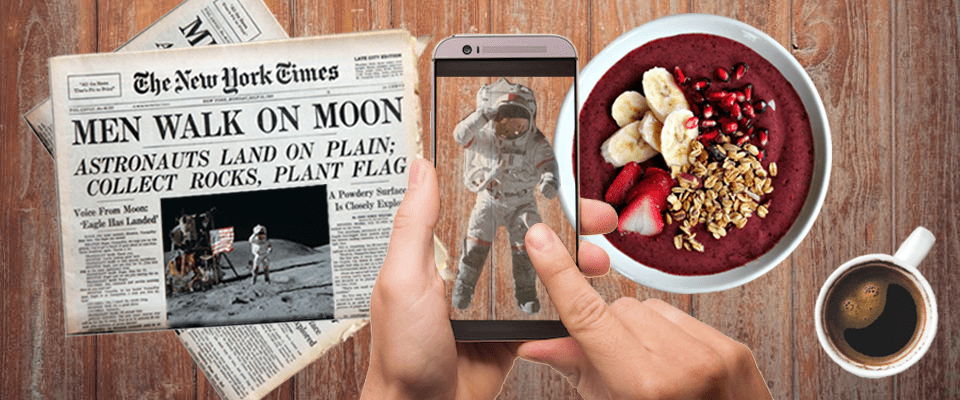
    You can give new life to your Newspapers with AR. Since we all saw the first film of Harry Potter, back in 2001, we all imagined how it could have been to have the first page of our favorite newspaper moving, having life and maybe showing you exactly what you want to see. Well, thanks to the “magic” of  Augmented Reality, this is now finally possible. 

    Of course, the AR “magic” can be activated only using a digital “wand” such as our everyday smartphone or tablet. The process itself is quite easy: using a mobile device, the AR app recognises the target image and lets you see the “magic” appear, watching the photo or the article coming to life through your device. 

    ar in newspaper Harry Potter

    Why you should give new life to your Newspaper using AR

    To increase the engagement and therefore sales

    New generations tend to use printed products less, especially newspapers, since they now grow up surrounded by technology tools in every step of their lives. Younger generations, indeed, may find printed products slower, less updated and less engaging, simply because of a lack of interactivity that digital products instead offer constantly. It is known, now, that digital is taking over print more and more every year. Using AR, though, the interactivity aspect is fully filled, giving to the readers an enhanced engagement with the content.

    To have an updated Newspaper with open information

    If printed products are well known for their static nature, the use of AR can mutate this aspect too. When a newspaper is published, the information on it cannot be changed or updated and sometimes,  when published, the news is already old. AR can resolve (or evolve) this feature by adding, for example, a link to the news to make the readers be able to stay updated about the developments of that particular news.

    The article in the newspaper could also be only a fragment of the news and by using AR, the reader could have the chance to see more about that news, with deeper investigations by way of videos, updated articles, more photos and so on… 

    To make readers “hear” the Article

    Everyone happens to be so busy that there is no time to read a full article, so think: “what if I could listen to it on my way to work?”. Well, with AR this is possible. Connecting the reader’s smartphone to the newspaper, the reader might be able to listen to the article or every other content present in the newspaper. Moreover, it is important to say that not only it is something that can help busy or lazy people, but also the ones who have sight problems and find it difficult to read a normal newspaper article.

    ar in newspaper

    To share a deeper knowledge thanks to the Three-dimensionality

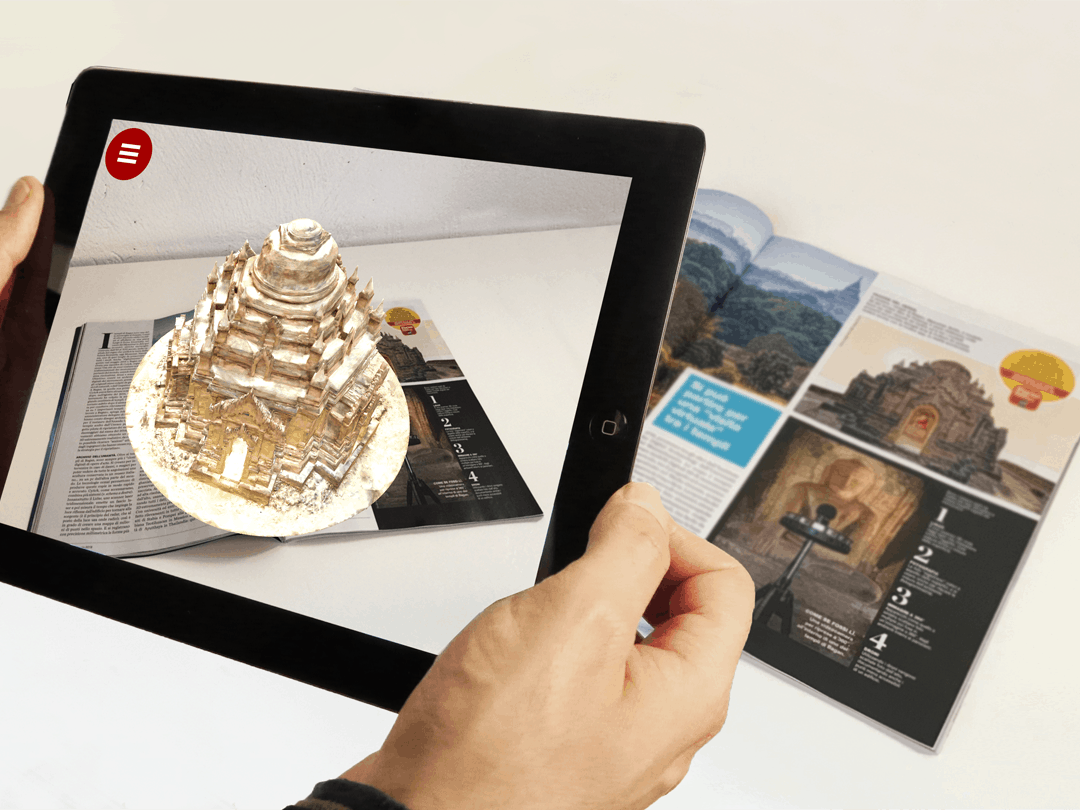
    The AR Three-dimensionality is definitely one of the main aspects that give new life to your Newspaper. The adoption of AR in newspapers can also help the reader to better understand specific graphic content thanks to the transformation of those in 3D models, perfectly seen in the mobile device. For instance, it is possible to have a full 3D view of a photo or an object present in the newspaper, by simply scanning it on the mobile device and looking at it from every angle.

    To create active readers

    Using AR in the newspaper might also mean being an active reader and making real contributions in the collection of the news. It might be possible, indeed, for the readers to add their own information, creating a sort of open source newspaper where everyone can add comments, integrate information and maybe share footage of what happened in that article. That could even help the journalists who are looking for deeper information and make the reader feel like an active helper in the newspaper and raise in him the willingness to read the next page, the next day and the day after and the day after that… 

    ar-newspaper

    The worlds of information and publishing are more and more going through a digitalization path and the adoption of AR could integrate the print product with the digital, creative a more tangible, immersive and innovative way of making information.

  • Augmented Reality in Marketing and AR use cases

    Augmented Reality in Marketing and AR use cases

    Industry experts have long known that Augmented Reality is a powerful marketing tool, while in more recent times the Pokémon Go boom has made everyone understand the huge business impact of the technology.

    There have been many businesses that have ridden the wave exploiting PokeStop and Pokémon gyms in order to attract a greater number of customers, and getting some success.

    Pokémon Go, to be honest, is not the world’s most powerful implementation of Augmented Reality, although in its simplicity it was able to achieve unprecedented success.

    Application scenarios of Augmented Reality in marketing are numerous and require a dedicated study.

    AR for print products

    Although the digital revolution has dramatically changed the way we use information, still a relevant piece of information is conveyed through paper, such as newspapers, magazines, catalogs, flyers, books, etc …

    Despite having lost ground to digital, paper products are still a powerful means of communication and this is confirmed by the McKinsey Global Media Report 2015 which basically highlights two trends: the first concerns the maturity of the print media (+ 1.7% growth from 2014 to 2019); the second a steady growth of the digital (+ 9.5% in the same period).

    This suggests that these two seemingly distant worlds, can live well together, and indeed they can also cooperate. In fact, according to research by Digimarc, 75% of consumers think that digital media is a complement to paper, rather than a replacement.

    Marketers from all sectors can think of innovative ways for presenting their products and services, combining greater clarity of the offer to a greater customer engagement. It has been demonstrated, according to the claim made by Lisa Hu, that using Augmented Reality you can get a dwell time 2.5 times higher than that of traditional media (TV, radio and newspapers).

    To date, cases of successful Augmented Reality implementations in the publishing area relate to, among others, the creation of immersive catalogs, magazines and books with AR.

    Augmented Reality for events and trade shows

    The promotional environment for excellence, for many companies, is that of fairs and events in general. These are special occasions for companies to show off theirs strengths and to try to engage visitors in order to convert them into customers or at least into leads.

    In this context, companies focus a lot on entertainment, giving visitors the opportunity to try the products and to make the time spent at the stands a memorable experience.

    The use cases of marketing actions with the support of Augmented Reality in this area are diverse, ranging from brochures and catalogs with immersive 3D visualization of the product, to the organization of contests and gaming experiences to engage and amaze visitors giving them a concrete idea of the real potential of the product.

    AR for packaging

    A sub-set of paper products, to which more and more companies turn their attention to design marketing actions with Augmented Reality, is packaging.

    What better time to engage the customer and to provide additional information on the product except when she is face to face with the package?

    There are interesting use cases of interactive packaging that put people in a position to activate additional content or mini-games that come to life from a bottle of a soft drink, rather than from the foil of the chips of a fast food and so on.

    The result is an increase in brand reputation and customer loyalty, because when customers are faced with a similar product, they tend to pick the more exciting purchase experience.

    Augmented Reality for in-store experiences

    The natural ability of Augmented Reality to expand people’s vision makes it particularly suited to design in-store marketing experiences, allowing retail companies to offer additional layers of information to the visitors.

    This category of use cases includes indoor navigation to guide people in a particular area of the store, maybe to locate special deals; the display of products and information that is not physically present in the stores because of space limitations; the possibility to sort or read the data on the origin, understand the production process, watch a promotional video, etc …

    These experiences can be enriched by the gamification of the buying process with premium and retention mechanisms.

  • Il Nuovo Calcio, the first sports magazine in Italy to embrace AR

    Il Nuovo Calcio, the first sports magazine in Italy to embrace AR

    Starting from issue #336 of February 2021, the Italian sports magazine “Il Nuovo Calcio” embraces AR in order to offer additional content in conjunction with the printed magazine.

    To celebrate the magazine’s 30th anniversary, the editorial board decided to release a brand new mobile application, named “Il Nuovo Calcio AR” for iOS and Android devices, providing exclusive access to interesting and updated multimedia content that would not be possible to deliver on paper.

    With this move, Il Nuovo Calcio is the first Italian sports magazine to embed AR multimedia files into its product, confirming the trend, already underway by the major publishers, to offer a hybrid product that integrates both the traditional logic of publishing with the digital ones. The final aim is to offer a renewed and more appealing reading experience.

    As we discussed before, the publishing industry is undergoing great changes, mainly due to the rise of interest of readers towards digital products and channels, which is part of a general shift of information towards digital media. One of the ways to strengthen paper products’ appeal is by providing a mix between digital and traditional, which is a type of support to which people are still very attached to.

    What an AR sports magazine can offer?

    With the introduction of its application, Il Nuovo Calcio will be able to offer content that will enrich the reading experience, by making pages more interactive and more entertaining.

    It is easy to imagine how much a sports magazine can benefit from AR content like video interviews, highlights, tactical animations, gallery of photos and even 3D models of stadiums or other sport facilities.

    Before this hybrid model was even possible, readers used to read paper products and then they explored the topic more in depth using the internet. Often publishers themselves provide indications and website references where a topic can be studied in depth, when they haven’t the chance to embed it directly into the product.

    Finally with AR and VR, publishers have more tools to deliver their content and to provide a truly fulfilling experience.

    One of such tools is AR-media, Inglobe Technologies’ Zero Coding Augmented Reality platform, a visual and easy to use tool for creators willing to quickly and effectively produce immersive content for a variety of audiences and use cases, including publishing.

    Get to know more about AR-media and get your free account now –> AR-media – Create Augmented Reality without coding (inglobetechnologies.com)

  • How Publishers can use Augmented Reality to upgrade their business

    How Publishers can use Augmented Reality to upgrade their business

    The publishing industry has undergone a massive transformation in the last decade, with mobile and portable devices opening the door to digital content that wasn’t as easily and freely available before. E-books, online magazines and other multimedia content now abund and seriously challenge the supremacy that traditional and paper based products had before.

    PwC Global Entertainment & Media Outlook 2020-2024 CAGR by segment

    Not only digital media challenged traditional media in the adoption rate, but it is also becoming increasingly attractive for advertisers that are shifting their budgets towards digital channels year over year.

    One of the reasons behind this shift is that not only digital media attract more users, but it also allows advertisers to target their message to a better profiled audience.

    In some countries digital advertising revenues already surpassed traditional advertising and where it didn’t happen yet, it is set to happen in 2021.

    US Advertising Media Market Sizes 2020 vs 2024

    The solution to changing preferences in the Publishing Industry

    Most of the major consulting companies agree that publishers and editors should reposition their products and start mixing innovative and engaging experiences into their traditional offer.

    A lot of people are still attached to paper products and rather than completely replacing them, they’ve started making it complementary with digital products.

    US Internet User's Magazine Readership Trends

    Digital and Paper can live together as they offer profoundly different user experiences. So why not contaminate paper products with engaging content that readers typically expect to experience only on digital products? To us that is the key to rejuvenate the image of paper products and making them more attractive. There are plenty of options to achieve this goal and we believe that Augmented Reality plays a crucial role in this process.

    Augmented Reality Books

    There are certain book genres that would benefit a lot from an integration of multimedia content enjoyed in Augmented Reality. Just think about technical and scientific books with a lot of images, schemes and illustrations, they may be complemented by videos, animations, infographics and 3D models, making the reading and learning process much more effective.

    Credits: Eosliber by Ripensarte

    Augmented Reality Magazines

    Today we have quite a few examples of magazines that have embraced Augmented Reality as a part of their content offering. Telling a fact or a news with the aid of interactive media provides the reader with an experience that is a hybrid between the traditional and the digital ones.

    Just here in Italy we have quite a few examples of magazines that are offering AR content to the readers with Focus by Mondadori being the most popular one, with over 100.000 readers having downloaded the AR app to enjoy the multimedia content.

    Augmented Reality Newspapers

    Newspapers are probably the category that lost more ground in sales because of the shift of many users to digital channels to stay informed. Paper newspapers have to be printed every night and distributed in the whole country in a matter of hours, making it a continuous challenge.

    Editorial offices have to work very quickly to get the work done in time and sometimes, as the newspapers are being printed, they are already out of date because something else happened.

    Augmented Reality could help editors to provide newspapers with up to date information, since the AR content can be prepared and/or updated, even once the newspapers are out.

    Credits: AdvisionPlay

    Augmented Reality School Books

    Just like technical and scientific books, school books are often full of images, illustrations, infographics, that serve the purpose of helping students to understand more effectively what’s being taught in that book.

    Imagine students studying the solar system while pointing a device to their book and watching the animation of the planets moving around the sun in 3D, or also studying history by watching small clips taken from documentaries that provide appropriate in depth information related to those facts.

    Credits: Visible Bodies

    How AR-media can support Publishers in the transition

    Augmented Reality can support publisher transition to a hybrid model of traditional and digital media, offering paper products with additional multimedia content attached to a certain number of pages.

    With this approach readers can continue to enjoy a product they are attached to, while benefiting from the innovation of digital content like videos, 3D models, 360 photos and videos and so on.

    Moreover, with the aid of data analytics and push notifications, publishers can build and nurture a relationship with their readers and have a better understanding of their preference in terms of types of content, by analyzing which pages have been scanned the most and how long the reader spent on each one of them, that are typical tools available to online publishers.

    In this scenario AR-media is the ideal tool to build and publish Augmented Reality projects for Publishers, as it requires no coding skills and allows the user to create AR content with a visual, simple workflow. Get a free AR-media account and start creating, you can rely on detailed tutorials and documentation available in the support section.

  • MSC presents the first Mixed Reality catalog

    MSC presents the first Mixed Reality catalog

    Last year MSC Cruises, supported by Axed Group in collaboration with Inglobe Technologies, Onemore and D2B, created the first mixed reality catalog for sale of cruises through the travel agency channel. The experience consisted of displaying 360° photos and videos relative to the MSC cruise ship environments and to the locations of the various routes available. Potential customers could try to preview the cruise experience from an entirely new point of view than that offered so far by the traditional catalog.

    This year, for the 2018-2019 edition, MSC Cruises has gone further and wanted to offer an even more immersive experience by adding Augmented Reality to Virtual Reality, thus offering the first Mixed Reality catalog for cruises in the world.

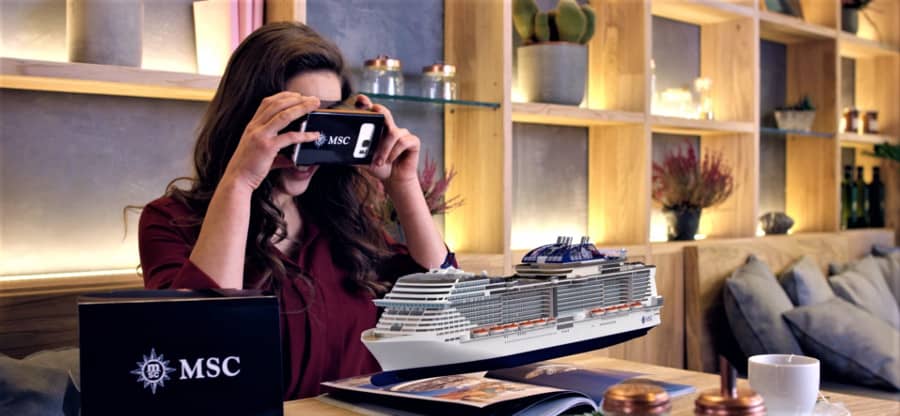
    The application allows users to rely on their mobile devices to view 3D models of MSC ships, which seem to emerge from the paper catalog pages coming to life and offering an interactive perspective. In fact, you can access the panoramic views that cast people inside the environments of the ship by enabling an immersive exploration thanks to the selection of hotspots available in AR on the three-dimensional model of the ships.

    Google Cardboard visualization is also available, for an even more immersive user experience.

  • Mondadori embraces Inglobe’s Augmented Reality for its best-selling magazine

    Mondadori embraces Inglobe’s Augmented Reality for its best-selling magazine

    On december the 20th 2016 issue #291 of Focus was released on newsstands, the historical magazine published by Mondadori which explores topical themes such as science, innovation, behavior and culture, which is also the most read magazine in Italy.
    The novelty is that starting from this issue, Focus is enriched with immersive content with augmented reality, making the reading experience even more engaging and exciting.

    How does the Augmented Reality magazine works

    Focus readers with a smartphone or tablet can download from the stores the app Focus Realt? Aumentata for Android and iOS, which enables content in AR by simply framing the pages of the magazine to which are associated ?augmented? contents.
    The cover of issue #291 of Focus and several inside pages of the Augmented Reality magazine come to life by showing the reader immersive multimedia experiences related to the contents.

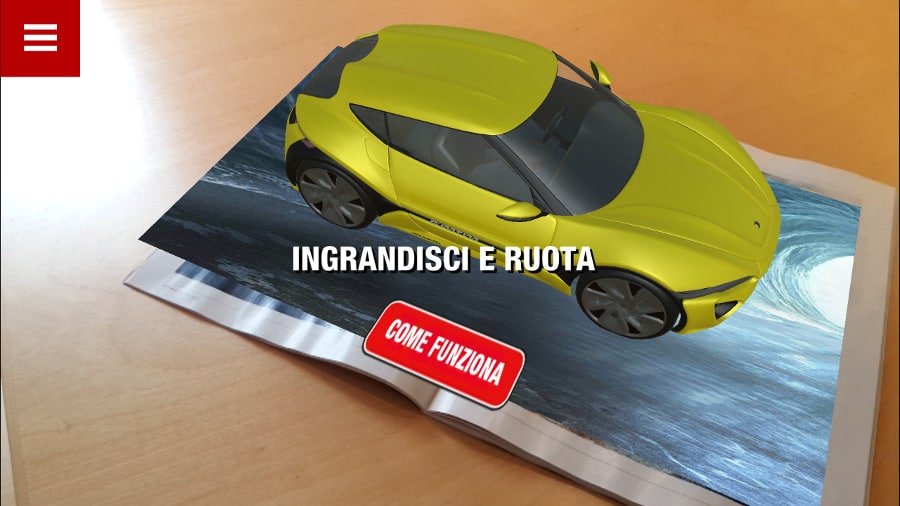
    We are talking about 3D animations, 360? videos, thematic tests, mini games and panoramic photos that add information and understanding to the text and images available to the reader, which is not limited to view only, but can interact with and activate a series of additional content according to her curiosity.

    Inglobe Technologies innovation in the solution for Mondadori

    The Augmented Reality technology is provided by Inglobe Technologies, which for ten years has been involved in the development of pioneering AR solutions. Back in 2007, when the advent of smartphones had not yet occurred, Inglobe had launched the idea of an AR book on the solar system. A few years later, in 2011, Inglobe has released a whitepaper on innovation in publishing through Augmented Reality.

    Today, almost 10 years later, thanks to the advent of the mobile and AR technologies into the mainstream, Focus Mondadori has embarked on a path of high-impact product innovation. In this context, Inglobe oversaw the entire development of the apps for Android and iOS working on contents edited by Mondadori.

    The technical features of the project include the recognition of planar images -the pages that trigger AR experiences-, gamification experiences, which allow readers to interact with contents, 360? photos and videos and a range of interactive and 3D tests.

    Augmented Reality Magazine with 3D model of Car

    Augmented Reality in Publishing and the future issues of Focus

    The path taken by Mondadori with the introduction of Augmented Reality in one of its leading editorial products highlights?two trends in the publishing industry: the first one concerns the strong need to give new life to this medium that always suffers more competition from new media and new ways of information fruition; the second one concerns the possibility of offering highly engaging content to readers thanks to the opportunities made available by the Mixed Reality. The?leading players in Publishing?are likely to move towards this direction if they want to keep an updated and attractive product for readers.

    Issue #291 of Focus’s Augmented Reality magazine is not a random experiment, but a path that will continue in the future with the regular publication of monthly issues enriched by augmented reality experiences, providing for the adoption of a technological solution specially designed for the publishing industry.
    We look forward to the next issue #292, to be published at the end of January.