Category: AR-media SDK

  • Integrating HTML5 with AR: some use cases

    Integrating HTML5 with AR: some use cases

    HTML5 is a very powerful markup language, it givesyou the ability to create simple to complex web applications rich in multimedia content. HTML5 allows you to create apps and games that, in the form of packages, can be easily integrated into entertaining immersive experiences.

    AR-media Studio offers a straightforward process to easily combine HTML5 and Augmented Reality into a single project.

    In particular, among the use cases that can be achieved, here are a few examples:

    HTML5 Mini Apps

    • Using HTML5 to build mini applications serves the purpose of achieving a specific goal during the user experience, for example a registration form. Integrating this kind of content into immersive experiences can help gather data from users/customers to be used later for marketing purposes. In this way you can build an experience that is useful and entertaining at the same time because it provides a funny experience to the user, yet it collects precious marketing data.

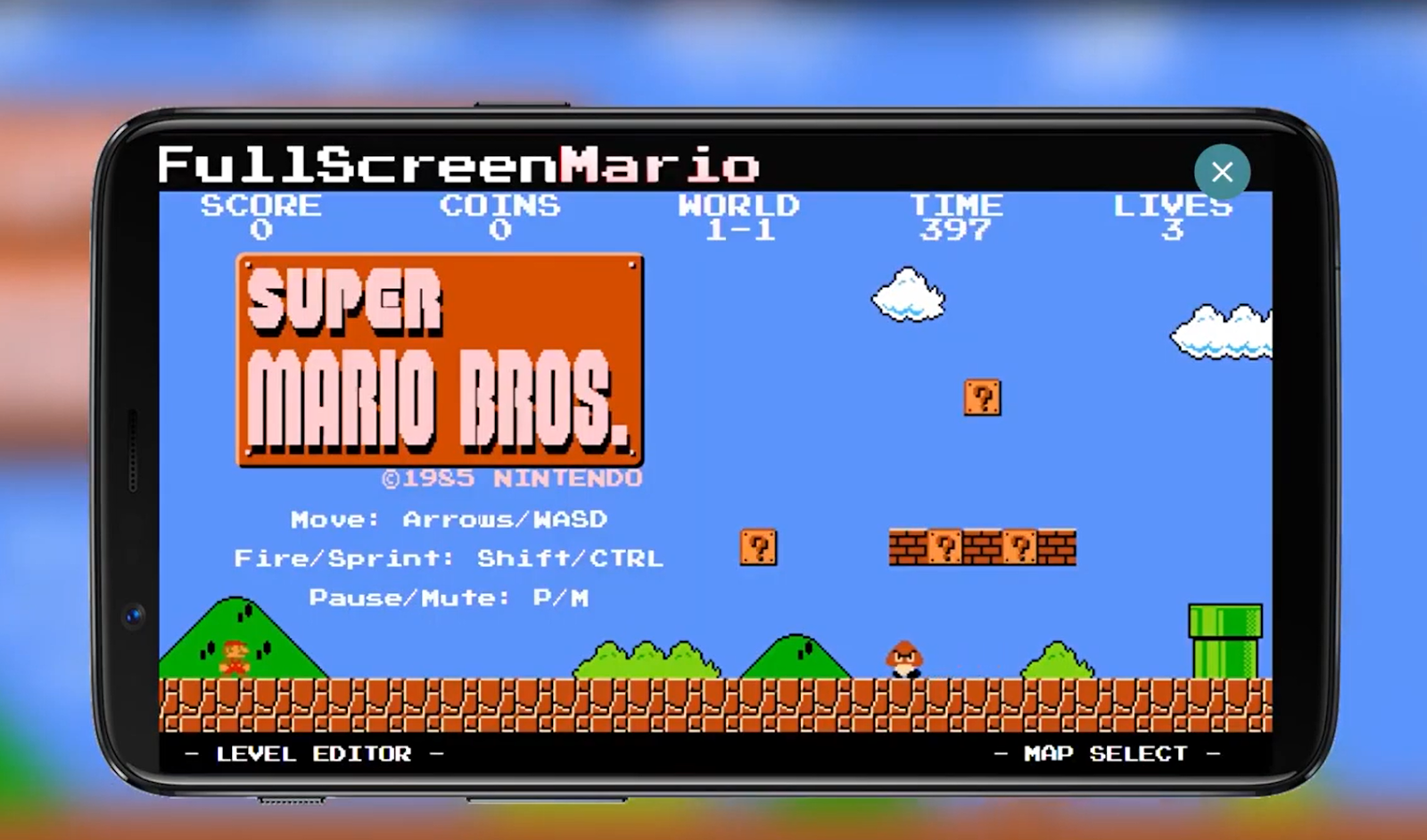
    HTML5 Mini Games

    • People love games on mobile devices and HTML5 lets you create mini games that can be embedded into AR/VR experiences so that, once the user scans an image she is given the option to play a game. This kind of user experience is especially useful when the mini game has some kind of pertinence with the content/topic being scanned. When creating this kind of content, please keep in mind the the final experience will be enjoyed on a mobile device, thus all the games controls have to be usable through touch and gestures.
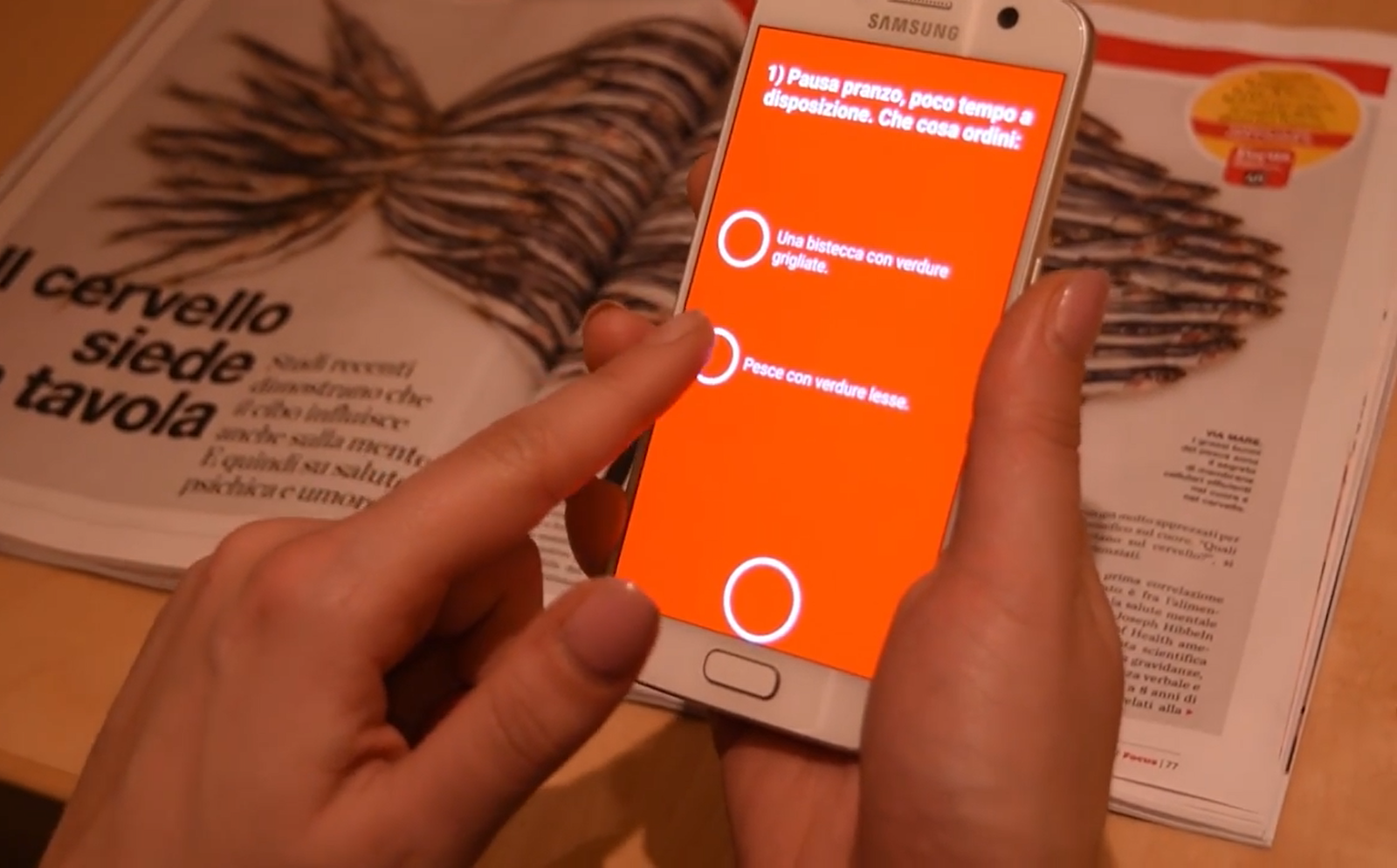
    HTML5 Quizzes and Tests

    • For Entertainment, Training or Education purposes, HTML5 can help you integrate Quizzes and Tests into your printed materials in order to let users enjoy a Quiz or a Test related to something they just read. This is a great way to enrich a training book since the user will be able to get immediately a feedback related to the level of understanding of the topic she just read. Same goes for funny quizzes, the user can easily get a result without having to engage in boring and time consuming calculations.
    HTM5 Photo Galleries

    • Finally HTML5 packages can also be used to create Photo Galleries. Starting from an AR experience, the user can be invited to open a gallery with additional media files, as an in-depth of the topic being discussed. This is a great option for magazines or catalogs which are tipically full of pictures. So when there is not enough room on the page to add additional visual content, and HTML5 gallery, triggered through Augmented Reality can be the perfect complement.

    Get a free AR-media account and start creating, you can rely on detailed tutorials and documentation available in the support section.


  • AR-Media SDK 2.1.0 released with multiple object tracking and more

    AR-Media SDK 2.1.0 released with multiple object tracking and more

    Inglobe Technologies recently released a new version of its popular AR-Media SDK, now available as version 2.1.0.
    New sophisticated features, alongside with bug fixing and general improvements, are now implemented into the SDK in order to satisfy even the most demanding developers, willing to create memorable augmented reality experiences.

    AR-media SDK 2.1.0 release highlights

    Multiple object tracking

    This is a new unique and exciting feature of the AR-Media SDK, which enables you to recognize multiple objects at a time enabling the respective contents at the same time.
    Multiple object tracking works with 3D objects as well as with planar images and a mix of the two.
    New advanced augmented reality experiences are now possible thanks to this feature.

    Android camera performance

    Camera performance on some Android devices has been improved and made much more smooth.

    API documentation

    AR-Media SDK API documentation is now complete and exhaustive. Check it out.

    Upcoming features

    Even though only available upon request, by the moment, the SDK will soon include a specific support for Samsung Gear-VR, enabling the creation of applications which can run on such device in Augmented Reality mode!
    This feature has been deployed in a relevant project in which we recently took part in the field of cultural heritage enhancement.

    Tourist with AR VR headset inside Ara Pacis in Rome for the Ara as it Was experience
  • AR-media SDK v2.0: New Features and Applications

    AR-media SDK v2.0: New Features and Applications

    Being able to provide contextual, high quality and spatially aligned digital information to real objects in Cultural Heritage sites is one of the biggest challenges for developers who try to provide a unique experience to their App users. This is what Augmented Reality is for.

    In order to help developers deal with these challenges, at Inglobe Technologies we have worked hard to add new features to the AR-media Augmented Reality SDK. The new AR-media SDK v2.0 provides different tracking methods -including geolocation, planar images, device motion, 3D object tracking- alongside with 360° panoramas and interactive 3D contents on mobiles. The methods are packed together in such a way that they can be easily integrated into a single app. For more information take a look at this presentation:

    ARmedia SDK: new Features and Capabilities

    And here goes a video that shows some of the features at work

    If you are an interested reader, you can start to develop your own mobile Apps based on those features using the AR-media SDK today and make yourself familiar with the technology.

    Hope you’ll enjoy it!

  • Inglobe Technologies releases AR-media 3D SDK with Unique Object 3D Tracking Features

    Inglobe Technologies releases AR-media 3D SDK with Unique Object 3D Tracking Features

    The Development Lab of Inglobe Technologies announced the release of the AR-media 3D SDK and platform on the first day of Augmented World Expo in Santa Clara, CA. The AR-media 3D SDK v.1.0.0 features advanced 3D object tracking, a new 3D mapping and tracking approach that allows to create first of a class augmented reality (AR) applications capable of recognizing and tracking objects independently of their size and geometry.

    Inglobe Technologies first demonstrated the AR-media 3D Tracker prototype working on mobile devices in Santa Clara during Augmented World Expo 2013 catching the eye of many interested users. The new release will bring an enhanced version of the technology to the community of developers with extended support for multiple platforms and authoring environments, like for example Unity3D.

    With the AR-media 3D SDK users will be able to create applications and systems that link the digital and physical world in ways never experienced before. The AR-media SDK enables a new generation of applications that redefine the boundary of indoor and outdoor augmented reality in domains like industrial maintenance, interactive gaming, architectural visualization and cultural heritage, just to mention some.

    “While developing the AR-media 3D SDK we have tried to bridge the gap between what users and developers expect from augmented reality technology and what they actually have.” Said Graziano Terenzi, CEO at Inglobe Technologies. “Our 3D tracking technology adds a new form of intelligence to the environment and allows users to develop products and solutions never imagined before”.

    The AR-media 3D SDK allows to create a new generation of gaming applications on site thus allowing developers to add digital interaction to real world objects around us and create funny and engaging experiences. By using the AR-media 3D SDK technology users can populate a historical site with virtual characters, help represent and reconstruct the past, like for example a battle or even take part to a battle as an active player and try to change the course of events.

    The 3D object recognition and tracking technology of the AR-media 3D SDK does not just recognize planar images, but also complex 3D objects and is suitable for applications in the industry. This capability will address the growing need of different industries (like AEC, Aerospace, Automotive and Process Industry) to enhance their processes by means of the interaction of physical and digital information.