Tag: Museum

  • The best AR Apps for your Holidays

    The best AR Apps for your Holidays

    It’s finally that time of the year where you pull out your dusty suitcase, put on your favorite sunglasses and leave the city to go towards exotic beaches, steep mountains and unexplored places. On the other hand, we know that going for holidays can be very tricky and stressful sometimes, for example when you get lost in the middle of the Sahara desert where all you see is sand, or when you can’t find your way out from the depths of the jungle with that tiger staring at you…. Ok, perhaps we are going a bit extreme, but your struggle during your holidays may be very real. 

    Luckily, we have some Augmented Reality tips that can help you relax a little bit more and enjoy your holiday the way you deserve. Whether your dream place is the highest peak of a mountain or the flattest wave of the ocean, we got you covered. Let’s discover now the best AR apps for your holidays.

    ar holidays

    The best AR Apps for your Holidays into the Wild

    Peakvisor

    If you love trekking and exploring new mountains this AR App is a must have. Peakvisor allows you to instantly see the names of the mountains in front of you, so that you immediately identintificate where you are and your surroundings. By pointing your smartphone in front of you, little banners with the names of the mountains will appear together with the high. Moreover, Peakvisor also has a 3D map program incorporated so that you can do your research before going exploring. Being an App for explorers, it can also work offline, you just have to remember to download your trails before your hiking.

    iNaturalist

    While hiking, we happen to meet unseen gems like particular flowers or rare trees and unfortunately we might not know what kind of plant/tree is. With iNaturalist, by scanning the image in front of you with the camera of your smartphone, you are able to see the name and some information about the plant you are looking at. Of course you might encounter some inaccuracies. For example if the quality of the image is not very high, the system might not be able to recognize the right species, or if the element you want to know about is too rare you might not find it at all inside of the app. This App, indeed, is managed by experts and a community, that is why it can happen not to find the exact match.

    iOverlander

    iOverlander is one of the best Apps for campings. Using GPS recognition, it allows you to find the perfect camping spot WORLDWIDE. It also gives you information about the condition of the campsite, where to find water, food, wi-fi and nearby points of interest. The beauty of iOverlander is its community: you will find lots of people just like you that give tips and precious advice in order to give you the best camping experience.

    peak ar app holidays

    The best AR Apps for your Holidays in a famous City

    Are you thinking about going to visit a new city and feeling afraid not to make the best of it? Well, it all depends on which city you are going to. There are some tourist places now that have implemented AR in their touring guides in order to give to the tourists more immersive experiences of their City and a fuller and deeper involvement in the exploring aspect. 

    For instance, if you are planning to spend your holidays in the north of Italy, you should definitely have on your smartphone AR Apps like TabUI. TabUI is an Italian App that allows you to gather information about the places you are visiting by simply pointing your smartphone at your point of interest. For now, though, it only works in some areas of North Italy. While, if you are keen to visit Italian Architecture Monuments among the cities of Turin and Rome, you don’t want to miss trying Arch.i, an AR App that works by pointing your smartphone at basically any monument of architectural work to instantly have the chance to know everything you want about it. Moreover, if you are planning to stay in the Italian Capital a little bit more, we suggest using another AR app that can guide you through the ancient streets of Rome and tell you everything secret of the Roman Empire: Charta Roma. 


    Other numerous Apps that help you visit a place in a deeper and more immersive way might be “Santorini AR”, focused on the greek city of Santorini and “National Parks by Chimani”, an amazing Augmented Reality Guide that will let you explore the American National Parks in way you have never imagined.

    best ar apps for your holidays

    Your must have AR Apps for every Holiday

    Virtlo

    Virtlo is an Augmented Reality App only available for IOS for now, able to tell you all the points of interest nearby, such as restaurants, hotels, museums, parks and even stations by using your smartphone. You can also see the distance from where you are so you can explore the city in the best way possible. The app is completely free and it’s open source, which means that everyone can add some tip or point of interest and help the others.

    ar app

    Google Translate

    How not to mention Google Translate when it comes to travel and technology? Google Translate allows you to instantly translate every written word to every language by putting your phone’s camera on the word you want to translate. Google will do all the rest. This means that if during a trip you want to know what is written on a street signal, in a restaurant menu or a contract, you can instantly translate it by using your phone. Of course, you need to be careful because not every translation is accurate and the chances of a misunderstanding are quite high, but for basic sentences it will work just fine. 

    All you have to do now is just pack and enjoy your holidays, wherever you are going!

  • Boosting tourism with Digital Heritage

    Boosting tourism with Digital Heritage

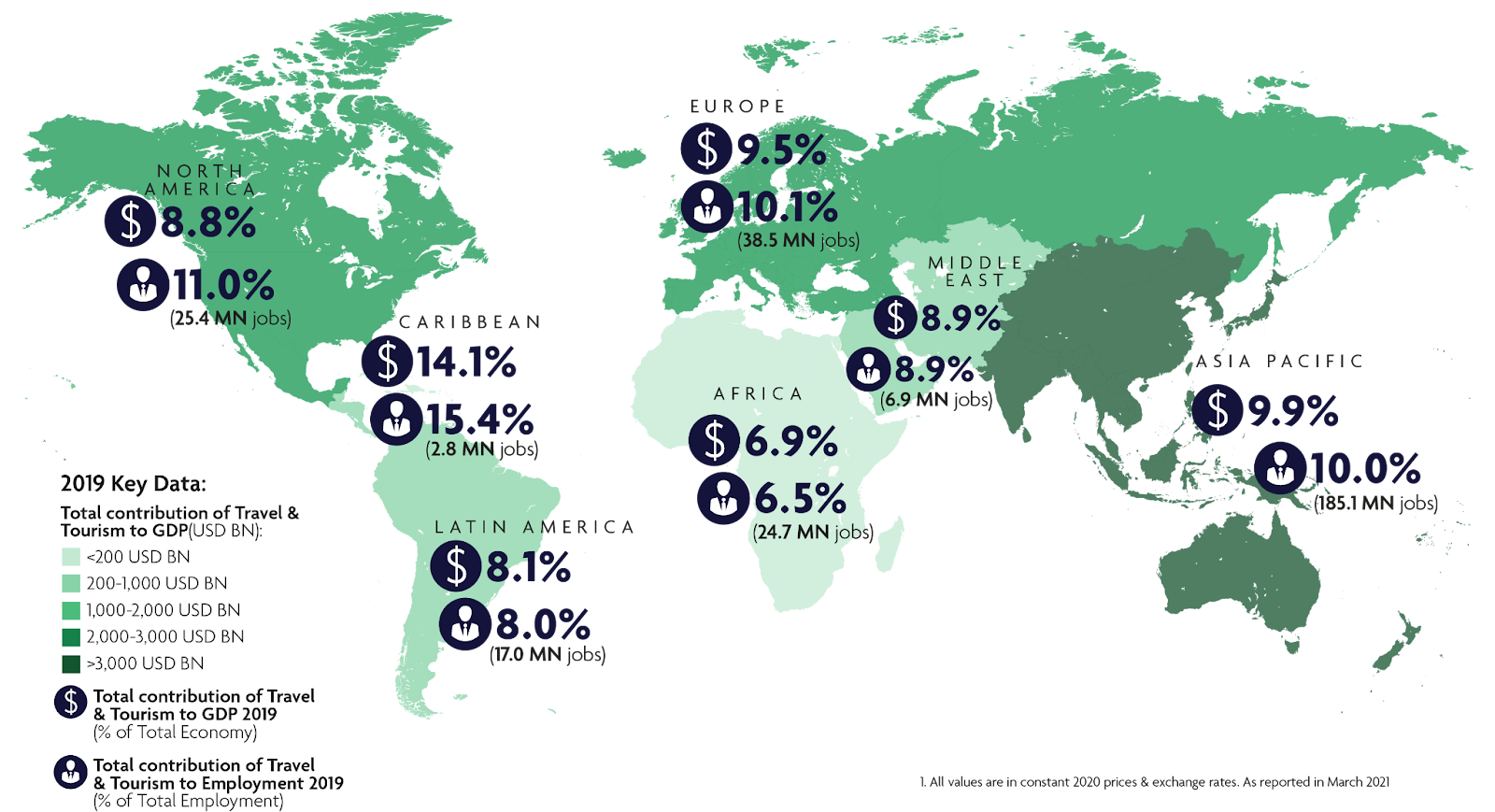
    Pre-Pandemic values for the Travel & Tourism Industry, according to the WTTC, accounted for over 10% of the global GDP, meaning it’s still one of the most attractive activities for people worldwide, who are constantly looking for innovative and engaging ways for exploring cities, landmarks, museums and other attractions.

    The demand for memorable experiences, coupled with the advancements in the technology, led to the transition from Cultural Heritage to Digital Heritage.

    According to UNESCO, Heritage is defined as “our legacy from the past, what we live with today, and what we pass on to future generations. A heritage is something that is, or should be, passed from generation to generation because it is valued.”

    Furthermore, UNESCO defines Digital Heritage as something that “is made up of computer-based materials of enduring value that should be kept for future generations.”

    A survey from Osservatori Digital Innovation gathered information from over 400 Italian cultural heritage operators, finding that 11% of them are already providing AR/VR experience to their visitors, while 50% of them are thinking about introducing some sort of immersive experience in the future.

    This premise prompts us to explore in more detail the Digital Heritage industry and the process and tools needed to design and implement successful immersive experiences in the cultural heritage sector.

    Digital processing of historical and documentary research

    Designing Digital Heritage experiences requires a preliminary stage related to historical research in order to guarantee a high degree of accuracy of both storytelling and digital assets. It is true that immersive experiences have to be entertaining, but they have to be accurate and scientifically verified nonetheless.

    Typically during this stage, experts from different disciplines have to be involved in the process, from historians to archeologists, including software developers and digital creatives.

    The output should be a scientifically validated set of digital assets that will be included in the web, mobile or wearable applications.

    Digital Heritage historical research

    3D Modeling and Reconstruction of Objects and Monuments

    Once the historical context has been defined, it becomes possible to start creating the digital assets to be incorporated into the virtual experiences.

    As of today there are several different ways to produce 3D content with the two most common approaches being 1) from a photogrammetric survey and 2) from scratch.

    Creating digital assets starting from photogrammetry

    There are a few reasons why a team working at a Digital Heritage project decides to rely on photogrammetry for the reconstruction of objects, monuments and environments in general, the first one being the ability of scanning large sites and objects in a short time, while getting a high degree of accuracy and quality. Furthermore, photogrammetry is often used to get tracking data needed for 3D object recognition and tracking, a method used for Augmented Reality experiences that require the perfect superimposition of virtual content to the real object.

    The benefits of using photogrammetry come also with a few downsides. Working with photogrammetry requires the digital team to be on-site, often requiring special permissions to operate in areas with restrictions, especially if using drones. Moreover, photogrammetry may be expensive in some cases because it requires special equipment (not always) such as depth cameras, drones, etc…

    Finally in order to obtain the final 3D product, photogrammetry requires a few stages of processing and optimization.

    Alongside with photogrammetry another popular visual surveying technique used for Digital Heritage capture is laser scanning.

    Creating digital assets starting from scratch

    In some cases the project team decides to go for creating objects and models from scratch and that may be for several reasons. For example the site or object may not be readily available for photogrammetry or laser scanning, or simply the Digital Heritage project may be related to sites that just host a few ruins, while the ancient monuments that have to be 3D modeled have gone completely lost.

    In the scenario of creating 3D assets from scratch implies following a workflow based on 3D modeling software, such as 3ds Max, Blender, Maya and so on, and all the due optimization activities. By optimization we mean creating a digital project that runs smoothly on mobile and/or wearable devices, that typically don’t have the same processing power that dedicated workstations for 3D modeling have.

    This 3D models’ optimization for Augmented and Virtual Reality requires activities on poly count and textures mostly, in order to make them suitable for the target devices.

    Fountain 3D Model Augmented Reality Digital Heritage

    Digital storytelling and Immersive Tours

    When dealing with Digital Heritage projects the goal is usually to provide a highly engaging experience for tourists and visitors, letting them discover venues with innovative tools and techniques.

    One of the most important elements to engage the user is to design and create a digital storytelling that puts together history, curiosities and fun in a single experience.

    The storytelling can be designed by giving the experience a chronological sense, or even by letting users explore without a given order, and that has to be decided according to the peculiarities of the site.

    Enjoying AR & VR Digital Heritage experiences can vary greatly in terms of user experience and technical approach, depending on the location of the experience with the main distinction being between indoor and outdoor.

    Digital Heritage Indoors Immersive Tours

    Indoor environments are typically more controlled in terms of spaces, lighting and routes. Objects inside museums, art galleries and other indoor institutions are less subject to changes, they are not affected by climatic aspects, changing lighting conditions during the day and that makes it generally easier to design, implement and even run Digital Heritage projects.

    For indoor projects it is also easier to manage devices, if the experiences foresee their use, compared to outdoor areas where there may be no boundaries at all and controlling how devices are being distributed and recollected can be more challenging.

    A relevant project of indoor Cultural Heritage valorization in which Inglobe took part, which we consider worthy of mention is the “The Ara As It Was”, regarding the Ara Pacis, an ancient Roman altar hosted in a spectacular building in the heart of Rome.

    Digital Heritage Outdoors Immersive Tours

    When target sites are located outdoors the technical approach followed and the resulting user experience can change compared to indoor locations. That’s the case of archeological sites and city tours for example.

    Working outdoors implies being subject to day and night, varying lighting conditions, varying weather, seasonals changes in the environment and so on. All these variables make it harder to design a solution that works in all such conditions and may require some kind of adjustment.

    For example when working with Object Recognition, varying lighting conditions and shadows are challenges that must be properly tackled.

    In some cases devices used outdoors can suffer some kind of stress as well, like for example extreme temperatures that can jeopardize proper operation. These issues can be mitigated as well with the proper experience and equipment.

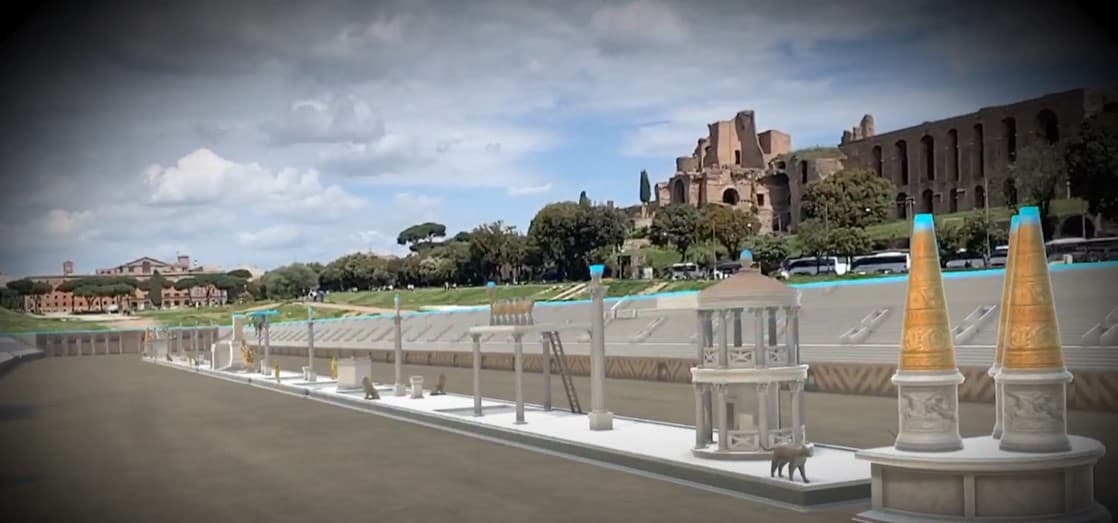
    A relevant project of outdoor Cultural Heritage valorization in which Inglobe took part, which we consider worthy of mention is the Circo Maximo Experience.

    AR/VR Authoring Workflow for Digital Heritage

    Depending on how the project has been designed and on what kind of device it will have to run, there can be several options for the development of the experience. The project may run on one or more of the following: web browser; mobile device; wearable device.

    The user experience will necessarily be different on these platforms, since on some you interact through the mouse, on one interaction is managed by taps and in other cases interaction is voice controlled or even totally automated.

    Development platforms may include custom coding using an Augmented Reality SDK, development on Unity or Unreal Engine and it may or may not include mobile/wearable development if the experience has to be packed for such devices.

    However on the market there are tools like AR-media Studio that let you easily integrate your immersive content (3D, 360s, Videos, etc…) in a straightforward manner, by using a visual approach that requires no coding at all.

    Creating Digital Heritage projects with AR-media is easy and fun. Contents can be downloaded right away or can be saved on devices for later use, a useful functionality when there is a chance of using devices in remote locations or in absence of an internet connection.

  • Art Galleries meet Augmented Reality

    Art Galleries meet Augmented Reality

    Art galleries with Augmented Reality are changing considerably, moving more and more towards the world of digitalisation, promoting a new contemporary way of experiencing and looking at art.??

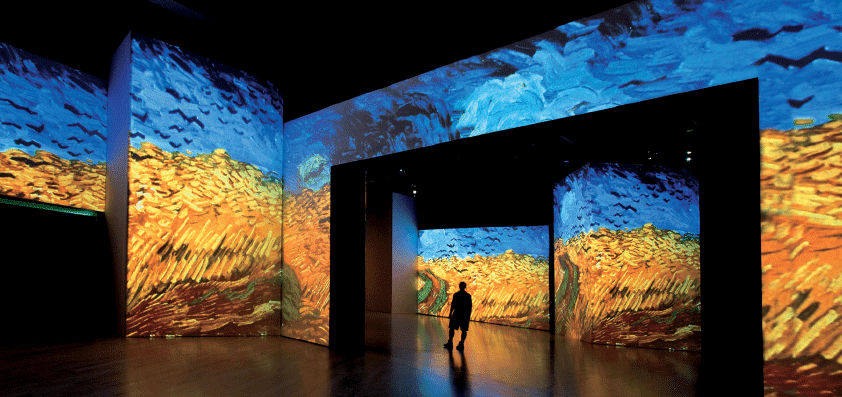
    Art galleries are making room for the world of optical illusion and 360-degree augmented reality, experimenting with new ways of making and communicating art. AR adds new elements to the real world of art galleries and is a simpler and more mature technology because it manages not to distort the history and elements of that place, but instead adds more engaging ways of enjoying it and spreading its beauty.

    art galleries with augmented reality

    New technologies, such as AR, have strengthened the relationship between artists and viewers, improving their ability to understand and evaluate the work of art despite the increase in distances and the relative division caused by the physical detachment that has affected this historical interval. This is precisely where Augmented Reality is making its appearance, a digital technology that is increasingly being used in the art world not only to provide the audience with new experiences, but also to find new ways of bringing art to the public, becoming more immersive and improving the experience inside galleries.?

    Augmented reality for art

    If until now we thought of Augmented Reality as a tool used only and exclusively in the world of games, today it is increasingly expanding its horizons by positively affecting the world of art, adding elements of entertainment and surprise, thus increasing visitors? engagement. AR offers the possibility of living original and highly personalized experiences. 

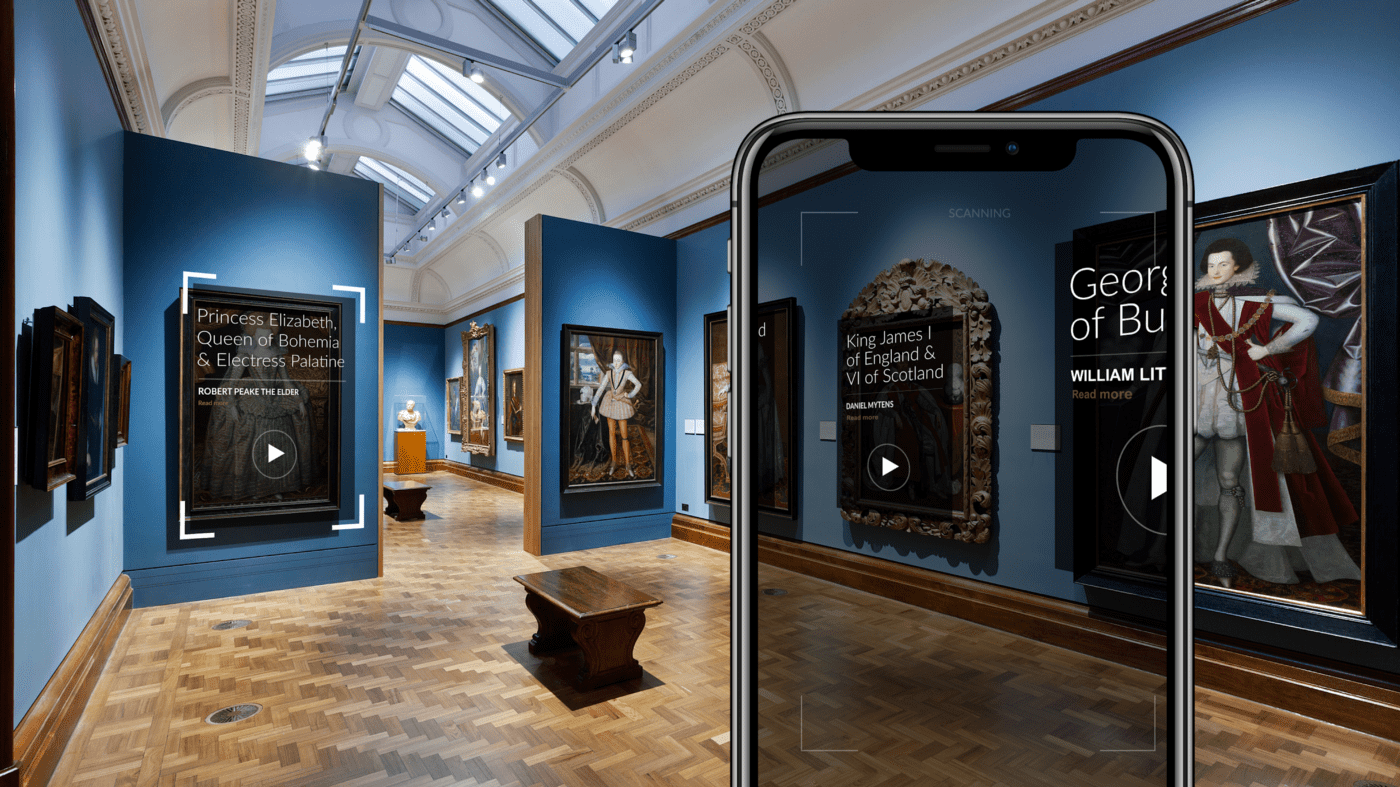
    Through the use of electronic devices, such as smartphones, tablets and wearables, it is possible for visitors to see, in addition to physical artworks, additional virtual artworks in the surrounding space of the art galleries and museums. Such pieces of art can be visualized in their real size, can be moved and manipulated freely (zooming, rotating, etc?). Augmented reality is destined to be increasingly exploited in the art world, not only as an alternative to a physical exhibition, but also in support of it.

    Ar in paintings

    By the end of 2022, according to Gartner’s The Future of Immersive Experiences research, 70% of art galleries will have experimented with immersive technologies to make the visitor experience unique.?

    Augmented reality painting

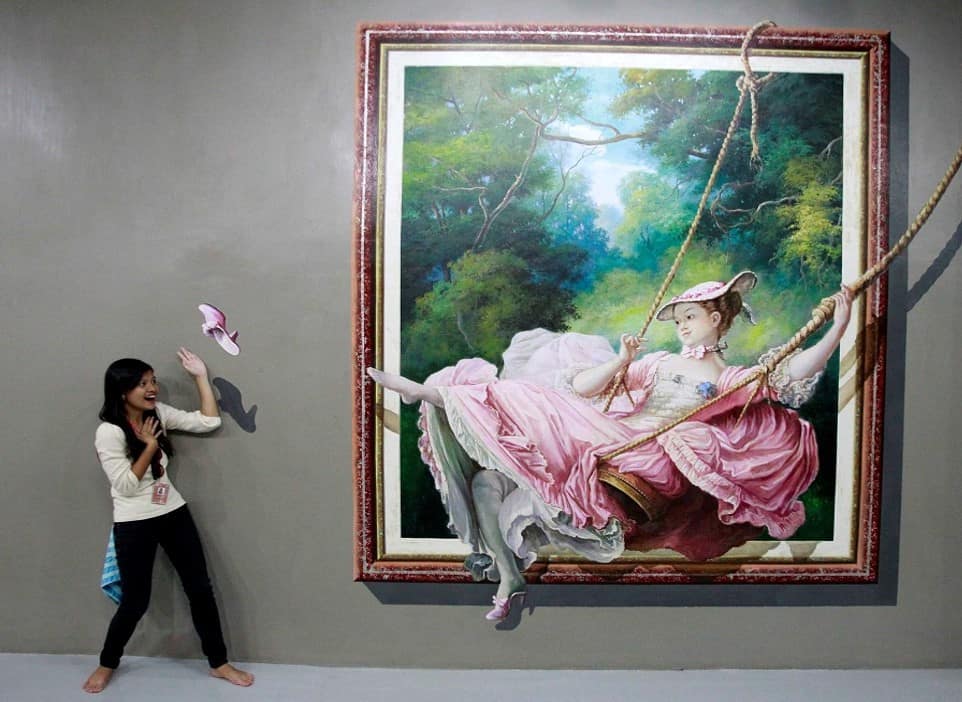
    With AR, even paintings come to life, acquiring three-dimensionality, becoming interactive with the user?s touch, transforming and moving, finally developing new surprises for the viewer with unseen and engaging virtual visual effects. Digital technology is opening up a new dimension of art and new ways of enjoying it, bringing the secrets of artistic language closer to an increasingly wide audience. Touching works of art, an action that is definitely not permitted in museums, has become the dominant experience of viewing paintings. It is indeed very common to find displays of varying sizes in museums and art galleries, however they often provide a very limited interactivity, that is also physically disconnected from the artwork itself.

    art galleries with augmented reality

    AR glasses allow several works to be viewed at the same time and to move them freely through space. The use of AR in art galleries brings numerous advantages both in setting up an exhibition and in a museum, let?s explore the most relevant ones.

    Create art galleries with augmented reality: what are the advantages?

    The advantages, in addition to return on investment (ROI), are many: augmented reality allows younger generations such as Millennials & Generation Z to be involved, and offers the possibility of retargeting operations, that is, personalized ads that intercept users based on their online behavior, as well as the attention of the public, conveying a sense of freshness and innovation and thus increasing perceived value.

    https://www.inglobetechnologies.com/ar-media/

    A cultural visit that is different, alternative and/or complementary to the traditional one, allowing the user to live a totally immersive experience and the art gallery to increase profits and earnings. 

    art galleries with augmented reality

    In addition, augmented reality allows for greater usability by reaching geographically dispersed audiences. It is an ideal tool where there is no possibility to visit a live art gallery. 

    All these different advantages allow the art gallery to attract an increasingly diverse audience, thus increasing engagement and interaction. Augmented reality is coming to generate a hybrid of dream and creation. An artist can decide to let us enter directly into his mind, into the way he perceives the world, involving us at 360 degrees. 

    Examples of art exhibitions in augmented reality:

    Augmented reality in the form of multimedia storytelling is becoming increasingly popular. Art galleries are offering visitors special glasses or inviting them to download an app on their smartphones that allows them to see additional virtual content such as images, videos, 3D models and listen to audio files in real time while simultaneously observing what they see. 

    – In Italy, more precisely in Palermo. 30 young creatives, including artists, designers, architects and graphic designers, during a Public Imagination Workshop “Call for (AR)tist”, hosted by Palermo’s Gallery of Modern Art, adopted 20 works of street art scattered throughout Palermo’s historic center and based on them created new digital animations usable in augmented reality.

    paintings

    – The initiative launched by the Art Gallery of Ontario was also very successful. The Toronto gallery used digital technology to animate the paintings in its rooms. Thanks to the support of their electronic devices, visitors were able to interact directly with the subjects depicted in the paintings. For each painting, there was not only an explanation, but also a character who came to life telling stories to the visitors.

    paintings

    – Lisson Gallery, with exhibition spaces in London, New York and Shanghai, has launched an augmented reality app that allows you to view the works inside your home, an online exhibition by artist Rodney Graham. The effect of augmented reality comes close to the real thing and can be viewed and edited.

    
paintings

    – The Looking Glass aims to transform some outdoor spaces into a large open-air museum, to be explored with your smartphone. To admire the works of art, all you have to do is download the appropriate app and place the device in front of the various QR codes scattered around the city. Once the simple operation has been completed, the seventeen works of art by KAWS, Olafur Eliasson, Tom?s Saraceno and the winner of the Frieze Artist Award 2021, Precious Okoyomon, will magically appear in the urban space. A myriad of impalpable and ephemeral “sculptures” to be visualized thanks to technology.

    art
  • AR and VR can make your museum a memorable experience

    AR and VR can make your museum a memorable experience

    AR,VR and museums may seem two distant concepts, but they are perfectly synergistic since, if used in combination, can create profound and memorable experiences.

    The digital evolution that is affecting many areas of the economy also concerns museums. More and more visitors demand for emotional, engaging and more informative experiences.

    Augmented and Virtual Reality can be the perfect tools to provide a real immersive visit experience, since that can enrich the existing environment with new elements and help the visitors retain their memories for longer. Moreover, such an increased engagement makes them want to share their experiences with other potential visitors, both by word or month or by sharing their thoughts on social media.

    AR technologies support museums to reach a new level of interaction with visitors and offer them a unique opportunity to look at the world around them from a different perspective. Augmented reality gives traditional museums the possibility to incorporate elements of dynamism and movement into their interiors, catching the attention of the public and engaging new visitors.

    The relationship between Augmented Reality and museums aims to enhance the artistic and cultural heritage and to offer a memorable journey, fully involving the visitor, making her feel an integral part of the experience, enriching the enjoyment of works of art with extra information and interactive content. By connecting with some kind of devices, for example a smartphone or a tablet, offered by the museum itself, the visitor becomes more involved and active. In some cases Museums may also release some kind of mobile app that visitors can download and experience on their own devices.

    In order to engage visitors through Augmented and Virtual Reality, museums must integrate innovative but also functional technologies. No visitor would be attracted by applications or devices that are too difficult or cumbersome to use. The visitor experience must be easy and intuitive, and the solutions adopted must be almost invisible and non-invasive.

    What are the benefits and advantages of AR in museums?

    The choice of integrating Augmented Reality in museums gives the possibility to expand the target audience. Experiences can be created with customised thematic paths for children, combining the experience of learning and knowledge with play. Gamification, for example, is an experience that is enriched by the addition of fun challenges, quizzes, puzzles and much more. The more fun it is, the more little visitors will learn and remember. With gamification, visitors can be taken on a journey that includes small mysteries to be solved in order to discover curiosities and include fun and engaging elements into the journey. 

    AR technologies help museums to reach a new level of interaction with visitors and offer them a unique opportunity to look at the world around them from a different perspective.

    The decision to offer visitors an emotional as well as informative and experiential path of knowledge transmission is effective and attractive especially for the younger generations.

    Augmented reality technologies can also help visitors interact with different touchpoints, online and offline, from the website, social media, brochures to multimedia guides, increasing engagement.

    Summing it up, AR and VR have many important advantages for museums such as:

    • Engaging and expanding the target audience
    • Creating increasingly personalised experiences
    • Offering visitors a new, fun and memorable way of learning
    • Creating additional revenue streams through Premium tickets

    What are the most common AR and VR use cases for a museum?

    Depending on the nature and typology of Musemus, Augmented and Virtual Reality can enable a number of different use cases, let?s explore them together.

    A new way to look at paintings with AR and VR

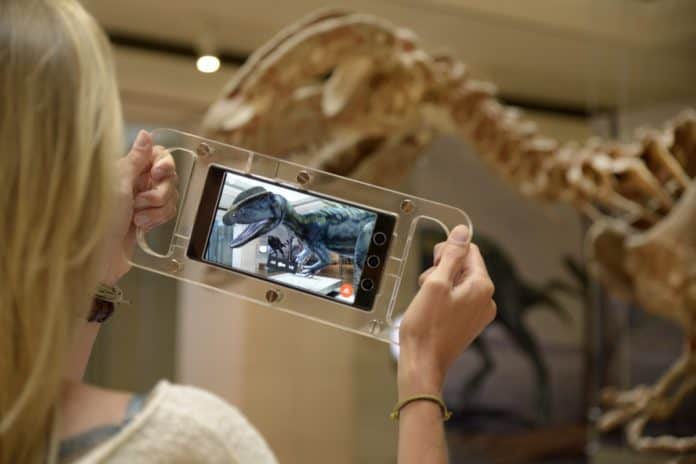
    With the use of Augmented Reality, the visitor pointing the phone?s camera towards a work of art can experience additional content. The user can listen to the description and the story of a work directly from the artist; they can hear ancient songs, street noises, chattering, bringing back to the present the typical environment of the time when the work was created. Extinct animals may come back to life, interacting with the little ones.

    The various ancient wars and battles could be relieved at first hand, scientific demonstrations would be explained with concrete examples. Frescos could be seen by the visitor as new or retrace with the artist the creation of the artwork; paintings could be brought to life and interact with the visitor.

    AR VR IN THE MUSEUM

    Sculptures and buildings can be brought back to life

    The same is true for sculptures or other tridimensional objects exhibited in museums. Immersive technologies can help focus the visitors? attention on specific elements of a work of art, with the help of 3D highlights superimposed on the real object.

    AR and VR have proven to be very useful especially when the goal is to show a visitor how certain pieces of art or ruines used to look like in their former glory.

    AR VR IN THE MUSEUM

    Discover museums through a virtual tour guide

    When guide tours are not available AR and VR come in support by providing 3D avatars or holograms that can guide the visitors through a predefined path and help them get the best out of the Museum, helping them to discover and experience even the most hidden gems.

    ar and vr in the museums

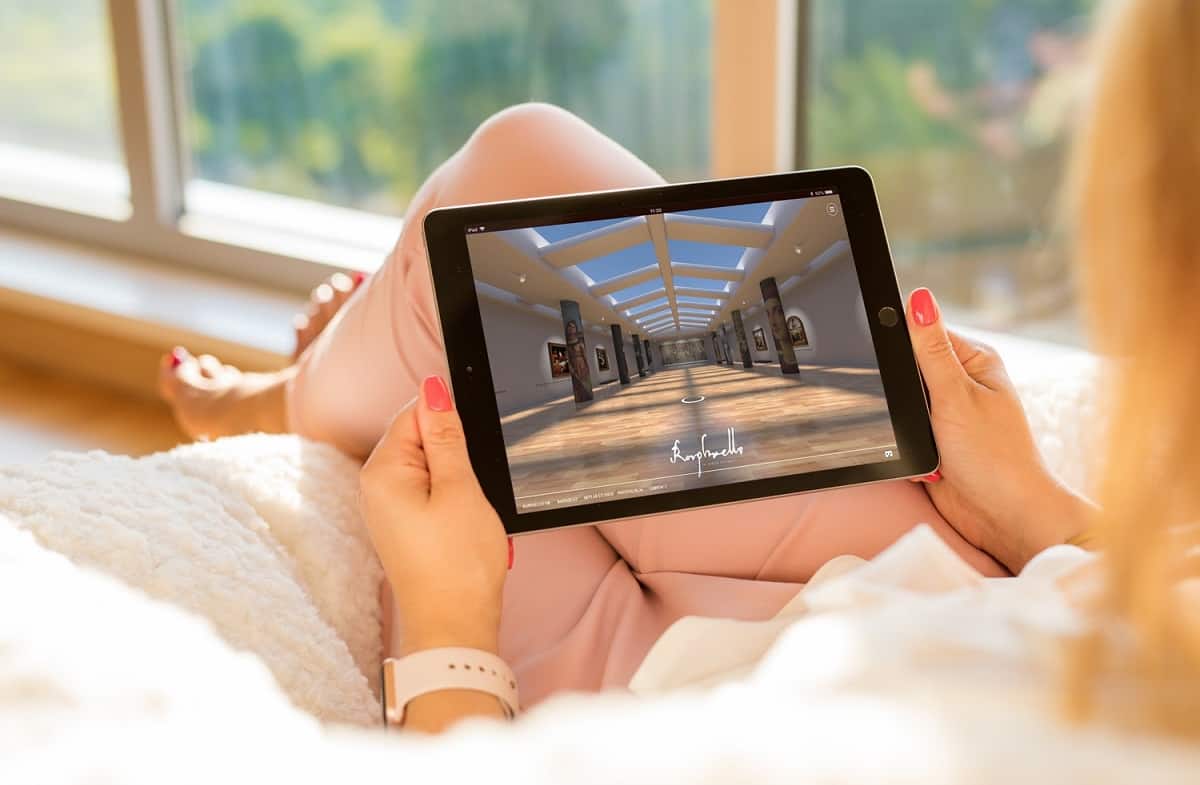
    Preview the museum experience at home

    Who said Augmented and Virtual Reality can only be used inside a museum? In order to tempt and intrigue potential visitors, Museums may release public AR/VR mobile apps that let users get some anticipation of what they can find inside the museum, something very similar to what happens with movie trailers.

    A visitors? journey can start comfortably from the sofa, at home, and continue with the real visit in the museum. App in this case may even provide a way to buy the tickets at a special discount.

    AR VR IN THE MUSEUM

  • The Contribution of Mixed Reality to Cultural Heritage during the pandemic

    The Contribution of Mixed Reality to Cultural Heritage during the pandemic

    The global health emergency caused by the Covid-19 virus, in addition to having generated a profound impact on the industrial sector of our country and in the rest of the world, has profoundly affected a sector that in Italy is worth 13% of GDP, it is tourism.

    The estimated crisis and post-crisis losses are in billions of euros and are mainly caused by limitations on travel, especially international ones, and by the rules of social distancing which will constitute a brake on prosperity of the tourism and cultural heritage sector which employs 15% of the overall Italian workers.

    The Italian cultural sector will have to deal with a 2020 that will see a drop in the number of visitors from abroad throughout the year, which in our country represent 50.3% of the total.
    So at least initially we will focus on domestic tourism, since even the Italians who would have traveled abroad will likely look with greater interest to the domestic offer.

    In addition to dealing with the obvious losses in turnover that will affect the tourism sector, both in Italy and in the rest of the world, operators and managers of cultural heritage, are beginning to realize that the main road to overcome the crisis is that of “digital transformation”. Thanks to these solutions, it will be possible to make cultural heritage available to everyone, including tourists who cannot travel. The digital solutions will, in fact, lead institutions towards a phase of renewal in which the transformation of flows and the availability of more tools will allow to create more sustainable and higher quality models.

    In some use cases the immersive technologies, Virtual Reality and Augmented Reality, have shown not only to be able to overcome the problem of remote use, but also to have the ability to enrich the visiting experience with content and information normally not available.

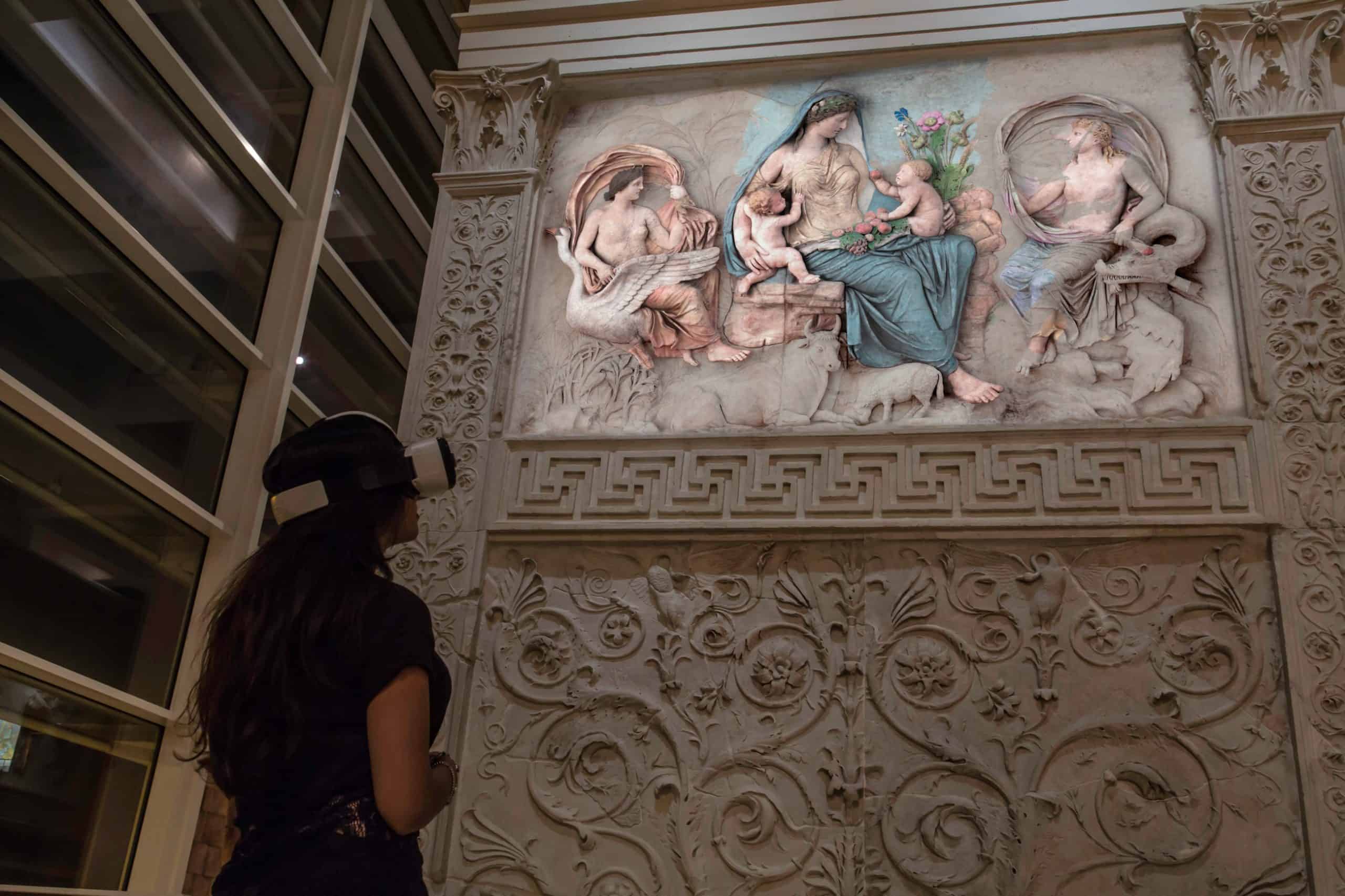
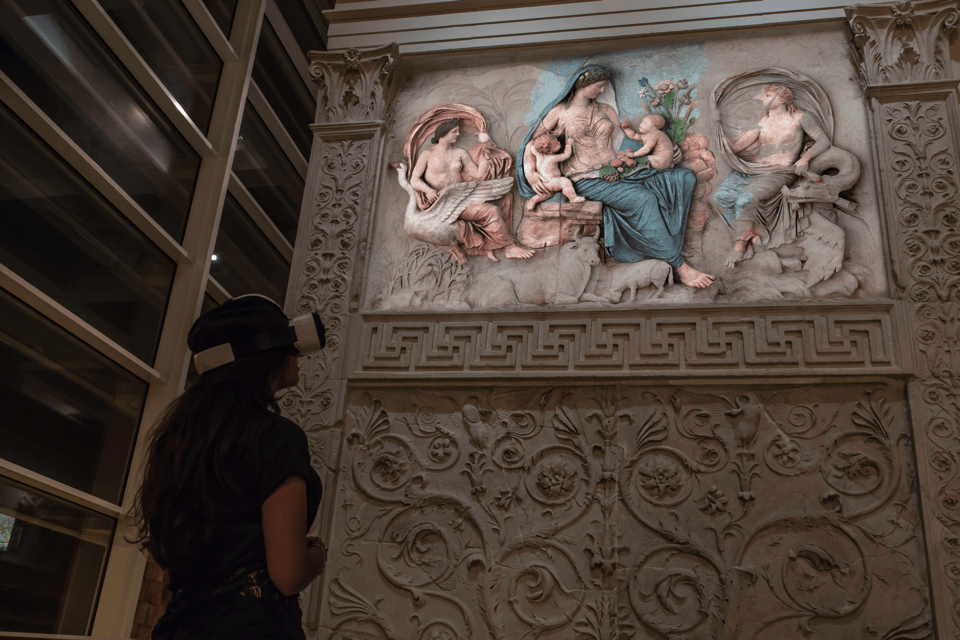
    tourist using mixed reality headsets at Ara Pacis in Rome

    Here are some possibilities for operators of museum structures and sites of interest in general:

    • Digitization of the exhibition spaces
      It is a photogrammetric or laser scanner reconstruction of the real spaces of places such as museums. This activity allows you to create a digital version of the museum, on which various types of experiences can be grafted, from browsing the environments, in Google Streetview style, to enabling multimedia points of interest with voice, video or simply narrations associated. This type of use case can be made usable by both web browsers and mobile applications.
    • Virtual Reality Routes
      This use case involves the artificial reconstruction of spaces, in their current state or in a state that corresponds to a different historical period. It is mainly used when you want to show content and routes related to sites that have been lost in whole or in part. This category includes some of the stages of the Circo Maximo Experience project, through which you can relive the chariot races in ancient Rome.
    • Mixed Reality Routes
      To make the most of digital content and apply it not only to the virtual context, but also to the physical assets available within a site of interest, Mixed Reality techniques are used, they exploit the coexistence of VR and AR, allowing visitors to immerse themselves in reconstructions anchored to real objects (e.g. ruins), and to view completely artificial contents. The result can be obtained both by using Mixed Reality headsets and mobile devices, even the latter, in fact, with dedicated technologies, are able to perform very well object recognition and tracking.
    • Simple Digital Routes
      One possibility that does not contemplate the use of immersive technologies, but which still allows a light digitization of the visit experience, is the creation of applications that provide digital access to content, presenting it in traditional ways, such as image galleries, video and audio narrations.

    In conclusion, the digitization process of entities operating in the cultural heritage sector can only be accelerated due to the Coronavirus emergency, but the road has already been traced by a series of successful experiences, both in Italy and abroad.

    The advantage for operators in the sector is therefore to facilitate access to the sites of interest at a time when these will be subject to rules that will provide for the quota of entrances, social distancing and the use of personal protection devices. The digital experience can to some extent make up for the drop in turnover that operators will most likely face this season and we do not rule out even in the years to come.

  • “ARA as it was”, a first of a kind Immersive Augmented Reality experience for Cultural Heritage

    “ARA as it was”, a first of a kind Immersive Augmented Reality experience for Cultural Heritage

    Immersivity is referred today as one of the most important attributes of high quality Virtual Reality experiences. Indeed, much attention has been recently devoted to technologies that enable immersivity mainly as a consequence of the widespread adoption of Virtual Reality headsets, such as Google Cardboard, Oculus Rift, HTC Vive and Samsung Gear. Seldomly the term ?immersive? is used today to make reference to Augmented Reality experiences, as, notwithstanding the promises, they mainly run on smartphones or not yet fully developed Smartglasses. This happens mainly because of the limitation of current AR displays.

    On Monday 10th October 2016, the city of Rome together with Zetema, one of the most important Italian cultural heritage management organizations, launched and opened to the public the “ARA as it was“, namely the first large scale augmented reality valorization project for the roman cultural heritage. Hosted in a beautiful building designed by the famous American architect Richard Meyer, Ara Pacis is the symbol of the power exerted by the Augustan lineage across the Roman Empire.

    The Project

    The project has been developed by ETT Solutions in collaboration with the Augmented Reality vendor, Inglobe Technologies, that provided the AR technology that made it possible. Basically, the Ara Pacis Augmented Reality system is based on immersive AR headsets that work in association with an Application that assists visitors through the discovery of the monument and its history.

    We expect that this is going to be one of the most important benchmarks for Augmented Reality projects for Cultural Heritage as Zetema has already a business model around this project. Paying visitors are provided with Immersive Smartglasses, namely Samsung GearVR, powered by a Samsung S7 smartphone that runs the “Ara as it was” application.

    The application is based on a unique feature of Inglobe’s AR technology that provides high performance 3D Tracking on a variety of devices, including Samsung Gear VR. This feature, together with the other features of the technology by Inglobe has made it possible to develop such an incredible and unique experience.

    The Experience of an immersive Cultural Heritage site

    Thanks to this approach, visitors can immerse themselves in the narrative path of the museum in first person. They can see the bas-reliefs and elements of the monument come to life in AR by providing the original shapes and colors together with information related to their history.

    The experience is personalized and is based on a hybrid and multi-sensorial approach as it relies on sensorimotor, visual and auditory interaction, right there in the real world.

    Ara Pacis Virtual Reality & Augmented Reality headset
    Tourist with VR AR headset visiting Ara Pacis in Rome

    Talking about the solution, it allows to navigate through the different POIs of the monument. Each POI is a gateway to an immersive AR experience that leverages 3D object recognition and tracking (unique features of Inglobe’s AR technology) to provide visitors with information related to digital reconstructions both in terms of architecture and socio-historical meaning of the monument. Large FOV, precision of 3D Tracking, accuracy of Computer Graphics overlays and personalization of experience are just some of the takeaways of the solution.