Tag: Virtual Reality

  • AR & VR for education helps students to learn more and better

    AR & VR for education helps students to learn more and better

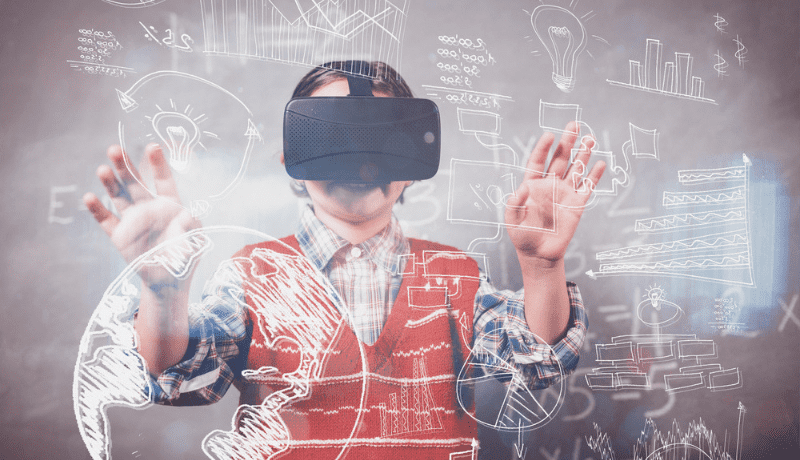
    Learning through AR & VR technologies can be a very effective educational methodology, able to engage the students and make content more attractive to them. The entire process can become more interactive and fun. In the field of education and training there are application tools that can help to improve the teaching-learning process by making it more connected with the surrounding environment; learning can become a more collaborative journey through the creation of interactive spaces that can encourage greater student involvement. 

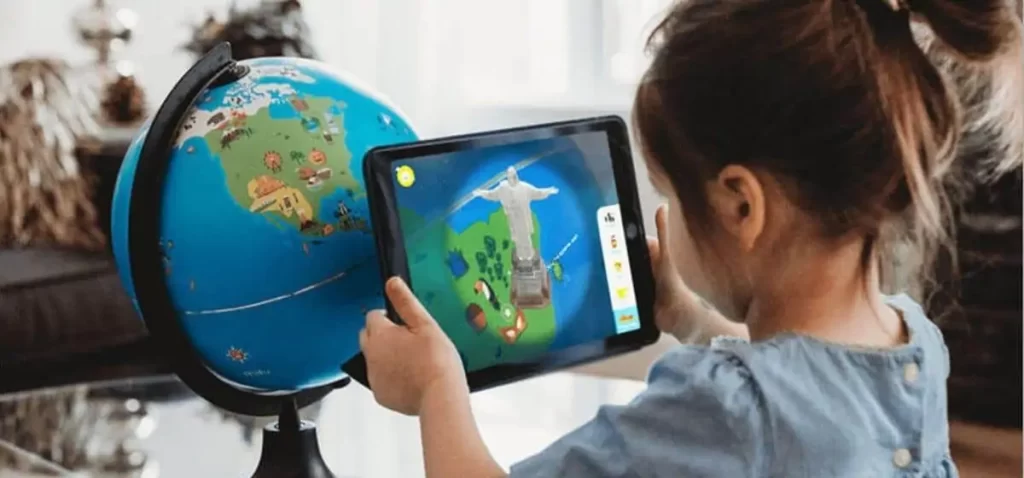
    Through augmented reality, teachers can engage students by capturing their attention, making them have a great time: they will be able to remember the proposed topics more easily, even the most difficult ones will be more understandable. We believe that AR & VR for learning can become an essential component of the educational process, helping schools and teachers  to meet the needs and habits of the new generations.
    AR & VR for education help students to learn more and better

    For those who have kids in school age, the last couple of months have been quite a revelation.
    Used to kiss them goodbye in the morning and see them again only many hours later, whatever happened all day long inside the classroom was largely a guessing game, with the sole prop of clues that were either sporadic (the interaction with the teachers) or outright poor (the recounts of the usually reticent pupils).

    But when suddenly home-schooling became the new normal, it was as if the fourth wall collapsed, allowing us to take a glimpse at what happens routinely behind the scenes.
    A somewhat displacing experience, the one thing it did was giving us a better understanding of both the benefits and the limitations of digital and traditional means to deliver education.

    There is no doubt that a physical interaction with teachers and peers is crucial, not only for learning purposes, but also for a healthy social development; on the other hand, the increased adoption of communication technologies that are already part of the youngsters’ lives plays a role in engaging them more and better in the learning process.

    As such, we suddenly found ourselves at a crossroads where we must solve the dilemma and obtain the best of both worlds: by blending real world and digitally constructed contents, immersive technologies can be the answer.
    Let’s be clear about this: the pandemic did not raise the question from nowhere; it simply put it right at the top of the agenda. The case for mixed reality was already there well before the outbreak, and it rests on a set of reasons that we can schematically summarise as follows.

    The Benefits of Augmented Reality for Education

    Improve students’ engagement

    This is arguably the most powerful driver, as the interactive nature of  AR & VR for learning helps raise attention’s levels on any subject.
    Think about a maths lesson where pupils learn proportions by designing a building and then seeing it digitally erected: if their calculations are wrong, the result will be evidently disastrous! Not only that, but they will be extra-motivated to understand the theory better in order to improve the outcome. In addition, AR &VR enable students to study and learn more effectively, without distractions, they can improve their understanding of topics and have a better information retention over time.
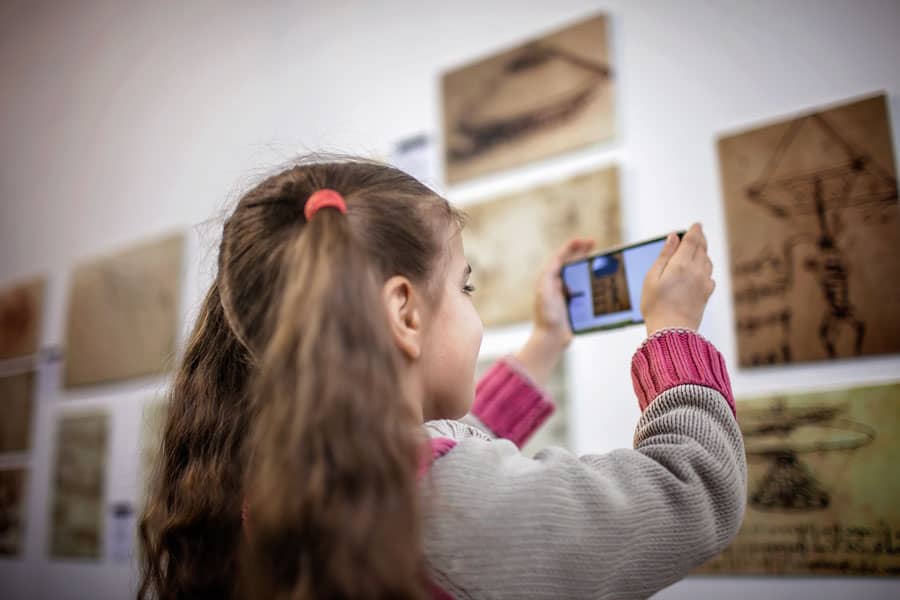
    AR & VR for education help students to learn more and better

    Increase knowledge retention

    Research on the topic is extensive and unequivocal: by pulling contents through their own discovery, users recollect more memories – and more vividly – than they do when they are at the receiving end of a “passive” teaching approach.

    Augmented Reality is the perfect vehicle at this respect: one thing is to learn chemistry on a book; a totally different experience is to so by conducting experiments virtually, thus – by the way – without the need to equip an expensive lab.  Augmented and virtual reality are kinaesthetic learning, a system that helps students learn things better through direct practice instead of listening to lectures orally.

    Gamification of Learning with AR & VR

    How to apply the dynamics of video games to stimulate learning in schools?  

    Gamification is the use of game elements in contexts other than gaming, such as in education. Through challenges, exciting quizzes, based on the video games model, students are able to obtain a higher motivation as well as increased interest and creativity. 

    Learners will be more motivated and will eventually achieve better results. It is also motivating for teachers to be able to use innovative teaching strategies and tools in order to connect better with the new generations.
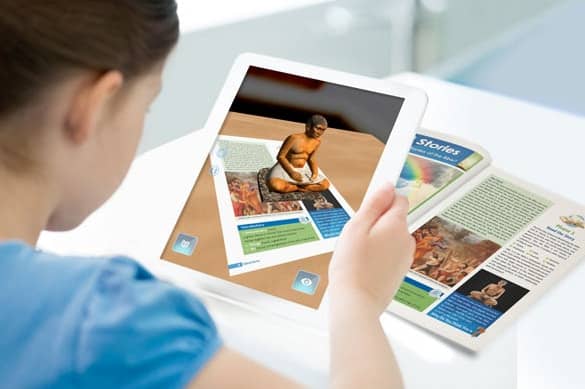
    AR & VR for education help students to learn more and better

    Seek cost-effectiveness in Education

    The “virtual lab” example has introduced the idea, but there is more to add in respect to costs saving.

    Sure, immersive technologies entail upfront investments that, especially in the case of public institutions, might initially be seen as a stumbling block.
    A couple of things however must be taken into account: first of all, applications of this kind increasingly run on hardware that is already in the students’ hands (their own mobile devices); and in the mid-run, the flexibility and the ease in updating the contents reduces the costs for designing and renewing the lessons.
    In short: while acquisition costs are decreasing, cost savings are getting more and more conspicuous.

    AR-Media included in the i-pear toolkit of educational AR & VR platforms

    The AR-Media platform has been selected to be featured on the iPear network (Inclusive Peer Learning with Augmented Reality Apps) project by the AETMA Lab of IHU University, Greece. The iPEAR project brings together the expertise of technology-enhanced learning researchers, computer scientists and educators to build a strategic partnership to optimize the adoption of Augmented Reality (AR) technology in education. The project will create innovative, accessible training resources for teachers that help implement and integrate active and collaborative learning pedagogical approaches supported by AR.

    Technological advances have influenced every aspect of our lifestyle: from communication, to the world of work, to social life. The school and educational context has also opened up to technology and digital teaching innovations to ensure that schools keep up with the times.  
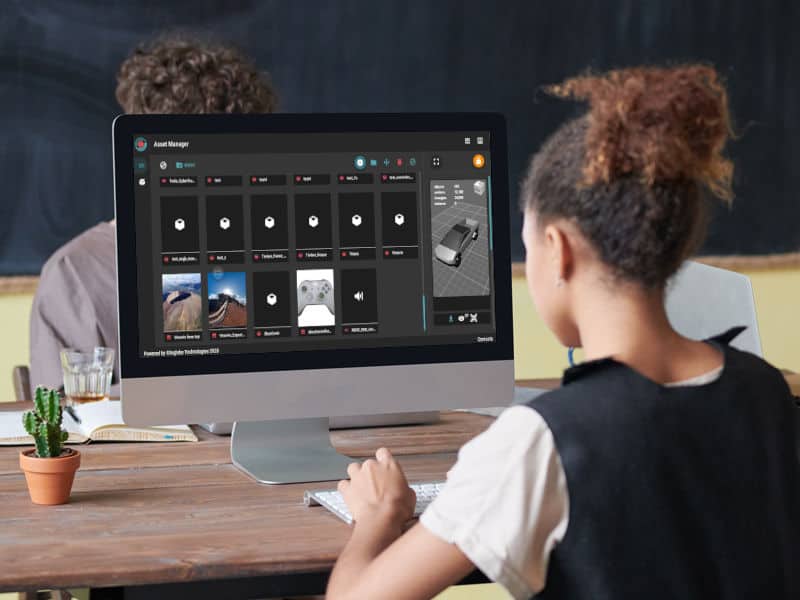
    AR & VR for education help students to learn more and better

    AR-media believes in the importance of integrating education with Augmented and Virtual Reality by providing its users with diversified plans created to meet different needs. Recently we made available dedicated educations plans for Students, Teachers, Classrooms, Schools and even a custom Academy plan with more personalization options.

    We aim to offer the most competitive prices on the market, to let everyone work and study with Augmented Reality tools. AR-media for Education offers exclusive features such as the possibility to create tests and quizzes, send assignments to the Students and give them a feedback/mark and much more.
  • AR and VR can make your museum a memorable experience

    AR and VR can make your museum a memorable experience

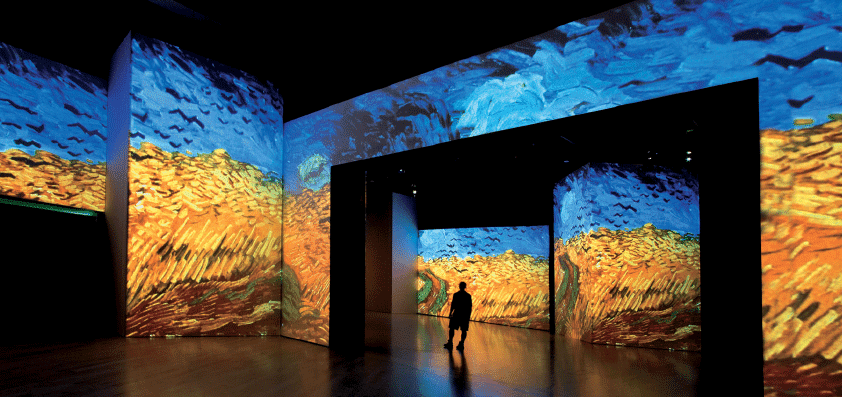
    AR,VR and museums may seem two distant concepts, but they are perfectly synergistic since, if used in combination, can create profound and memorable experiences.

    The digital evolution that is affecting many areas of the economy also concerns museums. More and more visitors demand for emotional, engaging and more informative experiences.

    Augmented and Virtual Reality can be the perfect tools to provide a real immersive visit experience, since that can enrich the existing environment with new elements and help the visitors retain their memories for longer. Moreover, such an increased engagement makes them want to share their experiences with other potential visitors, both by word or month or by sharing their thoughts on social media.

    AR technologies support museums to reach a new level of interaction with visitors and offer them a unique opportunity to look at the world around them from a different perspective. Augmented reality gives traditional museums the possibility to incorporate elements of dynamism and movement into their interiors, catching the attention of the public and engaging new visitors.

    The relationship between Augmented Reality and museums aims to enhance the artistic and cultural heritage and to offer a memorable journey, fully involving the visitor, making her feel an integral part of the experience, enriching the enjoyment of works of art with extra information and interactive content. By connecting with some kind of devices, for example a smartphone or a tablet, offered by the museum itself, the visitor becomes more involved and active. In some cases Museums may also release some kind of mobile app that visitors can download and experience on their own devices.

    In order to engage visitors through Augmented and Virtual Reality, museums must integrate innovative but also functional technologies. No visitor would be attracted by applications or devices that are too difficult or cumbersome to use. The visitor experience must be easy and intuitive, and the solutions adopted must be almost invisible and non-invasive.

    What are the benefits and advantages of AR in museums?

    The choice of integrating Augmented Reality in museums gives the possibility to expand the target audience. Experiences can be created with customised thematic paths for children, combining the experience of learning and knowledge with play. Gamification, for example, is an experience that is enriched by the addition of fun challenges, quizzes, puzzles and much more. The more fun it is, the more little visitors will learn and remember. With gamification, visitors can be taken on a journey that includes small mysteries to be solved in order to discover curiosities and include fun and engaging elements into the journey. 

    AR technologies help museums to reach a new level of interaction with visitors and offer them a unique opportunity to look at the world around them from a different perspective.

    The decision to offer visitors an emotional as well as informative and experiential path of knowledge transmission is effective and attractive especially for the younger generations.

    Augmented reality technologies can also help visitors interact with different touchpoints, online and offline, from the website, social media, brochures to multimedia guides, increasing engagement.

    Summing it up, AR and VR have many important advantages for museums such as:

    • Engaging and expanding the target audience
    • Creating increasingly personalised experiences
    • Offering visitors a new, fun and memorable way of learning
    • Creating additional revenue streams through Premium tickets

    What are the most common AR and VR use cases for a museum?

    Depending on the nature and typology of Musemus, Augmented and Virtual Reality can enable a number of different use cases, let?s explore them together.

    A new way to look at paintings with AR and VR

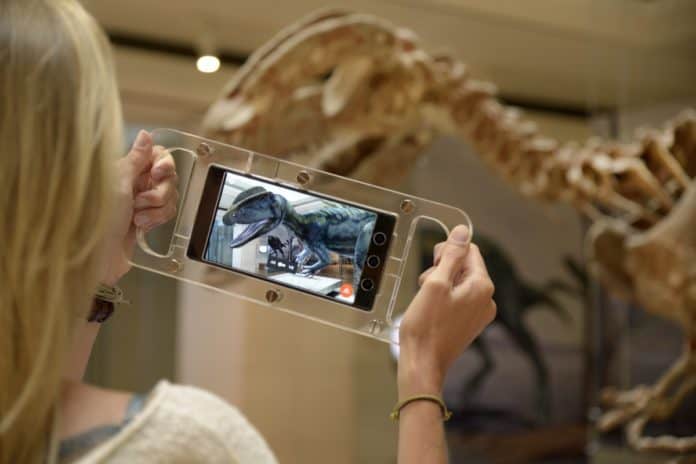
    With the use of Augmented Reality, the visitor pointing the phone?s camera towards a work of art can experience additional content. The user can listen to the description and the story of a work directly from the artist; they can hear ancient songs, street noises, chattering, bringing back to the present the typical environment of the time when the work was created. Extinct animals may come back to life, interacting with the little ones.

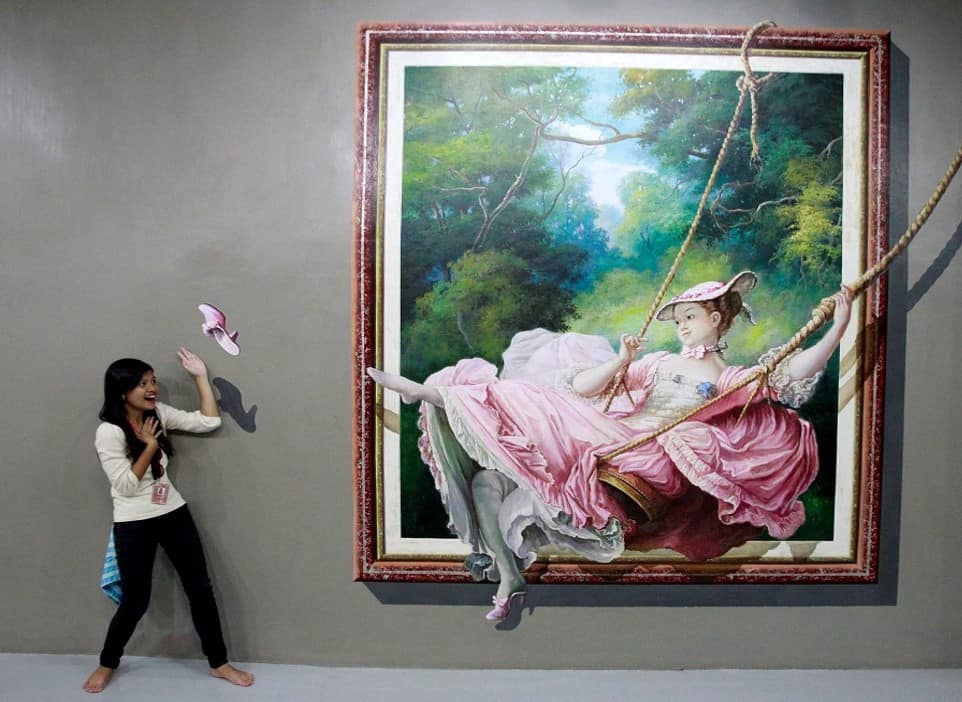
    The various ancient wars and battles could be relieved at first hand, scientific demonstrations would be explained with concrete examples. Frescos could be seen by the visitor as new or retrace with the artist the creation of the artwork; paintings could be brought to life and interact with the visitor.

    AR VR IN THE MUSEUM

    Sculptures and buildings can be brought back to life

    The same is true for sculptures or other tridimensional objects exhibited in museums. Immersive technologies can help focus the visitors? attention on specific elements of a work of art, with the help of 3D highlights superimposed on the real object.

    AR and VR have proven to be very useful especially when the goal is to show a visitor how certain pieces of art or ruines used to look like in their former glory.

    AR VR IN THE MUSEUM

    Discover museums through a virtual tour guide

    When guide tours are not available AR and VR come in support by providing 3D avatars or holograms that can guide the visitors through a predefined path and help them get the best out of the Museum, helping them to discover and experience even the most hidden gems.

    ar and vr in the museums

    Preview the museum experience at home

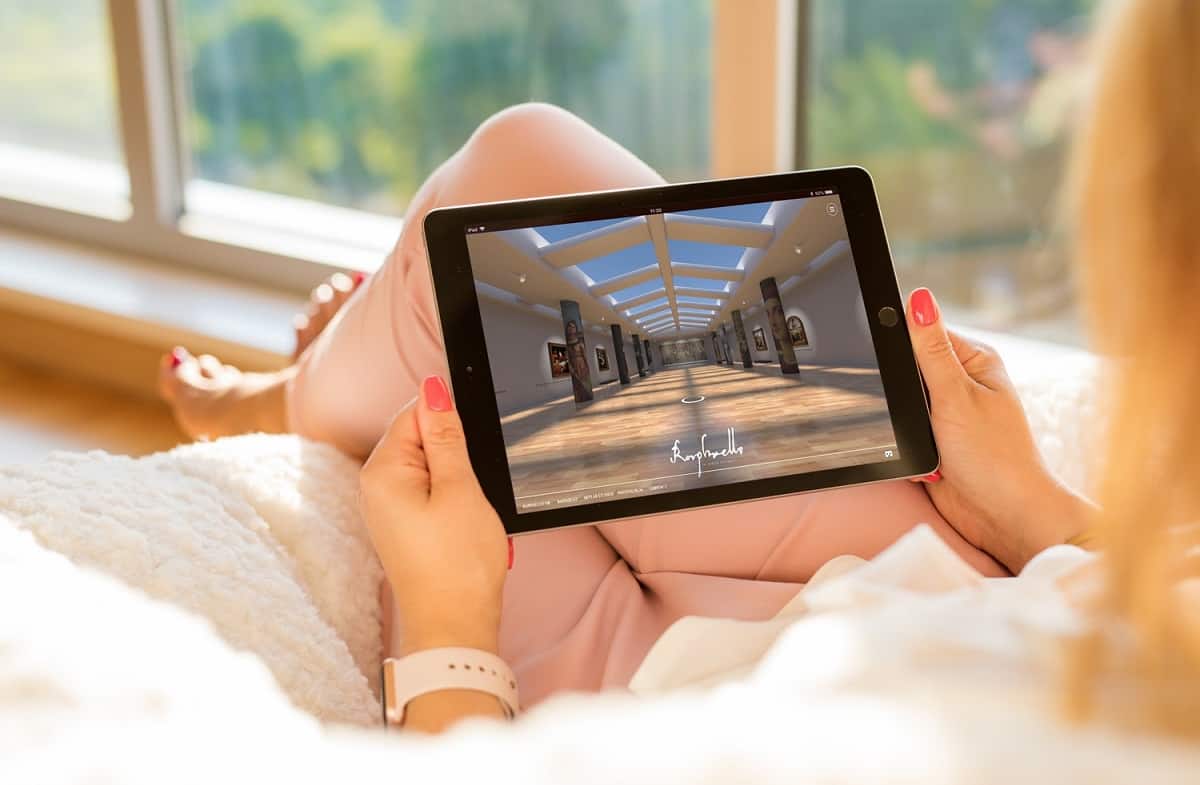
    Who said Augmented and Virtual Reality can only be used inside a museum? In order to tempt and intrigue potential visitors, Museums may release public AR/VR mobile apps that let users get some anticipation of what they can find inside the museum, something very similar to what happens with movie trailers.

    A visitors? journey can start comfortably from the sofa, at home, and continue with the real visit in the museum. App in this case may even provide a way to buy the tickets at a special discount.

    AR VR IN THE MUSEUM

  • Inglobe supports Bambino Gesù Children’s Hospital training courses

    Inglobe supports Bambino Gesù Children’s Hospital training courses

    From the 12th to the 14th of December 2019, Bambino Gesù Children’s Hospital organizes in Rome a training course titled “Which technology for which rehabilitation” in collaboration with Pegaso Onlus, GIS Neuroscience, and under the patronage of AIFI, AITO, SIAMOC, SIMFER and SIRN.

    The course will be dedicated to identifying the most suitable technological solutions to support rehabilitation programs and there will be many specialized medical figures. Particular attention will be paid to the relationship between ethics and innovation.

    Among the topics addressed by the course there will be:

    • the development of the movement
    • motion control
    • motion learning
    • movement analysis
    • robotics
    • virtual reality
    • the formulation of descriptive and predictive models
    • the technology assessment process (HTA)

    Inglobe Technologies, already partner of the Bambino Ges? Children?s Hospital in a project to develop a robotic platform with Virtual Reality, is a sponsor of the event.

    For more information and reservations: http://formazione.ospedalebambinogesu.it/event/1782/showCard

  • “ARA as it was”, a first of a kind Immersive Augmented Reality experience for Cultural Heritage

    “ARA as it was”, a first of a kind Immersive Augmented Reality experience for Cultural Heritage

    Immersivity is referred today as one of the most important attributes of high quality Virtual Reality experiences. Indeed, much attention has been recently devoted to technologies that enable immersivity mainly as a consequence of the widespread adoption of Virtual Reality headsets, such as Google Cardboard, Oculus Rift, HTC Vive and Samsung Gear. Seldomly the term ?immersive? is used today to make reference to Augmented Reality experiences, as, notwithstanding the promises, they mainly run on smartphones or not yet fully developed Smartglasses. This happens mainly because of the limitation of current AR displays.

    On Monday 10th October 2016, the city of Rome together with Zetema, one of the most important Italian cultural heritage management organizations, launched and opened to the public the “ARA as it was“, namely the first large scale augmented reality valorization project for the roman cultural heritage. Hosted in a beautiful building designed by the famous American architect Richard Meyer, Ara Pacis is the symbol of the power exerted by the Augustan lineage across the Roman Empire.

    The Project

    The project has been developed by ETT Solutions in collaboration with the Augmented Reality vendor, Inglobe Technologies, that provided the AR technology that made it possible. Basically, the Ara Pacis Augmented Reality system is based on immersive AR headsets that work in association with an Application that assists visitors through the discovery of the monument and its history.

    We expect that this is going to be one of the most important benchmarks for Augmented Reality projects for Cultural Heritage as Zetema has already a business model around this project. Paying visitors are provided with Immersive Smartglasses, namely Samsung GearVR, powered by a Samsung S7 smartphone that runs the “Ara as it was” application.

    The application is based on a unique feature of Inglobe’s AR technology that provides high performance 3D Tracking on a variety of devices, including Samsung Gear VR. This feature, together with the other features of the technology by Inglobe has made it possible to develop such an incredible and unique experience.

    The Experience of an immersive Cultural Heritage site

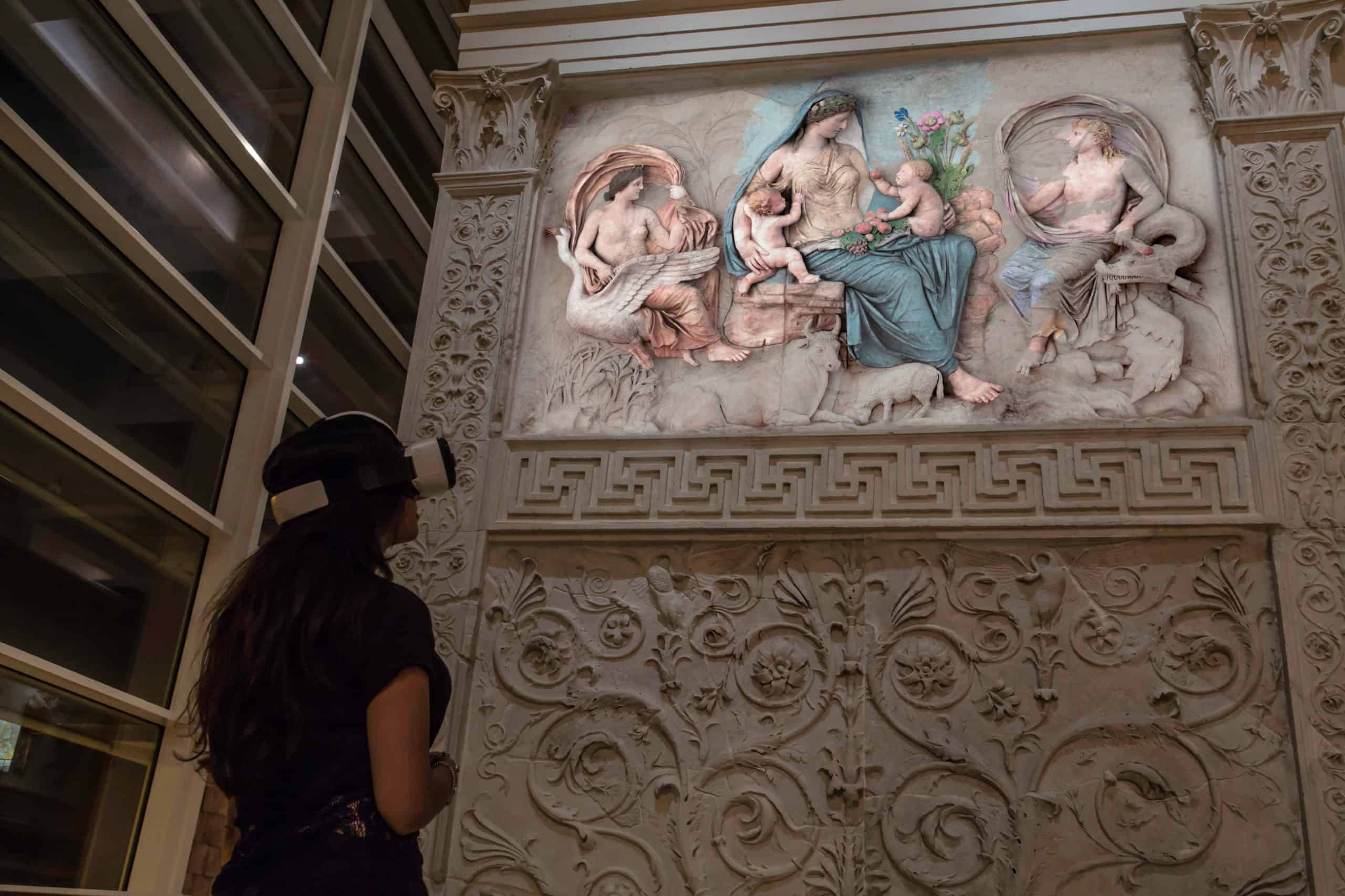
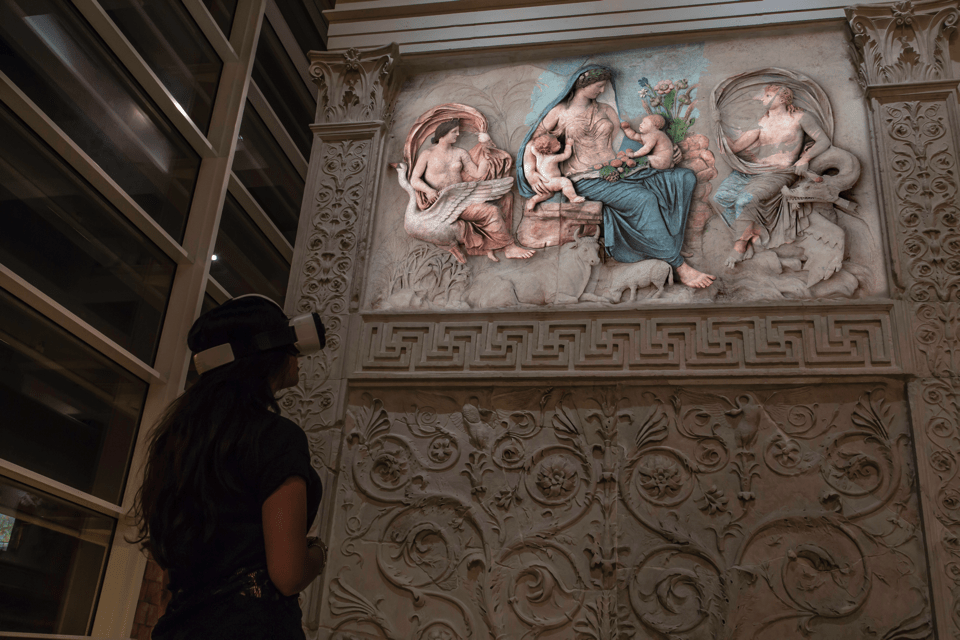
    Thanks to this approach, visitors can immerse themselves in the narrative path of the museum in first person. They can see the bas-reliefs and elements of the monument come to life in AR by providing the original shapes and colors together with information related to their history.

    The experience is personalized and is based on a hybrid and multi-sensorial approach as it relies on sensorimotor, visual and auditory interaction, right there in the real world.

    Ara Pacis Virtual Reality & Augmented Reality headset
    Tourist with VR AR headset visiting Ara Pacis in Rome

    Talking about the solution, it allows to navigate through the different POIs of the monument. Each POI is a gateway to an immersive AR experience that leverages 3D object recognition and tracking (unique features of Inglobe’s AR technology) to provide visitors with information related to digital reconstructions both in terms of architecture and socio-historical meaning of the monument. Large FOV, precision of 3D Tracking, accuracy of Computer Graphics overlays and personalization of experience are just some of the takeaways of the solution.