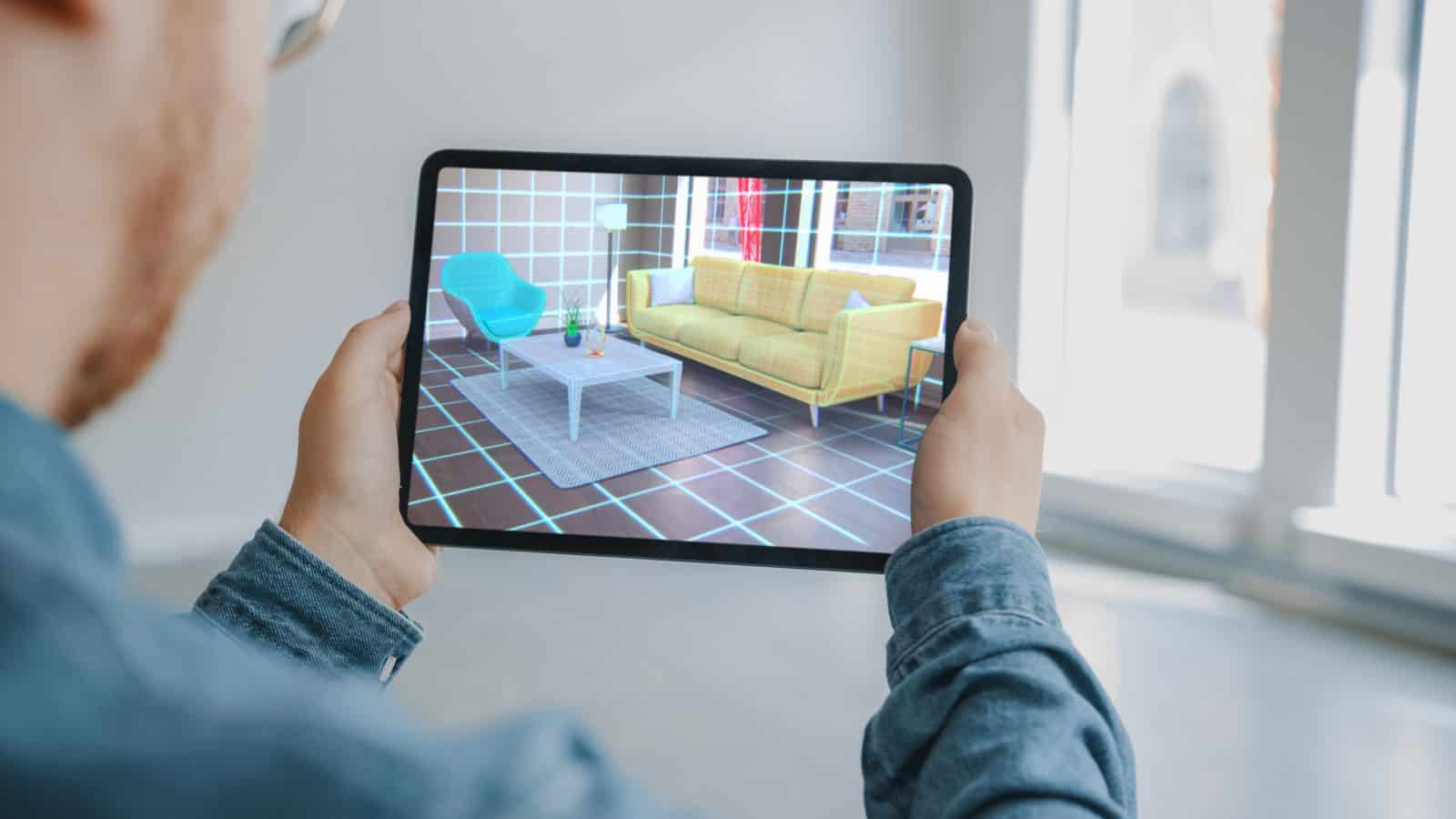
The most searched word of the moment? “Metaverse”: with 677,000 results on Google, the hashtag #Metaverse is used extensively on Instagram, with over 60,000 posts and tweeted more than 500 times per hour.
By now it seems clear that the world of the Internet is changing and that we are watching the advent of the next big breakthrough in the world of innovation.
The Metaverse will be the Internet of the Future: it will change the way we perceive the world and interact with others, it will modify the way we enjoy experiences, it will create new ways of marketing and communicating, and it will make new immersive experiences with high emotional impact for its customers, thanks to the use of augmented and virtual reality.
The opportunities and advantages offered by the Metaverse for the world of marketing are many, offering new tools, new spaces to sell and buy products, new shop windows and new worlds, placing the user at the center of this new technological ecosystem based on the creation and enjoyment of experiences.
When and how will one of the most innovative sectors like marketing change in the Metaverse?
During the pandemic, digital has become the main place where many marketing processes such as collaboration, training, communication, but also sales, meetings and events have moved to, building, in a very short time, its own rules.
To be digital and to keep up with the new “Metaverse” world is no longer a choice. For brands, a new frontier is opening up in which to find new ways of building relationships with their target audience, existing and potential consumers. Today, marketing processes and strategies must be adapted to a more immersive experience: multichannel, new generation and performance, customer journey.

But that’s not all: brands are also trying to increase brand awareness in the Metaverse, by starting to study its potential. It is not just about recreating the physical world, but about expressing and sharing brand values “somewhere else” and in another way. For companies, marketing will mean designing increasingly immersive and engaging ideas and experiences for their customers. In fact, the key word that describes and characterizes the Metaverse is: user experience. The goal is to improve the quality of time spent on mobile devices, building new unique adventures that are closer to the real world.
Thanks to the Metaverse, marketing experts will be able to develop a perfect marketing strategy for their target audience, as they will be able to simulate the effectiveness of a point of sale or a promotional campaign, verify the interest of the public towards a product, create a contest, implement a hybrid creative staff between the real and the virtual world. The Metaverse allows for answers and verifications, eliminating surveys or questionnaires, which users sometimes consider boring and repetitive.
What can we expect from the world of marketing in the future?
Marketers will have to broaden their horizons and will have to think in “3D” and imagine not only the user’s in-store experience, but also a safe and efficient experience that can be enjoyed directly from the couch at home, through a VR.
The Metaverse, with its innovations, radically revolutionizes advertising and marketing techniques, such as the ‘day one’ for the launch of a new product on the market by a brand: promotional events could take place in virtual mode with unlimited access, within a specially constructed digital space, providing participants with some exclusive benefits linked to this experience.
In particular, these are going to be the main changes:
– As narrative techniques become 3D, marketing and advertising methods are also transformed: advertisers will have to respect and not interrupt the immersive and shared experience of users in the Metaverse. In order to engage and retain users, therefore, new advertising methods designed to blend fluidly into the Metaverse’s spatial dimension will be needed – completely eliminating methods such as interstitial pages that interrupt the digital experience, distracting and unnerving users. Examples of innovative forms of advertising are Nike’s virtual launch of its latest Air Jordan in Fortnite, or Gillette Venus offering different skins in Animal Crossing New Horizons.

– SEO will also be present in the Metaverse: just as we optimize content to be indexed in search engines, it is time to start positioning ourselves in the world of the Metaverse as well.
– Gamification will become an essential element of communication: interacting in a virtual three-dimensional space where users can have experiences enriched by the perception of their own and others’ presence in the shared space. The feeling of being together with other people in a digital space expands the palette of actions, reactions and ideas that can arise from interaction with others, perceived in a digital proximity implemented in the 3D space of the Metaverse.

Metaverse for e-commerce?
The answer is obviously yes. According to the report “Social Media Trends 2022” the Metaverse in e-commerce could even become a “trend” as early as next year; the growth of e-commerce in the Metaverse is a trend that will see strong growth in the coming years. The Metaverse for e-commerce could meet the needs of sellers and end consumers, allowing a virtual contact similar to the real one you can experience in the typical retail space. Above all, it responds perfectly to the needs of the new generation Z, the key target for the next 20 years, who do not perceive the barrier between offline and online. More and more brands are ready to adopt the Metaverse for ecommerce, introducing increasingly revolutionary features that will allow offline and online shopping to become a symbiosis.

The Metaverse will allow brands to offer shoppers a highly personalized digital experience that focuses on a seamless solution that makes it easier for customers to find exactly what they want and when they want it. It will be possible, thanks to virtual reality, to recover the concept of spatiality by being able to walk through shopping centers with the convenience of not even having to leave the house. A remotely controlled avatar will make every move for the user with the freedom to shop.
What can companies do to get the most out of the Metaverse in Marketing?
Many brands are giving their marketing space in the metaverse:
– Coca-Cola celebrated International Friendship Day on 30 July with the launch of its first collectibles in the virtual world, through a three-day auction. A friendship box containing some of the brand’s most iconic “objects”, but reinvented for the metaverse. For the occasion, Coca Cola also held an event in the decentraland metaverse;

– For the launch of its new model, the Nissan Juke car manufacturer decided to use customer engagement to engage and guide its users in their choice of product through various games and immersive realities. Stimulating conversion thanks to the emotional power of the video game;

– Microsoft, presented Mesh for Teams that allows users to participate in video calls as avatars, providing a sense of shared presence in a meeting. You can connect from any device, without necessarily needing VR/AR viewers.

The Metaverse in the marketing sector enables the merging of the physical and virtual worlds to significantly enrich consumers’ everyday experiences.